How Big Are 1 Carat Diamond Earrings? A Visual Size Guide
Wondering how big 1 carat diamond earrings actually look? Explore exact millimeter sizes, shape comparisons, and setting tricks to maximize sparkle.

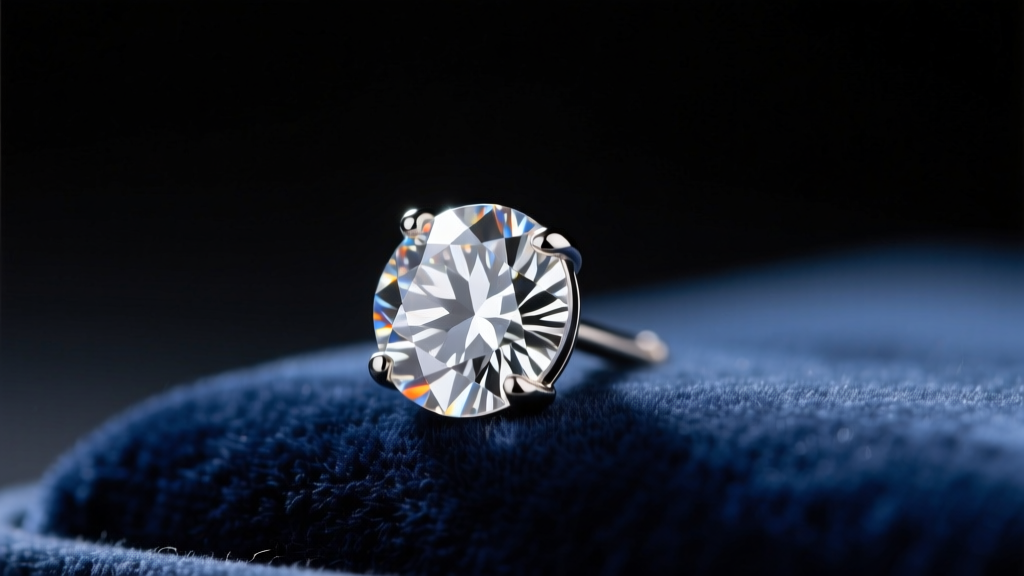
When shopping for diamond studs, the most common question beginners ask is: how big are 1 carat diamond earrings in real life? The short answer requires a quick industry translation. A true, single 1-carat round brilliant diamond measures approximately 6.4 to 6.5 millimeters in diameter. However, when jewelers advertise "1 carat diamond earrings," they are almost always referring to 1 Carat Total Weight (1 CTW). This means the combined weight of both earrings equals one carat, resulting in a 0.50-carat diamond per ear, which measures about 5.1 to 5.2 millimeters across.
The Carat Confusion: Total Weight vs. Per Ear
Understanding the difference between Total Carat Weight (CTW) and Carat Weight (CW) per ear is the most critical step in avoiding buyer's remorse. According to the Federal Trade Commission's Jewelry Guides, retailers must clearly disclose if a weight refers to the total combined weight of all stones in a piece.
- 1 CTW (Total Carat Weight): 0.50 carats per ear. Total weight = 1.00 carat. Visual size = ~5.2mm each.
- 2 CTW (Total Carat Weight): 1.00 carat per ear. Total weight = 2.00 carats. Visual size = ~6.5mm each.
- 1 CW (Carat Weight per ear): 1.00 carat per ear. Total weight = 2.00 carats. Visual size = ~6.5mm each.
If you want a 6.5mm diamond in each ear, you must specifically search for "1 carat each" or "2 carat total weight" studs. Buying a standard "1 carat" pair will yield the smaller 5.2mm stones.
Exact Millimeter Sizes: How Big is a 0.50-Carat Diamond?
Since a standard 1 CTW pair features 0.50-carat diamonds, we need to look at the physical millimeter dimensions of a half-carat stone. Carat is a measure of weight, not physical size, meaning the dimensions change drastically depending on the diamond's shape. According to Blue Nile's diamond education guides, elongated shapes carry their weight on the surface, while step-cuts carry it in the depth.
| Diamond Shape (0.50ct) | Approx. Dimensions (mm) | Visual Footprint |
|---|---|---|
| Round Brilliant | 5.15 x 5.15 | Classic, symmetrical, maximizes brilliance |
| Princess Cut | 4.40 x 4.40 | Square, faces up slightly smaller due to depth |
| Oval Cut | 6.50 x 4.30 | Elongated, faces up noticeably larger |
| Cushion Cut | 4.80 x 4.80 | Soft square, deep pavilion hides weight |
| Pear Cut | 7.00 x 4.50 | Teardrop, longest visual spread on the lobe |
If your primary goal is maximizing the visual size of your 1 CTW earrings without paying for a higher carat weight, choosing an Oval or Pear shape is the most effective strategy.
How Diamond Cut and Shape Alter Perceived Size
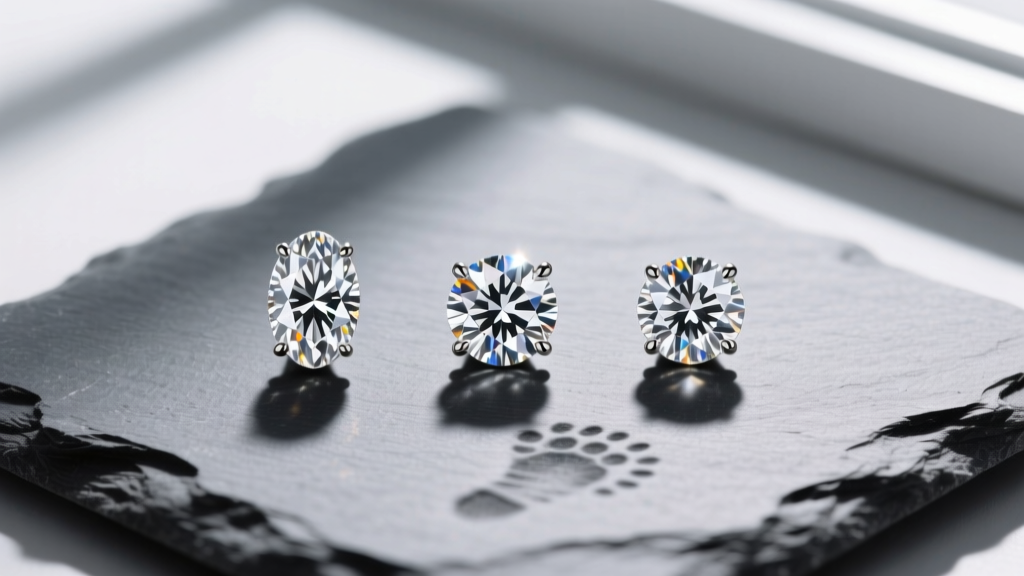
Beyond shape, the physical cut quality dictates how large a diamond appears. This is known as the stone's "spread." Some cutters intentionally cut diamonds shallow to increase the surface area (the spread) so a 0.50-carat diamond measures 5.8mm, mimicking a 0.70-carat stone. However, this is a trap for beginners. A shallow cut causes light to leak out of the bottom of the stone, resulting in a dull, glassy appearance lacking the signature diamond sparkle.
To ensure your earrings are both beautiful and proportionate, always prioritize cut grade over marginal size gains. The Gemological Institute of America (GIA) recommends sticking to "Excellent" or "Very Good" cut grades for round brilliants. A perfectly cut 5.15mm diamond will appear significantly brighter and more eye-catching than a poorly cut 5.8mm diamond, making it look larger to the human eye due to its superior light return.
Setting Styles That Maximize Visual Spread
The metal setting holding your diamond plays a massive role in how big the earring looks on your earlobe. Here is how the three most common stud settings affect perceived size:
- The Martini Setting (3-Prong): This is the gold standard for diamond studs. The three-prong design uses minimal metal, allowing maximum light to enter the sides of the diamond. It sits low and flat against the earlobe, preventing the earring from drooping forward, which keeps the diamond facing directly outward for maximum visual impact.
- The Crown Setting (4-Prong): A classic, secure basket setting. It offers excellent protection for the diamond's girdle but introduces slightly more metal, which can visually interrupt the diamond's outline.
- The Bezel Setting: A continuous rim of metal surrounds the diamond. While incredibly secure and modern, a bezel setting actually makes the diamond look slightly smaller because the metal rim covers the outer 0.2mm of the stone's diameter.
- The Halo Setting: If you want the look of a massive diamond on a budget, a halo setting surrounds a 0.50-carat center stone with a ring of micro-pave melee diamonds. This can increase the overall visual footprint of the earring to mimic a 1.5-carat or 2-carat single stone.
What to Expect: Pricing and Quality Grades for Everyday Wear
One of the best secrets in the jewelry industry is that you do not need to pay for top-tier diamond grades when buying earrings. Unlike an engagement ring, which is viewed from a distance of 12 inches and compared directly to other jewelry, earrings are viewed from a conversational distance of 2 to 3 feet.
Expert Sizing & Grading Tip: For 1 CTW diamond studs, you can safely drop your Clarity grade to SI1 or even eye-clean SI2. Inclusions at this grade are entirely invisible from two feet away. Similarly, you can drop the Color grade to G, H, or even I. Once set in yellow or rose gold, the slight warmth of an H-color diamond is completely undetectable, saving you hundreds of dollars.
Estimated Pricing for 1 CTW (0.50ct each) Studs in 2026:
- Natural Diamonds (G Color / VS2 Clarity): $2,500 to $4,500
- Lab-Grown Diamonds (G Color / VS2 Clarity): $600 to $1,200
- Natural Diamonds (H Color / SI1 Clarity): $1,800 to $3,000
Lab-grown diamonds offer the exact same physical, chemical, and optical properties as mined diamonds, making them the smartest choice for buyers who want a larger visual footprint (like upgrading to 2 CTW) without exponentially increasing their budget.
The Hardware: Post Gauge and Backings
Beginners often overlook the metal hardware, but it is critical for how the earring sits on the ear. A 1 CTW pair of studs (weighing roughly 0.2 grams total) is relatively light, but the physical size of the 5.2mm heads can cause them to tilt forward if the post is too thin.
- Post Gauge: Standard earring posts are 20-gauge (0.8mm thick). For 1 CTW studs, 20-gauge is acceptable. However, if you decide to size up to 2 CTW or 3 CTW, you must look for an 18-gauge (1.0mm) or 19-gauge post. Thicker posts provide the structural rigidity needed to keep heavy diamonds pointing straight out rather than drooping toward the floor.
- Backings: Standard friction backs (butterfly backs) rely on tension and can easily be pulled off by hairbrushes or sweaters. For any diamond earring valued over $1,000, always upgrade to screw-backs or locking backs (such as La Pousette backs), which physically lock onto the post and prevent catastrophic loss.
Final Checklist for Buying 1-Carat Studs
Before you finalize your purchase, run through this quick expert checklist to ensure you are getting exactly what you expect:
- Verify the Weight: Confirm the listing says "1 CTW" (0.50 each) or "1 Carat Each" (2.00 total) based on your size preference.
- Check the Millimeters: Ensure the round diamonds measure between 5.1mm and 5.3mm for a 0.50ct stone.
- Prioritize Cut: Never sacrifice GIA Excellent/Very Good cut grades just to get a slightly wider spread.
- Smart Grading: Choose H/SI1 or G/VS2 to maximize your budget without sacrificing visible beauty.
- Secure the Hardware: Opt for 18-gauge posts and screw-backs or locking backs to protect your investment.
By understanding the physical millimeter dimensions and the industry terminology around total carat weight, you can confidently select a pair of diamond studs that offers the perfect balance of brilliance, physical presence, and value for your personal style.


