Diamond Stud Earrings 2 Carat: 2026 Trend & Style Analysis
Explore the 2026 style trends for diamond stud earrings 2 carat. Expert analysis on lab vs. natural, settings, and how to style this luxury anchor piece.

The 2026 Shift: From Vault to Everyday Anchor
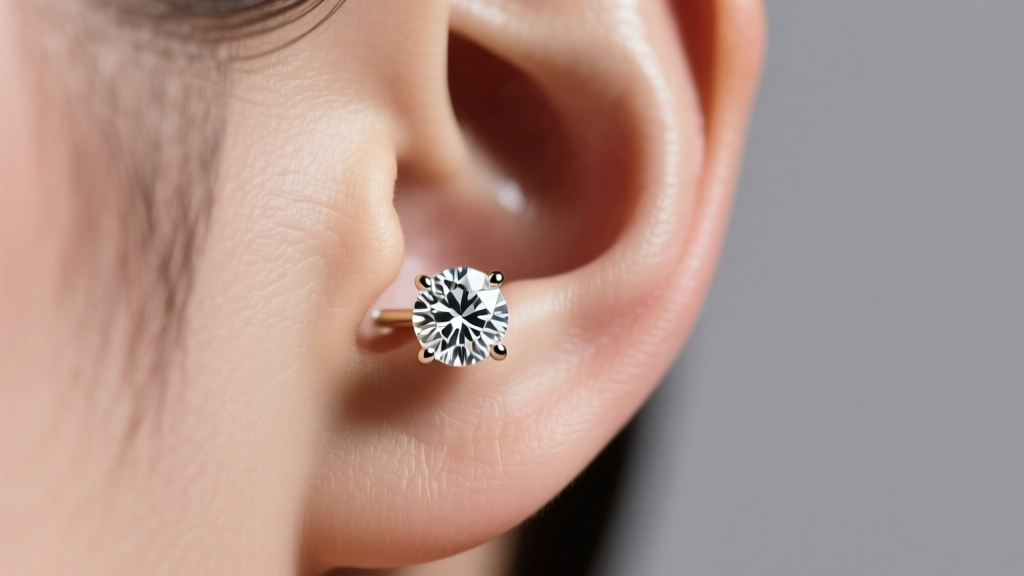
In the evolving landscape of fine jewelry, the diamond stud earrings 2 carat milestone has undergone a radical repositioning. Historically reserved for black-tie events or locked away in vaults, the 2-carat total weight (TW) stud—comprising two 1-carat stones—has emerged in 2026 as the ultimate "anchor piece" for everyday luxury. This shift is driven by the post-pandemic recalibration of personal style, where consumers are prioritizing high-impact, versatile staples over fleeting micro-trends.
According to the GIA Diamond Buying Guide, the modern buyer is highly educated, seeking specific millimeter spreads and optical performance rather than just raw carat weight. A standard 1-carat round brilliant diamond measures approximately 6.5mm in diameter. When worn on the earlobe, this creates a commanding presence that covers a significant portion of the lower lobe without crossing the threshold into "chandelier" territory. In 2026, the trend is "Loud Minimalism"—a single, impeccably cut stone that speaks for itself.
Natural vs. Lab-Grown: The 2-Carat Market Breakdown
The most significant disruption in the diamond stud earrings 2 carat market is the bifurcation between natural and lab-grown stones. Five years ago, a 2ct TW natural diamond stud was the undisputed standard. Today, lab-grown diamonds have captured a massive share of the stud market, fundamentally altering pricing structures and consumer expectations.
| Metric | Natural Diamond (2ct TW) | Lab-Grown Diamond (2ct TW) |
|---|---|---|
| Average Retail Price (G/VS2) | $12,000 - $18,000 | $1,800 - $3,500 |
| Resale Value Retention | 20% - 40% | Negligible (Under 5%) |
| Visual & Chemical Identity | 100% Carbon Crystal | 100% Carbon Crystal |
| Primary Consumer Motivation | Rarity, Heirloom, Investment | Size-maximization, Budget, Ethics |
For the style-focused consumer in 2026, lab-grown diamonds offer the ability to hit the 2-carat visual milestone without the five-figure price tag, freeing up capital for complementary ear stack pieces. However, natural diamond purists continue to value the geological rarity and heirloom permanence of mined stones.
Setting Mechanics: Why Weight Matters for 2-Carat Studs
When scaling up to diamond stud earrings 2 carat TW, structural engineering becomes just as critical as gemology. A 1-carat diamond weighs exactly 0.2 grams. While this sounds negligible, the leverage exerted on a standard earlobe piercing by a 6.5mm stone can cause severe drooping if the setting is poorly designed.
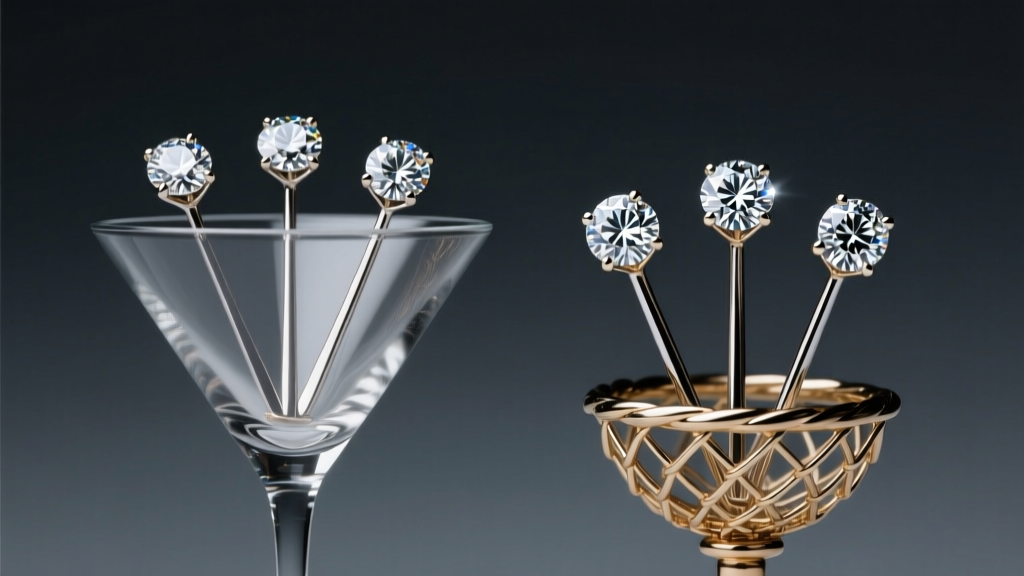
Martini vs. Basket Settings
The martini setting (3-prong) is a favorite for studs because its V-shaped profile sits flush against the earlobe and allows maximum light entry from the sides. However, for 1-carat stones, the high center of gravity can cause the earring to tilt forward, especially on relaxed or stretched earlobes. Conversely, the basket setting (4-prong) features a wider, flat base that distributes the weight more evenly. For 2ct TW studs, a low-profile basket setting is highly recommended to maintain a forward-facing angle throughout the day.
The Backing Imperative
Never trust standard friction push-backs with a $10,000+ asset. The grooves on standard posts wear down, and a snagged sweater can easily pull the earring out. For 2-carat studs, you must upgrade to screw-backs or proprietary locking mechanisms like the La Pousette back, which utilizes a spring-loaded locking cap that clicks securely into place behind the earlobe.
Post Gauge Considerations: Standard earring posts are typically 20-gauge (0.81mm) or 18-gauge (1.02mm). For the added weight of a 1-carat stone per ear, an 18-gauge post provides necessary rigidity to prevent bending. If your piercings were done with standard 20-gauge needles, ensure the jeweler can source or customize an 18-gauge post with a gradual taper to avoid stretching the piercing uncomfortably.
Buying Framework: Where to Compromise on the 4Cs
Maximizing the visual impact of diamond stud earrings 2 carat TW requires strategic compromises on the 4Cs. Because earrings are worn on the periphery of your face and are rarely viewed from a distance closer than two feet, you can optimize your budget without sacrificing perceived beauty.
- Cut (Non-Negotiable): Opt for Excellent or Ideal cut grades only. The cut dictates the light return and scintillation. A poorly cut 1-carat stone will face up smaller and look lifeless.
- Color (Strategic Compromise): While D-F (colorless) grades command a massive premium, the GIA Diamond Color Scale indicates that G-H (near-colorless) stones face up brilliantly white once set in white gold or platinum. The metal reflection masks slight warmth, making G-H the ultimate sweet spot for studs.
- Clarity (Budget Saver): According to GIA Clarity Grading standards, VS2 to SI1 clarity grades are perfectly acceptable for earrings. Inclusions that might be a dealbreaker in an engagement ring are entirely invisible to the naked eye when mounted on an earlobe.
- Fluorescence (The Hidden Discount): Medium to Strong blue fluorescence can cause a slight milky appearance in rare cases, but more often, it makes a G-H color diamond face up whiter in UV-rich environments (like sunlight). Seeking out stones with medium fluorescence can yield a 5-10% discount on natural diamonds without compromising the visual integrity of an earring.
Styling the Anchor: 2026 Ear Stack Configurations
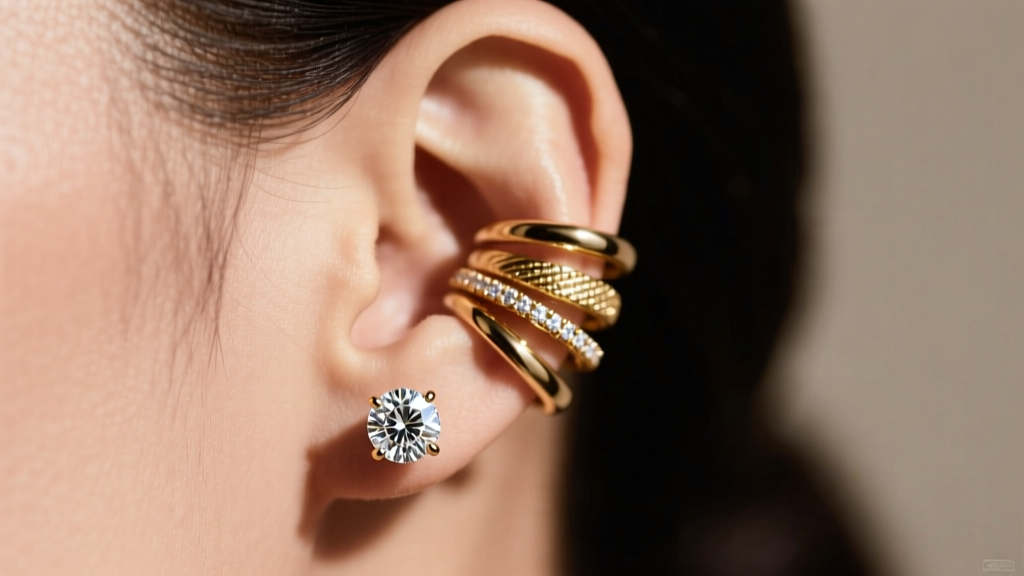
In 2026, the diamond stud is rarely worn in isolation. It serves as the foundational "anchor" for curated ear stacks. The prevailing trend is the "Heavy-Light" contrast, where the substantial 2-carat stud in the primary lobe piercing is balanced by delicate, minimalist pieces in secondary and tertiary piercings.
The Executive Stack
Pair the 2-carat round brilliant stud with a seamless 12mm yellow gold huggie in the second lobe hole, and a subtle 5mm gold ball stud in the third. This configuration bridges the gap between boardroom authority and contemporary style, utilizing mixed metals (white gold for the diamond, yellow gold for the hoops) to add dimensionality.
The Helix Balance
To offset the visual weight of 6.5mm diamonds on the lower lobes, stylists are incorporating structural ear cuffs or flat-back labret studs in the upper helix and flat regions of the ear. This draws the eye upward, creating a harmonious, full-ear aesthetic that feels intentional rather than cluttered.
Final Verdict
The diamond stud earrings 2 carat category has matured from a static, formal accessory into a dynamic cornerstone of modern personal style. Whether you opt for the geological romance of a natural stone or the pragmatic brilliance of a lab-grown equivalent, prioritizing an ideal cut, a low-profile basket setting, and secure locking backs will ensure your investment remains a staple of your wardrobe for decades to come.


