Beginner Guide to Chain Long Earrings: Style and Fit Tips
Discover how to choose, style, and care for chain long earrings. Our beginner guide covers chain types, weight limits, and face-shape matching.

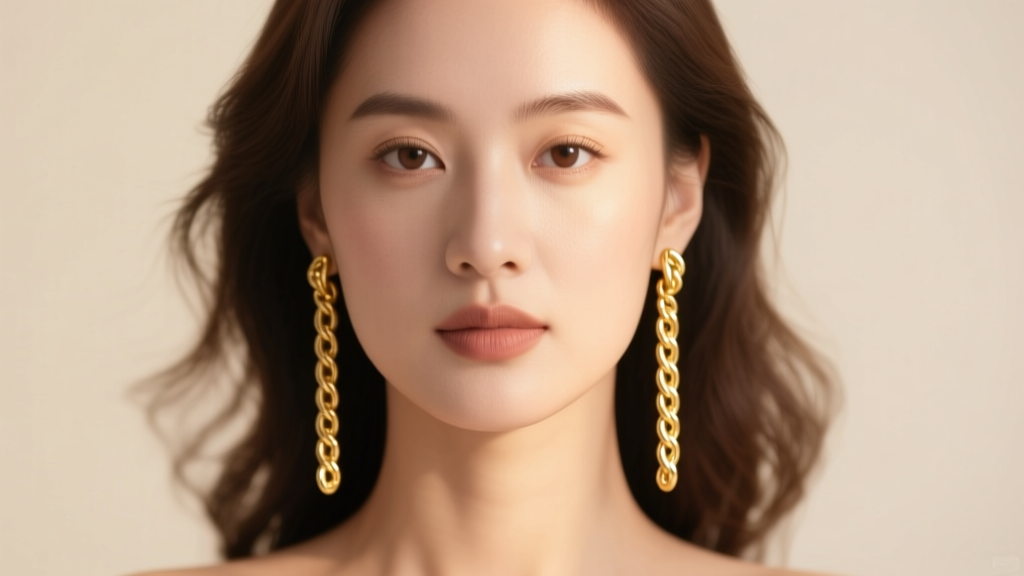
Introduction: The Appeal of Chain Long Earrings
Chain long earrings occupy a unique space in jewelry design, bridging the gap between subtle everyday studs and dramatic, heavy chandelier drops. Their defining characteristic is movement. Unlike rigid dangle earrings that swing as a single solid unit, chain long earrings articulate across dozens of tiny links, catching the light and creating a fluid, kinetic effect. For beginners, however, this flexibility can introduce a few challenges: tangling, snagging, and unexpected earlobe strain.
This comprehensive guide will walk you through the mechanics of selecting the perfect pair. We will explore the structural differences between chain links, the physics of weight distribution on a standard earlobe piercing, and the precise material grades you need to avoid allergic contact dermatitis. Whether you are looking at a minimalist 14k gold threader or an edgy sterling silver lariat, understanding these fundamentals will ensure your earrings look stunning and feel comfortable all day.
Decoding Chain Types: Which Link is Right for You?
Not all chains are created equal. The link structure dictates the earring's durability, its tendency to tangle in your hair, and its overall visual weight. When shopping for chain long earrings, you will typically encounter five primary link styles. Understanding these will help you match the earring to your lifestyle.
| Chain Style | Link Shape | Tangling Risk | Best For |
|---|---|---|---|
| Cable | Oval/Round | High | Classic, minimalist everyday wear |
| Curb | Flattened | Low | Durable, snag-free daily styling |
| Rolo | Thick Round | Medium | Heavier pendants and edgy looks |
| Snake | Smooth Tubular | Very High | Sleek evening wear (handle with care) |
| Figaro | Alternating | Medium | Vintage or masculine-leaning aesthetics |
For beginners, curb chains and rolo chains are the most forgiving. Because curb links are flattened and interlock tightly, they rarely knot. Snake chains, while beautifully fluid and modern, are notorious for catching on fine baby hairs and can permanently kink if bent at a sharp angle.
The Physics of Dangle: Weight, Gauge, and Earlobe Health
One of the most common mistakes beginners make is ignoring the weight of chain long earrings. A delicate-looking 4-inch gold chain can weigh significantly more than a chunky acrylic hoop. According to the Association of Professional Piercers, standard healed earlobes can comfortably support between 7 to 10 grams per earring for extended, all-day wear. Exceeding 15 grams without proper support can lead to micro-tears, lobe stretching, and migration of the piercing fistula.
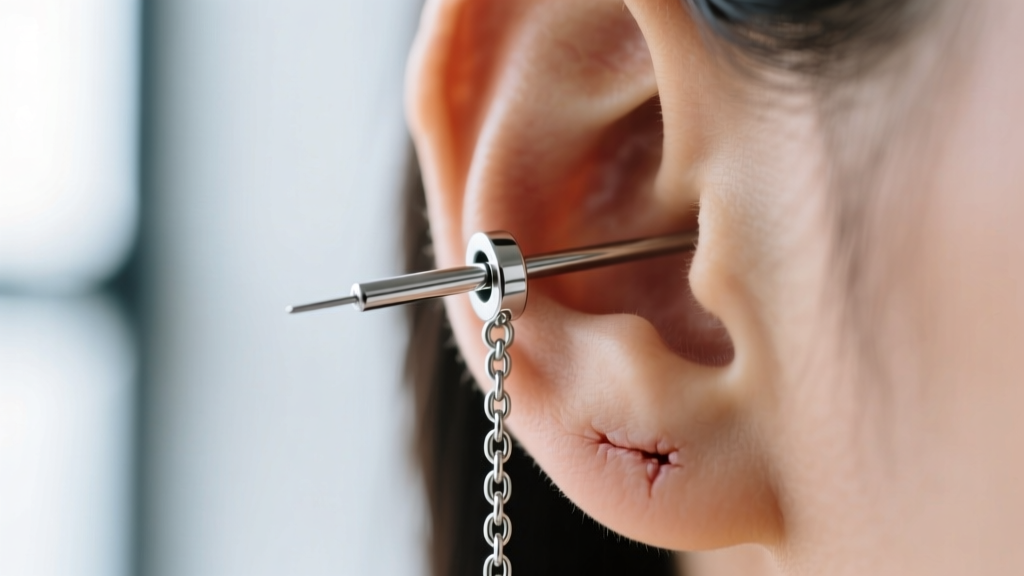
Understanding Gauge and Post Thickness
If you are buying threader-style chain long earrings (where the chain itself pulls through the piercing), gauge size is critical. Standard lobe piercings are typically done at 20G (0.81mm) or 18G (1.02mm). A threader chain must be 22G or a very fine 20G to slide through the fistula without causing friction or trauma. If the chain is too thick, you risk tearing the delicate tissue inside the piercing channel.
Preventing Earlobe Stretching
If you fall in love with a heavier pair of chain long earrings, you must upgrade your earring backs. Standard butterfly friction backs are insufficient for dynamic, heavy chains because the movement creates leverage that pulls the backing off. Instead, use jumbo silicone disc backs or specialized locking earlobe supports (like the brand BlingWraps) that distribute the weight across a wider surface area of the ear's posterior.
Face Shape Pairing Framework
Chain long earrings are incredibly versatile, but their elongating effect can be maximized by pairing the correct length and volume with your specific face shape. Use this framework to find your most flattering proportions:
- Round Faces: Opt for linear, unembellished chains that drop at least 3 inches below the earlobe. The vertical line creates an optical illusion that lengthens the face and sharpens the jawline. Avoid chains with large, spherical beads at the ends.
- Square Faces: Soften strong jawlines with chains that feature gentle movement or teardrop-shaped terminations. A 2.5-inch rolo chain ending in a small, smooth pearl or rounded gemstone balances angular features beautifully.
- Heart-Shaped Faces: To balance a narrower chin, choose chain long earrings that feature a slight flare or wider visual weight at the bottom. Medium lengths (around 2 inches) that sit right at the jawline work best to add width where the face naturally tapers.
- Oval Faces: The universal canvas. You can pull off ultra-long lariat styles, asymmetrical chain drops, and heavily layered threaders without disrupting your natural facial harmony.
Tangling and Snagging: Troubleshooting Common Issues
The bane of any chain jewelry enthusiast is the inevitable knot. Chain long earrings are particularly prone to tangling with loose hair, sweater threads, and even your own necklaces.
Pro Tip: If your threader chain knots up, never pull it tight. Lay the earring flat on a hard surface, apply a microscopic drop of baby oil or olive oil to the knot, and use two fine sewing needles to gently tease the links apart from the center outward.
To prevent snagging on clothing, avoid wearing cable or snake chain long earrings with loose-knit sweaters or lace fabrics. The tiny gaps between the links act like micro-hooks, catching on textile loops and potentially snapping the delicate metal. For winter wardrobes, switch to thicker, soldered curb chains or opt for huggie-style earrings until you change into smoother fabrics.
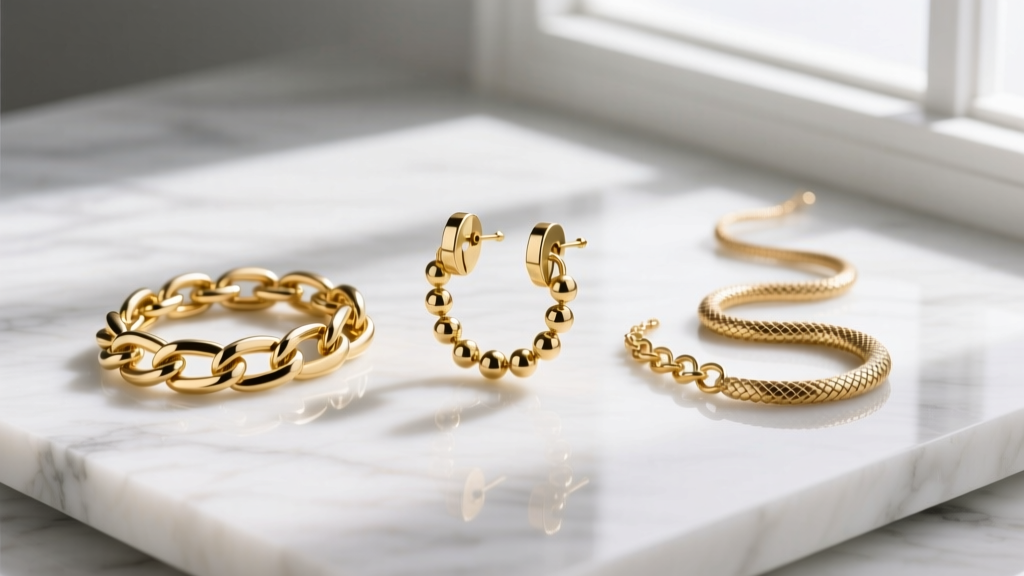
Material Grades: Avoiding Allergic Reactions
Because chain long earrings move constantly, the metal rubs against the skin of your neck, jaw, and the inside of your piercing. This friction makes material purity non-negotiable, especially for those with sensitive skin or nickel allergies.
According to metallurgical guidelines referenced by the Gemological Institute of America, you should prioritize the following materials for the posts and links that touch your skin:
- Implant-Grade Titanium (ASTM F136): The gold standard for sensitive piercings. It is completely nickel-free, lightweight, and highly resistant to corrosion from sweat and cosmetics.
- 14k or 18k Solid Gold: Ensure it is solid, not plated. 14k offers the best balance of durability and purity for thin chain links, which can bend if the gold is too soft (like 24k).
- Niobium: A highly biocompatible, hypoallergenic metal that can be anodized into vibrant colors, though less common in fine chain weaves.
Avoid: 'Gold-plated brass' or 'surgical steel' (which often contains nickel). The constant friction of a long chain will quickly wear away thin plating, exposing your skin to base metals that cause green discoloration and contact dermatitis.
Care and Maintenance for Longevity
Proper storage is just as important as material selection. Never toss chain long earrings into a communal jewelry box. The links will inevitably weave through other pieces, creating a frustrating, time-consuming mess. Store each pair individually in a small, airtight ziplock bag or a dedicated felt-lined compartment. When cleaning, avoid ultrasonic cleaners for snake or herringbone chains, as the high-frequency vibrations can weaken the interlocking joints. Instead, soak them in warm water with a drop of mild dish soap, gently agitate, and pat dry with a lint-free microfiber cloth. By respecting the mechanics and materials of your chain long earrings, you ensure they remain a fluid, elegant staple in your rotation for years to come.


