Steampunk Stud Earrings: The Ultimate Metal & Gear Buying Guide
Discover what to look for when buying steampunk stud earrings. Learn about hypoallergenic metals, gear mechanisms, gauge sizes, and styling tips.

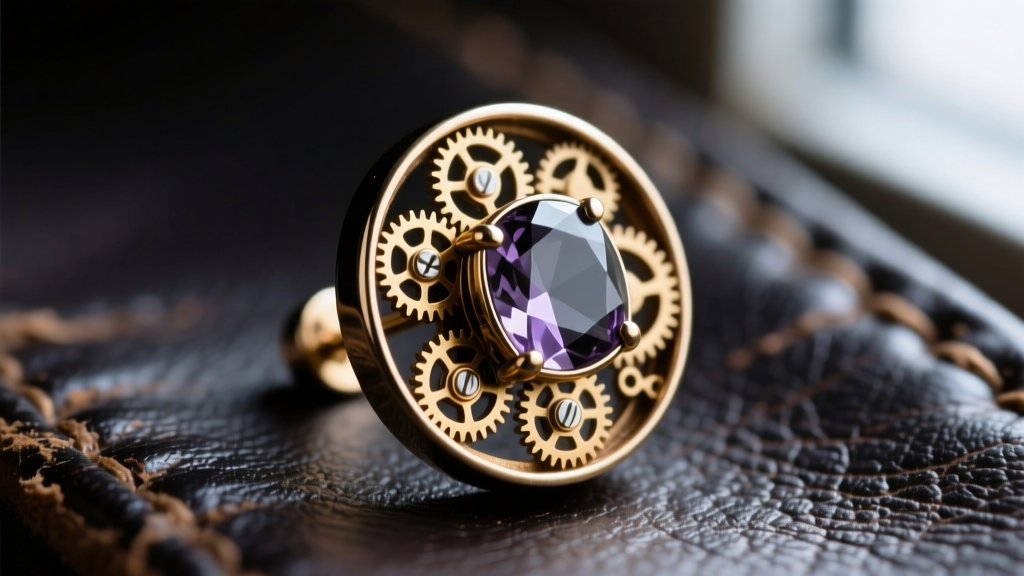
The Anatomy of Authentic Steampunk Studs
Steampunk jewelry has evolved significantly over the last decade. What was once a niche subculture relying on heavy, DIY-modified hardware has matured into a sophisticated horological art form. As we navigate the jewelry market in 2026, steampunk stud earrings are no longer just glued-together watch parts; they are precision-engineered micro-sculptures. However, this complexity introduces unique buying challenges. From metallurgical compatibility to mechanical failure modes, selecting the right pair requires a discerning eye.
This comprehensive buying guide dissects the critical components of steampunk studs, ensuring your next purchase is both aesthetically striking and biologically safe for your piercings.
Base Metals vs. Plating: Avoiding the Green Ear
The most common pitfall when purchasing industrial or Victorian-inspired jewelry is the base metal. The steampunk aesthetic relies heavily on the warm, antique hues of brass, copper, and bronze. Unfortunately, raw brass (an alloy of copper and zinc) and copper are highly reactive. When exposed to the pH levels of human skin and sebum, they oxidize rapidly, leading to the dreaded "green ear" effect and, more seriously, contact dermatitis.
The Modern Standard: PVD Coated Titanium
Top-tier jewelry designers have moved away from cheap electroplating, which flakes and exposes the reactive base metal beneath. Instead, look for Physical Vapor Deposition (PVD) coating applied over an ASTM F136 implant-grade titanium core. PVD is a vacuum-deposition process that bonds brass or copper-colored molecular layers to the titanium at an atomic level. This provides the authentic Victorian brass aesthetic while remaining 100% hypoallergenic and impervious to tarnish.
"For any body jewelry, especially in cartilage or unhealed lobes, the Association of Professional Piercers strongly recommends implant-grade titanium or 316L stainless steel to prevent allergic reactions and rejection." — Association of Professional Piercers (APP)
Sizing, Gauges, and Piercing Compatibility
Steampunk studs are inherently front-heavy due to the layered gears, cogs, and gemstone settings. This weight distribution fundamentally changes how the earring sits in your piercing.
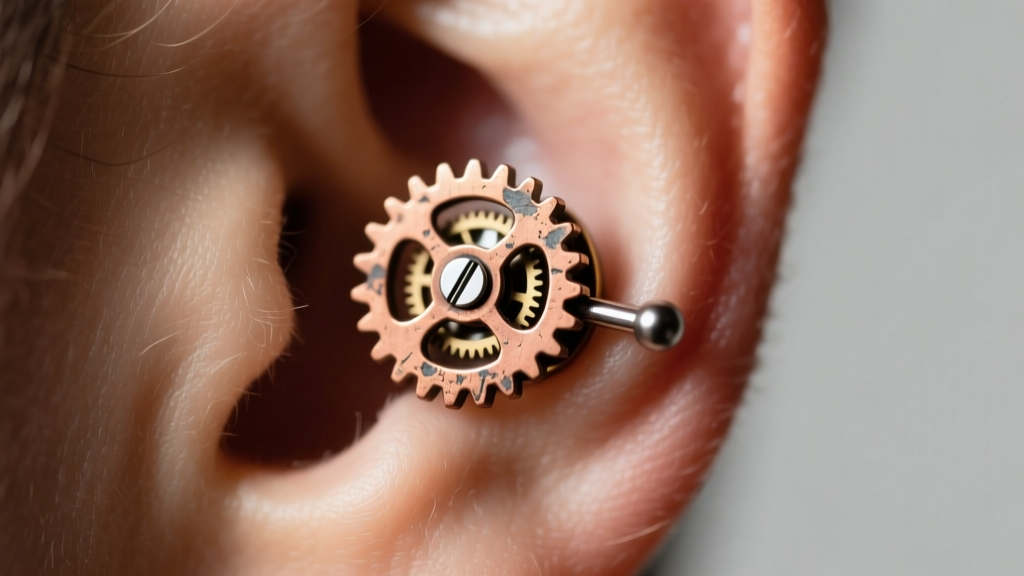
Gauge Thickness and Post Length
- Standard Lobe (20G - 0.81mm / 18G - 1.02mm): Most commercial steampunk studs are cast at 20G. However, because the front cluster is heavy, a thicker 18G post is highly recommended to prevent the "cheese-cutter effect," where a thin wire slowly migrates downward through the lobe tissue over time.
- Cartilage / Helix (16G - 1.29mm): If you are adapting a steampunk stud for a cartilage piercing, you must ensure the post is 16G and the length accommodates the thicker tissue (usually 5/16" or 8mm).
The Failure Mode of Friction Backs
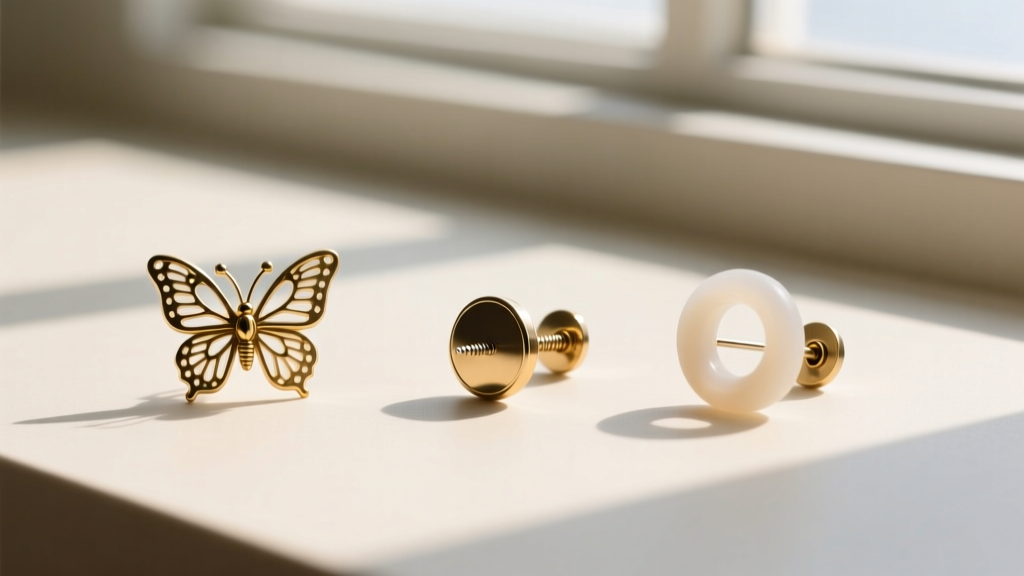
Never use standard butterfly friction backs for heavy clockwork studs. The weight of the gears will cause the front of the earring to droop, pressing the mechanical elements awkwardly against the side of your face and stretching the piercing hole. The solution is an internally threaded flat-back labret post. The flat disc rests flush against the back of the ear, providing a stable, perpendicular anchor that keeps the intricate gear work facing strictly forward.
Mechanical Elements: Moving Gears vs. Static Casts
When evaluating the visual centerpiece of steampunk stud earrings, you will encounter two distinct manufacturing methods: static casting and horological upcycling.
| Feature | Static Cast (Zinc Alloy) | Horological Upcycling (Real Watch Parts) |
|---|---|---|
| Visual Depth | Flat, uniform, lacks micro-details | Multi-layered, authentic bevels and pivots |
| Movement | None (solid piece) | Often features kinetic, spinning micro-gears |
| Weight | Heavy, dense | Lightweight, delicate |
| Price Range | $15 - $35 | $60 - $150+ |
Authentic pieces often utilize salvaged components from vintage mechanical watch movements (such as ETA or Miyota calibers). These micro-gears, known as pinions and escape wheels, offer a level of intricate detail that a mold simply cannot replicate. Furthermore, the 2026 trend of sustainable jewelry makes upcycled horological parts highly desirable.
Snag Hazards and Edge Finishing
Real watch gears have microscopic teeth designed to interlock. If a jeweler does not properly seal or blunt these edges, your steampunk studs will become magnets for snagging on lace collars, knit scarves, and long hair. Always inspect product macro-photography to ensure the outer perimeter of the gear cluster is encased in a smooth bezel or a soldered border ring.
Gemstone Accents in Steampunk Design
While bare metal is a staple of the genre, the incorporation of gemstones elevates a steampunk stud from a mere mechanical replica to a piece of Victorian high jewelry. The key is selecting stones that match the moody, industrial palette of the aesthetic.
- Smoky Quartz: Its translucent, brownish-grey hue perfectly mimics the look of smoked glass or aged copper patina. It is a staple in high-end steampunk designs.
- Garnet (Almandine): Deep, blood-red garnets provide a striking contrast to brass and gold tones, evoking the velvet and mahogany interiors of Victorian parlors.
- Peridot & Citrine: For a lighter, "sunshine and brass" aesthetic, these golden-green and amber stones capture the warmth of polished metal.
According to the Gemological Institute of America (GIA), stones like smoky quartz and garnet are not only historically accurate to the 19th-century jewelry boom but also possess the durability (Mohs hardness of 7 to 7.5) required for everyday wear in earring settings where accidental impacts are common.
Expert Verdict: What to Buy and What to Avoid
Investing in high-quality steampunk stud earrings means prioritizing structural integrity and skin safety over fast-fashion aesthetics. Here is your final checklist before checking out:
- Demand Implant-Grade Cores: Accept nothing less than ASTM F136 titanium or 316L surgical steel, even if the outer layer is PVD-coated brass.
- Upgrade the Backing: Discard friction backs immediately. Purchase 16G or 18G threaded flat-back labret posts to support the heavy gear clusters.
- Verify the Gears: Look for multi-dimensional layering and authentic horological parts rather than flat, single-piece zinc casts.
- Check the Bezels: Ensure all sharp gear teeth are contained within a smooth outer boundary to prevent wardrobe snags.
By focusing on advanced metallurgy and authentic micro-mechanics, you can curate a steampunk jewelry collection that is as resilient and precise as the clockwork it celebrates.


