The Ultimate Guide to Earrings for 2 Piercings: Styling & Sizing
Discover how to choose and style earrings for 2 piercings. Learn gauge sizes, metal grades, and pairing formulas for a perfectly curated double lobe.

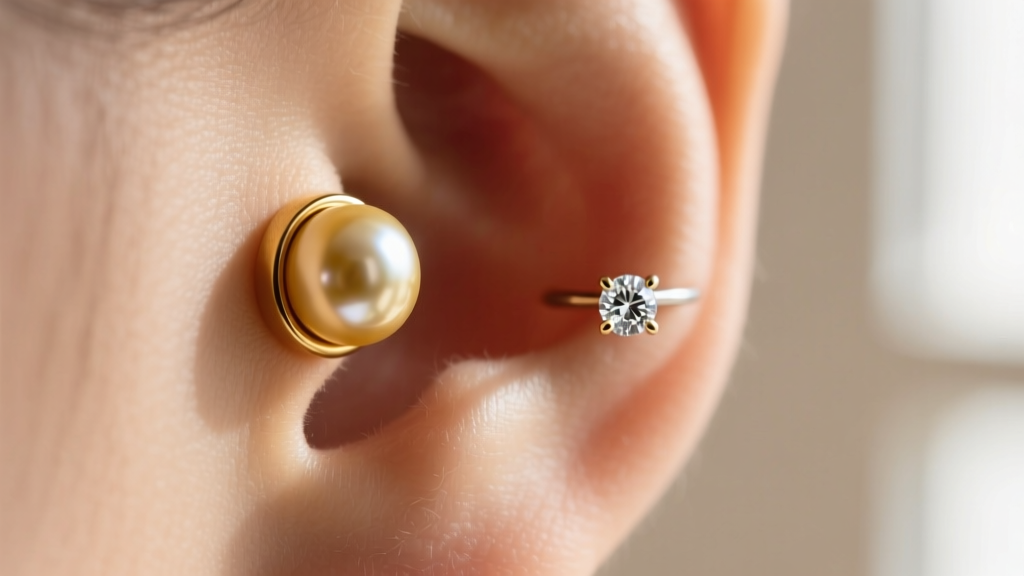
Stepping into the world of curated ears can feel overwhelming, especially when you are transitioning from a single standard stud to a multi-piercing setup. Having a double lobe piercing is the perfect canvas for self-expression, offering just enough real estate to play with proportions, textures, and metals without the immediate commitment of cartilage piercings. However, choosing the right earrings for 2 piercings requires more than just picking two pretty studs. You must account for anatomical spacing, jewelry gauge, post lengths, and material safety to ensure your lobes remain healthy and your aesthetic remains cohesive.
In this beginner-friendly explainer, we will break down the exact metrics, material grades, and styling formulas you need to master the double-lobe curation. Whether your piercings are freshly healed or decades old, these professional guidelines will elevate your jewelry game.
The Anatomy of a Double Piercing Setup
Before buying new jewelry, you need to understand the physical constraints of your specific ear anatomy. The standard distance between a first and second lobe piercing typically ranges from 6mm to 8mm. This spacing is the most critical factor when selecting earrings for 2 piercings because it dictates the maximum diameter of your jewelry.
If your piercings were done with a piercing gun, they are often placed too close together—sometimes less than 5mm apart. In these cases, wearing two standard 6mm studs will result in the jewelry overlapping, causing friction, trapping moisture, and creating an environment ripe for bacterial growth. If you have tight spacing, your first hole can accommodate a 5mm to 6mm stud, but your second hole must be reserved for micro-studs (3mm to 4mm) or ultra-thin huggies.
Understanding Gauge and Post Length
Gauge refers to the thickness of the metal post. Most commercial, mall-kiosk earrings are 20-gauge (0.81mm) or 18-gauge (1.02mm). However, professional piercers typically use a 16-gauge (1.29mm) or 14-gauge (1.63mm) needle for lobes to provide better stability and reduce the 'cheese-cutter effect' (where thin wire slowly migrates through the tissue). Always check your gauge before buying; forcing a 20G post into a 16G hole can cause the tissue to shrink around the thinner wire, making future upsizing painful.
Post length is equally vital. A standard lobe requires a 6mm (1/4 inch) post. If you have thicker lobes, or if the piercing is still experiencing minor swelling, you will need an 8mm (5/16 inch) post to prevent the backing from embedding into your skin.
Material Grades: What to Wear in Healing vs. Healed Lobes
When shopping for earrings for 2 piercings, the metal composition is non-negotiable. The jewelry market is flooded with misleading terms like 'hypoallergenic' or 'surgical steel,' which often harbor hidden irritants.
- Implant-Grade Titanium (ASTM F136): The gold standard for fresh or irritated piercings. It is completely nickel-free, lightweight, and highly biocompatible.
- 14k or 18k Solid Gold: Excellent for healed piercings, provided it is alloyed without nickel. Avoid gold-plated or gold-filled jewelry, as the base metal (usually brass or copper) will eventually leach through and cause contact dermatitis.
- Niobium: A highly reactive metal that is anodized to create vibrant colors without using toxic paints or platings. Safe for sensitive ears.
- 316L Surgical Steel: Despite the name, this contains up to 10% nickel. According to the National Center for Biotechnology Information (NCBI), nickel is the leading cause of contact dermatitis in jewelry. Avoid this for fresh piercings or if you have sensitive skin.
For a comprehensive breakdown of safe metals, the Association of Professional Piercers (APP) strongly recommends sticking to implant-grade materials to prevent allergic reactions and delayed healing.
The Beginner’s Pairing Formula for Earrings for 2 Piercings
Styling two piercings is all about creating a visual hierarchy. You want a 'Focal' piece that draws the eye, supported by a 'Satellite' piece that complements without competing. Here is a data-driven matrix to help you pair your earrings flawlessly.
| Style Archetype | First Hole (Focal) | Second Hole (Satellite) | Best For Spacing |
|---|---|---|---|
| The Classic | 6mm Pearl or Bezel Diamond | 3mm Micro Stud or Tiny Hoop | Standard (6-8mm) |
| The Edge | 12mm Chunky Huggie | 4mm Threadless Spike | Wide (8mm+) |
| The Minimalist | 5mm Flat-Back Gold Disc | 2mm Flush-Set Diamond | Tight (Under 6mm) |
| The Statement | Small Drop Earring | Empty or 2mm Micro Stud | Standard (6-8mm) |
Notice how the second hole almost always features a smaller, less obtrusive piece. This prevents the ear from looking cluttered and ensures the jewelry does not physically clash when you move or lie down.
Common Beginner Mistakes and How to Avoid Them
Even with the best intentions, beginners often make structural errors when curating their lobes. Avoid these three critical failure modes:
1. Relying on Butterfly Backs
Standard push-on butterfly backs are notorious for trapping dead skin, soap residue, and bacteria against the earlobe. Furthermore, the thin posts often bend, causing the earring to sit at an awkward angle. Upgrade to flat-back labrets. These feature a flat disc that rests flush against the inside of your lobe, making them incredibly comfortable for sleeping and significantly more hygienic.
2. Ignoring Threading Types
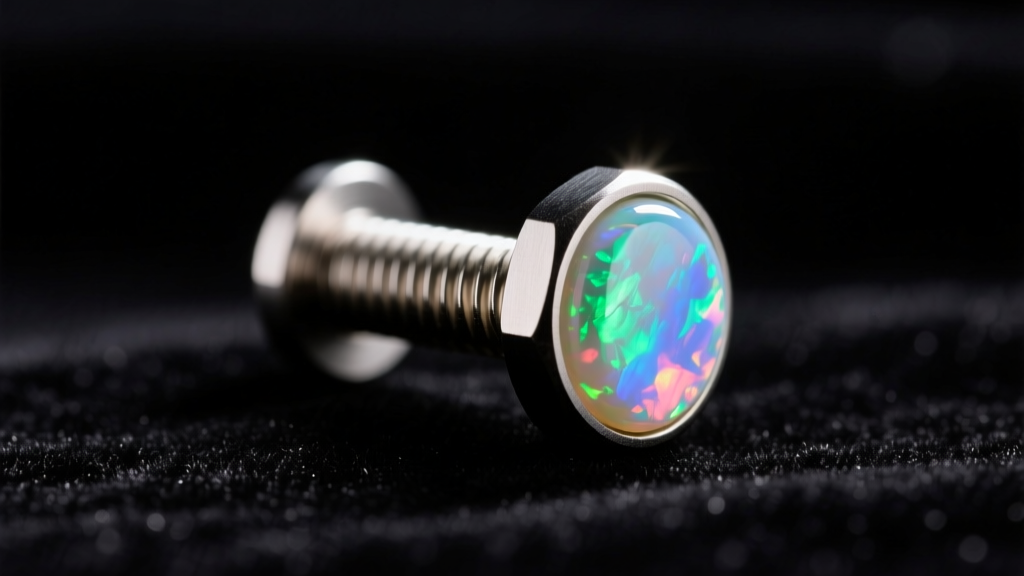
If you are buying high-end body jewelry, you will encounter 'internally threaded' or 'threadless' (press-fit) options. Never buy 'externally threaded' jewelry, where the screw pattern is on the post itself. Forcing those sharp threads through your piercing tears the delicate fistula (the skin tube inside the hole). Threadless jewelry uses a slight bend in the pin to create tension, offering the most secure and damage-free fit available.
3. Overloading the Second Hole
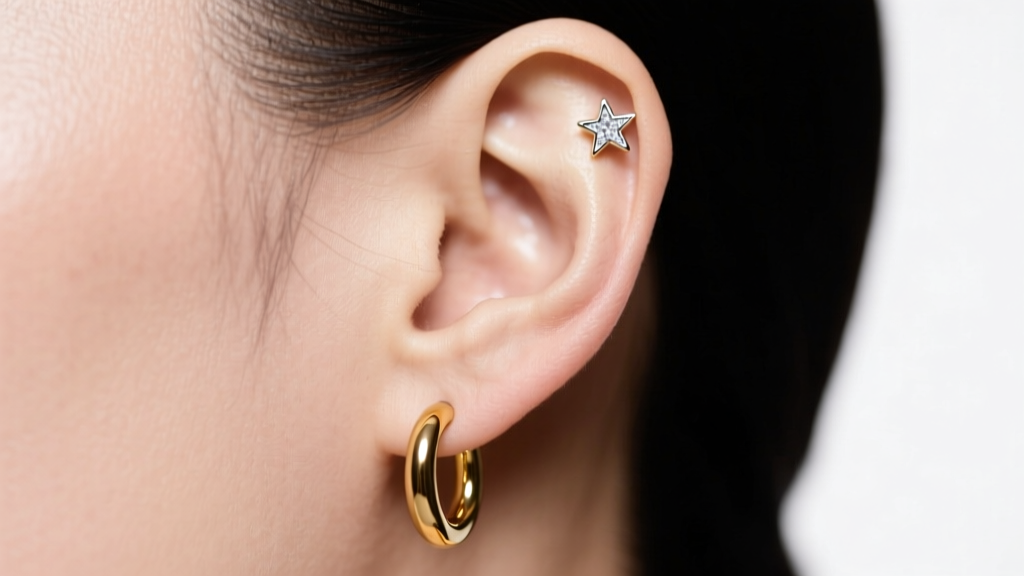
Because the second piercing is usually slightly higher and angled differently than the first, hanging heavy dangles or large hoops from it can cause migration over time. Reserve dangles and heavier pieces exclusively for the primary, lower lobe piercing, which has a thicker tissue base to support the weight.
Curated Brand Recommendations and Pricing
To help you start your collection, here are three reputable brands that cater to double-lobe styling, categorized by budget and expertise level:
- BVLA (Body Vision Los Angeles): The pinnacle of fine body jewelry. They specialize in 14k/18k solid gold and threadless ends. Pricing: $80 - $400+ per piece. Best for those who want lifetime heirloom pieces and have access to a professional piercer for installation.
- Maria Tash: Famous for popularizing the 'curated ear' aesthetic. They offer excellent lightweight huggies, invisible-set diamonds, and specialized forward-facing studs. Pricing: $120 - $600. Best for luxury shoppers who want high-end styling with retail accessibility.
- Mejuri or Gorjana: Great entry points for 14k solid gold and gold vermeil options. While not strictly 'body jewelry' brands, their small studs and huggies are perfect for fully healed second piercings on a budget. Pricing: $40 - $150.
Expert Tip: If you are buying flat-back labrets online, buy a 'fitting kit' first. These kits include 3 or 4 different post lengths (e.g., 5mm, 6mm, 8mm) for a low cost, allowing you to find your exact anatomical measurement before investing in expensive gemstone ends.
Final Thoughts on Building Your Ear Curations
Mastering the art of styling earrings for 2 piercings is a journey of understanding your unique anatomy and respecting the biology of your skin. By prioritizing implant-grade materials, upgrading to flat-back posts, and utilizing the focal-satellite pairing formula, you can create a curated look that is as comfortable as it is stunning. Take your time, measure your spacing, and invest in quality over quantity. Your lobes will thank you.


