2026 Gift Guide: Turquoise Earrings Men Actually Want
Discover the 2026 gift guide for turquoise earrings men love. Learn stone grading, gauge specs, and occasion matching for the perfect jewelry gift.


The Renaissance of Men's Turquoise Jewelry
When curating a jewelry gift guide, finding pieces that balance bold character with everyday wearability is a persistent challenge. This is precisely why turquoise earrings men increasingly seek out have become a cornerstone of contemporary menswear gifting. Far from being relegated to vintage Southwestern tourist shops, high-grade turquoise has experienced a massive resurgence in luxury and streetwear circles alike. Whether you are shopping for a subtle lobe stud or a striking cartilage shield, understanding the gemological and metallurgical nuances of this stone is critical to selecting a gift that will actually be worn and cherished.
According to the Gemological Institute of America (GIA), turquoise has been prized for millennia, but modern lapidary techniques and ethical sourcing have elevated it to a premium status in men's fine jewelry. Gifting turquoise is no longer just about the color; it is about the matrix, the origin, and the craftsmanship of the setting.
Decoding the Stone: A Buyer’s Matrix for Gifting
Not all turquoise is created equal. The market is flooded with reconstituted 'block' turquoise that lacks value and longevity. If you are gifting these earrings, you must understand the grading and treatment spectrum to ensure you are paying for genuine quality.
| Turquoise Type | Visual Profile & Matrix | Treatment Status | Estimated Price Range (Studs) |
|---|---|---|---|
| Sleeping Beauty | Uniform sky blue, little to no matrix | Often stabilized for durability | $80 - $250 |
| Kingman | Deep blue to green, striking black/brown webbed matrix | Natural or lightly stabilized | $150 - $400 |
| Persian (Neyshabur) | Vibrant robin's egg blue, high clarity | Often completely natural (untreated) | $300 - $800+ |
| Reconstituted (Block) | Opaque, uniform, lacks natural depth | Crushed dust mixed with epoxy/resin | $20 - $50 |
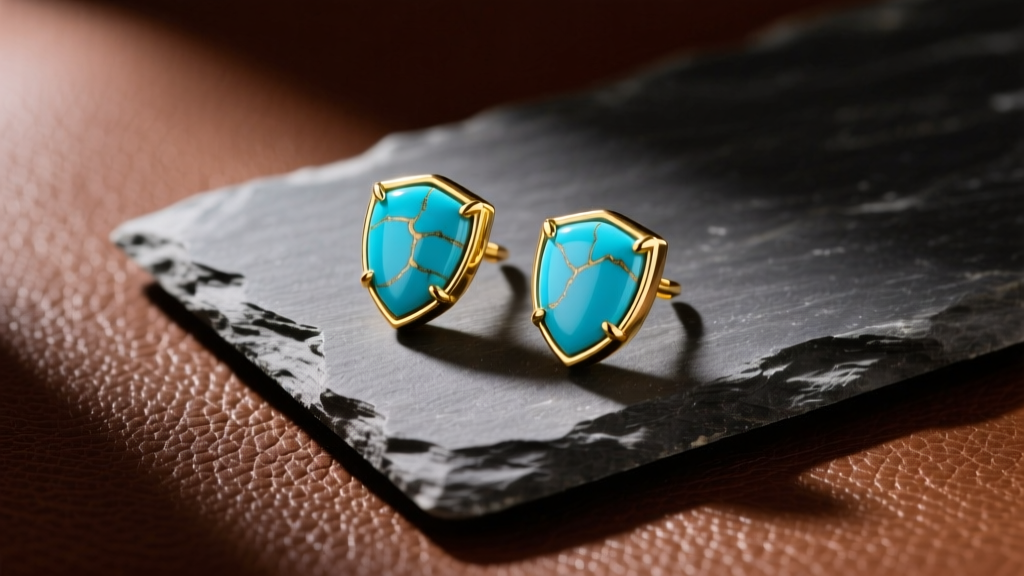
For a meaningful gift, completely avoid reconstituted turquoise. The American Gem Society notes that stabilized turquoise (where a clear epoxy is forced into the porous stone under pressure) is an industry-standard practice that enhances durability without faking the stone's origin. However, natural, untreated high-grade Persian or Kingman turquoise represents the pinnacle of luxury gifting.
Occasion Matching: Which Style Fits His Milestone?
The style of the earring dictates its appropriateness for specific life events. Here is a framework for matching the earring silhouette to the occasion.
Graduation & Career Milestones: The Minimalist Stud
For a recent graduate or someone entering a conservative corporate environment, subtlety is key. A 4mm to 6mm bezel-set turquoise stud in 14k white gold or platinum offers a refined pop of color that doesn't distract. The bezel setting is crucial here; it protects the edges of the cabochon from chipping against desks or steering wheels, a common failure mode for prong-set turquoise.
Anniversaries & Bold Personalities: The Shield or Drop
If he has an established personal style or works in a creative field, consider a turquoise shield earring or a moderate drop. Shields (often featuring intricate Navajo silverwork like stamping or repoussé) make a powerful statement. When gifting a drop earring, ensure the drop length does not exceed 1.5 inches to maintain a masculine, structured silhouette rather than a bohemian dangle.
The Fashion-Forward Creative: Cartilage & Huggies
For the man with multiple piercings, a turquoise-inlaid titanium huggie or a flat-back cartilage labret is an exceptional gift. These pieces cater to the modern 'curated ear' trend and allow for mixing and matching with plain metal rings.
Artisan Craftsmanship vs. Mass Production
When investing in high-end turquoise earrings, the setting is just as important as the stone. Authentic Native American silversmithing—particularly from Navajo, Zuni, and Hopi artisans—employs techniques that mass-market brands simply cannot replicate. Zuni needlepoint and petit point styles feature meticulously hand-cut, tiny turquoise cabochons set in delicate silver bezels. These are masterpieces of lapidary art and make incredible anniversary gifts. Conversely, Hopi overlay technique involves soldering two sheets of silver together, with the top sheet featuring intricate cut-out designs that reveal an oxidized, textured bottom layer, often accented with a single, striking turquoise cabochon. If you are purchasing artisan pieces, always look for the artist's hallmark stamped into the silver, which guarantees authenticity and significantly increases the piece's long-term value.
Furthermore, be wary of the 'Zachery treatment.' Developed by electrical engineer James Zachery in the 1990s, this proprietary method enhances the color and reduces the porosity of turquoise without using traditional polymers or epoxies. While it produces a beautiful, durable stone that tests as natural turquoise in standard gemological labs, purists and high-end collectors often prefer untreated stones. If you are gifting to a serious jewelry collector, transparency about any Zachery or epoxy stabilization is paramount.
Metallurgy and Gauge Specifications: The Technical Details
A beautiful stone will be ruined by a poor metal setting or an incorrectly sized post. Pay close attention to these technical specifications when browsing:
- Metal Pairings: Sterling silver (925) is the traditional and most popular pairing, offering a cool contrast to the warm blue/green stone. However, silver tarnishes. For a low-maintenance gift, opt for 14k or 18k solid gold. If he has sensitive skin or a fresh piercing, you must select implant-grade titanium (ASTM F136), which is completely nickel-free and biocompatible.
- Gauge Sizes: Standard lobe piercings are typically 20-gauge (0.8mm) or 18-gauge (1.0mm). If you are buying a cartilage piece, the standard is usually 16-gauge (1.2mm). Buying the wrong gauge will result in the earring either falling out or being impossible to insert without causing tissue trauma.
- Backing Mechanisms: Avoid cheap friction 'butterfly' backs for heavy turquoise stones; they slip off easily. Look for screw-backs, secure latch-backs (for hoops), or flat-back labret posts with internally threaded ends.
Care, Maintenance, and Gifting Presentation
Turquoise is a relatively soft and porous gemstone, ranking between 5 and 6 on the Mohs hardness scale. This means it requires specific care, which you should communicate when gifting.
Pro-Tip for Gifting: Include a small care card with your gift. Remind him to put his earrings on after applying cologne, hairspray, or skincare products, as the chemicals and alcohols can permanently alter the stone's color and degrade the polish.
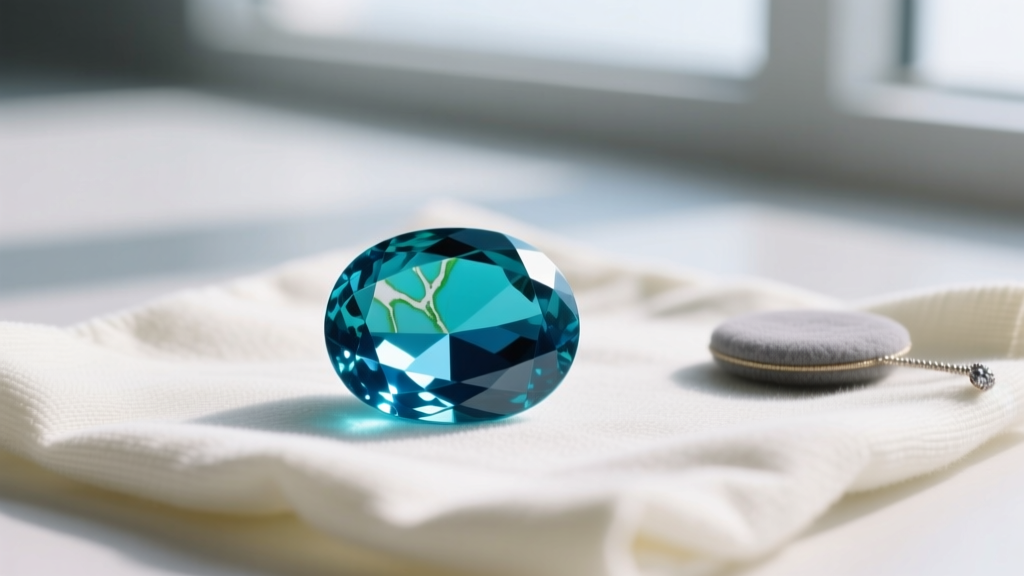
When presenting the gift, avoid standard cardboard boxes. Because turquoise is sensitive to extreme temperature changes and prolonged direct sunlight (which can dehydrate the stone and cause cracking over decades), present the earrings in a lined, climate-neutral leather or wood valet box. Include a dedicated microfiber polishing cloth—never a treated silver-polishing cloth, as the abrasive chemicals will scratch the turquoise cabochon.
Final Gifting Verdict
Choosing the right turquoise earrings men will genuinely appreciate requires moving past generic mall jewelry and focusing on origin, treatment, and structural integrity. By selecting a properly stabilized or natural stone, pairing it with the correct gauge and hypoallergenic metal, and matching the silhouette to his lifestyle, you are gifting a piece of wearable art that bridges heritage craftsmanship with modern masculine style.


