Beginner's Guide to Styling Gold Silver Hoop Earrings
Master the basics of gold silver hoop earrings. Learn about metal grades, gauge sizes, two-tone styling, and tarnish prevention in our beginner guide.

Understanding the Gold Silver Hoop Earring Market
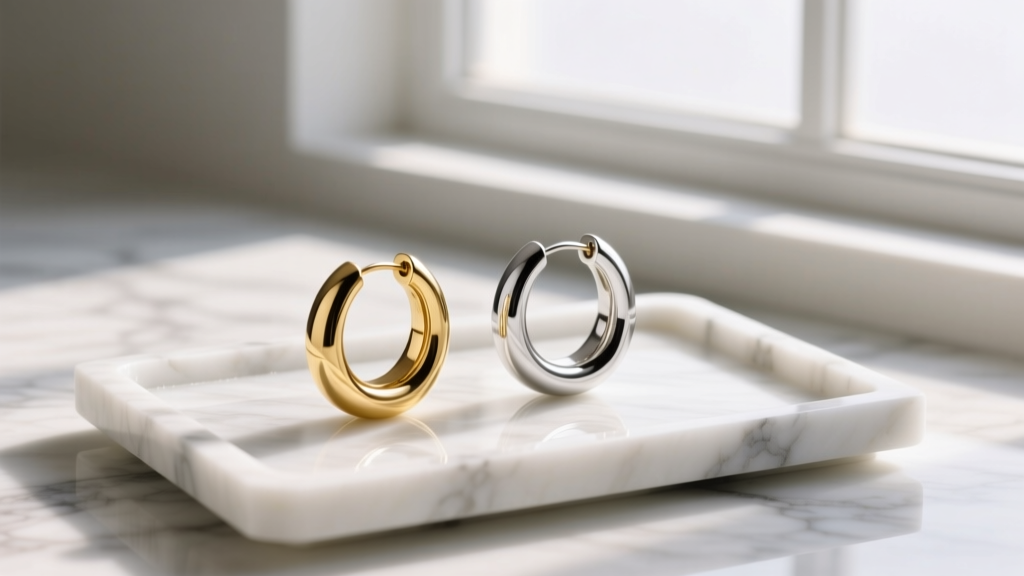
When beginners first explore curated ear styling, they often encounter the search term "gold silver hoop earrings" and wonder what it actually means. In the jewelry industry, this phrase generally refers to one of two things: two-tone hoop earrings that combine both yellow gold and sterling silver in a single piece, or the practice of mixing separate gold and silver hoops across multiple piercings. Both approaches offer incredible versatility, allowing you to bridge the gap between warm and cool-toned jewelry in your existing collection.
However, navigating the metallurgical differences, gauge sizes, and closure mechanisms can be overwhelming. Buying the wrong metal grade can lead to rapid tarnishing, allergic reactions, or mechanical failure of the earring hinge. This guide breaks down the exact specifications you need to know to confidently select, style, and maintain mixed-metal and two-tone hoops.
Metallurgy 101: What You Are Actually Buying
Before purchasing, it is critical to understand the base metals and alloys used in mixed-metal jewelry. Pure gold (24k) and pure silver are too soft for daily-wear hoop earrings, which require structural integrity to maintain their circular shape and secure closures.
Silver Alloys: 925 Sterling vs. Argentium
Standard sterling silver is an alloy containing 92.5% pure silver and 7.5% copper. The copper adds strength but is also the culprit behind silver sulfide tarnish—the black layer that forms when copper reacts with sulfur in the air or your skin's pH. For beginners seeking low-maintenance silver hoops, look for Argentium silver. This modern alloy replaces some of the copper with germanium, making it highly tarnish-resistant and hypoallergenic, though it typically costs 15% to 20% more than standard 925 sterling.
Gold Alloys: 14k vs. 18k
According to the Gemological Institute of America (GIA), 14k gold (58.5% pure gold) is the standard for durable, everyday hoop earrings. It offers excellent scratch resistance. 18k gold (75% pure gold) provides a richer, warmer yellow hue but is softer and more prone to warping if used in thin, continuous wire hoops. If you are buying two-tone hoops, ensure the gold section is solid 14k or 18k, not merely gold-plated over a brass core, which will eventually wear off and expose the base metal.
The Beginner's Buyer Matrix: Grades, Pricing, and Durability
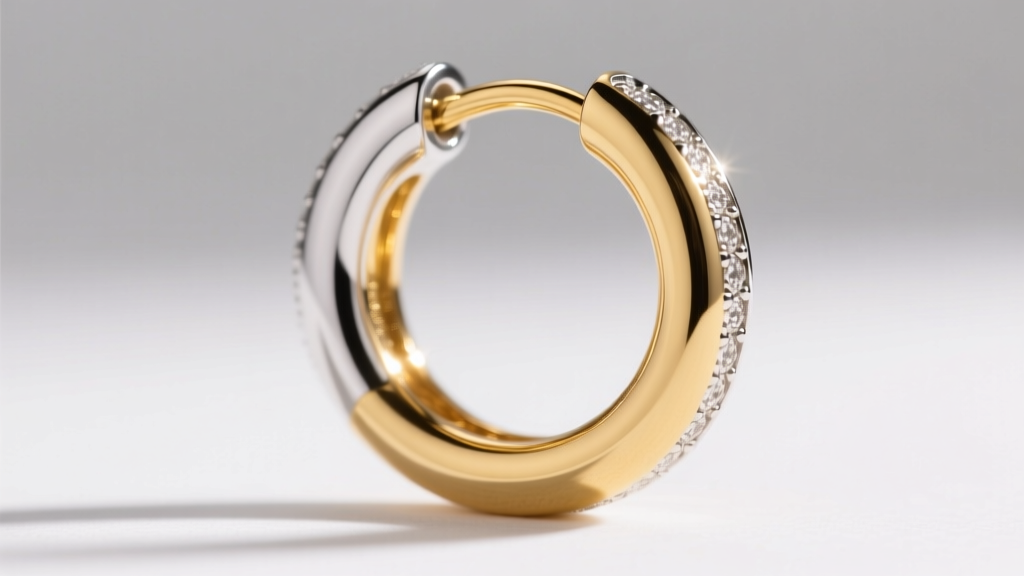
Use this comparison chart to evaluate gold silver hoop earrings based on your budget and lifestyle. Prices reflect standard 15mm to 20mm medium-sized hoops.
| Material Composition | Estimated Price Range | Durability & Lifespan | Best Use Case |
|---|---|---|---|
| Solid 14k Gold + Solid 925 Silver (Soldered) | $180 - $350 | Lifetime; can be polished indefinitely | Everyday wear, sleeping, showering |
| Solid 14k Gold + Argentium Silver | $220 - $400 | Lifetime; highly tarnish-resistant | Low-maintenance daily wear, humid climates |
| Gold Vermeil (14k over 925 Silver) | $60 - $120 | 1 to 3 years before gold layer wears thin | Occasional wear, trend-focused styling |
| Gold-Plated Brass + Silver-Plated Brass | $15 - $40 | Months; high risk of contact dermatitis | Strictly short-term fashion use |
Sizing, Gauges, and Mechanical Failures
A common beginner mistake is ignoring the wire thickness (gauge) and inner diameter (ID) of a hoop, leading to earrings that either pinch the earlobe or droop awkwardly.
Understanding Gauge Sizes
The gauge refers to the thickness of the wire that passes through your piercing. The higher the gauge number, the thinner the wire.
- 20 Gauge (0.81mm): The standard size for most commercial fashion jewelry and standard lobe piercings. Ideal for lightweight, delicate hoops.
- 18 Gauge (1.02mm): Slightly thicker, offering better structural support for medium-sized hoops (15mm-20mm). Excellent for primary lobe piercings that have stretched slightly over time.
- 16 Gauge (1.29mm): The standard for cartilage piercings (helix, tragus, conch). If you are buying hoops for upper ear placements, you must select 16G to avoid the "cheese-cutter effect," where a thin wire slowly migrates through the cartilage.
Closure Mechanisms and Failure Modes
The closure dictates the security and longevity of your gold silver hoop earrings. Continuous hoops rely on the tension of the wire snapping into a hollow tube. Over time, repeatedly bending the wire to open it causes metal fatigue, eventually leading to a snap. Hinged hoops (common in huggies) use a tiny mechanical joint. The primary failure mode here is sebum and dead skin buildup inside the hinge, preventing the post from clicking shut. Clickers feature a hinged segment with a secure locking mechanism, widely considered the most secure option for both lobes and cartilage.
Pro Tip for Hinge Maintenance: If your hinged two-tone hoop stops clicking securely into place, do not force it. Dip a soft-bristled baby toothbrush in 70% isopropyl alcohol and gently scrub the hinge joint to dissolve trapped sebum. Never use silver polishing cloths on two-tone jewelry, as the abrasive chemicals can strip the rhodium plating or dull the gold finish.
Styling Framework: The Bridge Method
Mixing metals used to be considered a fashion faux pas, but modern ear curation embraces the contrast. When styling separate gold and silver hoops across multiple piercings, beginners should use the Bridge Method.
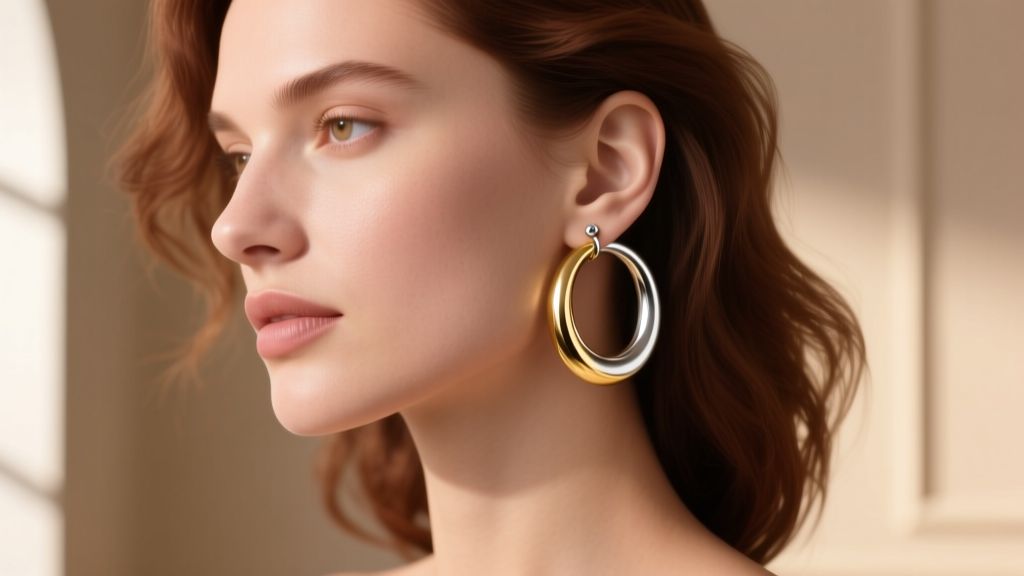
Start by wearing a distinct two-tone gold silver hoop earring in your primary lobe piercing. This piece acts as the "bridge" that visually justifies the presence of both metals. From there, place a solid yellow gold hoop in your second lobe piercing, and a solid sterling silver hoop in your upper cartilage (helix). This creates a deliberate, cohesive gradient rather than a chaotic, random assortment of metals. For a balanced look, keep the largest hoop in the primary lobe and decrease the inner diameter as you move up the ear.
Care, Maintenance, and Preventing Tarnish
Mixed-metal jewelry requires a specific cleaning protocol. You cannot use harsh chemical silver dips on two-tone earrings, as the sulfur-based solutions will permanently discolor the gold elements and strip away protective rhodium plating on white gold or silver accents.
According to the Jewelers of America, the safest and most effective cleaning method for mixed-metal hoops is a simple solution of warm water and a few drops of mild, phosphate-free dish soap. Soak the earrings for 5 to 10 minutes to loosen oils and lotions. Gently brush the crevices—especially around the hinge and the interior of the hoop—with a dedicated, ultra-soft jewelry brush. Rinse thoroughly under lukewarm water and dry completely with a lint-free microfiber cloth before storing.
Always store your gold silver hoop earrings in an airtight anti-tarnish bag with a silica gel packet when not in use. Exposure to ambient humidity and airborne sulfur accelerates the oxidation of the silver components, which can eventually transfer dullness to the entire piece. By understanding these metallurgical nuances and mechanical details, you can build a versatile, long-lasting hoop earring collection that perfectly bridges your gold and silver jewelry.


