Fixing Green Triangle Earrings: Snags, Flipping & Stains
Solve common issues with green triangle earrings. Learn to prevent skin stains, stop geometric flipping, and protect trillion-cut gemstone tips.

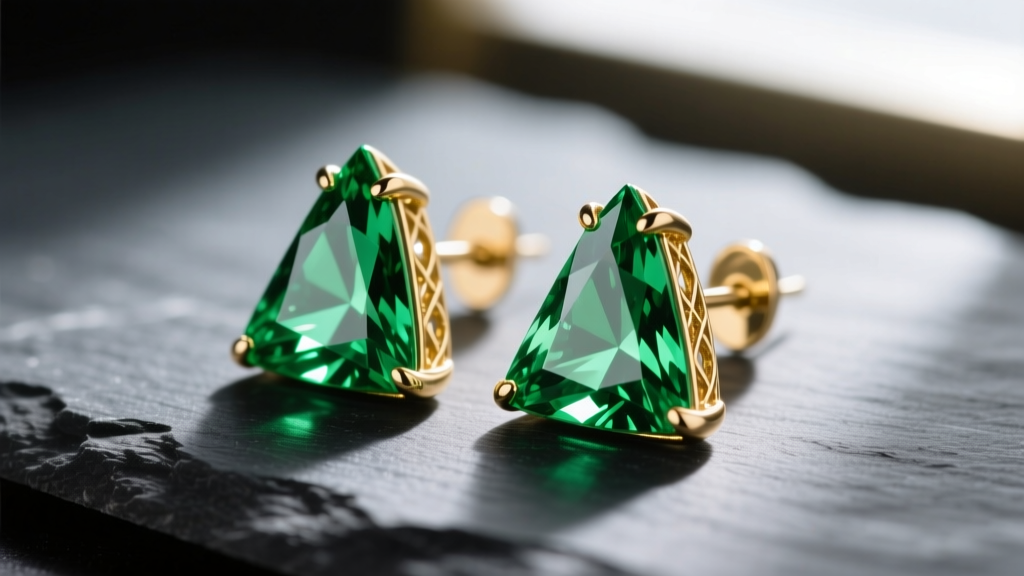
Geometric jewelry has maintained a fierce grip on fashion trends, and green triangle earrings remain a standout choice for those seeking a bold, architectural aesthetic. Whether your pair features a vibrant malachite inlay, a trillion-cut peridot, or sleek green enamel, the triangular silhouette offers a striking visual impact. However, this specific geometric shape and color profile introduce a unique set of physical and chemical challenges for the wearer.
From the dreaded 'triangle flip' caused by poor weight distribution to the sharp vertices that snag on delicate knits, owning these statement pieces requires a bit of troubleshooting. Furthermore, the word 'green' in jewelry often prompts a dual concern: is the earring itself a beautiful green gemstone, or is a cheap base metal oxidizing and turning your earlobe green? In this comprehensive troubleshooting guide, we will dissect the structural vulnerabilities of triangular earrings and provide actionable, expert-level solutions to keep them sitting perfectly and looking pristine.
The 'Green' Confusion: Skin Stains vs. Gemstone Care
Before addressing the physical shape, we must troubleshoot the color. If your skin is turning green beneath your earlobes, you are experiencing a chemical reaction, not a gemstone side effect. Many affordable geometric earrings are cast from brass or copper alloys and plated with a thin layer of gold or silver. When the plating wears off, the copper reacts with the natural acids (pH 4.5 to 5.5) and salts in your sweat, creating copper chelates—a green residue that stains the skin.
Metal Alloy Troubleshooting Table
| Metal Composition | Oxidation / Staining Risk | Troubleshooting Solution |
|---|---|---|
| Brass / Copper Alloys | High (Turns skin green quickly) | Coat the post with clear nail polish or upgrade to hypoallergenic metals. |
| 316L Surgical Steel | Low (May cause irritation, rarely stains) | Ensure the post is polished; avoid if you have a nickel sensitivity. |
| ASTM F-136 Titanium | None (Biocompatible) | The ultimate solution. Swap out cheap posts for titanium if the design allows. |
| 14k / 18k Solid Gold | None (Unless alloyed with high copper) | Stick to reputable jewelers; avoid 'gold-filled' items for sensitive lobes. |
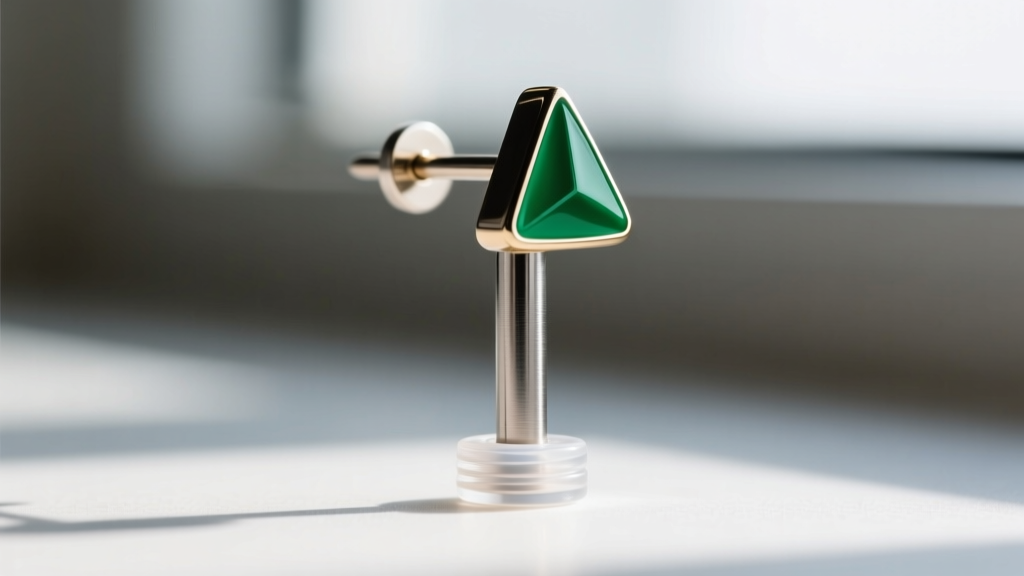
According to the Association of Professional Piercers (APP), implant-grade titanium (ASTM F-136) is the gold standard for body jewelry. If your favorite green triangle earrings have a cheap, reactive post, a jeweler can easily snip it off and laser-weld a 20-gauge (0.81mm) titanium post in its place, permanently solving the green skin issue.
Troubleshooting the 'Triangle Flip' (Center of Gravity Issues)
The most common structural complaint with geometric studs is the 'flip.' An inverted triangle (where the flat edge is at the top and the point faces down) is inherently top-heavy. Because the earring post is typically soldered near the upper third of the flat edge, the center of gravity sits above the piercing hole. On a standard, slightly stretched 18-gauge or 20-gauge lobe piercing, the earring will droop forward, eventually flipping upside down so the triangle points upward.
How to Stabilize Top-Heavy Triangles
- Silicone Friction Discs: Standard butterfly backs offer zero surface support. Swap them for 10mm clear silicone O-rings or friction discs. The wide surface area grips the back of the earlobe, creating a counter-lever that forces the triangle to lay flat.
- Earlobe Support Patches: Products like Bling Guards or LobeWonder are adhesive patches with a pre-punched hole. They stick to the back of your earlobe, reinforcing the tissue and preventing the heavy metal from stretching the piercing hole downward.
- Post Positioning: If you are having a jeweler cast or repair a pair, request that the post be soldered exactly at the geometric centroid (the center of mass) rather than the top edge. This requires a heavier post but completely eliminates the flip.
Snag Hazards: Managing Sharp Geometric Vertices
Triangles possess acute angles that act as natural hooks. The bottom vertex of a triangle drop earring, or the top corners of an inverted stud, will mercilessly catch on cashmere sweaters, silk scarves, and loose hair. This is not just an annoyance; a severe snag can tear the earlobe or bend the metal framework of the earring.
To troubleshoot this, examine the setting. If your green triangle earrings feature a bezel setting (where a rim of metal completely encircles the gemstone or enamel), the corners are naturally rounded and smoothed by the jeweler, reducing the snag factor by up to 80%. However, if the triangle is an open wire-frame or features sharp, unfiled prongs, you must manually mitigate the risk.
Pro-Tip: Use a fine-grit jeweler's file or a buffing block to gently round the absolute tips of the metal vertices. You do not need to alter the overall shape; merely softening the 90-degree or 60-degree apex by a fraction of a millimeter will allow fabrics to glide off the earring rather than catching on it.

Gemstone Durability: Protecting Trillion-Cut Tips
When your earrings feature genuine green gemstones, the triangular shape is usually achieved via a 'trillion cut' (or trilliant cut). While breathtaking, trillion-cut stones have three distinct, fragile points. According to the Gemological Institute of America (GIA), stones like peridot (Mohs hardness 6.5 to 7) are moderately durable but possess distinct cleavage planes, meaning a sharp knock to the pointed tip can cause the entire stone to fracture or chip.
If your green triangle earrings feature malachite, the situation is even more precarious. Malachite is exceptionally soft (Mohs 3.5 to 4) and highly sensitive to acids. The sharp points of a triangular malachite inlay will wear down simply from brushing against your hair or resting against your phone. Furthermore, the setting must be scrutinized. Standard round prongs leave the tips of a trillion-cut stone exposed. You must ensure your earrings utilize V-prongs—custom-shaped metal caps that cradle the sharp corners of the triangle, absorbing the impact of daily wear so the gemstone does not have to.
Cleaning and Maintenance for Green Stones
- Peridot & Tsavorite: Clean with warm water, mild dish soap, and a soft baby toothbrush. Avoid ultrasonic cleaners, as the high-frequency vibrations can shatter the delicate triangular tips.
- Malachite & Jade: Wipe only with a damp, untreated microfiber cloth. Never expose malachite to perfume, hairspray, or acidic skin sweat, as it will strip the polish and leave the green surface dull and pitted.
The Ultimate Troubleshooting Checklist
Before wearing your green triangle earrings out, run through this quick diagnostic checklist to ensure a flawless experience:
- The Post Test: Check the metal grade. If it's magnetic or unlabeled, apply a barrier coat of clear polish to the post to prevent green skin stains.
- The Balance Test: Put the earring on and let go. If it flips upside down, immediately swap the butterfly back for a 10mm silicone friction disc.
- The Snag Test: Run a piece of silk thread or a cotton ball over the vertices. If it catches, the corners need to be gently buffed or filed.
- The Prong Check: If featuring a trillion-cut green gem, ensure V-prongs are securely covering the three tips of the stone to prevent chipping.
By understanding the physics of geometric weight distribution and the chemistry of metals and gemstones, you can transform your green triangle earrings from a frustrating novelty into a reliable, sophisticated staple of your jewelry wardrobe.


