How to Choose and Style Sunflower Stud Earrings for Beginners
Discover everything about sunflower stud earrings. Learn about metals, gauge sizes, face shapes, and care tips in this beginner-friendly style guide.

The Timeless Appeal of Botanical Jewelry
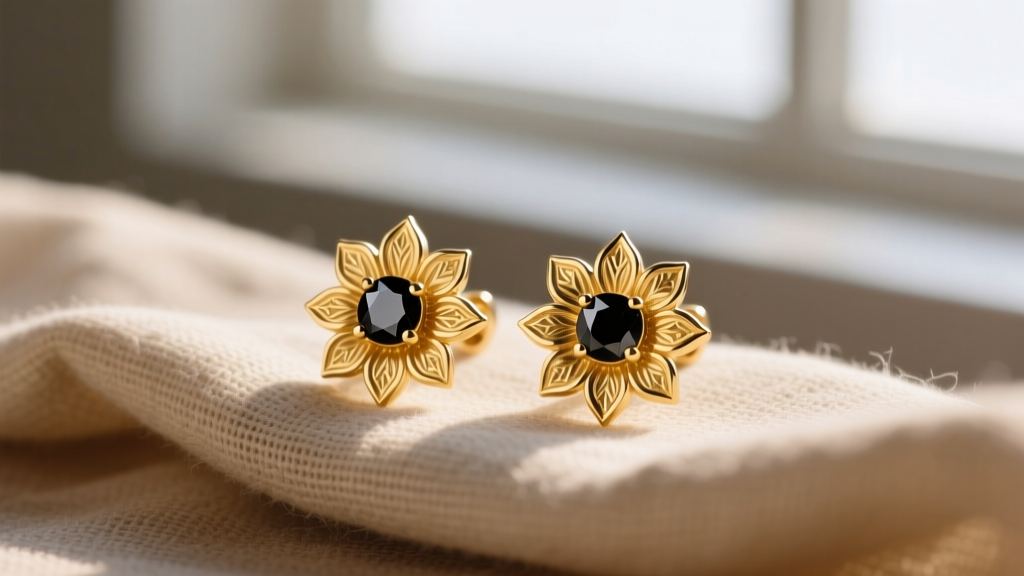
Sunflower stud earrings have cemented their place as a staple in botanical jewelry. Symbolizing adoration, loyalty, and longevity, the sunflower motif offers a cheerful yet sophisticated aesthetic that transitions seamlessly from casual daywear to evening elegance. For beginners navigating the vast world of ear adornments, sunflower studs provide an excellent entry point. They are versatile, universally flattering, and available in a wide array of materials and sizes. However, choosing the right pair goes far beyond picking a pretty design. Understanding the technical aspects of jewelry making, metal grades, and piercing anatomy is crucial for ensuring comfort, preventing allergic reactions, and maximizing the lifespan of your earrings. This comprehensive guide will walk you through the exact specifications you need to know before making your first purchase.
Material Mastery: What Actually Touches Your Skin
The term 'hypoallergenic' is largely an unregulated marketing buzzword. When shopping for sunflower stud earrings, especially for sensitive ears or fresh piercings, you must look at the exact metallurgical composition. According to the Association of Professional Piercers (APP), the safest metals for prolonged skin contact are implant-grade titanium and high-karat gold.
Solid Gold vs. Gold Vermeil
Gold is alloyed with other metals to increase its durability. As noted by the Gemological Institute of America (GIA), 14k gold contains 58.5% pure gold, making it an ideal choice for daily-wear sunflower studs because it resists scratching and bending better than softer 18k gold (75% pure). If solid gold is outside your budget, look for 'gold vermeil' rather than standard gold plating. Vermeil requires a base of sterling silver and a gold layer of at least 2.5 microns thick. Standard flash plating (often under 0.5 microns) will wear off within weeks, exposing base metals like brass or copper that can cause severe contact dermatitis.
Enamel Quality: Cold vs. Vitreous
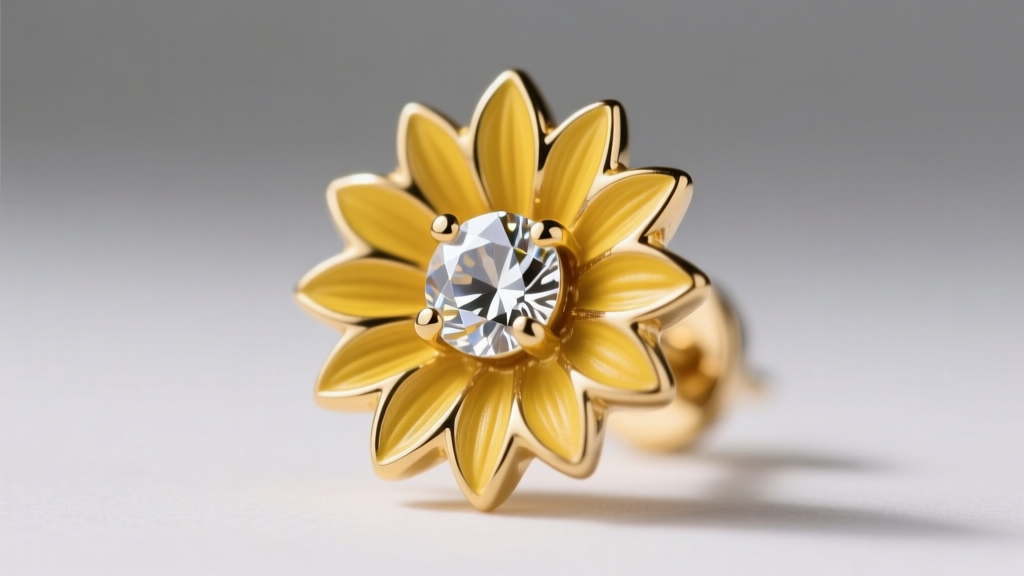
Many sunflower studs utilize yellow enamel for the petals. Beginners should understand the difference between cold enamel and vitreous enamel. Cold enamel is an epoxy-based resin that is painted on and air-dried; it is affordable but prone to yellowing, chipping, and degrading when exposed to perfumes or UV light. Vitreous enamel, on the other hand, is glass powder fused to the metal in a kiln at high temperatures. It is highly durable, colorfast, and possesses a brilliant, glass-like luster, though it commands a higher price point.
Sizing, Proportions, and Gauge Specifications
Selecting the correct size and gauge is where most beginners make critical errors. The 'gauge' refers to the thickness of the earring post, while the millimeter (mm) measurement refers to the diameter of the sunflower face.
Diameter and Visual Weight
- 4mm - 5mm (Dainty): Perfect for secondary lobe piercings, tragus piercings, or those who prefer a subtle, minimalist look.
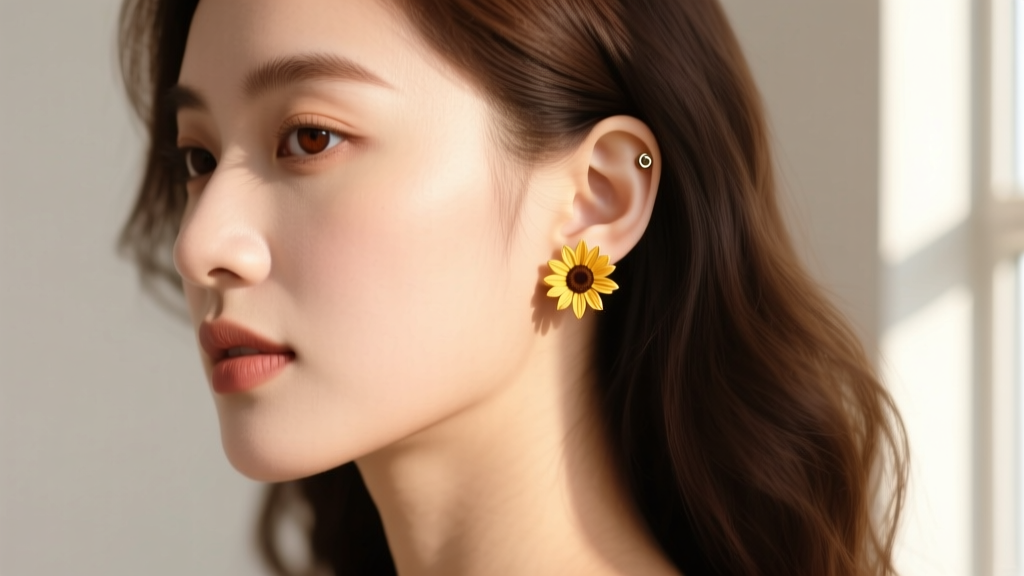
- 6mm - 8mm (Standard): The most versatile size for primary earlobe piercings. It provides enough visual impact to be noticed without overwhelming the ear.
- 10mm+ (Statement): Best reserved for primary lobe piercings on larger ear anatomies or for those who want a bold, maximalist focal point.
Gauge Thickness and Piercing Compatibility
Inserting a post that is too thick can tear the fistula (the piercing channel), while a post that is too thin can cause the jewelry to shift, leading to irritation bumps. Refer to the table below for standard sizing:
| Piercing Location | Standard Gauge | Post Thickness (mm) | Recommended Sunflower Stud Backing |
|---|---|---|---|
| Standard Earlobe | 20G or 18G | 0.81mm or 1.02mm | Friction back (butterfly) or screw back |
| Thick Earlobe / Helix | 16G | 1.29mm | Flat-back labret (threadless or internally threaded) |
| Tragus / Conch | 16G | 1.29mm | Flat-back labret (crucial for sleeping comfort) |
Pro Tip: If you are buying sunflower studs for a cartilage piercing like the helix or tragus, avoid traditional butterfly backs. They trap moisture and bacteria against the skin and are highly uncomfortable to sleep on. Opt for flat-back labret posts instead.
Styling for Face Shapes and Ear Anatomy
While sunflowers are inherently round and bold, slight variations in the design can flatter different face shapes.
- Round Faces: To avoid emphasizing the circularity of your face, look for sunflower studs that incorporate slightly elongated leaves dropping below the flower head, or pair a small 5mm sunflower stud with a vertical drop earring in the same ear to create an elongating visual line.
- Square Faces: The soft, rounded petals of a classic, symmetrical sunflower stud are incredibly flattering for square jawlines, as they introduce organic curves that soften sharp angles.
- Heart-Shaped Faces: A medium-sized (7mm) sunflower stud worn on the primary lobe helps add visual width to the lower half of the face, balancing a narrower chin.
Care, Cleaning, and Longevity
Proper maintenance is vital, particularly for sunflower studs featuring enamel or porous gemstone centers (like turquoise or opal). Never use ultrasonic jewelry cleaners on enameled pieces; the high-frequency vibrations can cause the enamel to fracture or separate from the metal base. Similarly, harsh chemical dips will strip gold vermeil and dull soft gemstones.
The Safe Cleaning Protocol
- Mix a few drops of mild, fragrance-free dish soap into a bowl of lukewarm water.
- Submerge the earrings for 3 to 5 minutes to loosen sebum and dead skin cells.
- Gently scrub the crevices between the sunflower petals using a brand-new, ultra-soft baby toothbrush.
- Rinse thoroughly under distilled water to prevent hard water spots.
- Pat dry with a lint-free microfiber cloth before storing them in an airtight anti-tarnish bag.
Price Tiers and Shopping Smart
Understanding pricing structures will help you identify quality and avoid overpaying for inferior materials.
- Budget Tier ($15 - $40): Typically made from brass or stainless steel with flash gold plating and cold enamel. Suitable for occasional wear, but expect the plating to wear off within a few months of daily use.
- Mid-Range Tier ($45 - $150): The sweet spot for beginners. You will find high-quality gold vermeil over sterling silver, vitreous enamel, and cubic zirconia or lab-grown sapphire centers. These offer excellent longevity with proper care.
- Fine Jewelry Tier ($200 - $800+): Crafted in solid 14k or 18k gold, featuring genuine diamonds or high-grade precious stones. These are heirloom-quality pieces that will never tarnish and can be worn 24/7, including in the shower.
By prioritizing material integrity, correct gauge sizing, and proper maintenance, your sunflower stud earrings will remain a vibrant, irritation-free staple in your jewelry collection for years to come.


