How to Style and Secure a Tear Drop Earring for Any Face Shape
Learn how to style, fit, and secure a tear drop earring for your face shape. Expert guide on gauge sizes, weight support, and gemstone care.


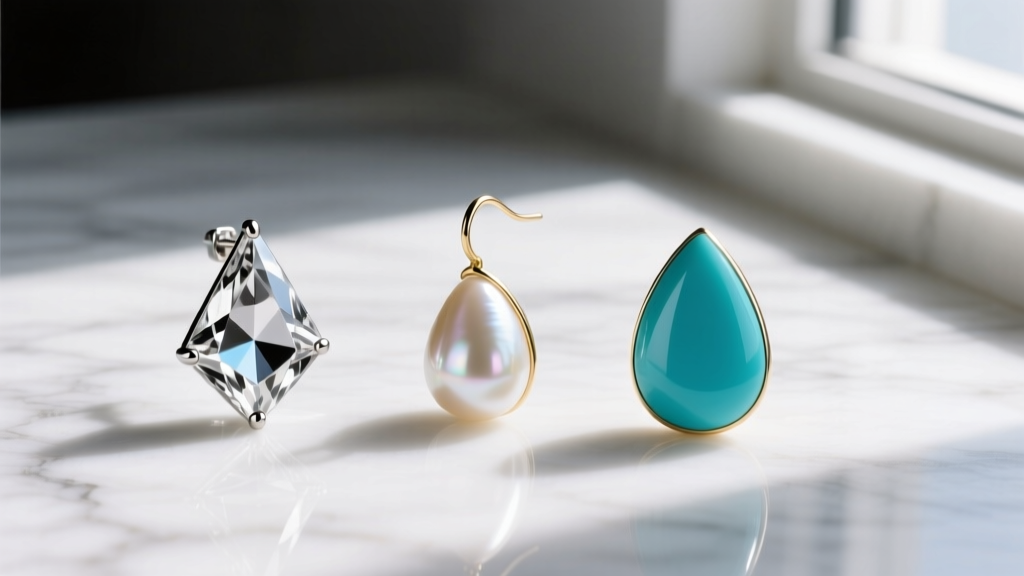
The tear drop earring is a masterclass in jewelry design, offering a silhouette that is simultaneously timeless and endlessly adaptable. Whether crafted from hammered gold, set with faceted gemstones, or carved from organic turquoise, the teardrop shape naturally draws the eye downward, elongating the neck and framing the jawline. However, styling this specific silhouette requires more than just picking a pretty stone. Because of their elongated center of gravity, tear drop earrings present unique challenges regarding weight distribution, earlobe stress, and facial proportion.
In this comprehensive guide, we break down the exact steps to select, secure, and maintain your tear drop earrings, ensuring they flatter your unique features while preserving the health of your piercings.
The Anatomy of a Tear Drop Earring
Before diving into styling, it is crucial to understand the structural components that dictate how a tear drop earring hangs and feels on the ear. A well-crafted piece balances three elements:
- The Finding (Hook/Post): The point of contact with the piercing. French wires (fishhooks) are common but can slip. Leverbacks offer security, while stud-and-clutch configurations provide the most stability for heavy pieces.
- The Bail or Connector: The small loop or jump ring connecting the finding to the body. This is the primary pivot point. A rigid bail will cause the earring to swing as a single unit, while a linked bail allows for fluid, independent movement.
- The Body: The main teardrop-shaped element. The distribution of mass here—whether it is top-heavy or bottom-heavy—determines how the earring rests against the neck.
Step-by-Step: Matching Tear Drop Earrings to Your Face Shape
The universal appeal of the tear drop earring lies in its versatility, but achieving the perfect look requires matching the specific proportions of the drop to your underlying bone structure. Follow this framework to find your ideal match.
1. Round Face Shapes
The Goal: Create vertical elongation and introduce sharp angles to contrast soft curves.
The Strategy: Avoid short, wide, or perfectly rounded teardrops that mimic the face's natural circumference. Instead, opt for elongated, angular tear drop earrings that measure at least 2.5 inches in length. Geometric wire-wrapped designs or marquise-cut gemstones set in a teardrop silhouette will draw the eye vertically, creating the illusion of a more defined jawline.
2. Square Face Shapes
The Goal: Soften a strong, angular jawline and wide cheekbones.
The Strategy: Look for tear drop earrings with curved, organic lines and rounded bottoms. A classic smooth cabochon teardrop (like polished moonstone or jade) or a fluid, molten-metal design will offset sharp angles. Keep the length moderate—between 1.5 and 2 inches—so the earring doesn't drag the visual weight down too heavily.
3. Heart Face Shapes
The Goal: Balance a wider forehead with a narrower, pointed chin.
The Strategy: You want to add visual volume to the lower half of the face. Choose a tear drop earring that is distinctly wider at the bottom than at the top. Chandelier-style teardrops or designs featuring a cluster of smaller stones at the base of the drop will beautifully fill out the space around the lower jaw and neck.
How to Prevent Earlobe Stretching with Heavy Tear Drops
The most common mistake wearers make with statement tear drop earrings is ignoring the physics of weight. A standard earlobe piercing is typically done at 20-gauge (0.81mm) or 18-gauge (1.02mm). Over time, heavy stones like large quartz, turquoise, or solid brass settings can cause 'cheese-cutter' syndrome, where the thin wire slowly migrates downward through the tissue, permanently stretching the piercing.
To protect your piercings, follow these structural guidelines recommended by professional piercers and outlined in the Association of Professional Piercers (APP) jewelry safety standards:
| Earring Weight | Recommended Wire Gauge | Required Support Method | Max Wear Time |
|---|---|---|---|
| Under 8 grams | 20G or 18G (0.8-1.0mm) | Standard silicone earring back | All day (8-12 hours) |
| 8 to 15 grams | 18G or 16G (1.0-1.2mm) | Earlobe support patches (e.g., BlingDots) | 4 to 6 hours |
| 15 to 25+ grams | 16G or 14G (1.2-1.6mm) | French clip-on adapter or heavy-duty leverback with O-ring | 2 to 3 hours (Event only) |
Pro-Tip: If you inherit or purchase a heavy vintage tear drop earring with a thin, fragile 22-gauge wire, take it to a bench jeweler to have the finding swapped for a thicker, implant-grade titanium (ASTM F136) leverback before wearing it.
Step-by-Step Cleaning and Maintenance for Gemstone Tear Drops
Because tear drop earrings hang freely, they are prone to swinging into hair, catching on scarves, and accumulating skin oils and cosmetics at the bail. Proper maintenance depends entirely on the Mohs hardness and porosity of the materials involved.
Step 1: Identify Your Gemstone Category
- Hard, Non-Porous Stones (Diamond, Sapphire, Ruby, Quartz): These can withstand mild surfactants and ultrasonic cleaners.
- Soft, Porous Stones (Turquoise, Opal, Pearl, Coral, Malachite): These will absorb chemicals, leading to discoloration or structural cracking. Never use ultrasonic cleaners or harsh soaps on these materials.
Step 2: The Cleaning Process
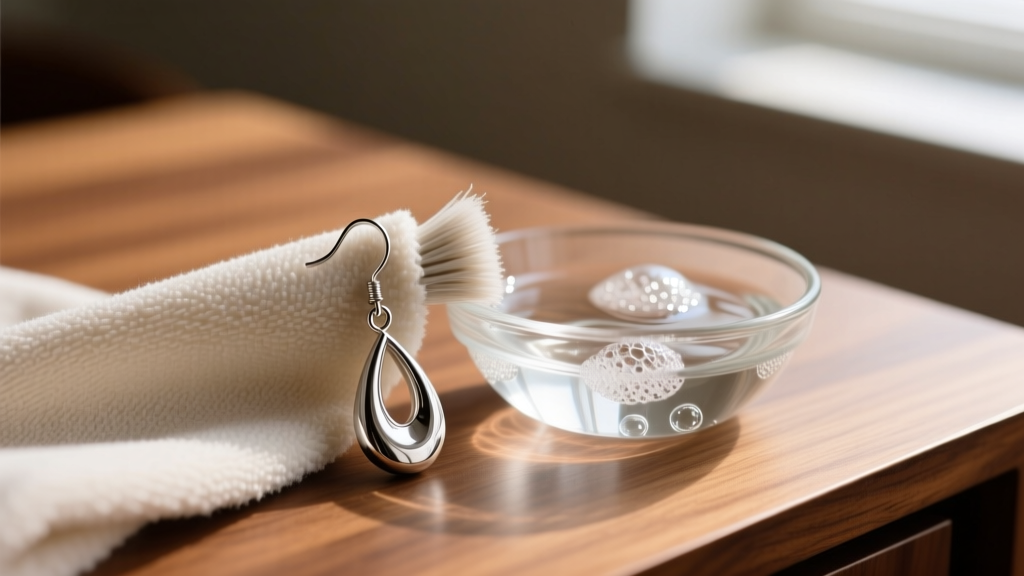
For hard stones, mix a few drops of mild, phosphate-free dish soap into warm distilled water. Use a soft-bristled baby toothbrush to gently scrub the back of the gemstone and the bail where grime accumulates. Rinse with distilled water and pat dry with a lint-free microfiber cloth.
For porous stones, simply wipe the gemstone with a dry, untreated microfiber cloth. Use a slightly damp Q-tip to clean the metal bail and wire hook, ensuring no moisture transfers to the stone itself. For deep cleaning protocols on specific organic gems, always refer to the Gemological Institute of America (GIA) care guides.
Step 3: Metal Polishing
If your tear drop earring features oxidized silver or gold vermeil, avoid aggressive polishing cloths, which can strip the intentional patina or the thin gold plating. Instead, use a dedicated jewelry polishing cloth infused with micro-abrasives only on the high-relief areas of the metal setting.
Cartilage vs. Lobe: Adapting the Tear Drop Earring
While traditionally worn in the earlobe, the tear drop silhouette is increasingly popular in upper ear piercings, such as the helix, forward helix, or tragus. However, cartilage piercings require different hardware considerations.
Cartilage is typically pierced at 16-gauge (1.2mm) or 14-gauge (1.6mm) to accommodate the swelling and thicker tissue. Most standard tear drop earrings are manufactured with 20-gauge or 18-gauge French wires, which will slide loosely and insecurely in a 16-gauge cartilage hole, leading to irritation and migration.
The Solution: Look for 'convertible' tear drop charms. These feature a removable top bail that allows you to detach the teardrop body and slide it onto a 16-gauge titanium captive bead ring (CBR) or a flat-back labret stud. This ensures a snug, flush fit against the cartilage while allowing the teardrop element to dangle safely without putting lateral torque on the healing or established fistula.
Final Styling Checklist
Before stepping out, run through this quick diagnostic checklist to ensure your tear drop earrings are secure and visually balanced:
- The Swing Test: Gently tap the earring. Does it swing freely and return to center, or does it get stuck on the earlobe? If it catches, the bail is too tight or the finding is bent.
- The Collar Check: Ensure the bottom of the earring clears the collar of your shirt or blouse by at least half an inch to prevent snagging.
- The Security Verify: If using a push-back post, ensure the silicone or metal clutch is pushed fully flush against the earlobe to prevent the heavy drop from tilting forward.
By understanding the interplay between weight, gauge thickness, and facial geometry, you can elevate the tear drop earring from a simple accessory to a masterfully curated element of your personal style.


