90s Hoop Earrings: A Beginner's Guide to Retro Styles
Master the 90s hoop earrings trend with our beginner guide. Learn gauge sizes, material grades, and styling tips for bamboo and tube hoops.


The Cultural Resurgence of 90s Hoops in 2026
If there is one accessory that has unequivocally conquered the jewelry landscape in 2026, it is the resurgence of 90s hoop earrings. From the iconic bamboo styles popularized by hip-hop legends to the sleek, thick tube hoops seen on 90s R&B icons, this era's earwear was never just about adornment; it was a cultural statement. According to Vogue, the hoop earring has historically served as a symbol of identity and resistance, and the 90s iteration remains one of its most celebrated chapters.
For beginners stepping into this bold aesthetic, navigating the modern market can be overwhelming. Vintage replicas often cut corners on metallurgy, while authentic vintage pieces can present sizing challenges for standard piercings. This comprehensive guide will break down the anatomy of 90s hoops, gauge sizing, material grades, and structural troubleshooting so you can wear these retro icons safely and stylishly.
The 3 Core Archetypes of 90s Hoop Earrings
To shop intelligently, you must first understand the three distinct silhouettes that defined the decade. Each style carries its own weight profile and manufacturing nuances.
1. Bamboo Hoops
Characterized by their textured, interlocking 'nodes' that resemble bamboo stalks, these hoops are a cornerstone of 90s urban fashion. Authentic vintage bamboo hoops were typically cast in brass and heavily plated in 14k or 18k yellow gold. Today, high-quality reproductions are cast in solid sterling silver or 3D-printed via wax casting to ensure the nodes are sharp and well-defined. Because of their intricate surface area, bamboo hoops catch the light beautifully but require regular cleaning with a soft microfiber cloth to prevent tarnish in the crevices.
2. Thick Tube Hoops
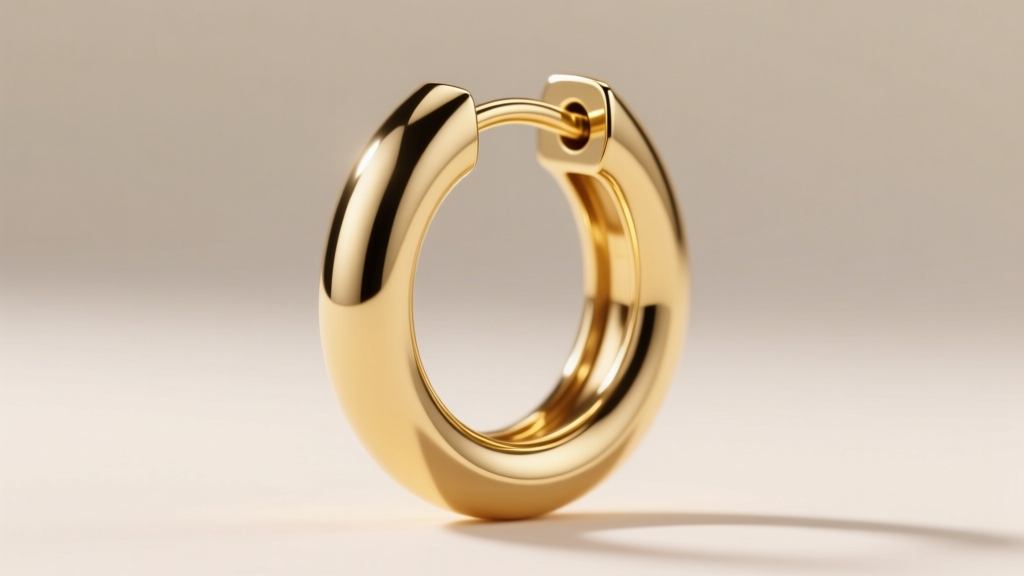
Ranging from 3mm to 10mm in thickness, the 90s tube hoop is all about volume. To keep these earrings wearable, jewelers utilize hollow-core manufacturing. A solid 8mm gold hoop would weigh over 25 grams per ear—far too heavy for a standard lobe. By creating a hollow tube, manufacturers maintain the chunky visual impact while keeping the weight under 8 grams. When buying tube hoops, inspect the hinge mechanism; a seamless 'clicker' hinge is vastly superior to the traditional friction-post and clutch, which often slips on thicker wires.
3. Oversized Wire Hoops
Often exceeding 50mm in diameter, these thin wire hoops (usually 1.5mm to 2mm thick) were a staple of 90s pop and R&B. The primary failure point for modern reproductions of this style is the latch-back closure. Cheap wire hoops lose their tension, causing the earring to slide out. Always look for 'tension-calibrated' latch-backs or continuous endless hoops that snap securely into a recessed tube.
Sizing and Gauge: The Beginner's Biggest Pitfall
The most common mistake beginners make when purchasing 90s-style hoops is ignoring the post gauge. Standard earlobe piercings are typically done at 20G (0.81mm) or 18G (1.02mm). However, many authentic 90s hoops—especially heavy bamboo and thick tube styles—were manufactured with 14G (1.6mm) or even 12G (2.0mm) posts to support the earring's weight.
Forcing a 14G post into an 18G piercing will cause micro-tears, inflammation, and potential blowouts. Always verify the post thickness before purchasing.
| Gauge Size | Millimeter (mm) | Common Use in 90s Hoops |
|---|---|---|
| 20G | 0.81mm | Thin wire hoops, lightweight huggies |
| 18G | 1.02mm | Standard tube hoops, medium bamboo styles |
| 14G | 1.60mm | Heavy vintage bamboo, oversized thick tubes |
| 12G | 2.00mm | Custom urban jewelry, stretched lobe pieces |
Metallurgy 101: Avoiding the 'Green Ear' Effect
The 90s era was notorious for cheap alloy jewelry that oxidized quickly, leaving the wearer with green or black-stained earlobes. As noted by the Gemological Institute of America (GIA), understanding the difference between plating techniques is crucial for modern buyers seeking retro styles.
The Vermeil Standard: To legally be classified as 'Gold Vermeil' in the US, a piece must have a sterling silver base and be plated with at least 10k gold to a minimum thickness of 2.5 microns. Anything less is considered 'flash plating' and will wear through to the base metal within weeks of daily wear.
If you are buying stainless steel 90s hoops, look for PVD (Physical Vapor Deposition) coating. PVD bonds gold to steel at a molecular level in a vacuum chamber, making it up to 10 times more durable than traditional electroplating. It is the gold standard for hypoallergenic, sweat-resistant retro jewelry in 2026.
Face Shape Matching Framework
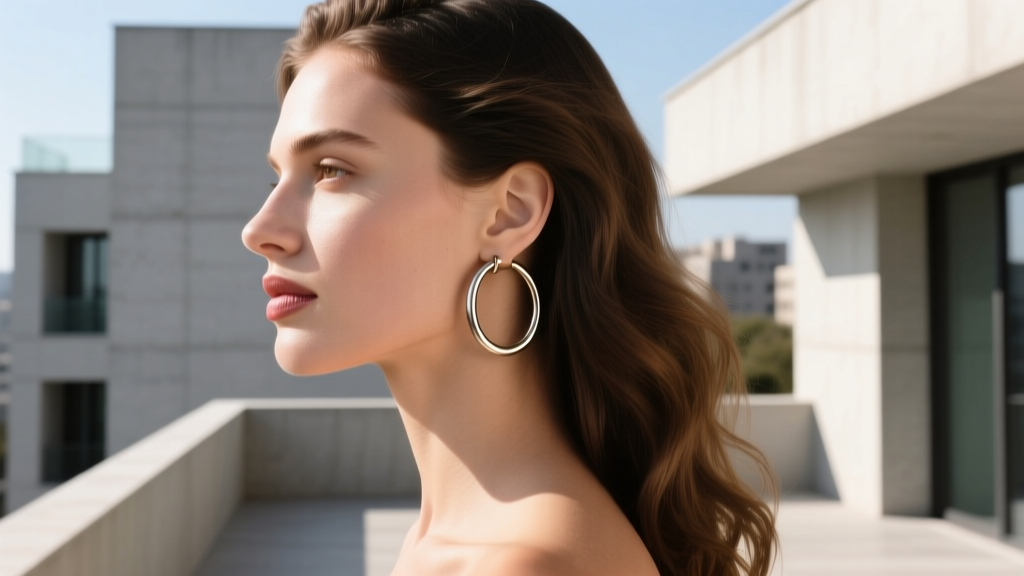
While 90s hoops are universally iconic, selecting the correct diameter and silhouette for your specific face shape elevates the look from costume to couture.
- Round Faces: Avoid small, perfectly round tube hoops (20mm-30mm), as they mimic and exaggerate facial circularity. Instead, opt for oversized 90s wire hoops (50mm+) or elongated bamboo drop hoops that create vertical length.
- Square Faces: The sharp angles of a strong jawline are beautifully softened by medium-sized (35mm-45mm) thick tube hoops or rounded bamboo styles with smooth, polished nodes.
- Heart-Shaped Faces: Balance a narrower chin with bottom-heavy 90s hoops, such as teardrop-shaped bamboo hoops or triangular wire designs that draw the eye downward.
- Oval Faces: The universal canvas. You can effortlessly pull off the chunkiest 10mm tube hoops or the widest bamboo styles without throwing off your facial proportions.
Troubleshooting Heavy Hoops and Lobe Fatigue
The most significant physical drawback of authentic 90s hoop earrings is their weight. Heavy bamboo hoops can easily exceed 15 grams per ear. Prolonged wear of heavy earrings leads to 'lobe fatigue,' where the piercing channel stretches, thins, and eventually sags.
To combat this without sacrificing the 90s aesthetic, implement the following structural supports:
- Silicone Ear Patches: Products like Lobe Wonder patches adhere to the back of your earlobe, distributing the weight of the hoop across a wider surface area and preventing the post from slicing downward through the tissue.
- Friction Discs: Replace standard butterfly backs with large, flat silicone friction discs. These provide a flush, supportive backing that stabilizes thick 14G posts.
- The 8-Hour Rule: Limit heavy, solid-cast bamboo hoops to 8 hours of wear. If you plan to be out longer, switch to hollow-core tube hoops, which offer the same visual volume at a fraction of the gram weight.
By understanding the mechanics, materials, and history behind 90s hoop earrings, you can confidently curate a collection that honors the decade's bold legacy while adhering to modern standards of comfort and dermatological safety. Whether you are stepping out in thick gold vermeil tubes or lightweight wire hoops, the 90s revival is here to stay.


