Why Your Gold Moon Hoop Earrings Flip & Tangle (And How to Fix Them)
Frustrated by gold moon hoop earrings that flip backward or tangle in your hair? Discover expert troubleshooting tips, gauge fixes, and material guides.

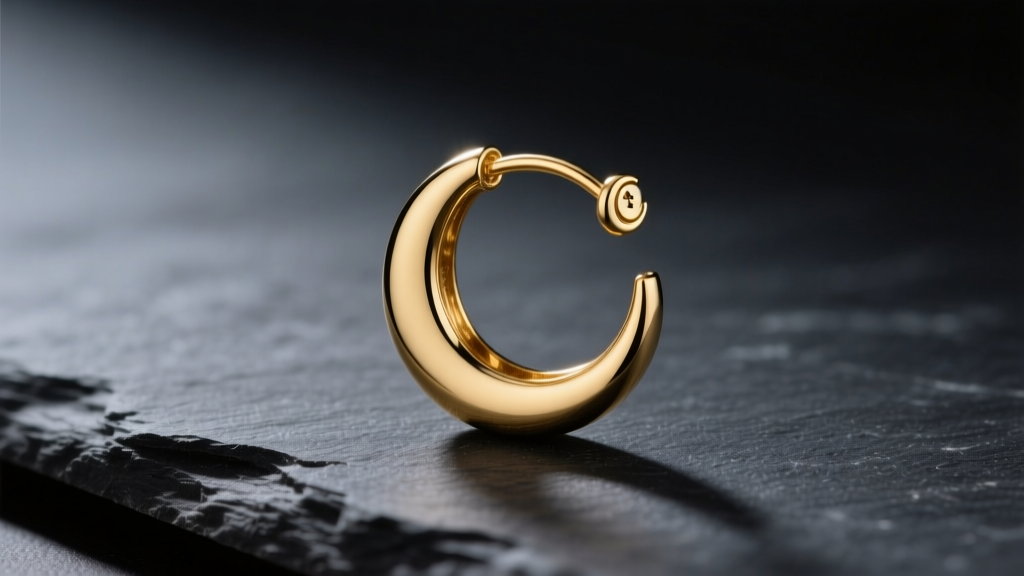
Celestial motifs continue to dominate 2026 jewelry trends, but there is a frustrating functional flaw that plagues many wearers: the dreaded backward flip. You put on your favorite gold moon hoop earrings in the morning, and within an hour, the crescent charm is hiding behind your earlobe, the clasp is resting awkwardly on your cheek, and the sharp tips of the moon are hopelessly tangled in your hair. This is not a design curse; it is a simple matter of physics, material weight distribution, and hardware mechanics. As a jewelry troubleshooter, I see these specific failure modes daily. Below, we break down exactly why your celestial hoops misbehave and provide actionable, expert-level solutions to fix them.
The Physics of the Flip: Why Moon Charms Rotate Backward
The primary reason gold moon hoop earrings rotate backward comes down to the center of gravity. A crescent moon charm is inherently asymmetrical and top-heavy compared to a simple geometric bead. When the charm is soldered or looped onto a thin wire hoop, it acts as a pendulum. If the hoop wire is too thin—typically 20-gauge (0.81mm) or 22-gauge (0.64mm)—the wire lacks the structural rigidity to resist the charm's downward pull. Consequently, the entire hoop rotates forward through the piercing to find equilibrium, pushing the clasp to the front of your ear and hiding the moon charm behind your lobe.
The Fix: You need to alter the weight distribution or increase the wire thickness. Upgrading to an 18-gauge (1.0mm) or 16-gauge (1.2mm) hoop provides enough lateral stiffness to keep the earring seated correctly in the earlobe. Alternatively, look for gold moon hoop earrings that feature a slightly thicker bottom half (a teardrop wire profile) or a small, subtle counterweight bead integrated into the back of the hoop to balance the moon charm.
Troubleshooting the Clasp and Hinge Mechanisms
The type of closure on your hoop drastically affects how the moon charm hangs. Hinged hoops with a standard latch closure are the most common, but they are also the most prone to the "flip" because the hinge acts as a rigid pivot point. When the heavy moon charm pulls down, the latch side lifts up, causing the earring to tilt.

Continuous hoops (also known as endless hoops) are vastly superior for heavy charms. Because they lack a bulky hinge or latch, the wire glides smoothly through the piercing, allowing gravity to naturally center the charm at the very bottom of the hoop. If you prefer the security of a clicker or hinged clasp, ensure the inner diameter of the hoop is at least 15mm. Hoops smaller than 12mm do not provide enough clearance for the charm to swing freely, causing it to catch on the earlobe and force the hoop to rotate.
Solving the Hair-Tangle Nightmare
Nothing ruins the elegance of celestial jewelry quite like yanking a tangled strand of hair from the sharp tips of a crescent moon. This issue is almost always caused by the casting method and the setting style. Many mass-produced gold moon hoop earrings feature high prong settings to hold tiny diamond or cubic zirconia accents, or they are cast with sharp, unpolished points at the tips of the crescent.
- Prong Snags: If your moon charm features gemstones, inspect the prongs under a jeweler's loupe. If they are lifted or sharp, a local jeweler can re-tip and burnish them flat in under ten minutes.
- Bezel Settings: When shopping for replacements, always opt for bezel-set moon charms. A bezel encases the gemstone in a smooth rim of gold, completely eliminating snag points.
- Tip Filing: For solid gold hoops with sharp, unpolished crescent tips, you can gently buff the points with a high-grit (1200+) jeweler's polishing cloth or have a professional tumble-polish them to round off the edges without losing the crescent silhouette.
Material Degradation: When "Gold" Turns Your Ears Green
Troubleshooting isn't just about mechanics; it is also about material longevity. Many wearers experience skin irritation or green discoloration around the piercing site when wearing gold moon hoop earrings. This is rarely an allergy to gold itself, but rather a reaction to the base metals exposed as thin plating wears away from the friction of the hoop sliding through the ear. According to the American Academy of Dermatology (AAD), nickel and copper alloys hidden beneath flash plating are the primary culprits for contact dermatitis in jewelry wearers.
Understanding the exact grading of your gold is critical for troubleshooting skin reactions and tarnish. The Gemological Institute of America (GIA) outlines strict purity standards, but the thickness of the gold layer is what dictates the lifespan of your earrings.
| Material Type | Gold Thickness | Base Metal | Troubleshooting & Lifespan |
|---|---|---|---|
| Flash Plated | < 0.1 microns | Brass / Nickel Silver | Wears off in weeks. Causes green skin. Discard or replat. |
| Gold Vermeil | > 2.5 microns | Sterling Silver (925) | Lasts 1-3 years. Hypoallergenic base. Polish gently. |
| Gold Filled | 5% of total weight | Jeweler's Brass | Lasts 5-10 years. Highly durable. Avoid harsh chemicals. |
| Solid 14k / 18k | N/A (Solid) | Alloyed Gold | Lifetime durability. Will not flake. Best for daily wear. |
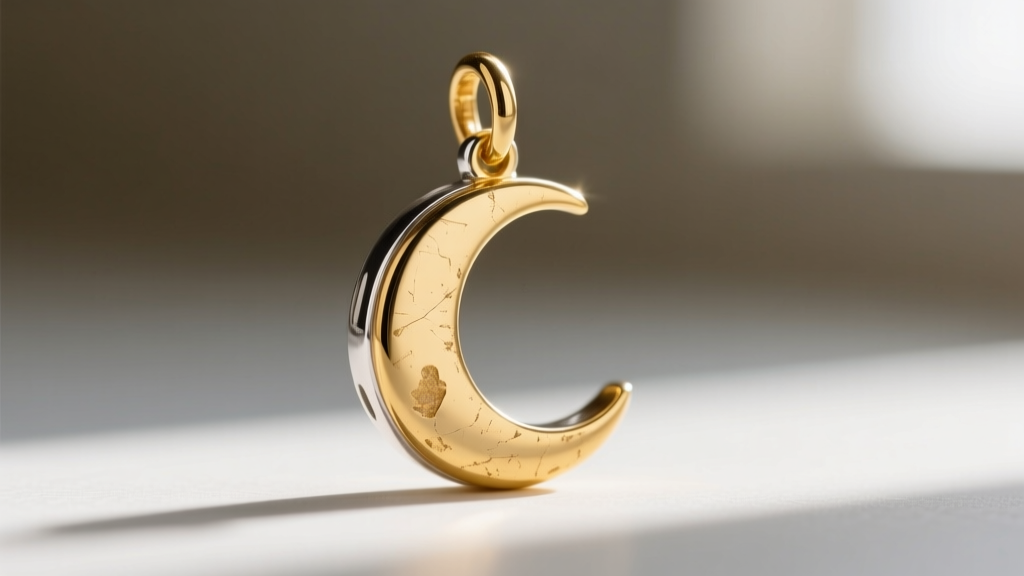
If your vermeil gold moon hoop earrings are showing silver patches near the clasp or the wire post, do not attempt to polish them with abrasive pastes. Instead, clean them with a mild, phosphate-free dish soap and warm water, and consider sending them to a plating service to apply a fresh 2.5-micron layer of 14k gold.
Step-by-Step Fixes for Common Gold Moon Hoop Earring Issues
If you are currently struggling with a pair of beloved but misbehaving hoops, follow this diagnostic checklist to restore their function:
- The Silicone O-Ring Trick: If your hoops are too thin and keep flipping, slide a tiny, clear silicone earring back (o-ring style) onto the wire post before closing the clasp. This creates friction against the back of the earlobe, acting as an anchor that prevents the hoop from rotating forward.
- Bend the Wire Slightly: For solid gold continuous hoops, you can very gently bend the wire into a slight oval shape (making it taller than it is wide). This shifts the center of gravity downward, forcing the moon charm to rest perfectly at the bottom.
- Lubricate the Hinge: If your hinged hoop is stiff and causing the charm to drag, apply a microscopic drop of synthetic watch oil to the hinge pin. Wipe away any excess immediately to avoid skin irritation.
- Check the Post Gauge: If your earlobe is stretching or the earring feels heavy, measure the wire. If it is 20-gauge or thinner, it is time to retire the pair for everyday wear and reserve them for short-term, low-activity events.
Final Thoughts on Celestial Hardware
Gold moon hoop earrings are a staple of modern jewelry wardrobes, but they demand a higher standard of hardware engineering than simple studs. By paying close attention to wire gauge, clasp mechanics, and material thickness, you can eliminate the frustration of tangled hair and backward-flipping charms. Invest in 18-gauge wires, prioritize bezel settings, and always verify the micron thickness of your gold plating to ensure your celestial pieces shine exactly where they are meant to.


