The Rise of Embroidery Earrings: 2026 Trend & Style Guide
Discover the 2026 embroidery earrings trend. Explore micro-stitch techniques, silk vs. metallic threads, and how to style these lightweight pieces.

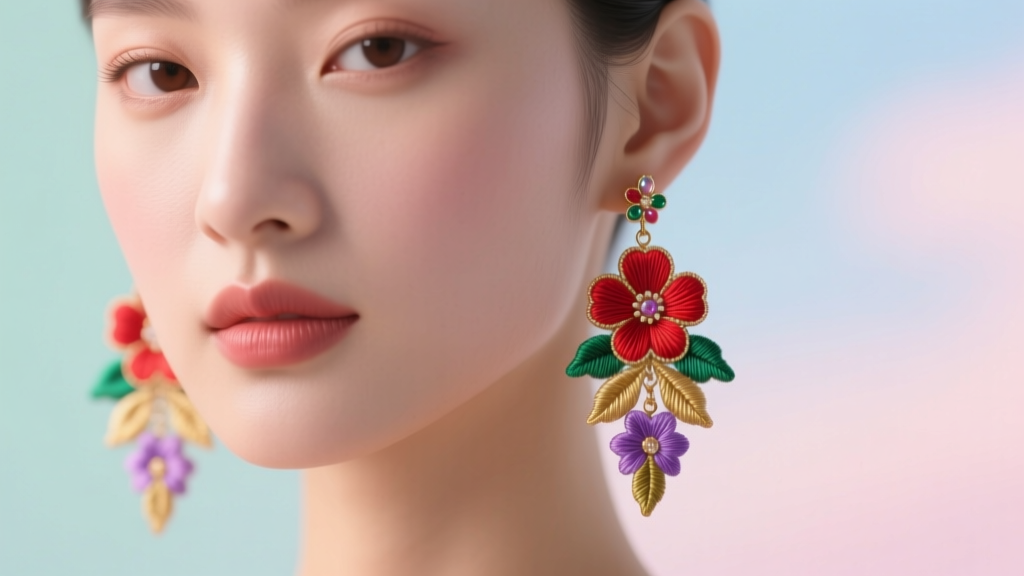
The jewelry landscape in 2026 has decisively pivoted toward the 'Neo-Artisan' movement, a trend that champions hyper-detailed, handcrafted textiles over traditional heavy metals. At the absolute forefront of this shift are embroidery earrings. Once relegated to niche craft fairs or specific cultural ceremonies, hand-stitched and micro-embroidered ear pieces have been elevated by contemporary designers into high-fashion statement accessories. This evolution is driven by a consumer desire for 'dopamine dressing'—vibrant, joyful, and deeply personal adornments that offer massive visual impact without the physical burden of heavy brass or solid gold.
As a style radar analyst, I have tracked the migration of embroidery from garment embellishment to structural jewelry. This comprehensive guide breaks down the material science, structural engineering, and face-shape styling frameworks you need to master the embroidery earrings trend this year.
The Resurgence of Textile Jewelry in 2026
According to recent market analyses tracked by the Business of Fashion's jewelry market reports, the demand for lightweight, sustainable, and craft-based accessories has surged by over 40% since 2024. Embroidery earrings perfectly encapsulate this zeitgeist. Unlike cast metals, which require energy-intensive mining and smelting, textile jewelry utilizes low-impact materials like organic cotton, peace silk, and upcycled metallic threads.
The 2026 iteration of this trend is defined by 'micro-embroidery.' While early 2020s bohemian trends favored massive, sprawling tapestry-style hoops, today's aesthetic demands precision. Designers are utilizing single-ply silk threads and magnification loupes to create intricate, miniature landscapes, botanical studies, and geometric patterns on canvases no larger than a thumbnail. This miniaturization transforms a traditional craft into a sophisticated, everyday luxury.
Material Breakdown: Silk, Cotton, and Metallic Bullion
Not all threads are created equal. The longevity, sheen, and drape of embroidery earrings depend entirely on the specific fibers used. Understanding these materials is crucial for both designers and discerning collectors.
Mulberry Silk Thread
The gold standard for high-end embroidered jewelry. Mulberry silk, typically separated into 2 to 6 microscopic strands, offers an unparalleled natural luster that mimics the light-reflecting properties of gemstones. It takes dye exceptionally well, resulting in hyper-vibrant, colorfast hues. However, silk has a lower tensile strength than synthetic alternatives and requires a skilled hand to maintain consistent tension without snapping the warp threads.
Mercerized Cotton (e.g., DMC)
For matte finishes and structural durability, mercerized cotton is the industry workhorse. The mercerization process treats the cotton fibers with sodium hydroxide, increasing their luster, strength, and affinity for dye. Cotton embroidery earrings are highly durable, less prone to snagging, and offer a distinctly modern, graphic aesthetic when used in tight satin-stitch geometric patterns.
Metallic Bullion and Zari
Originating from traditional South Asian Aari work and Middle Eastern couture, Zari metallic threads consist of fine gold or silver wire tightly coiled around a silk or cotton core. In 2026, designers are blending bullion wire with matte cotton to create striking textural contrasts. The primary drawback of metallic thread is oxidation; lower-quality alloys will tarnish rapidly when exposed to the natural oils and humidity of the skin.
Structural Integrity: The Engineering of Thread Earrings
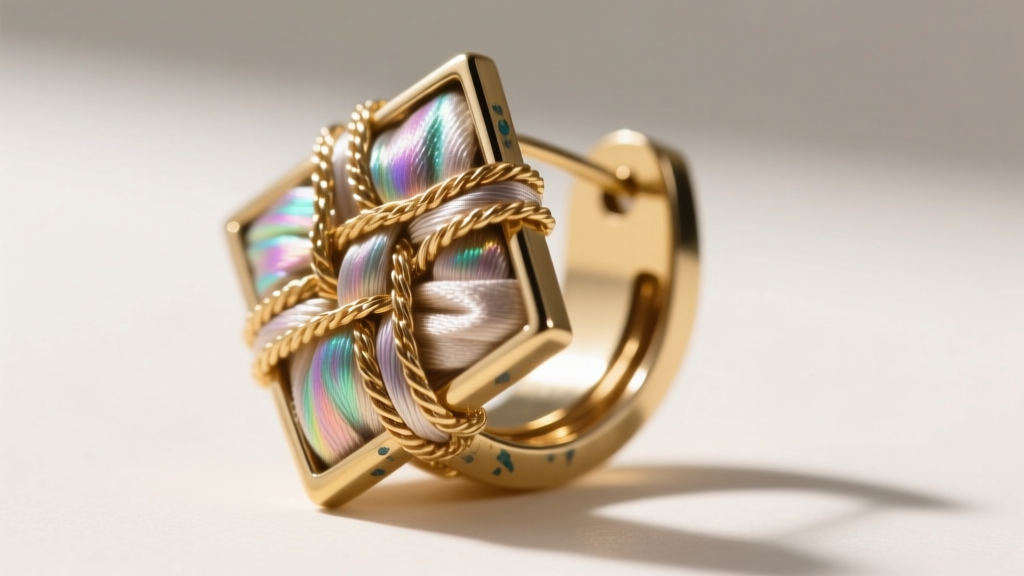
The most common failure point in textile jewelry is the junction between the fabric and the ear post. Cheap, mass-produced embroidery earrings often rely on hot glue applied to flimsy felt backing, resulting in sagging fabric, detached posts, and ruined textiles. True artisan embroidery earrings are engineered with structural permanence in mind.
- The Foundation Pad: Premium pieces utilize an 8mm to 12mm brass stamping pad as the foundation. The fabric is pulled taut over this rigid metal disc and secured at the back with a crimped metal bezel or a two-part marine-grade epoxy resin, ensuring the embroidery never warps or sags.
- The Post and Gauge: Because embroidery adds virtually zero weight, designers can afford to use thicker, more comfortable posts without causing lobe elongation. A standard 20-gauge (0.8mm) or 18-gauge (1.0mm) surgical steel or implant-grade titanium post is ideal. Titanium is highly recommended for 2026 releases due to its hypoallergenic properties and resistance to corrosion from skin acids.
- Weight Distribution: Even with heavy metallic bullion threads and glass seed bead accents, a properly engineered embroidery earring should never exceed 12 grams per ear. This keeps the jewelry well within the ergonomic safety limits for standard lobe piercings, preventing the 'stretched lobe' effect common with heavy brass hoops.
Styling Framework: Matching Embroidery to Face Shapes
Because embroidery earrings often feature bold colors, dense patterns, and distinct silhouettes, they interact dynamically with facial geometry. The goal is to create optical balance. Below is a strategic framework for selecting the right embroidered silhouette based on face shape.
| Face Shape | Ideal Embroidery Silhouette | Design Elements to Seek | Styles to Avoid |
|---|---|---|---|
| Round | Long, narrow drops or rectangular tassels | Vertical lines, dark monochromatic threads, elongated bead fringe | Large circular hoops, wide stud clusters |
| Oval | Medium geometric studs or teardrop dangles | Balanced proportions, mixed metallic and matte threads | Extremely long, overwhelming chandeliers |
| Square | Soft, curved drops or floral circular motifs | Organic shapes, pastel silk threads, scalloped edges | Sharp, angular geometric blocks |
| Heart | Bottom-heavy teardrops or chandelier styles | Intricate detailing at the lower half, gradient color dyeing | Top-heavy triangles, wide horizontal bars |
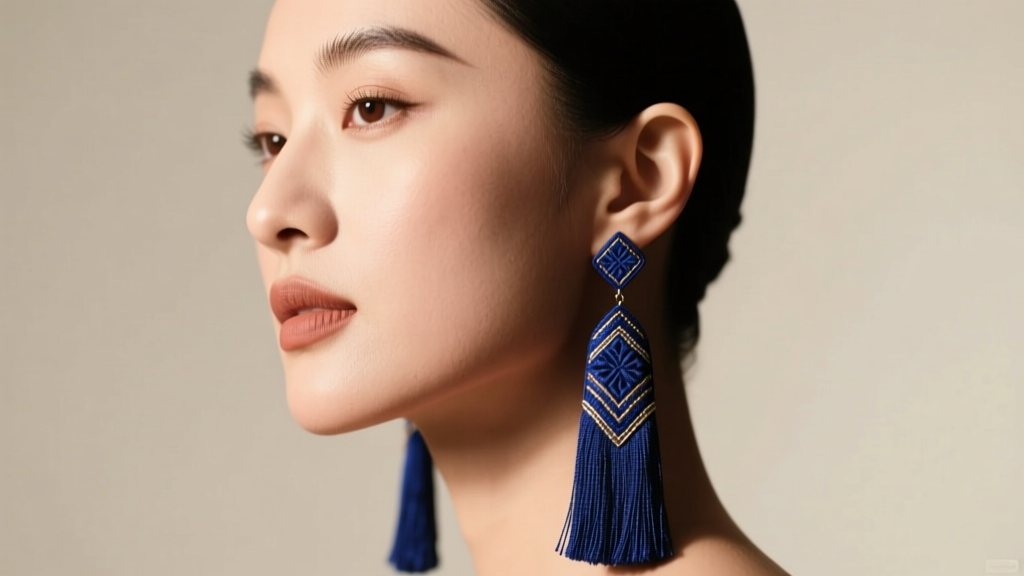
Care and Maintenance for Thread-Based Earrings
Textile jewelry requires a fundamentally different care regimen than metal or stone pieces. The porous nature of thread makes it susceptible to environmental damage, cosmetics, and moisture. To preserve the archival quality of your embroidery earrings, adhere to the following maintenance protocols:
The Golden Rule of Textile Jewelry: Always apply perfumes, hairsprays, and liquid foundations before putting on your embroidery earrings. The alcohol and volatile organic compounds (VOCs) in cosmetics can instantly dissolve the reactive dyes used in silk threads, causing irreversible color bleeding.
Routine Cleaning: Never submerge embroidery earrings in water. Instead, use a clean, dry, soft-bristled makeup brush (like a powder or blush brush) to gently sweep away dust, dead skin cells, and cosmetic fallout from the threads. For metallic bullion accents, a gentle pass with a microfiber polishing cloth will restore the shine without abrading the delicate wire coils.
Storage Solutions: Humidity is the enemy of metallic threads and the adhesives used in the backing pads. Store your pieces in an airtight acrylic organizer lined with silica gel packets. Keep them out of direct sunlight, as UV radiation will rapidly degrade and fade mercerized cotton and natural silk dyes over time.
Sourcing Authentic Artisan Pieces
As the trend accelerates, the market is unfortunately being flooded with machine-punched, mass-produced knockoffs that mimic the look of hand-embroidery but lack the structural integrity and soul of true artisan work. When shopping for authentic embroidery earrings in 2026, look for the hallmarks of genuine handcraft: slight, natural variations in stitch tension; the use of high-quality metal backing pads visible on the reverse side; and transparent supply chains that credit the specific artisan communities—such as the traditional embroiderers of Oaxaca or the silk workers of Gujarat—behind the designs. Investing in genuine artisan pieces not only ensures superior wearability but also supports the preservation of vital global textile heritage.


