Pearl Earrings Painting Repair: Fixing Enamel & Resin
Learn how to troubleshoot, restore, and protect hand-painted and enameled pearl earrings with expert conservation techniques.

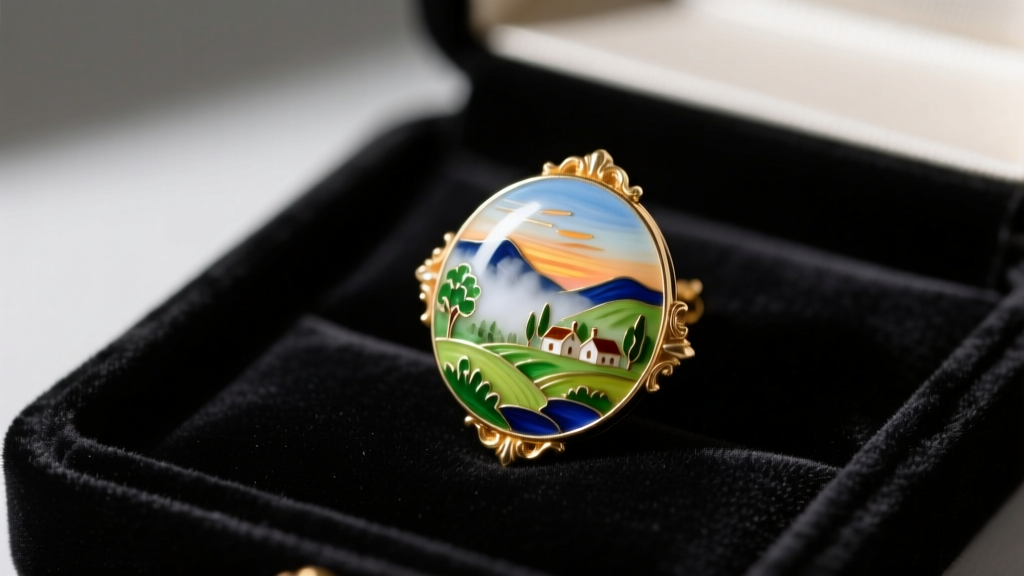
In the bespoke jewelry landscape of 2026, the artisan technique known as a pearl earrings painting has evolved from a niche historical craft into a highly coveted form of wearable art. Jewelers and micro-enamelists are now applying intricate, hand-painted scenes, floral motifs, and geometric resin overlays directly onto the undulating surfaces of baroque and blister pearls. However, combining organic gemstones with rigid pigments creates a unique set of structural vulnerabilities. When the painted layer begins to flake, yellow, or separate from the nacre, standard jewelry repair methods can cause irreversible damage.
This comprehensive troubleshooting guide explores the material science behind painted pearl jewelry, providing actionable conservation techniques to stabilize flaking enamel, restore clouded resin, and preserve the delicate conchiolin matrix of your favorite wearable masterpieces.
The Chemistry of Nacre vs. Paint Adhesion
To effectively troubleshoot a failing pearl earrings painting, you must first understand the battlefield: the interface between organic nacre and inorganic pigments. Nacre (mother-of-pearl) is a biomineral composite consisting of microscopic aragonite platelets bound together by conchiolin, an elastic organic protein. It ranks a mere 2.5 to 4.5 on the Mohs hardness scale.
Conversely, the materials used in pearl paintings—such as vitreous enamel, epoxy resins, and acrylic polymers—are significantly harder and possess different coefficients of thermal expansion. When the earring is exposed to temperature fluctuations (like moving from a cold winter street into a heated room), the rigid paint layer expands and contracts at a different rate than the underlying pearl. Over time, this sheer stress breaks the microscopic mechanical bond, leading to delamination.
Diagnostic Table: Why Your Painted Pearls are Failing
Before attempting any repair, accurately diagnose the failure mode. Use the following diagnostic chart to identify the root cause of your enamel or resin damage.
| Failure Mode | Visual Symptom | Root Cause | Conservation Fixability |
|---|---|---|---|
| Micro-Flaking | Tiny, dust-like specs of color missing near the drill hole or high ridges. | Desiccation of conchiolin causing the nacre surface to shrink and crack. | High (Consolidation) |
| Sheet Delamination | Large, continuous chips of paint lifting away from the pearl. | Thermal shock or mechanical impact exceeding the adhesive shear strength. | Moderate (Re-adhesion) |
| Resin Yellowing | Clear or light-colored resin overlays turning amber or cloudy. | UV degradation and oxidation of the polymer chains in the resin. | Low (Surface Polishing) |
| Crazing | A spiderweb network of fine cracks within the paint layer itself. | Improper curing of the enamel or resin during the initial artisan creation. | Very Low (Stabilization only) |
Step-by-Step Consolidation of Flaking Enamel
If your pearl earrings painting is suffering from micro-flaking or minor delamination, do not reach for standard cyanoacrylate (Super Glue). Cyanoacrylate off-gasses as it cures, leaving a permanent, frosty white bloom on the porous nacre that is impossible to remove without aggressive repolishing—which would destroy the adjacent painting.
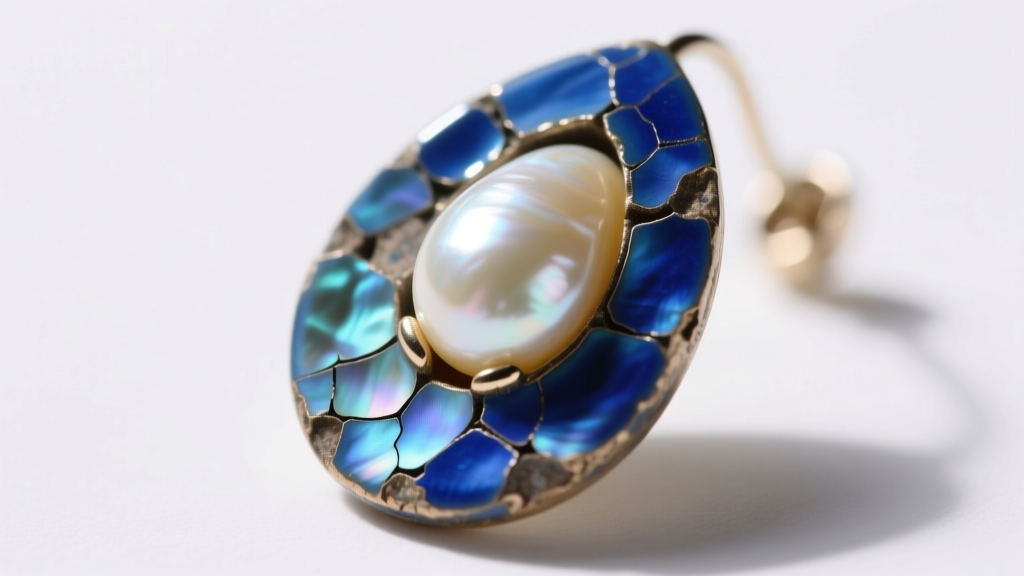
Professional conservators rely on Paraloid B-72, an ethyl methacrylate copolymer that remains stable, reversible, and optically clear. Here is the professional triage protocol:
1. Prepare the Consolidant
Dissolve Paraloid B-72 beads in analytical-grade acetone to create a 3% to 5% weight-by-volume solution. Allow it to sit for 24 hours until it reaches a thin, syrupy consistency. This low viscosity allows the solution to wick under the flaking paint via capillary action.
2. Clean the Surface
Using a soft, dry sable brush, gently sweep away any loose debris from the nacre. Never use water or ultrasonic cleaners, as moisture will swell the conchiolin and push the flaking paint further away from the pearl.
3. Apply the Consolidant
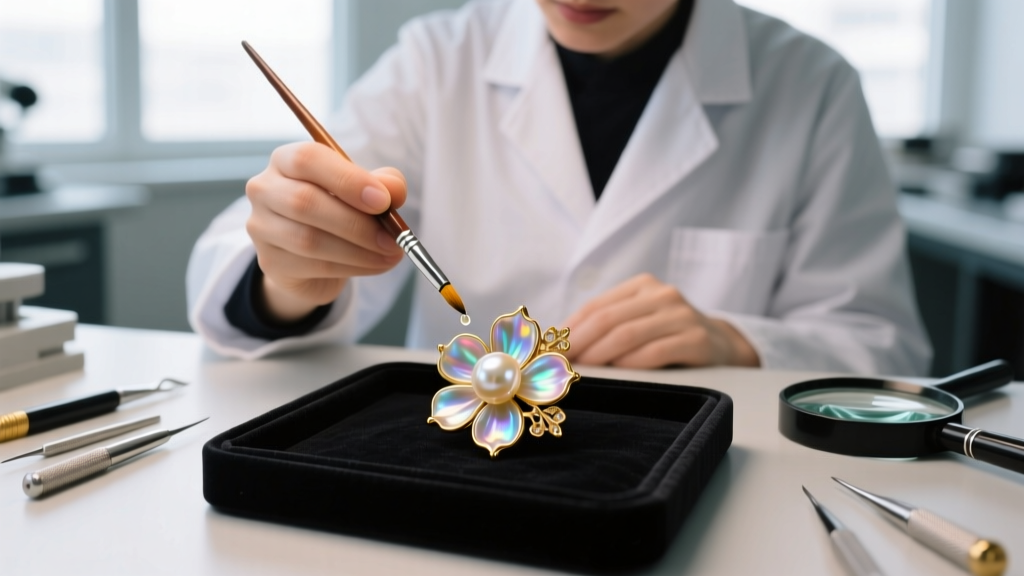
Under a 10x jeweler's loupe, use a 000 Kolinsky sable brush to apply a microscopic drop of the B-72 solution at the edge of the lifting paint. Allow capillary action to draw the adhesive underneath.
4. Apply Gentle Pressure
Once the solvent begins to flash off (about 15 seconds), use a silicone-tipped color shaper to gently press the enamel flake back down onto the nacre. Hold for 60 seconds. The acetone will evaporate completely, leaving a stable, reversible bond.
Troubleshooting Yellowed Resin Overlays
Many contemporary pearl earrings paintings utilize UV-cured resins to create a domed, glass-like effect over hand-painted acrylic details. By 2026, early iterations of these resin-heavy designs are showing signs of severe UV yellowing and clouding.
Unlike solid gemstones, you cannot simply buff a pearl with standard jeweler's rouge or tripoli, as the abrasives will scratch the nacre and generate heat that melts the resin further. To address yellowed resin overlays:
- Micro-Mesh Polishing: Use wet Micro-Mesh pads (starting at 3600 grit and moving up to 12000 grit) with a drop of distilled water. Keep the pearl moving to avoid heat buildup.
- UV-Blocking Topcoats: After polishing, apply a microscopic layer of conservation-grade microcrystalline wax (like Renaissance Wax) to seal the resin and block future UV penetration.
- Avoid Retrobrighting: While hydrogen peroxide vapor (retrobrighting) is popular for yellowed plastics, it is highly alkaline and will chemically etch and destroy the calcium carbonate of the pearl.
Preventative Care and Humidity Control
The most common reason a pearl earrings painting fails is improper storage. According to the Gemological Institute of America (GIA), pearls require a specific level of ambient moisture to maintain their structural integrity. When stored in airtight plastic bags or safety deposit boxes with silica gel packets, the conchiolin protein dries out, shrinks, and causes the nacre to craze, instantly shattering the rigid paint layer above it.
To protect your artisan pearl jewelry, the Smithsonian Institution recommends maintaining a relative humidity (RH) of 40% to 55%. Store your painted pearl earrings in a breathable linen pouch inside a wooden jewelry box, away from direct sunlight and extreme temperature swings. Furthermore, always put your pearls on after applying perfumes, hairsprays, and cosmetics, as the solvents in these products will dissolve both the nacre's luster and the delicate painted pigments.
When to Seek Professional Conservation
While at-home consolidation is effective for minor flaking, severe sheet delamination or damage to historically significant vintage pieces requires professional intervention. The American Institute for Conservation maintains a directory of certified objects conservators who specialize in organic gemstones and composite artifacts. If the painted scene is a complex micro-enamel miniature, a professional can utilize specialized localized heat pens and custom-mixed reversible adhesives that are unavailable to the consumer market, ensuring your wearable art survives for generations to come.


