Snake And Earrings Movie Influence: Fixing Stretched Ear Blowouts
Inspired by the Snake and Earrings movie? Learn how to troubleshoot stretched ear blowouts, thinning lobes, and cartilage trauma from heavy gauge mods.

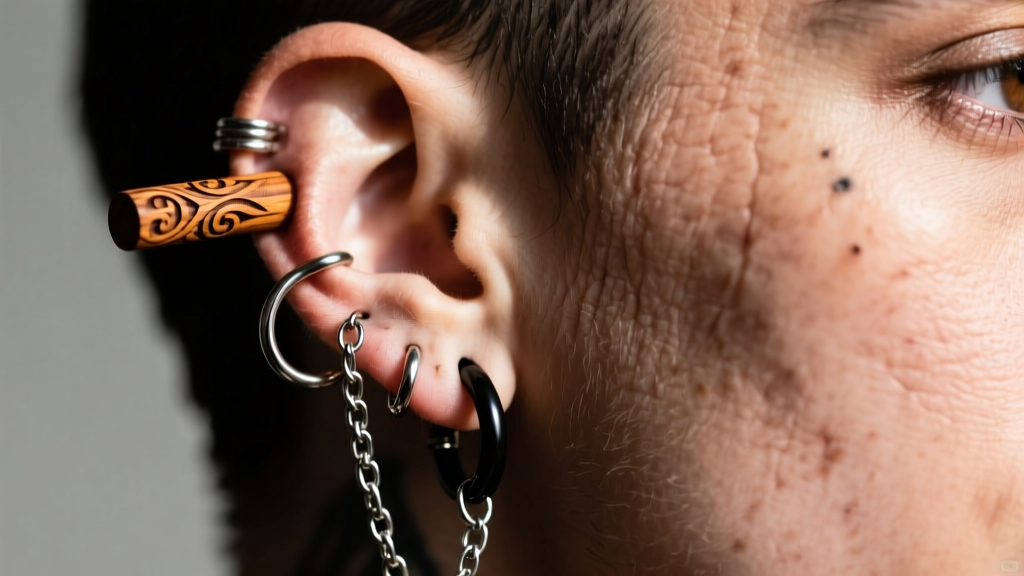
The 2006 Japanese film Snakes and Earrings (Hebi ni Piasu), based on Hitomi Kanehara’s Akutagawa Prize-winning novel, did more than just shock audiences with its raw depiction of youth alienation. It inadvertently catalyzed a global wave of extreme body modification. The protagonist’s fascination with heavy ear stretching and intense cartilage modifications inspired a generation to push their anatomical limits in pursuit of visceral self-expression. Now, in 2026, body jewelry specialists and dermatologists are dealing with the long-term physiological fallout of those cinematic trends.
While the Snake and Earrings movie portrayed body modification as an emotional release, the biological reality of stretching earlobes past 00g (10mm) or stacking heavy cartilage hoops requires meticulous, science-based aftercare. When enthusiasts rush the process to emulate on-screen aesthetics, the result is often severe tissue trauma. This guide provides expert-level troubleshooting for the most common heavy-gauge and cartilage complications born from this cultural phenomenon.
The Physics of the Fistula: Why Rushed Stretches Fail
The earlobe is composed of areolar connective tissue, fat, and a dense network of collagen and elastin fibers. Unlike cartilage, it lacks a rigid structural matrix, which allows it to stretch. However, elastin has a definitive yield point. When a lobe is stretched too quickly—often defined as jumping more than one standard gauge size (approx. 1mm to 1.5mm) within a single session or failing to wait the requisite healing period—the tissue does not expand; it tears at a microscopic level.
This micro-tearing leads to the formation of scar tissue (fibrosis) inside the fistula (the piercing tunnel). Scar tissue is significantly less elastic than healthy skin. As the wearer forces larger tapers or dead-stretches heavy stone plugs, the inelastic scar tissue resists, causing the pressure to seek the path of least resistance: outward through the back of the lobe.
Troubleshooting the Dreaded Lobe Blowout
A blowout is the involuntary inversion of the fistula. The inner lining of the piercing tunnel is pushed through the back of the earlobe, creating a raised, often painful ring of fleshy scar tissue. It is the most common catastrophic failure in heavy gauge stretching, and it requires immediate intervention to prevent permanent necrosis or lobe splitting.
Step 1: Immediate Downsizing
The moment a blowout is detected (characterized by a protruding lip of tissue at the back of the plug and sharp pain), you must remove the current jewelry. Downsize immediately by at least two to three standard gauge sizes. If you blew out at 0g (8mm), drop down to 4g (5mm) or 6g (4mm). The goal is to relieve all outward pressure on the compromised tissue.
Step 2: Switch to Implant-Grade Titanium or Glass
Never wear porous materials like wood, bone, or silicone in a damaged fistula. These materials harbor bacteria and can cause severe contact dermatitis in open wounds. Switch to ASTM F-136 implant-grade titanium or borosilicate glass plugs, which are non-porous and can be autoclaved.
Step 3: The PTFE Tape Wrapping Method
To gently rehabilitate the fistula without causing further trauma, use the tape-wrapping method. Wrap 1-2 layers of PTFE (Teflon) tape around your downsized titanium plug. PTFE is biocompatible, non-adhesive, and incredibly thin. Leave it in for a week, then remove one layer of tape. This allows the tissue to slowly contract and heal without the shock of a sudden size drop.
Step 4: Hydration and Massage
Twice daily, massage the lobe with pure, cold-pressed jojoba oil or unrefined emu oil. These oils closely mimic human sebum and help break down fibrotic scar tissue while increasing localized blood flow. Avoid vitamin E oil, which can cause contact dermatitis in compromised fistulas.
Stretching Timelines vs. Blowout Risk Factors
Rushing the timeline is the primary reason fans of extreme body mod end up in a dermatologist's chair. Below is the clinical consensus on safe stretching intervals based on tissue density.
| Current Gauge (AWG / mm) | Target Gauge (AWG / mm) | Minimum Wait Time | Blowout Risk if Rushed |
|---|---|---|---|
| 12g (2.0mm) | 10g (2.5mm) | 4-6 Weeks | Low (15%) |
| 8g (3.2mm) | 6g (4.0mm) | 8-10 Weeks | Moderate (35%) |
| 4g (5.0mm) | 2g (6.0mm) | 12-16 Weeks | High (60%) |
| 0g (8.0mm) | 00g (10.0mm) | 4-6 Months | Critical (85%+) |
Cartilage Trauma and the Heavy Helix Stack
The Snake and Earrings movie also popularized the dense, heavy cartilage stack—multiple helix and conch piercings adorned with thick, heavy-gauge hoops and dangling chains. While visually striking, the physics of heavy jewelry on unhealed or freshly pierced cartilage is a recipe for hypertrophic scarring.
Cartilage lacks its own blood supply; it relies on the perichondrium (the connective tissue sheath surrounding it) for nutrients and immune response. When a heavy 14-gauge or 12-gauge gold hoop is placed in a fresh helix piercing, the constant gravitational drag and rotational movement cause micro-traumas to the fistula wall. The body responds to this chronic irritation by overproducing collagen, resulting in a raised, hardened piercing bump (hypertrophic scar).
Fixing Cartilage Bumps
If you have developed a cartilage bump from heavy jewelry, the troubleshooting protocol is strict:
- Remove the Drag: Swap heavy hoops, chains, or dangles for a lightweight, flat-back labret stud made of implant-grade titanium. The flat back prevents the jewelry from moving and snagging.
- Stop the Irritation: Cease all twisting, turning, or sleeping on the affected ear. Use a travel neck pillow to keep pressure off the cartilage while sleeping.
- Sterile Saline Only: Cleanse twice daily with a sterile 0.9% sodium chloride wound wash. Avoid tea tree oil, aspirin pastes, and harsh soaps, which will chemically burn the delicate perichondrium and worsen the bump.
For persistent hypertrophic scars that do not resolve after 8 weeks of strict aftercare, a dermatologist can administer intralesional corticosteroid injections (Kenalog) to flatten the tissue.
Rebuilding Thinning Lobes: The Point of No Return
When earlobes are stretched to extreme sizes (00g and beyond) and worn with heavy stone or steel plugs for years, gravity takes its toll. The bottom edge of the lobe can thin to less than 2mm. At this stage, the tissue is essentially a fragile tube of skin holding a heavy weight, and a blowout or complete lobe split is imminent.
Non-Surgical Intervention: Dermal Fillers
For lobes that are thinning but not yet torn, hyaluronic acid (HA) dermal fillers (such as Restylane or Juvéderm) can be injected into the base of the lobe. This adds immediate structural volume, plumping the tissue and redistributing the weight of heavy plugs. This is a temporary fix, requiring top-ups every 9 to 12 months, with pricing ranging from $400 to $800 per session in 2026.
Surgical Intervention: Lobectomy and Reconstruction
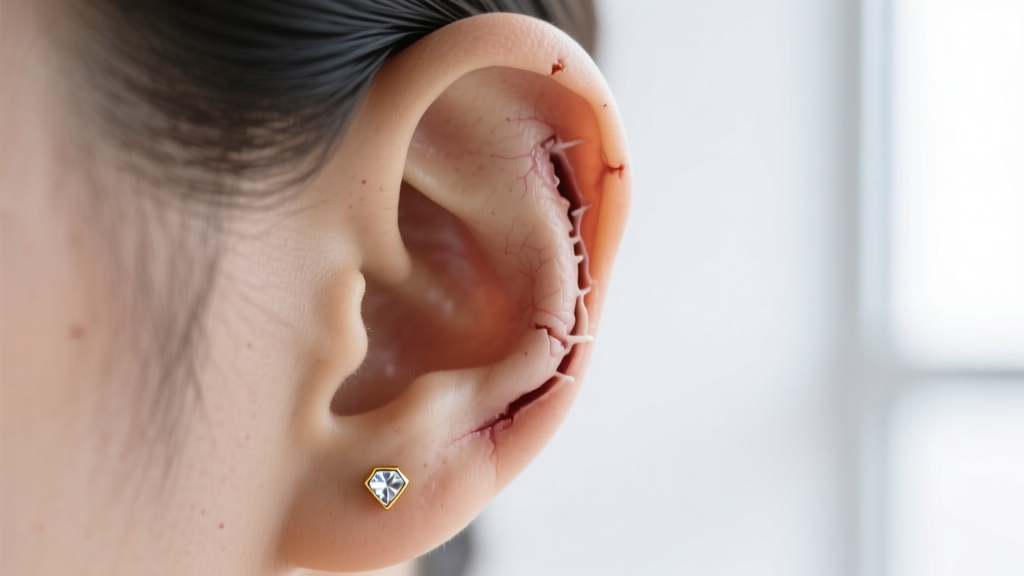
If the lobe has thinned to the point of translucency, or if a complete split has occurred, surgical reconstruction is the only permanent solution. A board-certified plastic surgeon or dermatologic surgeon will perform a lobectomy, excising the damaged fistula tract and the thinned inferior margin. The healthy edges of the lobe are then sutured together using deep dermal sutures to absorb tension, followed by fine epidermal sutures.
Surgical repair typically costs between $1,000 and $2,500 per ear, depending on the complexity of the tear. The ear must remain completely free of jewelry for a minimum of 6 months post-surgery. When repiercing, the new fistula must be placed in a different location than the original scar tissue to prevent re-tearing.
Moving Forward Safely
The cultural impact of the Snake and Earrings movie undeniably pushed the boundaries of mainstream body jewelry, proving that extreme modification is a valid form of personal artistry. However, true body modification requires respecting human biology. According to the Association of Professional Piercers (APP), patience, high-quality materials, and strict adherence to anatomical limits are the only ways to ensure your modifications remain healthy, beautiful, and sustainable for a lifetime. Do not let the rush for a cinematic aesthetic compromise the structural integrity of your tissue.


