The Ultimate Material Guide for Baguette Huggie Earrings
Compare metals and stones for baguette huggie earrings. Discover the best materials for durability, sensitive ears, and budget in our expert guide.

Introduction: The Engineering Behind Baguette Huggies
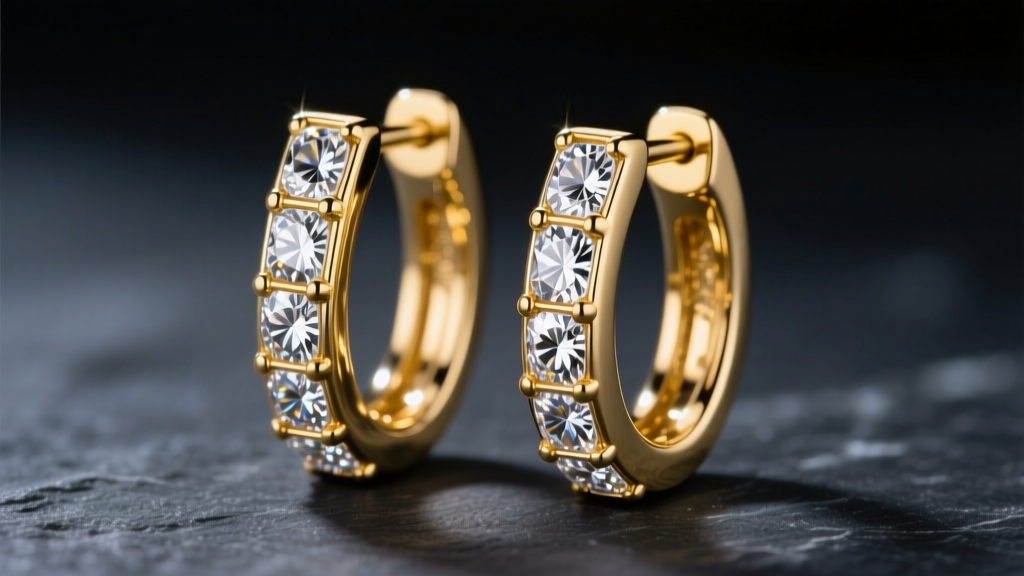
Baguette huggie earrings represent a unique intersection of geometric elegance and mechanical precision. Unlike standard round-brilliant hoops, the step-cut, rectangular geometry of baguette stones demands exacting metalwork to prevent chipping and ensure structural integrity. When selecting the perfect pair, consumers often fixate on carat weight or color, but the underlying metallurgy and material properties dictate the lifespan, comfort, and safety of the earring. In this comprehensive guide, we dissect the material properties of base metals, gemstone alternatives, and setting mechanics to help you make an informed, expert-level purchase.
Metal Matrix: Comparing Base Materials
The base metal of a huggie earring must fulfill two conflicting requirements: it must be malleable enough to cast intricate micro-hinges, yet possess enough "memory" (yield strength) to maintain a secure snap closure over years of daily wear. Here is how the industry-standard metals perform.
14k vs. 18k Gold
Gold purity drastically alters the Vickers Hardness (HV) of the alloy. 18k gold (75% pure gold) boasts a richer, warmer hue but sits at approximately 120 HV, making it relatively soft. For huggies, this softness means the hinge pin can warp over time, leading to a loose closure. Conversely, 14k gold (58.5% pure gold) is alloyed with copper, silver, and zinc, pushing its hardness to roughly 135 HV. This makes 14k gold the superior choice for the mechanical stress points of a huggie clasp, while still providing excellent hypoallergenic properties for sensitive earlobes.
Platinum and Titanium
Platinum (usually 95% pure, alloyed with ruthenium or iridium) is incredibly dense and durable, sitting around 125 HV but offering superior tensile strength. It will not wear away; instead, it develops a patina. According to Jewelers of America, platinum is the premier choice for securing high-value stones due to its prong durability. Titanium (specifically Grade 5 / Ti-6Al-4V), however, is a controversial choice for huggies. While highly hypoallergenic and lightweight, titanium's extreme hardness makes micro-casting precise snap-hinges nearly impossible. Most titanium huggies rely on threaded or friction closures, which lack the satisfying and secure "click" of a traditional gold hinge.
| Metal | Vickers Hardness (HV) | Hinge Memory | Avg. Price (16G Huggie) | Hypoallergenic |
|---|---|---|---|---|
| 14k Gold | ~135 HV | Excellent | $400 - $850 | High (Nickel-free alloys) |
| 18k Gold | ~120 HV | Good | $650 - $1,400 | Very High |
| Platinum (950) | ~125 HV (High Density) | Moderate | $1,200 - $2,500+ | Excellent |
| Sterling Silver | ~65 HV | Poor | $80 - $250 | Moderate (Copper allergies) |
Stone Selection: Natural vs. Lab-Grown vs. CZ Baguettes
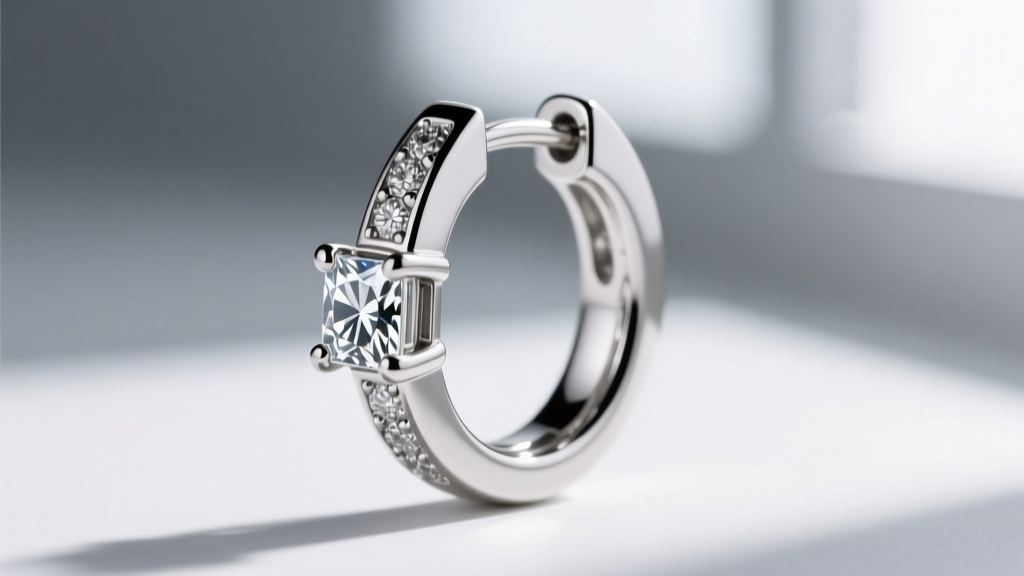
The baguette cut is defined by its 90-degree corners and large, open table facets. This geometry makes inclusions highly visible and corners highly susceptible to chipping. As of 2026, the market has seen a massive shift toward lab-grown diamonds for baguette cuts, as the controlled CVD (Chemical Vapor Deposition) environment produces stones with fewer stress fractures than early HPHT methods.
Mohs Hardness and Corner Vulnerability
According to the GIA Gem Encyclopedia, a diamond's cleavage planes can be exploited by a sharp impact. While diamonds sit at a 10 on the Mohs scale, a hard knock directly on the sharp corner of a baguette can cause a cleavage fracture. White sapphires (Mohs 9) are a popular, budget-friendly alternative, but they lack the refractive index of diamonds, often appearing "glassy" in the step-cut baguette style. Cubic Zirconia (Mohs 8-8.5) is the least recommended for daily-wear huggies; its lower hardness means it will accumulate micro-scratches from dust (which contains quartz, Mohs 7), leading to a cloudy appearance within 12 to 18 months of daily wear.
Setting Mechanics: Channel vs. Prong
How the metal interacts with the baguette stone is just as critical as the materials themselves. There are two primary setting styles for baguette huggie earrings:
- Channel Setting: The metal is folded over the top and bottom edges (the girdle) of the baguette in a continuous track. This is the gold standard for huggies. Because huggies sit close to the jaw and neck, they experience high friction. A channel setting completely protects the vulnerable 90-degree corners of the baguette from impacts and prevents hair or sweaters from catching on the stones.
- Prong Setting: Small metal claws hold the stone. While this allows more light to enter the stone, it leaves the sharp corners of the baguette exposed. If a prong experiences metal fatigue and lifts, the stone will inevitably chip or fall out. If you choose prong-set baguette huggies, ensure the prongs are V-shaped at the corners and crafted from platinum or 14k white gold for maximum grip.
Gauge Sizing and Ear Lobe Biomechanics
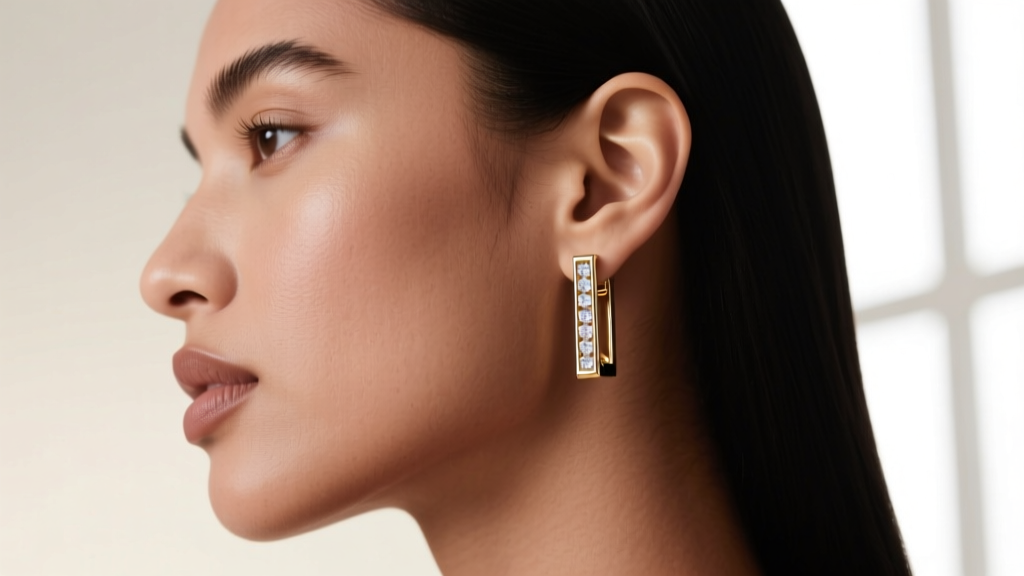
The thickness of the earring wire, measured in gauge, directly impacts the health of your piercing. Standard huggie earrings are typically manufactured in 18-gauge (1.0mm) or 16-gauge (1.2mm).
For standard lobe piercings, an 18G wire is usually sufficient and provides a lightweight, comfortable fit. However, if you are purchasing baguette huggies for a cartilage piercing (such as the helix or tragus), you must opt for 16G. Cartilage tissue is denser and more prone to the "cheese-cutter effect," where a thin, heavy earring slowly migrates through the tissue due to gravity and the weight of the baguette stones. Furthermore, always verify the inner diameter (ID) of the huggie. A standard lobe requires an 11mm to 13mm ID to allow for natural swelling and movement, whereas a snug helix huggie might require an 8mm to 9mm ID.
Care and Maintenance by Material
Maintaining the brilliance of baguette huggies requires specific care routines based on their material composition. Because baguette cuts have large, flat facets, skin oils and lotions are highly visible, quickly dulling the stone's geometric fire.
- Ultrasonic Cleaners: Safe for natural and lab-grown diamonds set in 14k/18k gold or platinum. Never use ultrasonic cleaners on fracture-filled diamonds, emeralds, or opals, as the high-frequency vibrations will shatter the stones.
- Hinge Lubrication: Over time, dead skin cells and soap scum accumulate in the micro-hinge of the huggie, causing it to stiffen. Use a soft-bristled baby toothbrush and a drop of mild dish soap to gently clear the hinge barrel. Avoid harsh chemical dips, which can degrade the rhodium plating on white gold settings.
- Prong Checks: If your baguettes are prong-set, inspect the corners every six months with a jeweler's loupe. The metal should sit flush against the stone's crown without any light gaps.
Final Verdict
When investing in baguette huggie earrings, prioritize structural integrity over sheer carat weight. A 14k gold or platinum base with a channel-set configuration offers the best defense against the inherent fragility of the baguette cut's sharp corners. By understanding the metallurgical properties of the hinge and the Mohs hardness of your chosen stones, you can select a pair of huggies that will maintain their mechanical snap and geometric brilliance for decades.


