Mother of Pearl Clover Earrings: 2026 Trend & Style Guide
Discover why mother of pearl clover earrings dominate 2026 trends. Explore styling tips, material grades, and buying guides for every face shape.

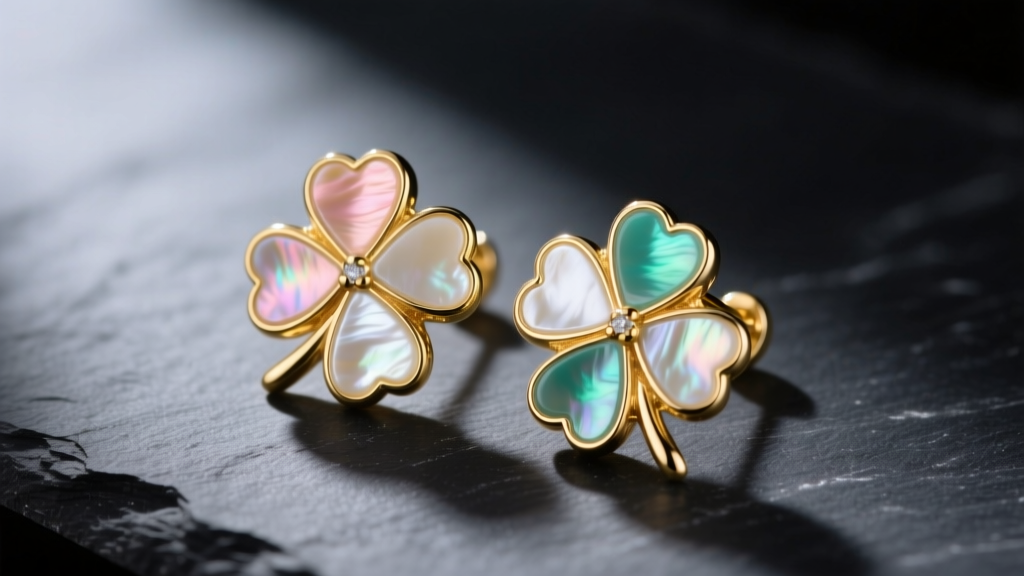
The 2026 Resurgence of Organic Motifs
In the landscape of 2026 jewelry trends, the industry is witnessing a definitive pivot away from stark, minimalist geometry toward romantic, nature-inspired silhouettes. At the forefront of this movement are mother of pearl clover earrings. The quatrefoil clover motif—long associated with heritage luxury houses—has been reimagined for the modern consumer, blending vintage elegance with contemporary wearability. According to the Bain & Company Global Luxury Market Study, consumers are increasingly investing in 'quiet luxury' pieces that feature organic materials and enduring symbolic motifs, making the clover a dominant shape for the year.
The magic of these earrings lies in the juxtaposition of the structured, symmetrical clover frame against the ethereal, light-diffusing properties of nacre. However, not all mother of pearl (MOP) clover earrings are crafted equally. Understanding the material grades, structural integrity, and proportional styling is essential for both collectors and everyday wearers.
Decoding Material Grades: Nacre Quality & Inlay Techniques
Mother of pearl is an organic gemstone secreted by mollusks, primarily the Pinctada maxima (South Sea oyster) and Pinctada margaritifera (Tahitian pearl oyster). On the Mohs scale of hardness, MOP ranks between 2.5 and 4.5, making it relatively soft and susceptible to scratching. This physical property dictates how high-quality clover earrings must be constructed.
Thick Nacre vs. Thin Shell
- Premium Grade (South Sea Shell): Sourced from the silver-lipped oyster, this MOP features a thick nacre layer (often exceeding 1.5mm) with a deep, satiny orient. It exhibits a warm, milky white iridescence that shifts under different lighting angles.
- Commercial Grade (Freshwater Shell): Often thinner and more brittle, commercial-grade shell is frequently backed with epoxy resin or painted black/green to simulate depth. While affordable, it lacks the natural translucency of premium nacre and is prone to peeling over time.
The Gemological Institute of America (GIA) notes that the visual appeal of organic gems relies heavily on their 'orient'—the iridescent play of color just beneath the surface. To protect this delicate surface in a clover shape, the setting technique is paramount.
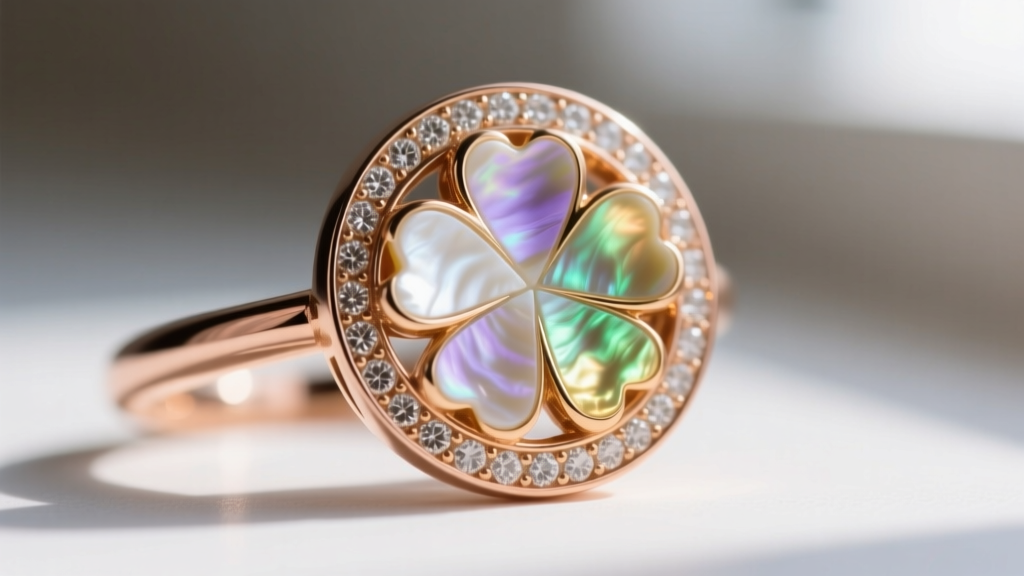
Bezel vs. Prong Settings
For MOP clovers, a bezel setting (where a continuous rim of metal surrounds the stone) is vastly superior to prong settings. The four points of a clover shape are structural weak points. Prongs leave these delicate tips exposed, leading to a high rate of chipping during daily wear. A flush or bezel setting not only protects the nacre edges but also provides a seamless, modern silhouette that aligns with 2026 aesthetic preferences.
Proportions and Face Shapes: Sizing the Clover
The quatrefoil shape is naturally wide, meaning the diameter of the clover significantly impacts facial balance. Below is a structural guide to selecting the correct proportions based on facial geometry.
| Face Shape | Ideal Clover Diameter | Recommended Style | Metal Pairing |
|---|---|---|---|
| Round | 12mm - 15mm | Elongated Clover Drop | 14k White Gold |
| Oval | 10mm - 12mm | Classic Stud or Huggie | 18k Yellow Gold |
| Square | 15mm+ (Oversized) | Statement Dangle | Rose Gold Vermeil |
| Heart | 8mm - 10mm | Petite Lobe Stud | Platinum or 18k White |
Styling Note: For round faces, avoid wide, flat clover studs that emphasize facial width. Instead, opt for a clover motif suspended from a delicate chain drop, which draws the eye downward and elongates the jawline.
Technical Specifications: Gauge, Backs, and Cartilage Placement
Beyond aesthetics, the hardware of mother of pearl clover earrings dictates their comfort and longevity. Because MOP is dense, larger clover earrings can be surprisingly heavy, requiring specific hardware to prevent earlobe stretching.
Gauge Sizes and Post Thickness
Standard earlobe piercings are typically 20-gauge (0.81mm) or 18-gauge (1.02mm). For clover studs larger than 12mm, an 18-gauge post is highly recommended to provide adequate structural support. If you are adapting a clover motif for cartilage placements (such as the helix or tragus), you must upgrade to a 16-gauge (1.29mm) flat-back labret post. Standard friction-back posts used for lobes will cause pressure necrosis and migration when worn in cartilage due to the angle of the piercing channel.
Securing the Earring
For high-end MOP clover drops, standard butterfly friction backs are insufficient. Look for La Pousette backs (locking clutch backs) or screw-backs. These mechanisms ensure that a sudden snag on a silk scarf or sweater will not result in the loss of a valuable organic gemstone.
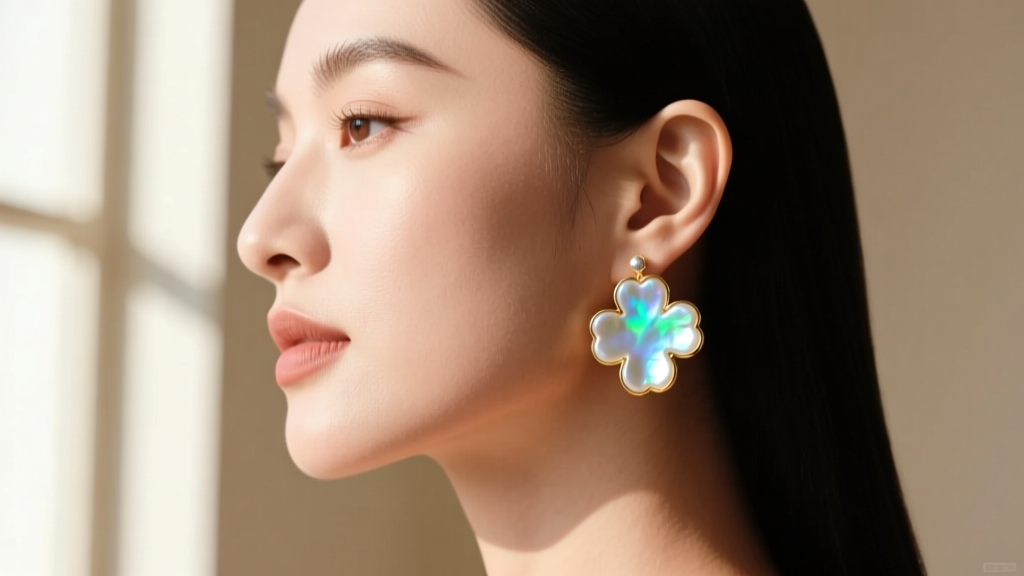
Market Pricing & Authenticity Checks
The market for mother of pearl clover earrings is heavily stratified. Understanding these tiers prevents overpaying for synthetic simulants or resin-backed shells.
- Fashion Tier ($30 - $90): Typically features brass or base metal plated in gold, inlaid with thin freshwater shell or synthetic pearlescent resin. The back of the clover is usually sealed with opaque epoxy. These are fine for seasonal trends but will tarnish and peel within a year of daily wear.
- Bridge/Accessible Fine ($150 - $600): Solid 14k gold or heavy gold vermeil over sterling silver. Uses genuine, unbacked South Sea MOP. These pieces feature open-back settings, allowing light to pass through the nacre and maximize the stone's natural iridescence.
- High Fine Jewelry ($3,500 - $12,000+): 18k gold or platinum, often featuring diamond pavé halos around the clover perimeter. The MOP is hand-selected for perfect color matching and zero surface blemishes. Brands in this tier often carve the clover directly from a single, thick piece of nacre rather than inlaying it.
Maintenance: Preserving the Iridescence
The most common failure mode for MOP jewelry is chemical degradation. Mother of pearl is composed of calcium carbonate, which is highly reactive to acids and harsh chemicals. Never use ultrasonic cleaners on clover earrings. The high-frequency vibrations can shatter the nacre, and the heat can melt the adhesives used in bezel inlays.
To clean your earrings, use a slightly damp, lint-free microfiber cloth. If the earrings have been exposed to perfume, hairspray, or sweat, wipe them down immediately. Store them in a soft pouch separate from diamond or sapphire jewelry, as those harder stones will easily scratch the MOP's delicate surface upon contact.
Final Styling Verdict
Mother of pearl clover earrings are not a fleeting micro-trend; they are a 2026 staple that bridges the gap between vintage sentimentality and modern sophistication. By prioritizing bezel settings, verifying nacre thickness, and selecting the correct gauge for your specific piercing placement, you can secure a piece that offers both enduring style and structural longevity.


