Turquoise Drop Earrings Silver: 2026 Trend Analysis
Discover 2026 trends for turquoise drop earrings silver. Learn about stone treatments, silver alloys, gauge sizes, and styling for your face shape.

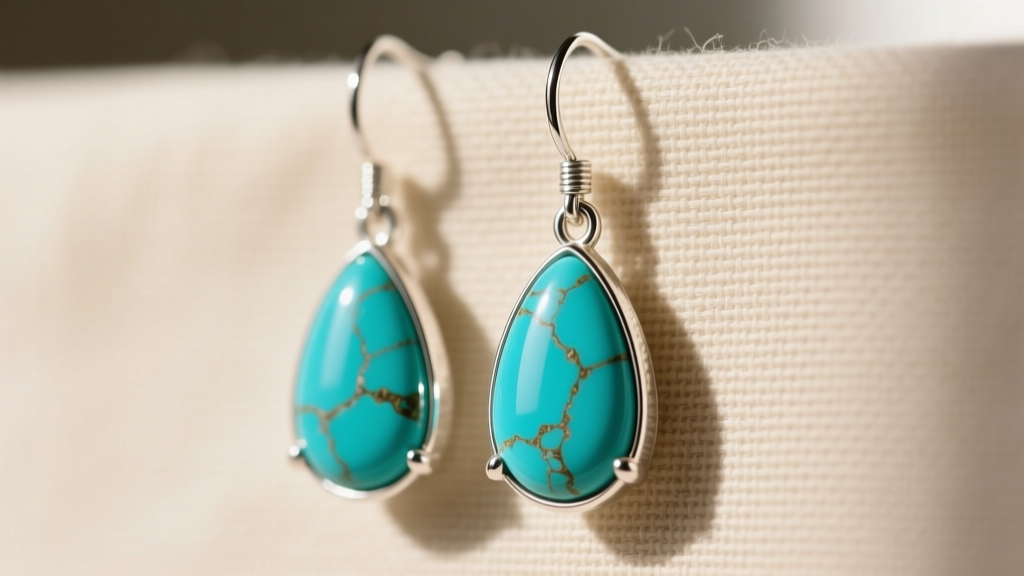
Navigating the market for turquoise drop earrings silver settings and stones requires a deep understanding of gemology and metallurgy. As we move through 2026, the intersection of Southwestern heritage and contemporary minimalist design has pushed this specific jewelry category into the spotlight. However, the closure of legendary mines and the influx of treated imitations mean that buyers must be more educated than ever. This comprehensive style and trend analysis breaks down the exact specifications, material grades, and styling frameworks you need to make an informed purchase this year.
The 2026 Market Shift: Scarcity and New Origins
The most significant trend impacting turquoise drop earrings silver designs in 2026 is the severe scarcity of Sleeping Beauty turquoise. Since the Arizona mine's closure, remaining stockpiles have been heavily depleted, driving prices for untreated, robin’s-egg blue stones up by over 40% in the last three years. Consequently, top-tier silversmiths and jewelry houses have pivoted to two primary alternatives:
- Kingman Turquoise: Sourced from Arizona, this stone is celebrated for its deep blue hues and striking black or brown pyrite matrix. It is currently the gold standard for high-end artisan drop earrings.
- Persian (Neyshabur) Turquoise: Known for its intense, matrix-free sky-blue color, Iranian turquoise is making a massive comeback in luxury silver drop designs, often cut into smooth, high-dome cabochons.
Decoding the Stone: Treatments That Dictate Value
Not all turquoise is created equal. Because natural turquoise is highly porous and relatively soft (ranking 5 to 6 on the Mohs scale), the Gemological Institute of America (GIA) notes that the vast majority of stones on the market undergo some form of enhancement. Understanding these treatments is critical when evaluating pricing.
The Treatment Hierarchy
- Natural (Untreated): Less than 5% of mined turquoise is hard enough to be cut and polished without stabilization. These stones are highly porous and can change color when exposed to skin oils. Expect to pay a massive premium for natural stones in drop earrings.
- Stabilized: The industry standard. Soft turquoise is infused with a clear epoxy or acrylic resin under pressure. This hardens the stone, locks in the color, and makes it durable enough for daily wear. High-quality stabilization does not diminish the stone's value; it ensures its survival.
- Zachery Treatment: A proprietary, high-end stabilization method that uses no polymers or plastics. It enhances the stone's durability and luster while maintaining a natural feel. Zachery-treated stones are highly sought after by collectors.
- Dyed Howlite or Magnesite: Often sold as 'turquolite', these are cheap, white porous stones dyed blue to mimic turquoise. Avoid these entirely if you are seeking authentic turquoise drop earrings.
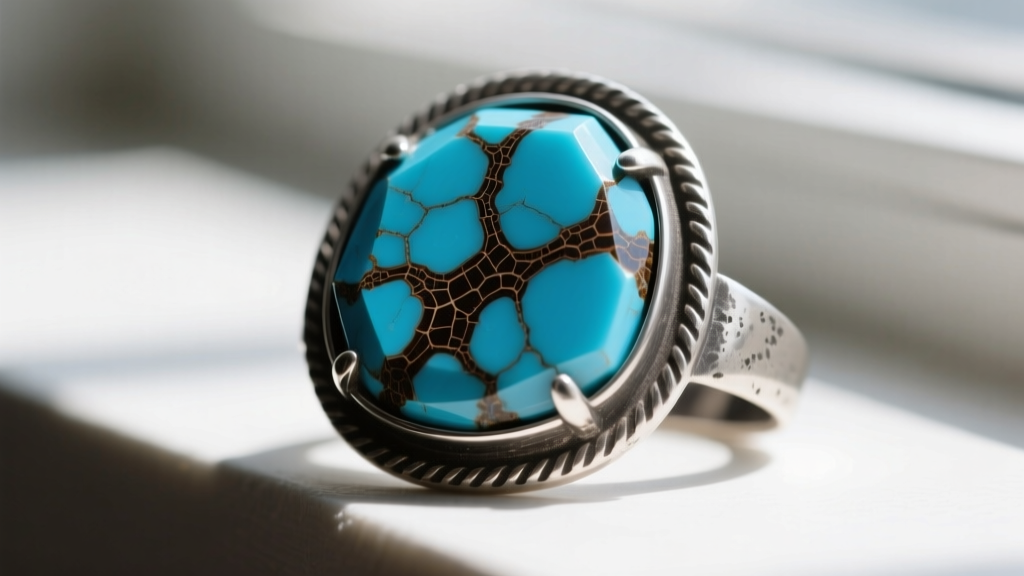
Silver Metallurgy: 925 Sterling vs. Argentium
The metal holding your drop earrings is just as important as the stone. While 'silver' is a catch-all term, the Silver Institute outlines distinct alloys that dictate tarnish resistance, malleability, and skin reactivity.
Standard Sterling Silver (925)
Composed of 92.5% pure silver and 7.5% copper, standard sterling is the traditional choice for Southwestern jewelry. The copper provides necessary structural hardness for intricate bezel work and stamping. However, the copper content makes it prone to oxidation (tarnish), requiring regular polishing with a treated jeweler's cloth.
Argentium Silver (935)
A modern innovation, Argentium replaces some of the copper with germanium. This results in an alloy that is 93.5% pure silver, highly resistant to tarnish, and naturally hypoallergenic. In 2026, many premium jewelers are transitioning to Argentium for their turquoise drop earrings silver collections, as the brighter, whiter luster of the metal provides a sharper contrast against the blue and green hues of the stone without the maintenance burden of traditional sterling.
Hardware Mechanics: Wire Gauges and Closures
Drop earrings rely heavily on their hardware for both security and comfort. The weight of a silver bezel combined with a large turquoise cabochon can easily exceed 8 grams per earring, making the choice of ear wire critical.
- 20-Gauge Wire (0.81mm): The ideal thickness for heavy drop earrings. It provides structural integrity and will not bend under the weight of a large stone, though it may feel slightly thick for those with very tight piercings.
- 22-Gauge Wire (0.64mm): The industry standard for most commercial drop earrings. It fits comfortably through standard lobe piercings but can warp if the earring is dropped or snagged.
- French Hook vs. Leverback: For stones over 15mm in length, always opt for a leverback closure. French hooks (the simple J-curve) lack a securing mechanism, and the pendulum motion of a drop earring frequently works them out of the earlobe over the course of a day.
Face Shape & Proportion Matrix
Styling turquoise drop earrings requires balancing the visual weight of the stone with your facial geometry. Use this framework to select the optimal drop length and stone cut.
| Face Shape | Ideal Drop Length | Recommended Stone Cut | Styling Rationale |
|---|---|---|---|
| Round | 2.0 - 3.0 inches | Elongated Teardrop, Marquise | Long, narrow drops create a vertical line that visually lengthens the face, counteracting wide cheekbones. |
| Oval | 1.0 - 2.5 inches | Oval Cabochon, Cushion | Oval faces are highly versatile. Medium drops with rounded stones complement the natural symmetry without overwhelming the jawline. |
| Square | 1.5 - 2.5 inches | Round, Pear | Curved, rounded stones soften a strong, angular jawline. Avoid geometric or square-cut turquoise which echoes the face's hard lines. |
| Heart | 1.0 - 1.5 inches | Inverted Triangle, Chandelier | Shorter drops that widen at the bottom add visual weight to a narrower chin, balancing a wider forehead. |
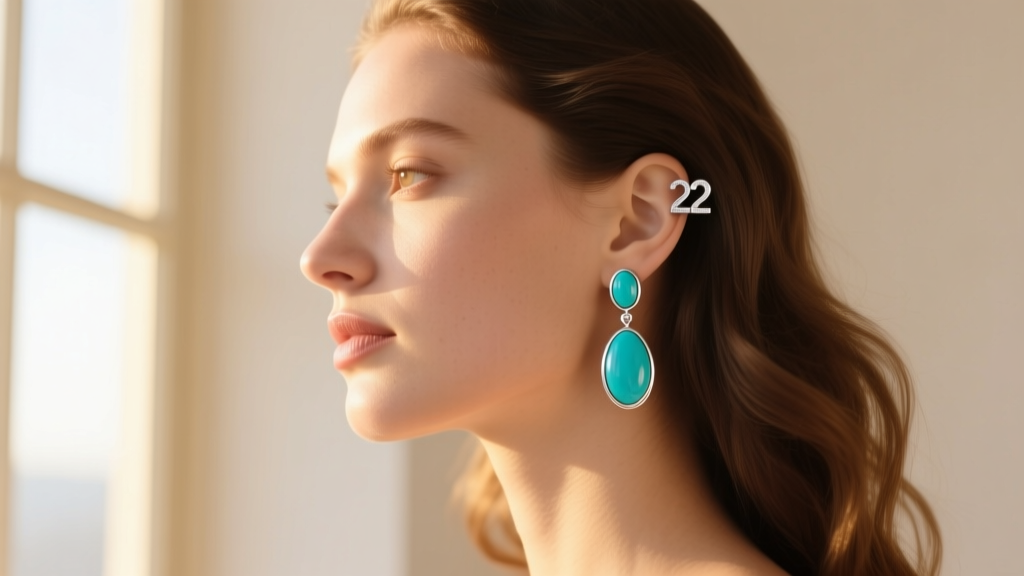
2026 Price Tier Analysis
Pricing for turquoise drop earrings silver settings varies wildly based on stone origin, treatment, and metal weight. Here is what you should expect to pay in the current market.
| Tier | Stone Type & Origin | Silver Type | Estimated Price Range (USD) |
|---|---|---|---|
| Entry / Fashion | Dyed Howlite or Reconstituted | 925 Sterling (Lightweight) | $35 - $85 |
| Mid-Range / Artisan | Stabilized Kingman or Chinese | 925 Sterling (Heavy Stampwork) | $120 - $280 |
| Premium / Collector | Natural Persian or High-Grade Kingman | Argentium 935 or Heavy 925 | $350 - $800+ |
| Heritage / Antique | Untreated Sleeping Beauty (Vintage) | Coin Silver or Vintage 925 | $1,200 - $3,500+ |
Care Protocols for Porous Gems
Turquoise is notoriously sensitive to chemicals, heat, and sudden temperature changes. To preserve the integrity of your drop earrings, you must abandon standard jewelry cleaning habits.
Expert Warning: Never place turquoise jewelry in an ultrasonic cleaner. The high-frequency vibrations can easily fracture stabilized stones and completely shatter natural, untreated turquoise. Similarly, steam cleaners will force moisture and heat into the stone's matrix, causing irreversible discoloration.
Instead, clean your silver settings using a dry, untreated microfiber polishing cloth. If the turquoise stone itself accumulates skin oils or lotion, wipe it gently with a barely damp, lint-free cloth and dry it immediately. Always put your earrings on after applying hairspray, perfume, and cosmetics, as the alcohols and aerosols in these products will degrade the polish of the cabochon over time.
Final Thoughts on the 2026 Landscape
The appeal of turquoise drop earrings silver combinations lies in their timelessness, but the 2026 market demands a discerning eye. By prioritizing high-quality stabilization methods, understanding the benefits of modern silver alloys like Argentium, and selecting the correct gauge and closure for your lifestyle, you can secure a piece that is both a striking fashion statement and a durable heirloom. Whether you are drawn to the intricate matrix of a Kingman stone or the pristine blue of a Persian cabochon, informed buying is the key to building a lasting collection.


