The 2026 Gift Guide to Inside Out Diamond Hoop Earrings
Discover the ultimate 2026 gift guide for inside out diamond hoop earrings. Learn sizing, clasp mechanics, and occasion matching for flawless gifting.

Why Inside Out Diamond Hoops Are the Ultimate 2026 Gift
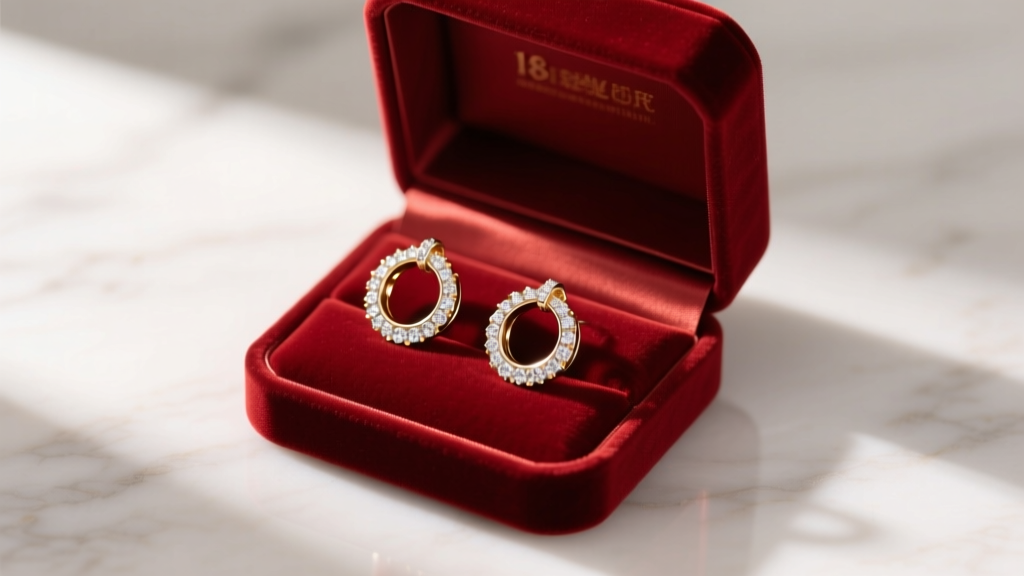
Gifting fine jewelry requires balancing emotional resonance with everyday wearability. While classic diamond studs and standard hoops have long been the default choices for milestones, the inside out diamond hoop earrings trend has completely redefined luxury ear styling. Unlike traditional hoops that only feature diamonds on the front-facing curve, inside out hoops are meticulously set with diamonds along both the exterior and the interior (the pavilion side) of the metal band. This dual-surface setting creates a continuous, 360-degree halo of brilliance that catches the light from every conceivable angle, making them an unforgettable gift for the modern jewelry connoisseur.
As we navigate the 2026 fine jewelry market, buyers are moving away from static, one-dimensional pieces in favor of dynamic designs that offer maximum visual impact. Whether you are shopping for a landmark anniversary, a graduation milestone, or a significant holiday, understanding the technical specifications, sizing nuances, and clasp engineering of inside out hoops is critical to selecting a piece that will be cherished for a lifetime.
Decoding the Specs: Diamond Quality and Metal Choices
When evaluating diamond hoops, the traditional hierarchy of the 4Cs (Cut, Color, Clarity, Carat) shifts dramatically. According to the Gemological Institute of America (GIA), diamond clarity and color are paramount for large, static center stones. However, inside out hoops rely on dozens of smaller melee diamonds (typically ranging from 0.01 to 0.05 carats each) set in continuous pavé or channel settings.
The Clarity and Color Sweet Spot
Because the diamonds in hoops are in constant motion and are relatively small, inclusions are virtually invisible to the naked eye. Expert Tip: Do not overpay for VVS or VS clarity grades in hoop earrings. Opt for SI1 to SI2 clarity, which offers the best value without compromising visual perfection. For color, the G to H range (near colorless) is ideal. The continuous reflection of light across the inside and outside curves masks slight warmth, allowing you to allocate more of your budget toward total carat weight (CTW) rather than color grades.
Metal Alloys and Durability
The metal foundation must support the weight of the diamonds while resisting bending. 14k gold (yellow, white, or rose) remains the industry standard for hoop structural integrity due to its higher alloy content, which provides superior rigidity. 18k gold offers a richer color but is softer; if choosing 18k, ensure the hoop diameter does not exceed 30mm to prevent warping. For heirloom-grade gifting, Platinum (950) is unmatched in durability and naturally enhances the brilliance of white diamonds, though it commands a 40-60% premium over gold.
Clasp Engineering: The Hidden Failure Point
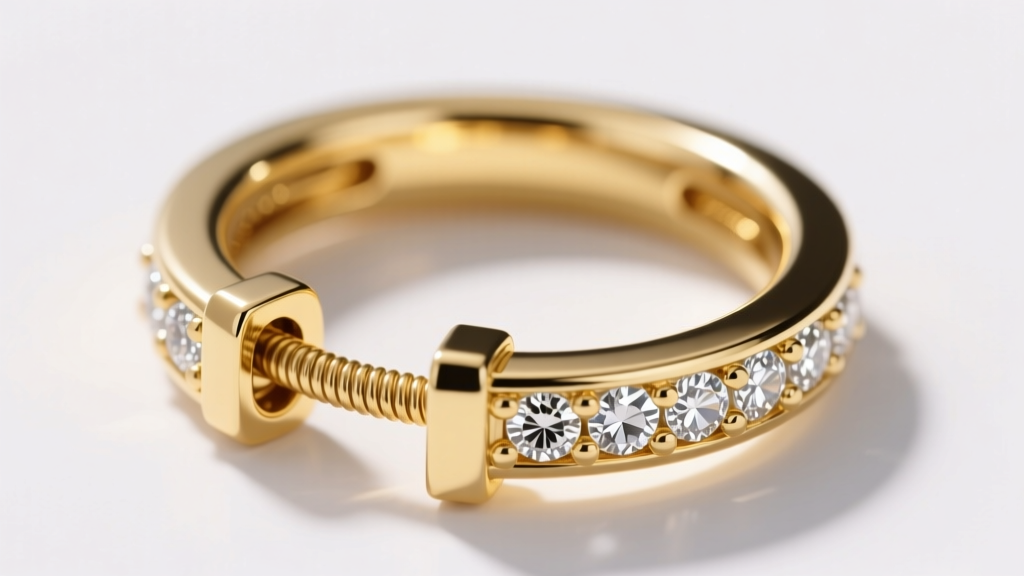
The most common point of failure in gifted hoop earrings is the clasp mechanism. A lost earring is a heartbreaking experience, making clasp selection a vital part of your purchasing decision.
- Hinged Click-Top (Snap Clasp): The gold standard for inside out hoops. A hinged post clicks securely into a grooved receiver on the opposite end. This mechanism is highly secure, easy to operate, and maintains a seamless silhouette that doesn't interrupt the diamond pavé.
- Latch-Back (Fishhook): A wire loops through the ear and clicks into a latch. While common in cheaper hoops, the thin wire is prone to bending, and the latch can loosen over time, risking loss. Avoid this for high-value diamond gifts.
- Omega-Back / Clip-Back: Used primarily for larger, heavier hoops (over 40mm). A hinged, wide paddle back distributes the weight across the earlobe, preventing the dreaded 'earlobe droop' and providing immense security.
Occasion Matching: Who, When, and What Size?
Matching the hoop diameter and carat weight to the recipient's lifestyle and the specific occasion ensures your gift is worn daily rather than locked in a safe. Below is our 2026 occasion-matching matrix.
| Occasion | Recipient Profile | Ideal Diameter | Total Carat Weight (CTW) | Best Metal Choice |
|---|---|---|---|---|
| 10th+ Anniversary | Elegant, attends formal events, loves statement pieces | 35mm - 45mm | 4.00 - 6.00 ct | 18k White Gold or Platinum |
| College Graduation | Young professional, needs versatile day-to-night wear | 20mm - 25mm | 1.50 - 2.50 ct | 14k Yellow or Rose Gold |
| Milestone Birthday (30/40/50) | Trend-conscious, follows luxury fashion, bold style | 30mm - 35mm | 3.00 - 4.50 ct | 14k White Gold |
| Valentine's / Holiday | Classic taste, prefers subtle luxury and everyday sparkle | 15mm - 20mm (Huggie) | 0.75 - 1.25 ct | 14k Yellow Gold |
2026 Pricing Guide: Lab-Grown vs. Natural Diamonds
The diamond market has evolved significantly, and understanding the pricing tiers for inside out diamond hoop earrings is essential for smart gifting. Lab-grown diamonds have achieved mainstream luxury status, offering identical chemical and optical properties to mined diamonds at a fraction of the cost.
Natural Diamond Pricing Tiers
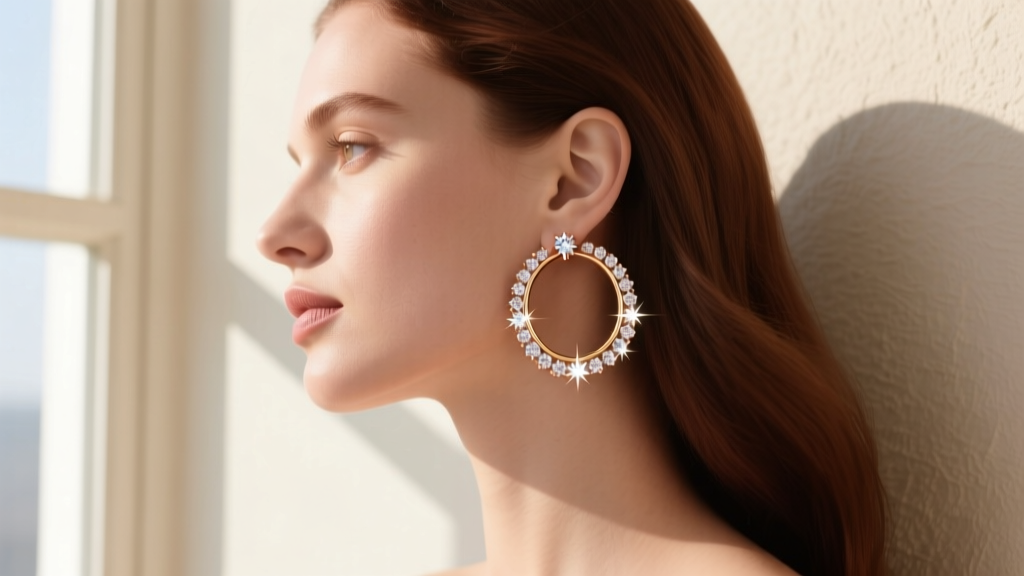
For recipients who place high emotional value on the geological rarity of earth-mined stones, natural inside out hoops carry a premium. Expect to pay between $4,500 and $8,000 for a high-quality 2.00 to 3.00 CTW pair in 14k gold. Prices scale exponentially past the 4.00 CTW mark due to the rarity of matching high-quality melee diamonds in large quantities.
Lab-Grown Diamond Pricing Tiers
Lab-grown options allow gifters to maximize size and sparkle. A stunning 2.00 to 3.00 CTW lab-grown inside out hoop pair typically ranges from $1,200 to $2,500. This price advantage makes lab-grown hoops the premier choice for buyers wanting a larger diameter (e.g., 40mm) without exceeding a $3,000 budget. When purchasing lab-grown, ensure the diamonds are certified by the IGI or GIA to guarantee the cut quality, which is the primary driver of the hoop's overall brilliance.
Expert Sizing: Gauge Thickness and Earlobe Health
While most buyers focus solely on the diameter of the hoop (the distance across the circle), the gauge thickness (the width of the wire that passes through the piercing) is equally critical for comfort and earlobe health. Standard ear piercings are typically 18-gauge or 16-gauge. However, heavy inside out diamond hoops require a thicker wire to prevent the 'cheese-cutter effect,' where a thin wire slowly slices through the earlobe tissue under the weight of the diamonds.
For hoops under 25mm in diameter (approx. 1.50 CTW), a 14-gauge (1.6mm) wire is sufficient and comfortable. For larger, heavier statement hoops exceeding 35mm and 4.00 CTW, insist on a 12-gauge (2.0mm) or even 10-gauge wire. Note that the recipient may need to gently stretch their piercing to accommodate a 12-gauge post, but the trade-off in structural support and lobe protection is well worth it.
Care and Maintenance for Continuous Sparkle
The defining feature of inside out hoops—the diamonds on the inner curve—is also their biggest maintenance challenge. The inner pavé sits directly against the neck and jawline, making it highly susceptible to sebum (skin oils), lotion buildup, and hair product residue, which quickly dulls the diamonds.
Advise your gift recipient to clean their hoops bi-weekly. While ultrasonic cleaners are excellent for shaking dirt loose from pavé settings, they should be avoided if the earrings feature fracture-filled diamonds or secondary gemstones like emeralds. Instead, a simple soak in warm water with a few drops of mild, ammonia-free dish soap, followed by gentle brushing with a baby-soft toothbrush specifically targeting the inner curve, will restore maximum light return. Always store them in a dedicated hard-shell earring box to prevent the inner diamonds from scratching against other jewelry pieces.


