How to Style Neon Green Earrings: A Beginner's Guide
Discover how to confidently wear neon green earrings. Learn about safe materials, gauge sizes, skin tone matching, and styling tips for bold colors.

When you think of building a versatile jewelry collection, neon green earrings might not be the first accessory that comes to mind. However, as we navigate the bold, maximalist fashion landscape of 2026, electric and highlighter hues have transitioned from niche festival wear to mainstream statement pieces. For beginners, integrating such a vibrant color into your daily rotation can feel intimidating. How do you match it? What materials are actually safe for sensitive piercings? And how do you maintain that eye-catching glow without the color fading?
This comprehensive guide will walk you through the science, styling, and safety of neon green ear jewelry, ensuring you can wear this striking color with absolute confidence.
The Science of Neon: How Jewelry Gets Its Glow
To understand how to care for and purchase neon green earrings, you first need to understand how the color is achieved. True metal alloys do not naturally occur in neon green. Therefore, jewelers must rely on three primary methods to create this electric hue: anodization, vitreous enameling, and polymer dyeing. Each method drastically affects the price, durability, and biocompatibility of the earring.
Anodized Titanium
Anodizing is an electrolytic passivation process that increases the thickness of the natural oxide layer on the surface of metal. When pure, implant-grade titanium (Ti6Al4V ELI) is submerged in a phosphoric acid bath and subjected to an electrical current, the oxide layer thickens. By precisely controlling the voltage—typically between 90 and 110 volts—the oxide layer refracts light to produce a vibrant, structural neon green. Because no dyes or paints are used, anodized titanium is exceptionally safe for sensitive skin and fresh piercings.
Vitreous Enamel
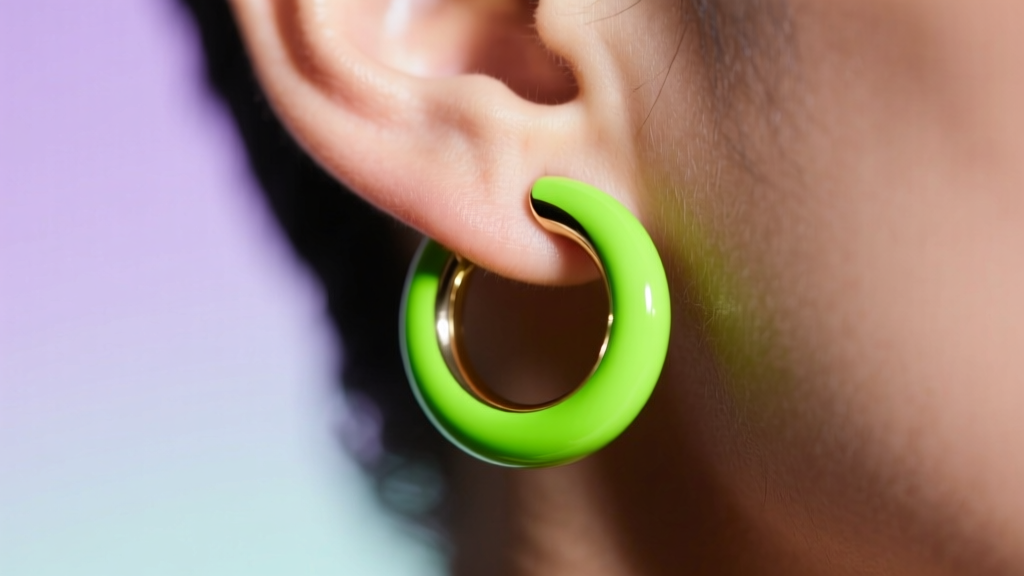
Enameling involves fusing powdered glass to a metal substrate (usually gold or sterling silver) at extremely high temperatures, typically around 1400°F (760°C). The neon effect is achieved by adding specific metal oxides or fluorescent compounds to the glass powder before firing. Enamel provides a glossy, opaque, and incredibly durable neon green finish that will not fade from UV exposure.
UV-Reactive Acrylic (PMMA)
Polymethyl methacrylate (PMMA) is a medical-grade plastic that can be heavily pigmented with fluorescent dyes. These dyes absorb invisible UV light and re-emit it as visible neon green light, creating a 'glowing' effect under blacklights. While affordable and lightweight, acrylic is porous and should only be worn in fully healed piercings.
Material Breakdown: What Should You Buy?
Choosing the right material depends on your budget, your piercing's healing status, and how often you plan to wear the earrings. Below is a comparative framework to help you decide.
| Material | Best For | Price Range | Hypoallergenic? | Durability |
|---|---|---|---|---|
| Anodized Titanium | Fresh piercings, sensitive lobes, cartilage | $35 - $90+ | Yes (Nickel-Free) | High (Oxide layer can scratch) |
| Vitreous Enamel | Everyday lobe wear, huggies, statement drops | $45 - $150+ | Depends on base metal | Very High (Shatter-resistant glass) |
| UV Acrylic (PMMA) | Festivals, temporary wear, stretched lobes | $8 - $25 | No (Porous) | Low (Scratches and degrades) |
According to the Association of Professional Piercers, implant-grade titanium remains the gold standard for initial piercings and reactive skin. If you are buying neon green earrings for a newly pierced helix or lobe, anodized titanium threadless ends or captive bead rings are your only safe options. Acrylic and plated base metals can harbor bacteria and cause severe contact dermatitis.
Gauge Sizing and Piercing Placements
Neon green earrings come in various styles, and understanding gauge sizes is critical for a comfortable fit. The gauge refers to the thickness of the post or wire that passes through your piercing.
- Standard Earlobe (20g - 18g / 0.81mm - 1.02mm): Most commercial fashion earrings, including enamel huggies and delicate neon studs, are crafted at 20g or 18g. This is the standard for healed lobe piercings.
- Cartilage / Helix / Tragus (16g - 14g / 1.29mm - 1.63mm): Professional piercers typically use 16g for cartilage. If you are buying anodized titanium neon green clickers or flat-back labrets for your cartilage, ensure you select a 16g post. Forcing a thicker 14g wire into a 16g piercing can cause micro-tears and irritation bumps.
- Stretched Lobes (8g and above / 3.2mm+): UV-reactive acrylic is highly popular in the body modification community for stretched ears. Neon green acrylic tapers, plugs, and tunnels are widely available in sizes ranging from 8g up to 00g and beyond.
Color Theory: Matching Neon Green to Your Skin Tone
Neon green is not a monolith; it spans a spectrum from yellow-based 'lime' to blue-based 'electric mint'. Understanding your skin's undertone will dictate which shade of neon green will make your complexion glow rather than look washed out.
Warm Undertones
If your veins appear greenish and gold jewelry flatters you best, you have warm undertones. You should gravitate toward yellow-based neon greens, such as highlighter yellow-green or electric chartreuse. These shades harmonize with the golden and peachy notes in your skin, creating a vibrant, sun-kissed contrast.
Cool Undertones
If your veins lean blue or purple and silver jewelry is your go-to, you have cool undertones. Opt for blue-based neon greens, often described as 'neon mint' or 'electric seafoam'. The subtle blue undertone in the jewelry will complement the pink and bluish hues in your skin, preventing the jewelry from clashing with your natural complexion.
Neutral Undertones
Neutral undertones can pull off the entire spectrum of neon green. However, true, pure 'electric green' (a perfect balance of blue and yellow) will provide the most striking, balanced contrast against your skin.
Care and Maintenance of Brightly Colored Jewelry
Neon jewelry requires specific care routines depending on the material. A common mistake beginners make is treating all earrings the same, which can lead to ruined finishes or skin infections.
Caring for Anodized Titanium
While the titanium itself is virtually indestructible, the anodized oxide layer that creates the neon green color can be worn away by friction and harsh chemicals. Never clean anodized titanium with baking soda, toothpaste, or ultrasonic cleaners, as these are mildly abrasive and will strip the color, leaving you with a dull grey earring. Instead, use a mild, fragrance-free liquid soap and warm water, gently drying with a microfiber cloth.
Caring for Enamel
Vitreous enamel is essentially glass. While it won't fade from sunlight or chemical exposure, it can chip or crack if dropped on a hard surface like a bathroom tile floor. Store your enamel neon green hoops or drops in a lined jewelry box, separated from harder gemstones like diamonds or sapphires that could scratch the glass surface.
Caring for UV Acrylic
Acrylic is highly sensitive to alcohol and extreme heat. Never soak UV-reactive acrylic earrings in rubbing alcohol or boiling water to sterilize them; the material will warp, turn cloudy, and potentially release irritating chemicals. The American Academy of Dermatology frequently notes that porous jewelry materials can trap dead skin cells and bacteria, leading to allergic contact dermatitis. To clean acrylic, wipe it down with a damp cloth and mild antibacterial soap, and never sleep in acrylic jewelry, as the friction can cause micro-abrasions in the piercing fistula.
Final Thoughts on Styling Neon
Styling neon green earrings as a beginner is all about balance. If you are wearing large, neon green acrylic dangles, keep the rest of your jewelry minimal and metallic. Conversely, a subtle pair of neon green enamel huggies can add a surprising pop of color to a professional wardrobe without overwhelming your look. By prioritizing biocompatible materials like anodized titanium and understanding the nuances of gauge sizing and color theory, you can safely and stylishly embrace one of the most electrifying trends in modern jewelry.


