Heart Hoops Earrings: A Technical Guide to Fit and Metallurgy
Discover the engineering behind heart hoops earrings. We analyze gauge sizing, hinge mechanics, metal fatigue, and weight distribution for optimal fit.

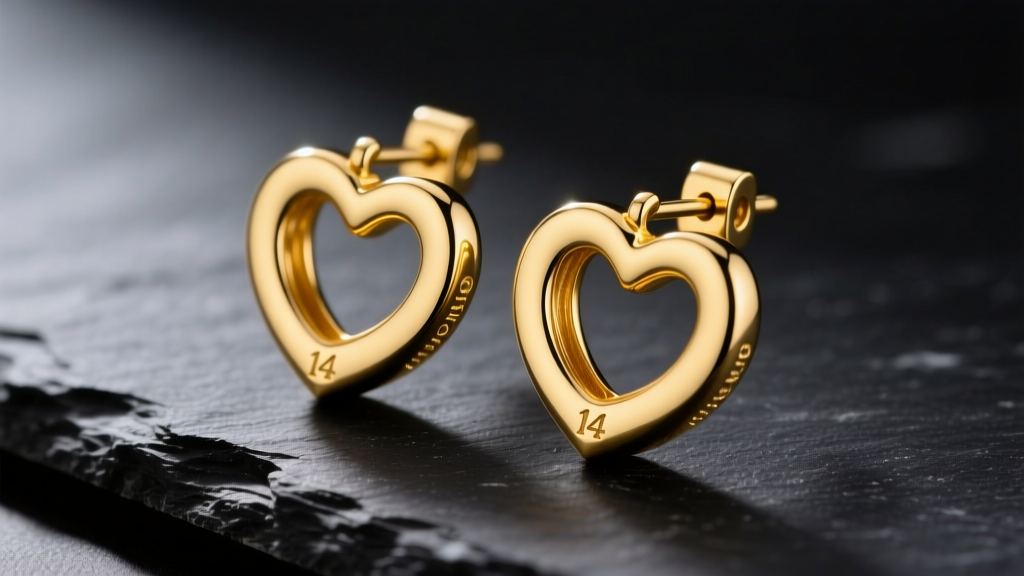
The Engineering Challenge of Heart-Shaped Hoops
When evaluating heart hoops earrings, most consumers focus purely on the aesthetic silhouette, overlooking the complex structural engineering required to make them wearable. Unlike a standard circular hoop, which maintains a constant radius and distributes weight evenly along the Z-axis, a heart-shaped hoop relies on dual-radius arcs and bezier curves. This asymmetrical geometry creates a unique set of physical challenges, primarily concerning the center of gravity and torque applied to the fistula (the piercing channel).
Because the mass of a heart hoop is concentrated at the lower vertex, the earring naturally exhibits a pendulum effect. This bottom-heavy distribution causes the earring to swing forward, placing asymmetric stress on the piercing hole. To counteract this forward tilt, expert jewelers must engineer a subtle counterweight into the top cleft of the heart or increase the wire thickness at the apex. Without these structural interventions, the earring will constantly rotate forward, causing the top wire to dig into the upper edge of the fistula, leading to irritation bumps and delayed healing in newer piercings.
Metallurgy and Material Grades for Structural Integrity
The choice of metal is not merely an aesthetic decision; it dictates the tensile strength and fatigue resistance of the earring. The bottom vertex of a heart hoop is a critical failure point. If the metal is too soft, the sharp point will easily bend upon impact, potentially turning inward and scratching the jawline or neck. According to the Gemological Institute of America (GIA), the Vickers hardness (HV) of the chosen alloy is paramount for maintaining the crisp lines of the heart silhouette.
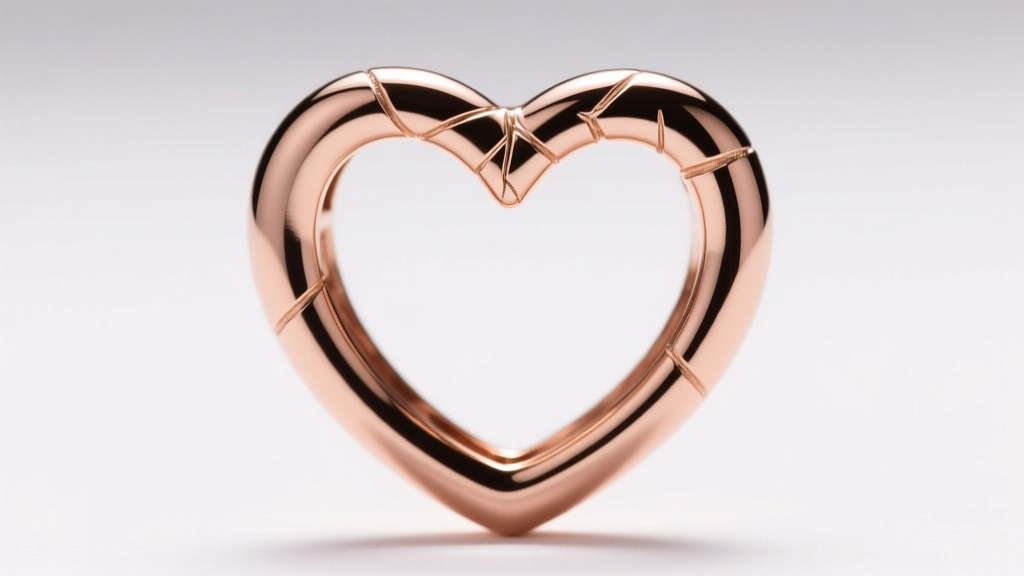
For daily wear, 14k gold (typically ranging from 120 to 140 HV) is vastly superior to 18k gold (90 to 110 HV) or 24k gold (which is far too malleable). The higher copper and zinc content in 14k gold provides the necessary rigidity to prevent the bottom vertex from deforming. For those with metal sensitivities, implant-grade titanium (ASTM F136) is the gold standard. Titanium offers an exceptional strength-to-weight ratio, allowing for larger, more dramatic heart hoops without the excessive weight that would otherwise drag down the earlobe.
"When designing asymmetrical hoops like the heart shape, we must account for work hardening during the casting and forging process. The tight curves at the top cleft are highly susceptible to micro-fractures if the metal is not properly annealed." — Master Bench Jeweler Technical Notes
Gauge Sizing and Hinge Mechanics
The structural integrity of heart hoops earrings is heavily dependent on the gauge (thickness) of the wire and the precision of the hinge mechanism. The Association of Professional Piercers (APP) recommends specific minimum gauges to prevent the "cheese-cutter effect," where a thin wire slowly migrates through the tissue due to uneven weight distribution. Because heart hoops naturally pull forward, adhering to proper gauge standards is critical.
| Gauge Size | Millimeter (mm) | Recommended Placement | Hinge Type Compatibility |
|---|---|---|---|
| 20G | 0.81mm | Standard Lobe (Lightweight only) | Friction post / Captive bead |
| 18G | 1.02mm | Lobe, Upper Lobe, Helix | Snap-barrel, Mini-clicker |
| 16G | 1.29mm | Lobe, Helix, Cartilage | Standard clicker, Saddle |
| 14G | 1.63mm | Stretched Lobes, Industrial | Heavy-duty clicker |
For heart hoops, the clicker hinge is the most reliable closure mechanism. A high-quality clicker utilizes a tension pin machined to tolerances of less than 0.05mm. When the post snaps into the receiving tube, it creates an audible "click" and a flush, seamless surface. Snap-barrel hinges, while common in cheaper fashion jewelry, often develop lateral play over time, causing the heart shape to sit crookedly on the ear. Always inspect the hinge under a loupe; the seam should be virtually invisible when closed.
Troubleshooting Common Failure Modes
Even well-crafted heart hoops earrings can experience mechanical failures if subjected to improper care or environmental stressors. Understanding these failure modes allows you to diagnose issues before they result in lost jewelry or tissue damage.
- Cleft Deformation: The inward dip at the top of the heart is a natural weak point. If the earring is squeezed or caught on clothing, the cleft can compress, altering the geometry and preventing the hinge from aligning properly. Solution: A jeweler can carefully reshape the cleft using nylon-jaw pliers and re-harden the metal.
- Vertex Snagging: If the bottom point is not properly polished and rounded (a process called "tumbling"), it can catch on hair and knitwear. Solution: Ensure the vertex has a micro-bevel rather than a razor-sharp terminus.
- Hinge Blowout: Applying lateral pressure to an open clicker hinge can bend the internal tension pin. Solution: Never force a hinge closed. If it fails to snap, the pin is likely bent and requires professional micro-welding or replacement.
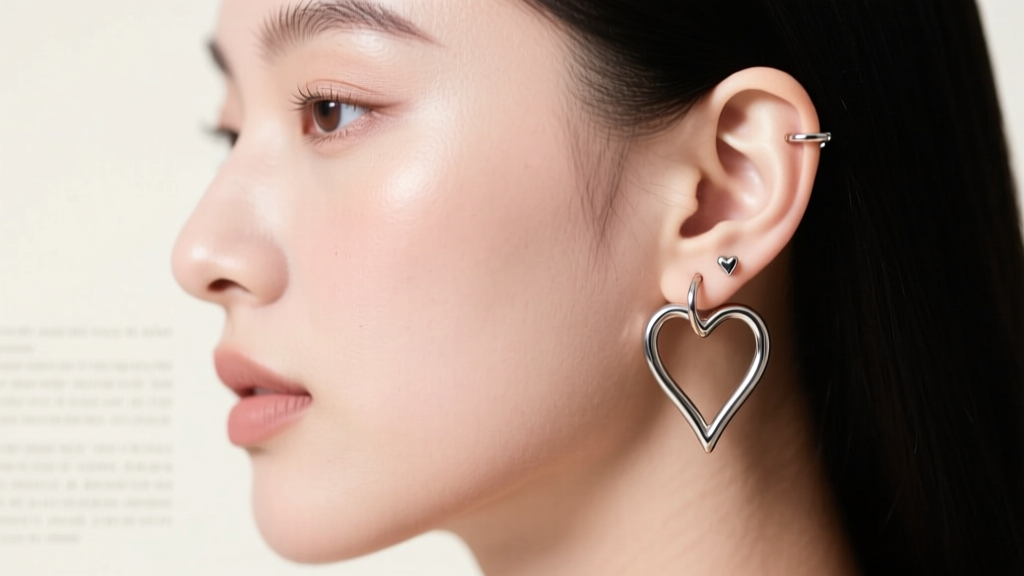
Ergonomic Sizing Guide by Ear Anatomy
The visual impact and physical comfort of heart hoops earrings change drastically depending on the piercing placement. For standard earlobe piercings, a 15mm to 20mm heart hoop provides a balanced silhouette that frames the face without overwhelming the jawline. The inner diameter must be large enough to accommodate the natural swelling of the lobe and the thickness of the tissue, preventing the earring from hugging the skin too tightly, which can trap moisture and bacteria.
For cartilage placements, such as the helix or tragus, the ergonomics shift. Cartilage is rigid and lacks the give of the earlobe. A heart hoop in a helix piercing must have a larger inner diameter (typically 8mm to 10mm for a snug fit, or 12mm for a dangling effect) to account for the angle of the fistula. Furthermore, because cartilage piercings are highly prone to irritation, the lightweight nature of titanium or hollow-tube gold construction is highly recommended to minimize the gravitational drag on the healing channel. By respecting the biomechanics of the ear and the physics of the heart shape, you can ensure your jewelry remains both structurally sound and aesthetically flawless for years to come.


