Technical Guide to Hoop Earrings with Pearls: Sizing & Alloys
Explore the technical anatomy of hoop earrings with pearls. Learn about metal alloys, pearl weight distribution, gauge sizing, and adhesive bonding.

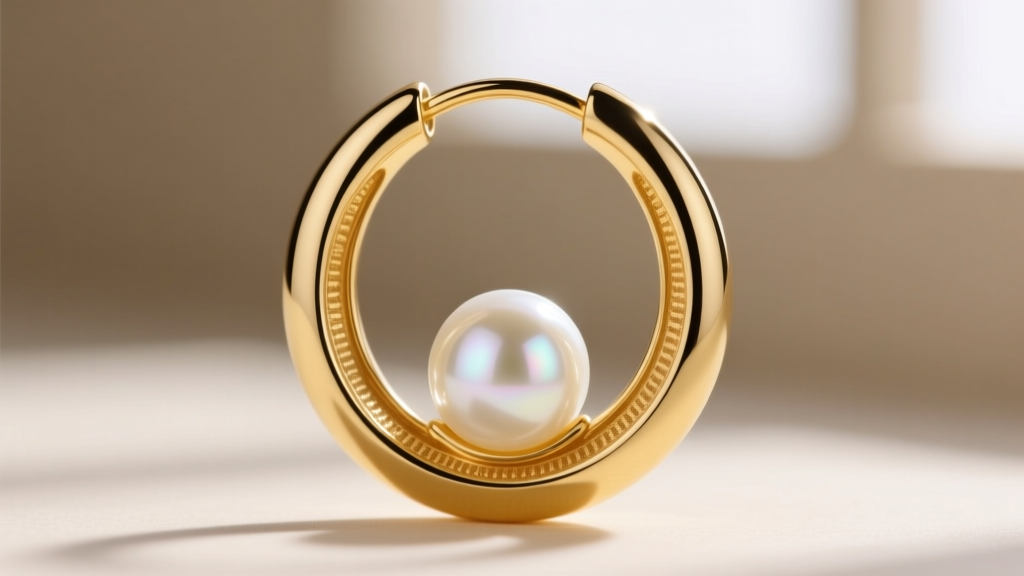
The Metallurgy of Pearl Hoops: Alloys, Weight, and Tarnish
When designing or selecting hoop earrings with pearls, the structural integrity of the metal is just as critical as the gemstone itself. As of 2026, the industry standard for luxury pearl hoops heavily favors 14k and 18k gold alloys, but each presents unique mechanical challenges. 18k gold (75% pure gold) offers a richer color and superior hypoallergenic properties, but its lower Vickers hardness makes it prone to bending. For continuous hoop earrings, this malleability can cause the wire to warp, altering the tension required to keep a sliding pearl centered or causing a clicker hinge to misalign.
Conversely, 14k gold (58.5% pure gold) provides a higher tensile strength, making it the superior choice for hoops that bear the weight of heavier South Sea pearls. Sterling silver (925) is a cost-effective alternative, but it introduces a hidden variable: rhodium plating. Many silver hoops are plated with rhodium to prevent tarnish. However, if a pearl is mounted via a peg and adhesive, the jeweler must ensure the plating is entirely removed from the mounting cup. Rhodium is notoriously non-porous, and jeweler's epoxy will bond to the plating rather than the base metal, leading to catastrophic adhesive failure when the earring is subjected to minor impacts.
For cartilage piercings, ASTM F136 titanium is the gold standard. Its high strength-to-weight ratio allows for thinner wire gauges that do not sacrifice structural rigidity, ensuring the hoop maintains its perfect circular geometry even when supporting a dense baroque pearl charm.
Pearl Selection: Half-Drilled Mechanics and Adhesive Bonding
The integration of a pearl onto a hoop earring typically relies on a half-drilled pearl mounted to a soldered peg, or a fully drilled pearl that slides along the continuous wire. According to the Gemological Institute of America (GIA), the depth and diameter of the drill hole are critical quality factors that directly impact jewelry manufacturing. A standard half-drill depth ranges from 1.5mm to 2.5mm. If the soldered peg on the hoop wire is 2.0mm long but the pearl drill depth is only 1.5mm, the pearl will sit 0.5mm above the mounting cup, creating a visible gap that collects skin oils and compromises the adhesive seal.
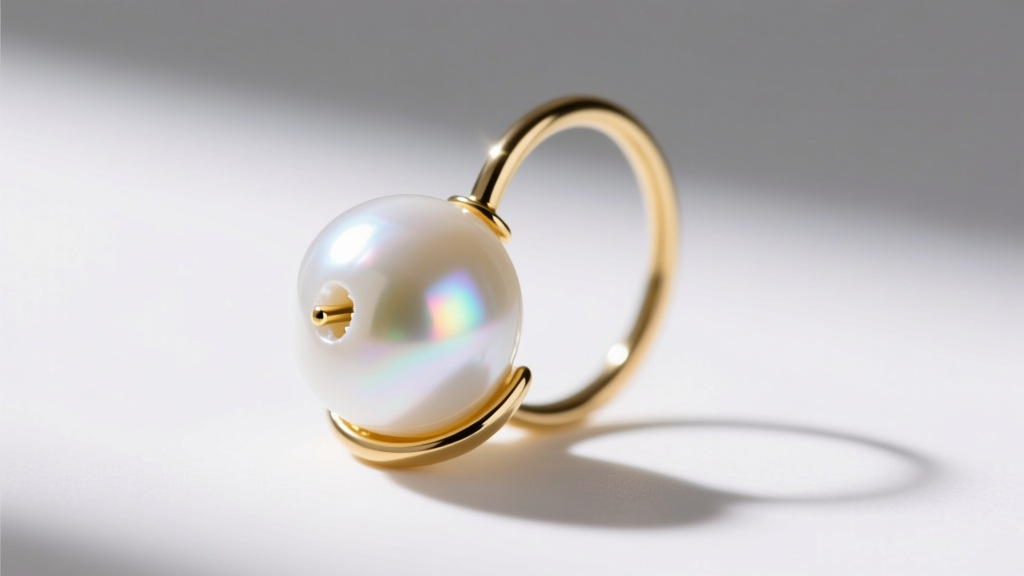
Adhesive Chemistry: Epoxy vs. Cyanoacrylate
A common failure mode in mass-produced hoop earrings with pearls is the use of cyanoacrylate (super glue). While cyanoacrylate offers high initial tensile strength, it cures into a brittle, glass-like state. The natural flex of a hoop earring during wear creates micro-fractures in the glue line, eventually causing the pearl to pop off. Master jewelers exclusively use two-part jeweler's epoxy resins. Epoxies cure with a slight degree of flexibility, acting as a shock absorber that accommodates the differing thermal expansion rates of the metal peg and the calcium carbonate nacre of the pearl.
"Never use cyanoacrylate on organic gemstones. The exothermic reaction during the curing process can generate enough localized heat to craze the thin nacre of an Akoya pearl, while the brittle cure guarantees eventual failure under hoop tension."
Before bonding, both the metal peg and the interior of the pearl drill hole must be degreased using 99% isopropyl alcohol. Any residual polishing compound from the manufacturing process will act as a release agent, preventing the epoxy from achieving a mechanical lock.
Structural Mechanics: Wire Gauges, Tension, and Closure Systems
The gauge of the hoop wire dictates both the aesthetic profile and the weight-bearing capacity of the earring. Understanding the difference between Inner Diameter (ID) and Outer Diameter (OD) is crucial when matching hoops to specific pearl sizes. A hoop with a 15mm ID and a 1.2mm wire thickness will have an OD of 17.4mm. If a 9mm fully drilled pearl is placed on this hoop, the remaining space for the pearl to slide is mathematically constrained, which affects the visual balance of the earring.
| Wire Gauge | Thickness (mm) | Best Use Case | Max Recommended Pearl Weight |
|---|---|---|---|
| 18 Gauge | 1.02 mm | Standard lobe hoops, heavy South Sea pearls | 4.5 grams |
| 20 Gauge | 0.81 mm | Everyday lobe hoops, Akoya and Freshwater pearls | 2.5 grams |
| 22 Gauge | 0.64 mm | Delicate huggies, tiny seed pearl sliders | 1.0 gram |
For hinged clicker hoops, the micro-hinge mechanism must be precision-machined. If the tolerances are off by even a fraction of a millimeter, the hinge will not snap shut securely, and the tension required to keep the hoop closed will transfer stress to the pearl mounting peg. The Federal Trade Commission (FTC) Jewelry Guides mandate strict accuracy in metal stamping and quality, ensuring that consumers are not misled about the karat weight or structural composition of the closures they rely on for security.
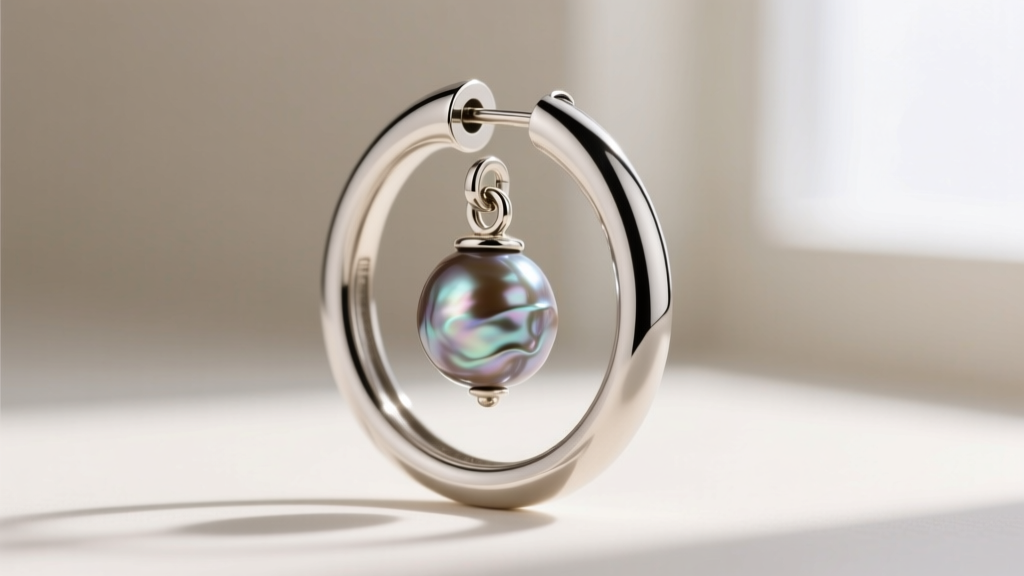
Troubleshooting Common Failure Modes
1. Pearl Rotation and Slippage
When a mounted pearl constantly rotates on its peg, it indicates an improper fit between the peg diameter and the drill hole. Pearls are organic and rarely have perfectly uniform drill holes. To combat this, jewelers use a technique called "keying." A microscopic groove is filed into the side of the metal peg, allowing the epoxy to flow into the channel and create a mechanical interlock that prevents rotational slippage once cured.
2. Hoop Wire Fatigue and Snapping
Continuous hoops that rely on bending the wire to insert into the ear are highly susceptible to metal fatigue. Repeatedly bending 14k gold back and forth work-hardens the metal, eventually causing it to snap at the exact point where it exits the earlobe. To prevent this, high-end manufacturers utilize a "tension-fit" continuous hoop, where the wire is tempered to spring back into its original shape without requiring the wearer to bend it during insertion.
Longevity Protocols and Care
The maintenance of hoop earrings with pearls requires strict adherence to chemical boundaries. Ultrasonic jewelry cleaners are strictly prohibited. The high-frequency cavitation bubbles generated by ultrasonic waves will not only shatter the epoxy bond holding the pearl to the hoop, but they will also strip the delicate orient and luster from the pearl's nacre layers. Furthermore, the alkaline environment of chlorinated swimming pools can cause the copper alloys within 14k gold to oxidize rapidly, leading to micro-pitting on the hoop wire that catches on hair and clothing. For routine cleaning, a damp microfiber cloth wiped gently over the gold wire, avoiding direct contact with the pearl's drill hole, remains the safest and most effective protocol to preserve both the metallurgical finish and the organic gemstone.


