Technical Guide to Pink Opal Earrings: Grades & Settings
Explore the gemological properties of pink opal earrings. Learn about Mohs hardness, bezel settings, metal grades, and proper care for long-lasting wear.

The Gemological Reality of Pink Opal
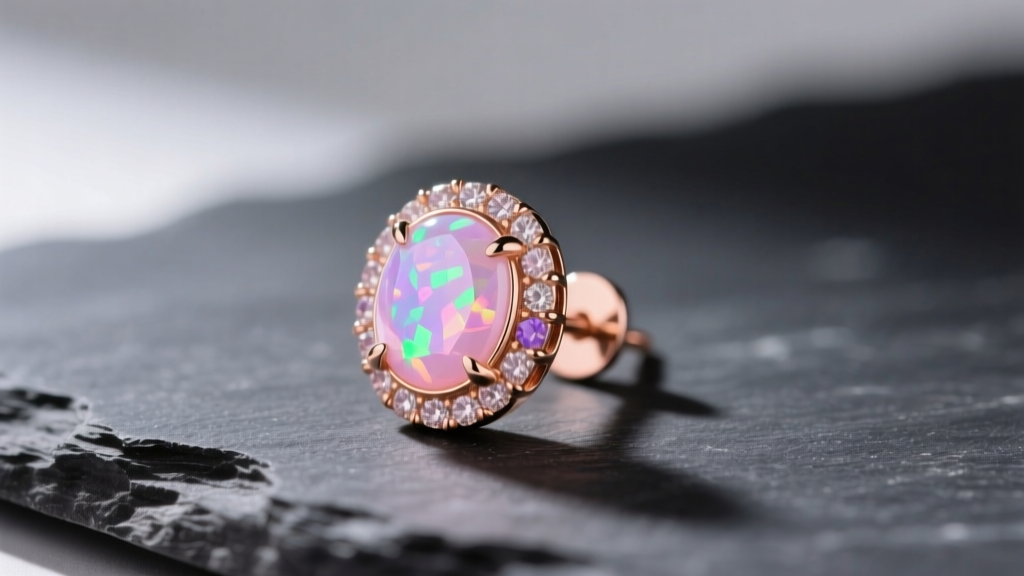
When evaluating pink opal earrings, the first step is understanding the exact mineralogical composition of the stone. Unlike precious Australian opals known for their fiery play-of-color, natural pink opal is classified as 'common opal' or 'potch.' The most highly prized natural variant on the market is Peruvian pink opal, which derives its distinctive pastel hue not from silica spheres alone, but from microscopic inclusions of palygorskite, a magnesium-rich clay mineral. According to the Gemological Institute of America (GIA), common opal lacks the internal structural grid necessary to diffract light, meaning it will appear opaque to semi-translucent with a waxy or pearly luster.
From a durability standpoint, pink opal presents specific challenges for jewelry designers. It ranks between 5.5 and 6.5 on the Mohs hardness scale, making it significantly softer than quartz (7) or topaz (8). Furthermore, opal is highly porous and contains variable amounts of water (typically 3% to 21%). This porosity makes the gemstone exceptionally vulnerable to chemical absorption, thermal shock, and 'crazing'—a network of fine surface cracks caused by rapid moisture loss. Buyers must be highly vigilant, as the market is flooded with synthetic 'opalite' (a type of iridescent glass) masquerading as natural pink opal. A genuine Peruvian pink opal will feel slightly warmer to the touch than glass and will exhibit natural matrix veining or color banding under 10x magnification.
Metallurgical Pairings: Biocompatibility and Porosity
Because pink opal is porous, the metal chosen for the earring post and setting is not merely an aesthetic choice; it is a chemical necessity. When worn against the skin, earrings are exposed to sebum, sweat, and cosmetic products. If a porous opal is set in a copper-heavy alloy, such as low-karat gold, brass, or gold-plated base metals, the stone can slowly absorb copper salts and oxidize, leading to a permanent greenish-brown discoloration along the edges of the cabochon.
For healed earlobes, 14k or 18k solid yellow or rose gold is the optimal choice. The higher the gold purity, the less reactive the alloy. Rose gold, which contains a higher copper content, is generally safe if the opal is sealed or bezel-set with a solid backing, but white gold (which often contains nickel or palladium) offers a more chemically inert environment. For fresh piercings or individuals with contact dermatitis, the earring post must be crafted from ASTM F136 implant-grade titanium. This specific alloy contains zero nickel and features a passive oxide layer that prevents any metallic ions from leaching into the skin or the adjacent gemstone.
Setting Techniques: Protecting a Fragile Gem
The physical vulnerability of pink opal dictates strict limitations on how it can be secured in an earring setting. The girdle (the outer edge of the gemstone) is the most prone to chipping upon impact. Therefore, the setting must provide maximum surface coverage while minimizing the mechanical stress applied to the stone during the setting process.
Bezel vs. Prong vs. Channel Settings
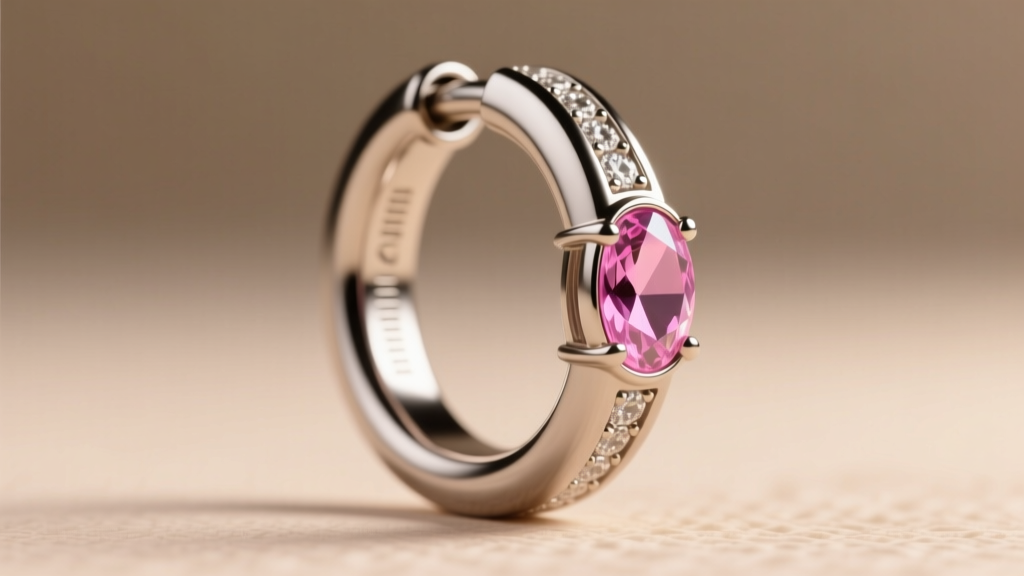
Prong settings, while excellent for maximizing light exposure in faceted diamonds, are generally contraindicated for pink opal. The localized pressure required to push a metal prong over the girdle of an opal can easily cause micro-fractures. Furthermore, prongs leave the edges exposed to daily impacts. Bezel settings, where a continuous rim of metal surrounds the entire perimeter of the cabochon, are the industry standard for opal earrings. A well-executed bezel not only protects the girdle but also creates a micro-climate that slows down the evaporation of the opal's internal water content, thereby reducing the risk of crazing.
| Setting Type | Protection Level | Crazing Risk | Recommended for Pink Opal? |
|---|---|---|---|
| Full Bezel | High | Low (Seals edges) | Yes (Ideal for daily wear) |
| Prong (4 or 6) | Low | High (Exposed edges) | No (High chip risk) |
| Channel | Medium | Medium | Yes (Best for hoop accents) |
| Flush / Gypsy | High | Medium | Rare (Hard to cut opal to fit) |
Sizing, Gauges, and Weight Distribution
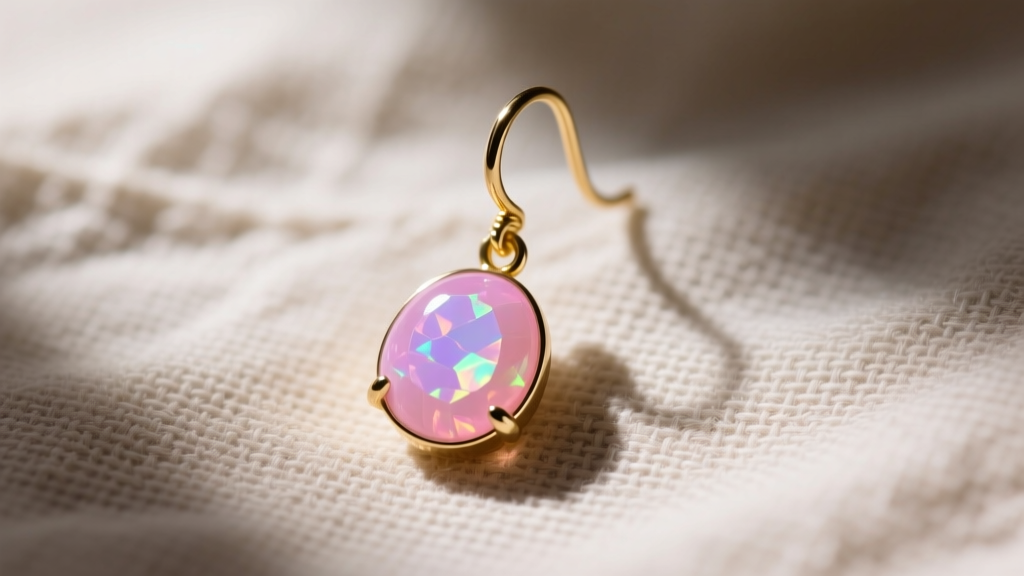
While opal has a relatively low specific gravity (approximately 2.10 to 2.15), making it lighter than many crystalline gemstones, the physical dimensions of the cabochon still dictate the necessary wire gauge for the earring post. Standard lobe piercings are typically done at 20-gauge (0.81mm) or 18-gauge (1.02mm). However, if you are purchasing pink opal drop earrings or dangles featuring stones larger than 8mm in diameter, an 18-gauge or even 16-gauge (1.29mm) post is highly recommended.
Using a thin 20-gauge wire to support a large, top-heavy opal cabochon creates a pendulum effect. Over time, the concentrated weight and swinging motion will cause the 'cheese-cutter effect,' slowly migrating the piercing hole downward and permanently stretching the earlobe tissue. For cartilage placements, such as the helix or tragus, the jewelry must strictly adhere to 16-gauge or 14-gauge standards to prevent migration and rejection, as cartilage tissue is far less forgiving than the fleshy earlobe. Always verify the post thickness with the jeweler, as many mass-market opal earrings inexplicably use flimsy 22-gauge wires to cut manufacturing costs.
Maintenance and Failure Prevention
The long-term survival of pink opal earrings relies entirely on the wearer's maintenance habits. Because of the stone's porosity and water content, standard jewelry cleaning protocols can be catastrophic. According to mineralogical data from Mindat.org, opals are highly sensitive to sudden temperature changes and harsh chemicals.
- Never use ultrasonic cleaners: The high-frequency vibrations will shatter the internal structure of a pink opal, turning a vibrant pastel stone into a dull, cracked mess.
- Avoid steam and boiling water: Thermal shock will cause immediate crazing. Heat accelerates the evaporation of the stone's internal moisture.
- Chemical exposure: Hairspray, perfume, and lotions should be applied before putting on the earrings. The porous surface of the opal will absorb these chemicals, leading to a permanent cloudy film.
- Proper storage: When not being worn, store pink opal earrings in a sealed plastic bag with a slightly damp cotton ball. This maintains a humid micro-environment, preventing the stone from drying out and cracking over the years.
By understanding the gemological limitations, insisting on biocompatible metals, and demanding protective bezel settings, you can ensure that your pink opal earrings remain a vibrant, structurally sound addition to your collection for decades.


