Curating Multiple Earrings Ideas: A Technical Piercing Guide
Explore expert multiple earrings ideas with our technical guide on gauge sizing, spatial planning, metallurgical compatibility, and healing protocols.

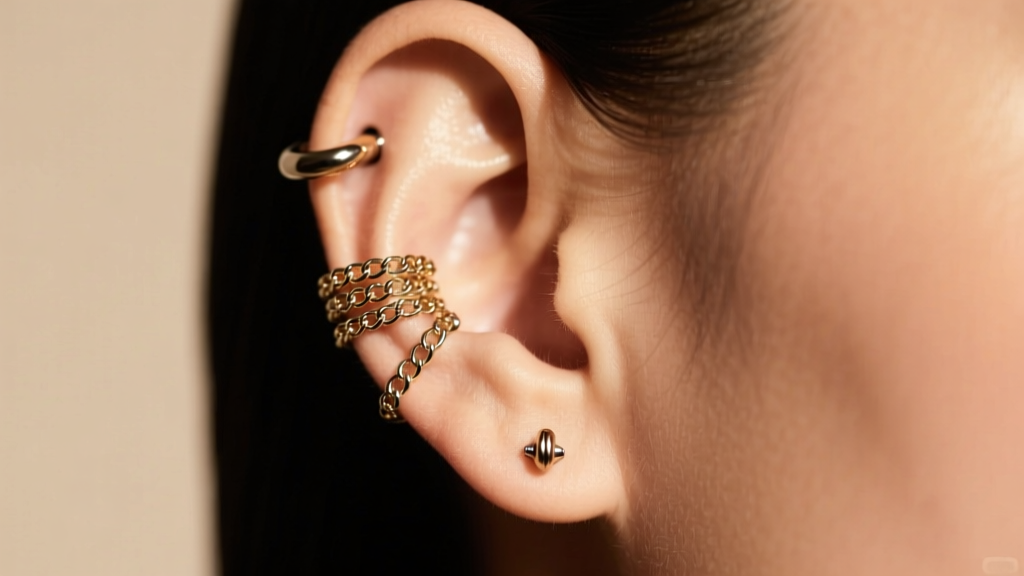
When searching for multiple earrings ideas, most style guides focus purely on aesthetics—matching gemstones or balancing visual weight. However, as a domain expert in body modification and jewelry engineering, I approach ear curation as a structural and biomechanical project. A successful multi-piercing setup requires strict adherence to gauge tolerances, spatial geometry, and metallurgical compatibility. In 2026, the shift toward threadless (push-fit) systems and implant-grade materials has revolutionized how we plan and execute complex ear constellations.
The Biomechanics of Ear Curation: Spacing and Gauge
The most common failure in multi-lobe or cartilage setups is inadequate spatial planning. Piercers must account for the physical footprint of the jewelry, not just the needle's entry point. Using a tri-bevel hollow needle (typically 15 to 18 degrees) ensures a clean crescent cut that removes a microscopic core of tissue, rather than displacing it. This precision is vital in tight cartilage clusters where tissue displacement could shift adjacent fistulas.
- The 8mm Lobe Rule: Standard lobe piercings require a minimum of 8mm center-to-center spacing. This accommodates standard 6mm to 8mm decorative tops and flat-back disks without overlapping. If you plan to wear larger hoops or huggies in adjacent piercings, increase this spacing to 10mm.
- Cartilage Geometry (Helix & Flat): Cartilage tissue lacks the elasticity of the lobe. Piercings here should be spaced 6mm to 8mm apart. Crucially, the needle angle must be perfectly perpendicular to the tissue plane. A 5-degree deviation will cause the jewelry to sit at an awkward tilt, disrupting the visual line of a curated constellation.
- Gauge Standardization: Lobes are typically pierced at 20g (0.81mm) or 18g (1.02mm), while cartilage is standardized at 16g (1.29mm). Mixing gauges complicates jewelry sharing and increases the risk of tissue irritation if a thicker post is forced into a narrower fistula.
Metallurgical Compatibility for Multi-Piercing Setups
When managing multiple fresh or healing piercings simultaneously, the chemical reactivity of your jewelry is paramount. The Association of Professional Piercers (APP) strictly regulates acceptable materials for initial piercings to prevent contact dermatitis and galvanic corrosion.
| Material | ASTM Standard | Best Use Case | Technical Notes |
|---|---|---|---|
| Implant-Grade Titanium | ASTM F-136 | Fresh piercings, sensitive skin | Nickel-free, highly biocompatible, mirror finish reduces bacterial adhesion. |
| Niobium | Unalloyed (99.9%) | Healed piercings, custom anodizing | Softer than titanium; can be anodized to various colors without toxic dyes. |
| 14k/18k Gold | Nickel-Free Alloy | Healed piercings, luxury setups | Must be alloyed with palladium or silver, never nickel. Avoid in unhealed fistulas due to micro-porosity. |
| Sterling Silver | 925 Standard | Occasional wear in fully healed lobes | Contains 7.5% copper. Tarnishes and can cause argyria (skin staining) in high-moisture cartilage areas. |
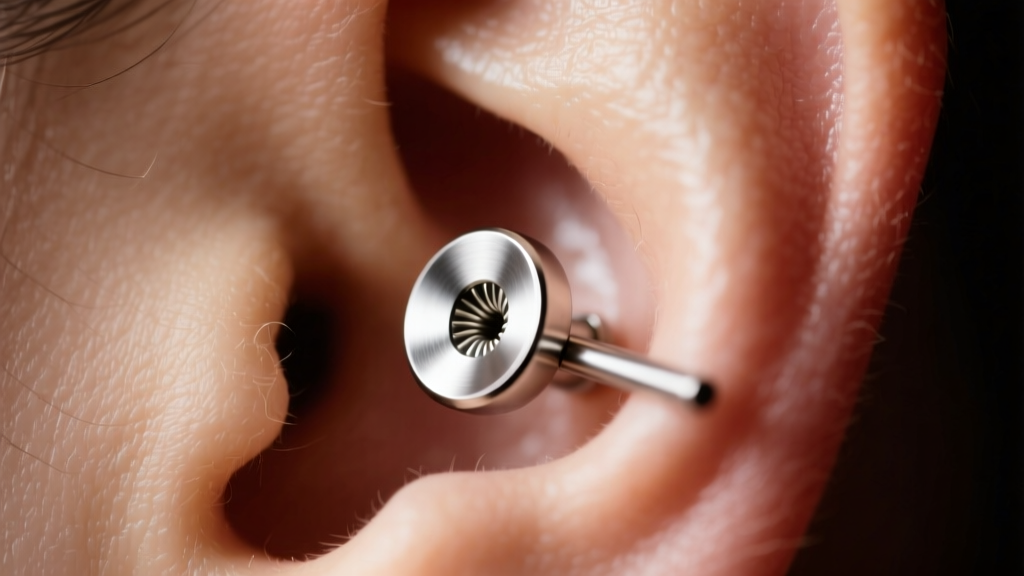
Load-Bearing Limits: Preventing the Cheese-Cutter Effect
A critical yet overlooked aspect of exploring multiple earrings ideas is understanding the physics of load distribution. The "cheese-cutter effect" occurs when a heavy dangle or drop earring is suspended from a thin wire (like a standard 20g or 0.81mm post). The downward force of gravity concentrates on a microscopic surface area of the fistula, leading to tissue necrosis, migration, and eventual tearing.
Expert Rule of Thumb: Any earring exceeding 3 grams of total weight requires a minimum of 18g (1.02mm) thickness, and ideally 16g (1.29mm), to safely distribute the mechanical load across the lobe tissue.
If your aesthetic demands heavy, ornate drops on delicate 20g lobe piercings, utilize ear cuffs or silicone o-rings on the back of the post to increase the surface area bearing the weight, thereby reducing pounds-per-square-inch (PSI) pressure on the piercing channel.
Strategic Healing: The Immunological Cost
Getting multiple piercings in a single session triggers a systemic immune response. The body treats each piercing as an open wound, deploying lymphocytes and macrophages to the site. Overloading the lymphatic system by getting four or five piercings at once often results in delayed healing, excessive lymph fluid secretion (crusting), and hypertrophic scarring.
Phased Healing Protocol
- Phase 1 (Months 1-3): Establish the foundation. Pierce the primary lobe and one upper cartilage point (e.g., helix). Limit to two fresh piercings per ear.
- Phase 2 (Months 4-6): Once the initial fistulas have formed a stable epithelial tube, introduce secondary placements like the conch or second lobe.
- Phase 3 (Months 8-12): Add high-movement, complex areas like the tragus or rook, which require strict aftercare as detailed in the APP aftercare guidelines.
Anatomical Limitations and Asymmetrical Planning
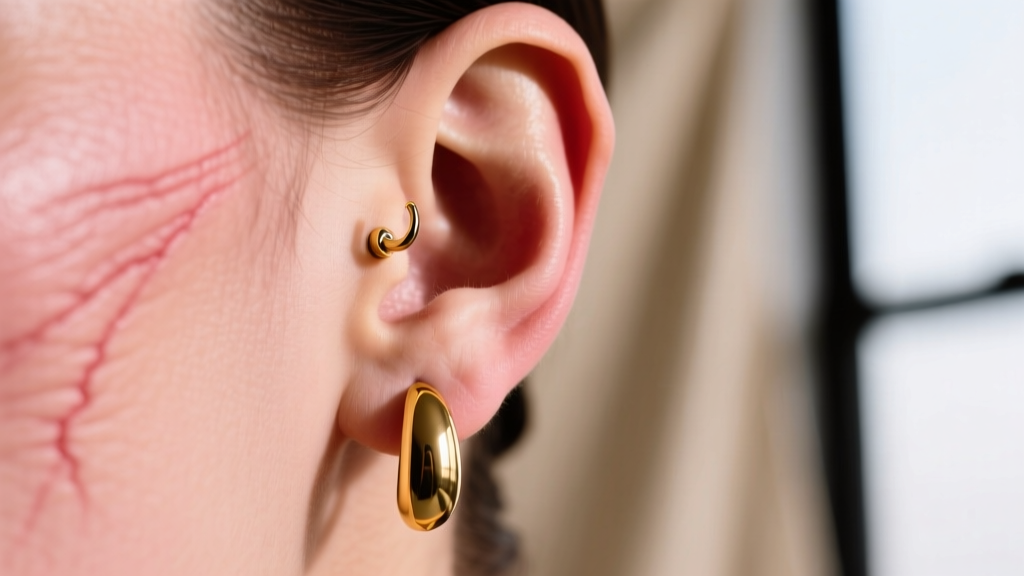
Not all ears can support the same constellation layouts. The size of the conch bowl, the prominence of the anti-helix, and the overall surface area of the auricle dictate what is physically possible. A common mistake when seeking multiple earrings ideas online is attempting to mirror a celebrity's ear curation without accounting for anatomical differences.
For instance, a "double conch" setup requires a wide, flat conch bowl with minimal cartilage ridges. If the anti-helix folds deeply into the conch, a standard flat-back labret will press against the inner ridge, causing pressure necrosis. In such cases, opting for a single, larger conch stud paired with a rook piercing provides a balanced visual weight without compromising tissue health. Furthermore, human ears are naturally asymmetrical. A skilled piercer will map the angles of the left ear to complement, rather than perfectly mirror, the right ear, adjusting the jewelry's decorative face angle to ensure stones catch the light optimally from a front-facing perspective.
Advanced Configurations: Threadless vs. Internally Threaded
By 2026, the industry has largely bifurcated into two high-end jewelry mechanisms: internally threaded and threadless (push-fit). For complex ear curations involving multiple flat-back labrets, threadless jewelry offers superior security and ease of insertion. The tension-bent pin creates a mechanical lock inside the hollow post, eliminating the risk of the decorative top unscrewing and falling out during sleep or hair brushing.
When clustering multiple studs (e.g., a helix-to-flat constellation), vary the gemstone cuts to manipulate light refraction. Pairing a brilliant-cut round diamond (which scatters light omnidirectionally) with a step-cut emerald or baguette (which creates linear flashes of light) adds dynamic visual depth to the ear. Avoid using identical sizes and cuts in a tight cluster, as this creates a "blob" effect from a distance. Instead, use a 3mm to 5mm gradient, anchoring the setup with a larger stone at the focal point and tapering down to 2mm stones at the periphery. When planning your layout, ensure your chosen piercer stocks premium threadless brands that utilize ASTM F-136 titanium posts, ensuring your multi-earring setup is as structurally sound as it is visually striking.


