The Ultimate Guide to Buying Thick Sterling Silver Hoop Earrings
Discover what to look for when buying thick sterling silver hoop earrings. Learn about silver grades, weight limits, clasp types, and tarnish resistance.


The Shift Toward Bold Minimalism
In 2026, the jewelry landscape continues to favor sculptural, bold hardware that bridges the gap between everyday wear and high-fashion statements. Among the most enduring staples are thick sterling silver hoop earrings. Unlike their delicate, wire-thin predecessors, chunky hoops offer a substantial presence, catching the light and framing the face with architectural precision. However, the visual weight of a thick hoop must be carefully balanced against its physical weight and metallurgical integrity. Buying a substantial piece of silver jewelry requires a deep understanding of alloy compositions, structural engineering, and clasp mechanics. This comprehensive buying guide will equip you with the exact specifications needed to invest in hoops that are comfortable, durable, and impeccably crafted.
Decoding Silver Alloys: 925 vs. Argentium vs. Fine
Not all silver is created equal, especially when it comes to structural jewelry. According to The Silver Institute, pure silver is inherently too soft for functional jewelry. Understanding the alloy mix is the first step in evaluating quality.
The Problem with 999 Fine Silver
Fine silver (99.9% pure) boasts a brilliant, bright white luster and is completely hypoallergenic. However, it is highly malleable. If a thick hoop is crafted from fine silver, it will warp, bend, and lose its perfect circular geometry within weeks of daily wear. The pressure of putting on a coat or sleeping on your side will permanently distort the metal. Therefore, fine silver should be strictly avoided for thick, structural hoops.
The Standard: 925 Sterling Silver
Standard 925 sterling silver consists of 92.5% pure silver and 7.5% alloying metals, typically copper. This copper addition provides the necessary tensile strength and hardness to maintain the hoop's shape. However, copper is prone to oxidation, which leads to the familiar blackish tarnish that requires regular polishing. When buying 925 silver, always look for the '925' or 'Sterling' hallmark stamped discreetly on the post or clasp.
The Upgrade: Argentium Silver
For buyers seeking low-maintenance luxury, Argentium silver is the superior choice. Argentium replaces a portion of the copper with germanium. This metallurgical tweak creates a transparent germanium dioxide layer on the surface, making the metal highly tarnish-resistant and significantly brighter than traditional sterling. While Argentium hoops command a 20% to 30% price premium over standard 925 silver, the reduction in maintenance makes them a worthwhile investment for everyday wearers.
The Anatomy of a Thick Hoop: Diameter, Width, and Weight
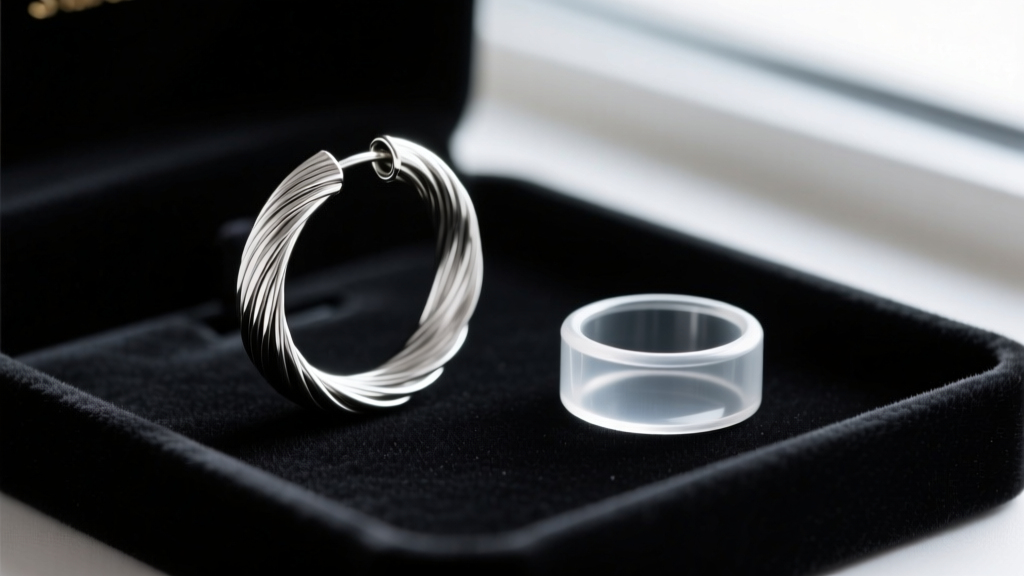
When jewelers and buyers discuss 'thick' hoops, they are generally referring to either a heavy-gauge solid wire or a wide hollow tube. Understanding the relationship between diameter, width, and weight is critical to avoiding earlobe fatigue and the dreaded 'cheese-cutter effect'.
The Cheese-Cutter Effect
If a hoop is heavy but the wire passing through the earlobe is thin (e.g., 20-gauge or 0.8mm), the weight is concentrated on a microscopic surface area. Over time, gravity will cause the thin wire to slowly slice through the earlobe tissue, leading to irreversible stretching or tearing. To prevent this, thick hoops must have a substantial post or wire thickness—ideally 12-gauge (2.0mm) to 8-gauge (3.2mm)—to distribute the weight safely across the piercing channel.
Solid Wire vs. Hollow Tube Construction
A solid 8-gauge silver hoop with a 50mm diameter can easily weigh over 25 grams per earring. The average human earlobe can comfortably support up to 10-14 grams before experiencing fatigue. To achieve a massive, chunky aesthetic without the punishing weight, master jewelers use hollow tube construction. By rolling a flat sheet of sterling silver into a seamless tube, manufacturers can create 8mm to 15mm wide hoops that look incredibly substantial but weigh a fraction of their solid counterparts.
| Construction Type | Dimensions (Width x Diameter) | Average Weight (Per Earring) | Lobe Safety Rating |
|---|---|---|---|
| Solid Wire (10-Gauge) | 2.5mm x 30mm | 6 - 8 grams | Excellent (All-day wear) |
| Solid Wire (8-Gauge) | 3.2mm x 50mm | 18 - 22 grams | Poor (Risk of stretching) |
| Hollow Tube (Medium) | 5.0mm x 40mm | 7 - 9 grams | Excellent (All-day wear) |
| Hollow Tube (Chunky) | 12.0mm x 60mm | 11 - 14 grams | Good (Monitor for fatigue) |
Clasp Mechanisms: Security vs. Comfort
The clasp is the most critical failure point on any hoop earring. A heavy, thick hoop exerts significant kinetic energy when it swings; if the clasp fails, the jewelry is lost instantly. Avoid basic fishhook or friction-back closures entirely for thick hoops. Instead, look for these engineered mechanisms:
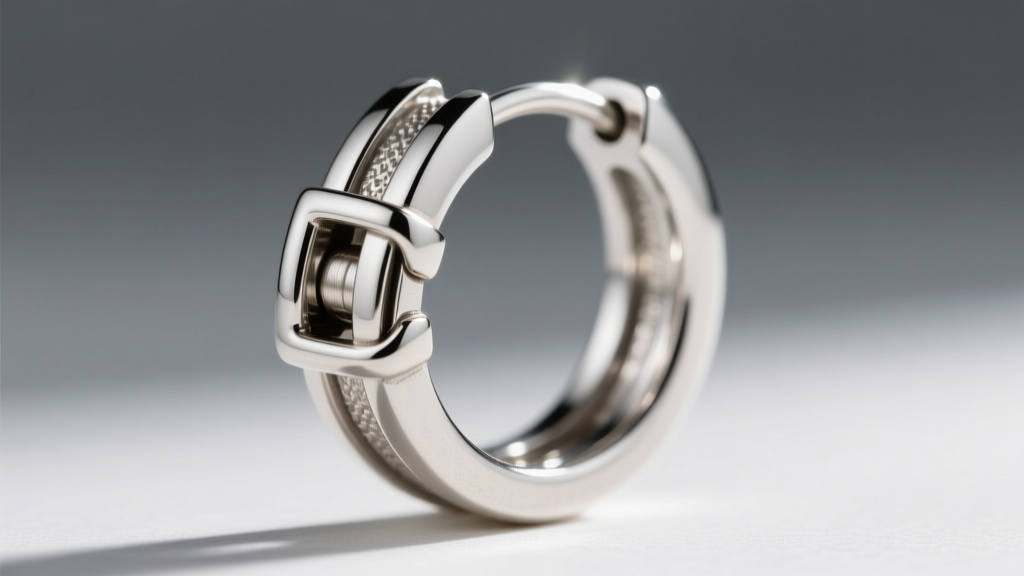
- Hinged Saddleback (Click-Top): The gold standard for thick hoops. The post hinges downward and clicks securely into a grooved saddle on the opposite side. The 'click' provides tactile and auditory confirmation that the earring is locked. Ensure the hinge pin is made of hardened steel or titanium, as soft silver hinge pins will wear down and become loose over time.
- Continuous (Endless) Hoop with Internal Tension: A seamless design where the thin post slides into the hollow tube of the hoop itself, relying on the metal's natural spring tension to stay in place. While aesthetically flawless, these require careful handling to avoid bending the delicate post.
- Locking Latch-Back: Features a hinged wire that snaps into a locking catch, often accompanied by a secondary safety shield. Common in vintage-inspired or heavily textured thick hoops where weight distribution requires extra security.
Rhodium Plating and Finishing Techniques
While raw 925 silver has a warm, moon-like glow, it is highly susceptible to sulfur-induced tarnishing and micro-scratches. To combat this, premium thick sterling silver hoop earrings are electroplated with rhodium—a precious metal from the platinum group. Rhodium provides a brilliant, mirror-like white finish that is completely impervious to tarnish and highly scratch-resistant.
When evaluating rhodium-plated hoops, inquire about the plating thickness. Standard 'flash' plating is a mere 0.1 microns thick and will wear off within months of friction against hair and clothing. High-quality, investment-grade hoops should feature a rhodium layer between 0.75 and 1.5 microns. This thickness ensures the protective barrier survives years of daily wear. For those who prefer the raw, uncoated look of oxidized or brushed silver, be prepared to polish the earrings weekly using a micro-abrasive jeweler's cloth to remove environmental sulfides.
Maintenance and Long-Term Care
Proper maintenance extends the lifespan of your thick hoops. The Gemological Institute of America (GIA) recommends storing silver jewelry in anti-tarnish flannel bags or airtight containers with silica gel packets to control ambient humidity. When cleaning, avoid harsh chemical dips that can strip rhodium plating or damage the internal tension of hollow tubes. Instead, use a mild, phosphate-free dish soap and a soft-bristled baby toothbrush to gently dislodge sebum and cosmetic buildup from the clasp mechanisms. For uncoated solid silver hoops, a treated silver polishing cloth is the safest and most effective method for restoring the metal's original luster without removing intentional oxidation details.
Final Verdict: Investing in Quality Hardware
Purchasing thick sterling silver hoop earrings is an exercise in balancing bold aesthetics with ergonomic engineering. By prioritizing 925 or Argentium alloys, demanding hollow-tube construction for larger diameters, and insisting on robust hinged saddleback clasps, you ensure your investment remains a cornerstone of your jewelry wardrobe for decades. Pay close attention to the gauge thickness passing through the earlobe, and never compromise on clasp security. When selected with these precise criteria in mind, a pair of chunky silver hoops transcends fleeting trends, offering a timeless, architectural edge to any personal style.


