Buying Guide: Choosing the Right Earrings for Eyebrow Piercings
Discover what to look for when buying earrings for eyebrow piercings. Learn about gauge sizes, implant-grade titanium, and the best curved barbells.

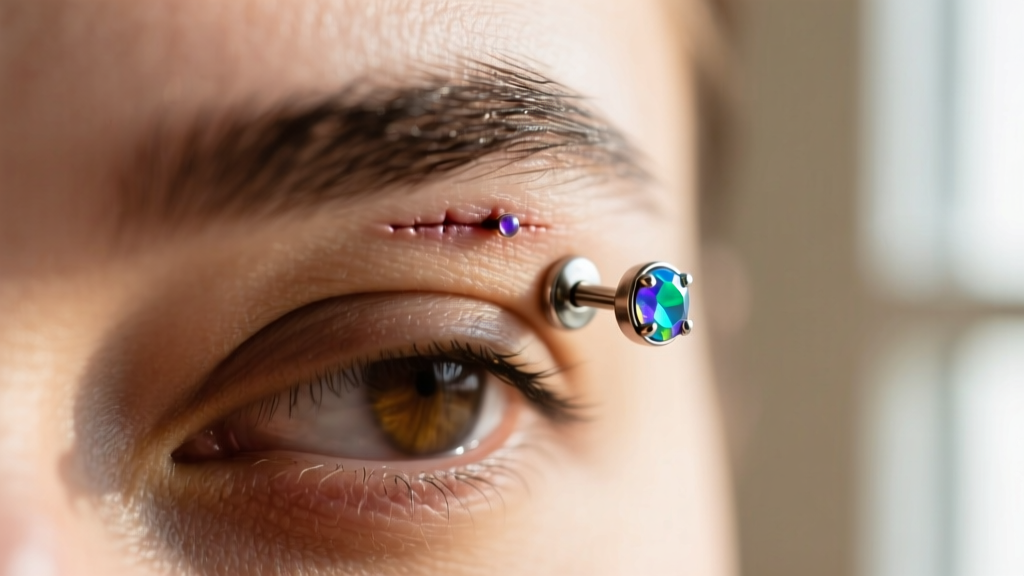
Clarifying the Terminology: 'Earrings' vs. Body Jewelry
When consumers search for earrings for eyebrow piercings, they are typically looking for specialized body jewelry designed to accommodate the unique anatomy of a facial surface piercing. Unlike standard earlobe piercings that pass through a distinct flap of tissue, an eyebrow piercing enters and exits on the same flat plane of skin. This anatomical reality dictates the specific hardware required to prevent migration, rejection, and scarring. While the term 'earring' is colloquially used by shoppers, professional piercers refer to these pieces as curved barbells, captive bead rings, or surface anchors. In this comprehensive 2026 buying guide, we will break down exactly what to look for when purchasing jewelry for your eyebrow piercing, focusing on material grades, precise measurements, and structural integrity.
The Critical Role of Gauge and Diameter
The most common mistake first-time buyers make is selecting jewelry that is too thin or too tight. Eyebrow piercings are highly susceptible to the 'cheese-cutter effect'—a phenomenon where jewelry that is too thin slowly slices through the tissue due to everyday tension and gravity. To prevent this, you must adhere to strict gauge and diameter standards.
Standard Eyebrow Piercing Specifications
| Measurement Type | Standard Size | Metric Equivalent | Use Case & Risks |
|---|---|---|---|
| Gauge (Thickness) | 16G or 14G | 1.2mm or 1.6mm | Industry standard. 18G (1.0mm) is too thin and drastically increases the risk of migration and the cheese-cutter effect. |
| Curved Barbell Length | 5/16' or 3/8' | 8mm or 10mm | Measured along the inner curve. 1/4' (6mm) is generally too short and will cause pressure dimpling on the skin. |
| Ring Inner Diameter | 3/8' or 7/16' | 10mm or 11mm | Rings must have a wide enough diameter to accommodate the natural swelling and the curved trajectory of the fistula. |
If you are buying replacement jewelry for a fully healed piercing, a 16G (1.2mm) curved barbell with a 5/16' (8mm) inner curve is the most universally comfortable starting point. However, if your piercing was initially done at 14G (1.6mm), you must stick to 14G jewelry to avoid stretching or irritating the fistula.
Material Matters: Implant-Grade vs. Surgical Steel
The skin around the eyebrow is highly reactive, and because surface piercings are already prone to rejection, introducing irritating alloys is a recipe for disaster. According to the Association of Professional Piercers (APP), the only metals recommended for long-term wear in surface piercings are implant-grade titanium and niobium.
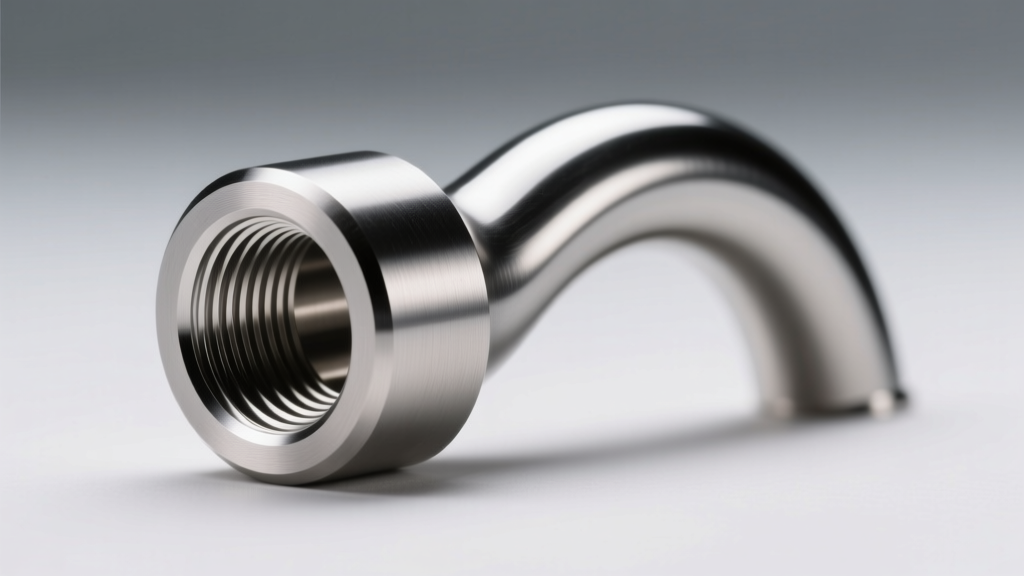
Why You Must Avoid 'Surgical Steel'
Many mass-market online retailers sell '316L Surgical Steel' labeled as hypoallergenic. This is a misleading marketing term. 316L steel contains up to 14% nickel, a known contact allergen. When exposed to the saline environment of a healing or healed fistula, nickel ions can leach into the tissue, causing contact dermatitis, hypergranulation, and eventual piercing rejection.
Instead, you must look for ASTM F136 compliant Ti6Al4V (Titanium). This is the exact same medical-grade alloy used in orthopedic joint replacements. It is entirely nickel-free, highly polished to a mirror finish to prevent bacterial adhesion, and lightweight enough to reduce gravitational drag on the delicate eyebrow tissue. For those seeking a dark, moody aesthetic, Niobium is an excellent, nickel-free alternative that can be safely anodized to black without the use of toxic plating chemicals.
Threading Types: Why Internal is Non-Negotiable
If you are purchasing a curved barbell, the threading mechanism—the way the decorative end screws onto the shaft—is just as critical as the metal itself. There are three main types of threading in the body jewelry market:
- Externally Threaded: The screw threads are on the shaft. When inserted, these sharp, jagged threads scrape directly through the delicate fistula lining, causing micro-tears and introducing bacteria. Never buy externally threaded jewelry for an eyebrow piercing.
- Internally Threaded: The screw threads are on the inside of the decorative end, while the shaft is completely smooth. This allows the jewelry to glide through the piercing without causing trauma.
- Threadless (Push-Pin): Pioneered by brands like NeoMetal, this system uses a slightly bent pin that creates tension inside the hollow shaft. As of 2026, threadless jewelry is considered the gold standard by high-end piercers because it is incredibly secure, easy to insert, and eliminates cross-threading issues.
When shopping, always verify that the product description explicitly states 'internally threaded' or 'threadless'. If the listing is vague or shows a close-up of external threads, close the tab and look elsewhere.
Best Styles of Eyebrow Jewelry
While the curved barbell is the undisputed king of eyebrow jewelry, there are several styles to consider depending on your aesthetic preferences and the healing status of your piercing.
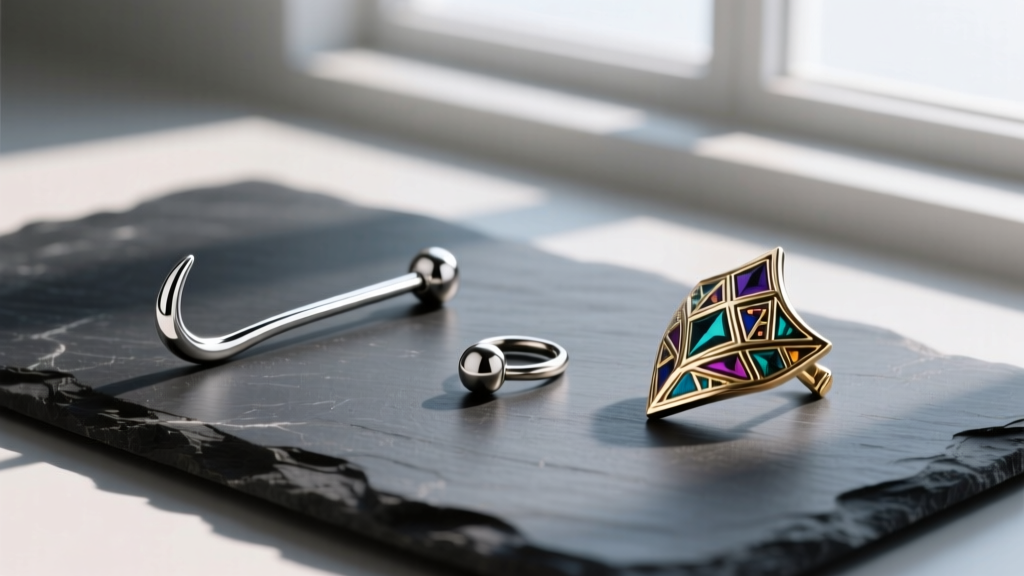
1. The Curved Barbell (Banana Bell)
The curved barbell is the most anatomically appropriate choice for both initial piercings and long-term wear. Its gentle arc perfectly mimics the natural 30-to-45-degree angle at which most eyebrow piercings are performed. This shape minimizes pressure on the entry and exit holes, significantly reducing the risk of migration. You can customize the look by swapping out the top and bottom ends for prong-set gems, opals, or minimalist titanium balls.
2. Captive Bead Rings (CBRs) and Clickers
Rings can be worn in eyebrow piercings, but only after the piercing is 100% healed. A ring that is too small in diameter will force the fistula into an unnatural curve, creating constant pressure that leads to rejection. If you prefer the look of a hoop, opt for a 3/8' or 7/16' diameter hinged clicker. Clickers are highly popular because they feature a seamless closure mechanism that snaps shut, eliminating the fiddly tension rings of traditional CBRs that often require pliers to open and close.
3. Eyebrow Shields and Dangles
For a more ornate, gothic, or bohemian aesthetic, eyebrow shields attach to the bottom ball of a curved barbell and drape across the skin below the brow bone. These are strictly for healed piercings, as the added weight can pull on a fresh fistula. Ensure the shield is made from lightweight cast titanium or carved bone/wood to prevent unnecessary drag on the piercing.
Trusted Brands and Pricing Expectations
When investing in facial jewelry, quality dictates longevity and safety. Cheap, plated jewelry from fast-fashion marketplaces will tarnish, chip, and irritate your piercing within weeks. Instead, look for reputable, APP-compliant manufacturers. Here is what you can expect to pay for premium, implant-grade titanium jewelry in 2026:
- NeoMetal: Famous for their threadless system. Expect to pay $25-$40 for a plain titanium shaft and $35-$80 for gemstone ends.
- BVLA (Body Vision Los Angeles): The luxury standard for custom gold and titanium ends. Prices range from $60 for simple titanium designs to $300+ for solid 14k gold and diamond clusters.
- Anatometal: Known for impeccable internal threading and high-polish finishes. Shafts run about $20-$30, with ends ranging from $40-$150.
- Industrial Strength Body Jewelry: Offers fantastic, durable internally threaded options with unique synthetic opals and PVD coatings. Ends typically cost $30-$60.
Remember that for threaded and threadless jewelry, the shaft and the decorative ends are usually sold separately. This modular system allows you to invest in one high-quality shaft and collect various ends to change your look without buying entirely new pieces of jewelry.
Aftercare and When to Change Your Jewelry
Eyebrow piercings are notorious for being temperamental. While a professional piercer might estimate a healing time of 6 to 8 weeks, surface piercings often take 3 to 6 months to fully stabilize. Do not attempt to change your initial jewelry until you have consulted with your piercer and confirmed that the fistula is fully epithelialized.
Watch closely for signs of rejection, which include the piercing hole gradually becoming larger, the jewelry sitting more shallowly under the skin, and persistent redness or flaking between the entry and exit points. If you notice the jewelry migrating toward the surface of the skin, remove it immediately to allow the tissue to heal and minimize permanent scarring. By choosing the correct gauge, insisting on ASTM F136 titanium, and prioritizing internal or threadless mechanisms, you give your eyebrow piercing the best possible foundation for a lifetime of healthy, stylish wear.


