Tom Ford Earrings 2026: Material & Durability Guide
Explore the material properties of Tom Ford earrings in 2026. Compare brass plating, enamel, and crystal durability, weight, and allergy risks.

The Anatomy of Luxury Fashion Jewelry in 2026
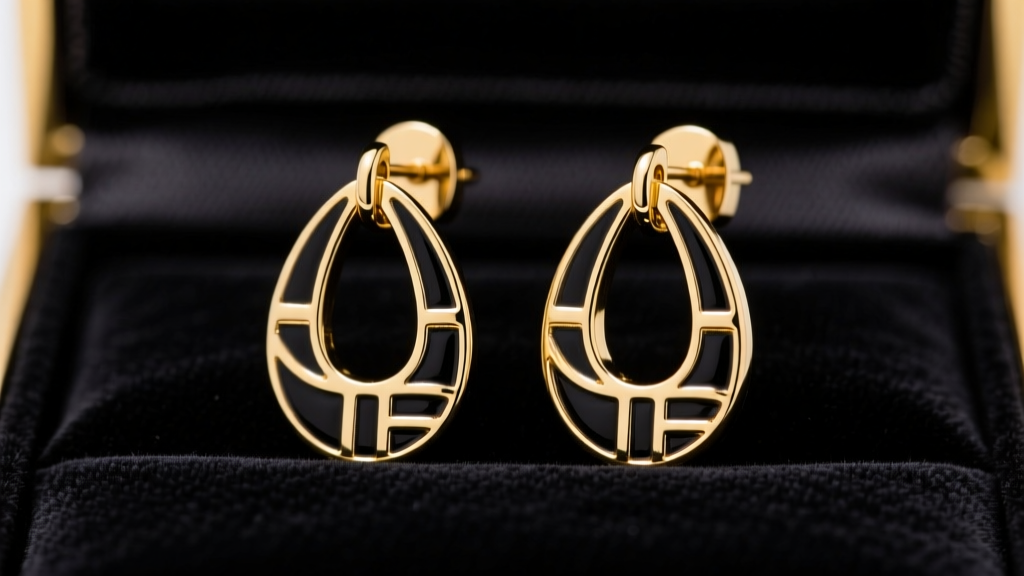
When evaluating tom ford earrings, it is crucial to understand the distinction between fine jewelry and luxury fashion jewelry. Tom Ford’s earring collections are celebrated for their bold, architectural silhouettes, 1970s-inspired glamour, and substantial visual weight. However, unlike fine jewelers that rely on solid 18k gold or platinum, Tom Ford primarily operates in the high-end fashion jewelry space. This means the core value lies in the design, brand heritage, and material finishing rather than intrinsic melt value.
In 2026, the luxury fashion jewelry market has seen a massive shift toward transparency regarding base metals and plating thickness. Consumers are no longer satisfied with vague 'gold-tone' descriptions; they demand to know the metallurgical properties, allergy risks, and longevity of their investments. This guide breaks down the exact materials used in Tom Ford earrings, comparing their physical properties, durability, and care requirements.
Core Materials: Brass, Enamel, and Crystal
Gold-Plated and Silver-Tone Brass
The foundation of most Tom Ford drop earrings, hoops, and huggies is brass (an alloy of copper and zinc). Brass is chosen for its exceptional malleability, allowing for the sharp, geometric casting details that define the brand's aesthetic. Furthermore, brass provides a satisfying, substantial heft that mimics the feel of solid gold.
However, raw brass oxidizes rapidly and can cause skin discoloration. To prevent this, Tom Ford utilizes electroplating, typically applying an 18k or 14k gold-tone finish. According to the Federal Trade Commission Jewelry Guides, the durability of plated jewelry is directly tied to micron thickness. While fast fashion utilizes flash plating (0.1 to 0.5 microns), luxury fashion houses generally apply 1.5 to 3.0 microns of gold over a nickel-free barrier layer. This thicker plating ensures the earrings resist tarnishing and everyday friction for several years, provided they are not exposed to harsh chemicals.
Vitreous vs. Cold Enamel Accents
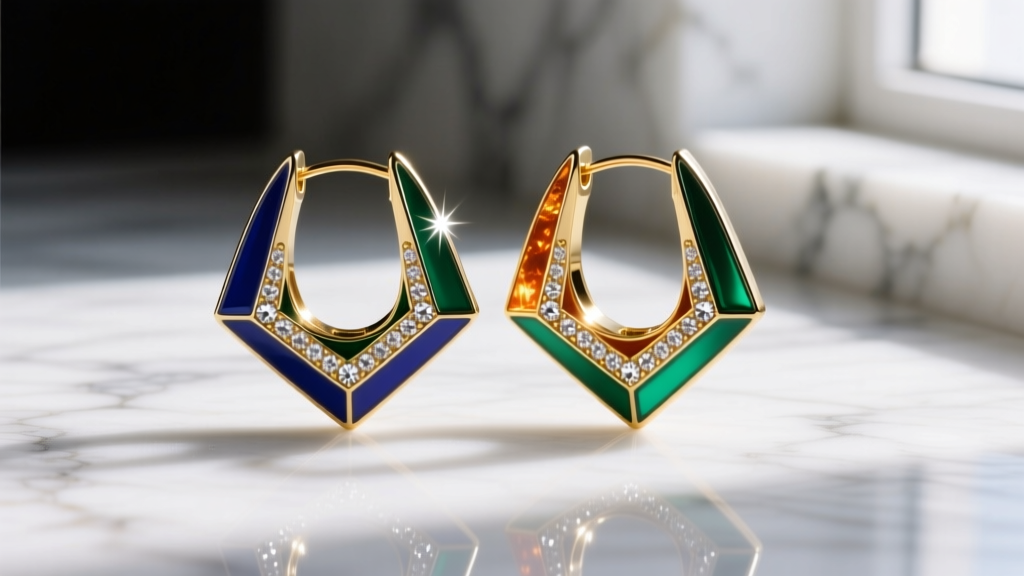
Enamel is a hallmark of Tom Ford’s seasonal earring drops, providing striking pops of onyx black, tortoiseshell, or deep crimson. It is vital to distinguish between the two types of enamel used in luxury manufacturing:
- Vitreous Enamel: Created by fusing powdered glass to metal at temperatures exceeding 1400°F. It yields a brilliant, glass-like finish with a Mohs hardness of 5.5 to 6.5. While highly scratch-resistant, it is brittle and can chip if dropped on hard surfaces.
- Cold Enamel (Epoxy Resin): A modern alternative that cures at room temperature. It is softer (Mohs 2 to 3) and more prone to micro-scratches, but it offers superior impact resistance and allows for complex, gradient color fills that vitreous enamel cannot achieve.
Swarovski and Precision-Cut Crystal
For pavé detailing and statement studs, Tom Ford frequently incorporates precision-cut crystal rather than mined diamonds. These crystals possess a high lead oxide content (or advanced lead-free barium/titanium equivalents in 2026), which maximizes the refractive index. The result is a brilliant light dispersion that rivals fine gemstones, though crystals remain susceptible to chipping along their girdles if subjected to hard impacts.
Material Comparison Chart: Durability & Properties
Understanding how these materials interact with your environment is key to maintaining their pristine condition. Below is a comparative analysis of the primary materials found in Tom Ford earrings.
| Material | Mohs Hardness | Base Composition | Allergy Risk | Maintenance Level |
|---|---|---|---|---|
| Gold-Plated Brass | 3.0 (Base) | Copper/Zinc Alloy | Low (if EU compliant) | Moderate |
| Vitreous Enamel | 5.5 - 6.5 | Fused Silica/Glass | None | Low |
| Cold Enamel | 2.0 - 3.0 | Epoxy Resin | None | High |
| Crystal Embellishments | 6.0 - 7.0 | Barium/Titanium Glass | None | Moderate |
| Acetate/Horn (Inlays) | 2.0 - 2.5 | Organic/Cellulose | None | High |
Navigating Metal Allergies and Lobe Weight
One of the most frequent concerns with luxury fashion earrings is contact dermatitis. The Gemological Institute of America (GIA) and European regulatory bodies note that nickel is the primary culprit in jewelry allergies. Tom Ford adheres to the EU Nickel Directive (2004/96/EC), which restricts nickel migration to 0.5 micrograms per square centimeter per week. However, individuals with severe hypersensitivity may still react to the copper or zinc in the brass base if the gold plating eventually wears through at high-friction points, such as the earring post.
Pro-Tip for Sensitive Ears: If you experience irritation from plated brass posts, apply a micro-layer of clear, flexible jewelry guard (or a high-grade cyanoacrylate coating) to the post before insertion. This creates an inert, medical-grade barrier between the base metal and your skin without dulling the visible earring.
The Physics of Heavy Earrings
Tom Ford’s architectural drop earrings and oversized hoops are notoriously heavy. A solid brass drop earring can easily weigh between 15 and 25 grams per ear. Over time, this gravitational pull can stretch the earlobe piercing, leading to permanent elongation or, in extreme cases, lobe tearing. To mitigate this, always utilize the brand's provided omega-backs or lever-backs, which distribute weight across the cartilage rather than relying solely on the piercing hole. For extended wear, transparent silicone lobe support patches are highly recommended to reinforce the tissue.
Care Protocols for Plated and Enameled Pieces
Maintaining the integrity of luxury fashion jewelry requires a departure from fine jewelry cleaning methods. Ultrasonic cleaners, which use high-frequency sound waves to dislodge dirt, are strictly prohibited for Tom Ford earrings. The vibrations can easily shatter vitreous enamel, loosen crystal adhesives, and accelerate the peeling of gold plating.
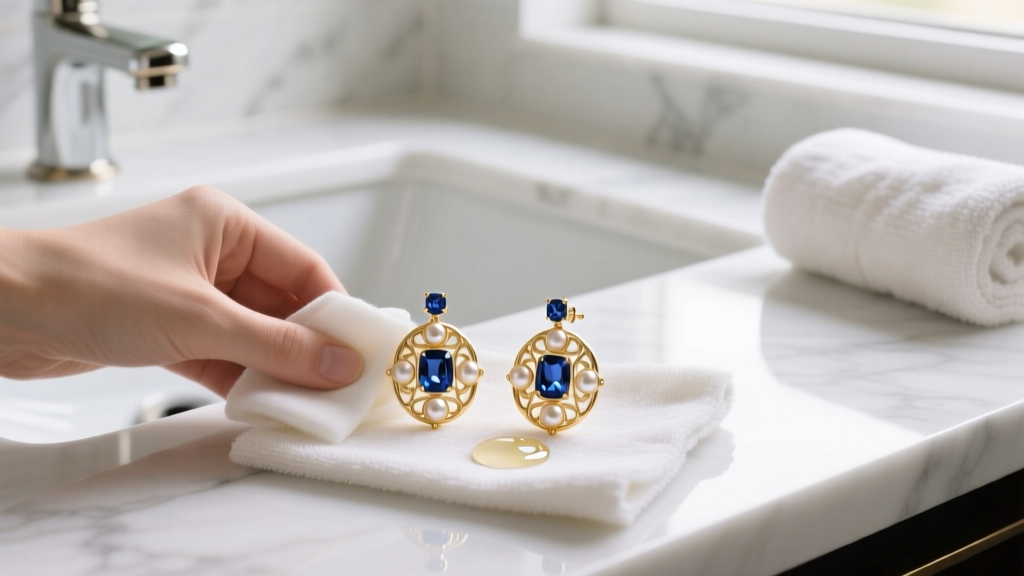
Instead, adopt the following 2026 best-practice cleaning protocol:
- Dry Dusting: Use a clean, untreated microfiber cloth to gently wipe away surface oils and cosmetics after every wear. Sebum and foundation contain mild acids that degrade gold plating over time.
- Deep Cleaning: Mix lukewarm distilled water with a single drop of pH-neutral dish soap. Dip a soft-bristled infant toothbrush into the solution and gently agitate the crevices around crystal settings.
- Drying: Immediately pat dry with a lint-free cloth. Never allow water to air-dry on the surface, as mineral deposits from tap water will leave permanent etching on the enamel and plating.
- Storage: Store each pair in its original flannel pouch, alongside an anti-tarnish silica strip. Keep them in a climate-controlled environment, as high humidity accelerates the oxidation of the underlying brass.
Investment Value: Fashion vs. Fine Jewelry
When purchasing Tom Ford earrings, buyers must align their expectations with the reality of the luxury fashion market. Retail prices in 2026 typically range from $350 for minimalist crystal studs to $895 for elaborate, multi-material architectural drops. You are paying for the brand's design language, the precision of the casting, and the quality of the enamel work. Unlike solid gold or diamond earrings, fashion jewelry does not retain intrinsic resale value based on commodity markets. However, well-maintained, iconic pieces from archival runway collections can hold significant value in the vintage and collector markets, proving that exceptional design and material execution never truly go out of style.


