The Small Hoop Earring: 2026 Ear Stack Trend Analysis
Discover 2026 small hoop earring trends. Learn how to style huggies and micro-hoops for curated ear stacks, including gauge guides and material tips.

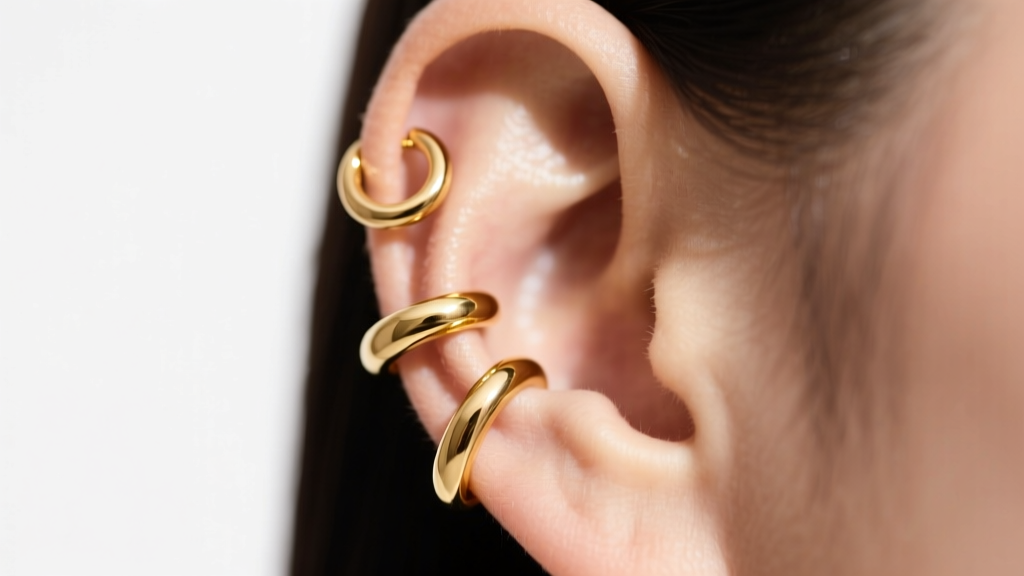
The Evolution of the Small Hoop Earring in 2026
Over the past decade, the curated ear has transitioned from a niche subculture to a mainstream staple. However, as we navigate the style landscape of 2026, the approach to ear stacking has fundamentally shifted. We are moving away from the chaotic, maximalist piercing trends of the early 2020s and entering an era of architectural precision. At the absolute center of this movement is the small hoop earring. No longer just a fallback option for healing piercings or a basic everyday staple, the small hoop has become the critical connective tissue in high-end ear curation.
In 2026, jewelry designers and piercing professionals are treating the ear as a geometric canvas. The small hoop earring—encompassing huggies, micro-hoops, and continuous rings between 5mm and 12mm in inner diameter (ID)—provides the necessary visual rhythm between larger statement pieces and minimalist studs. The trend is heavily focused on varied textures, mixed metal tones, and hyper-specific sizing. Consumers are no longer buying generic 'one-size' hoops; they are investing in millimeter-precise jewelry tailored to their unique anatomical placements. This analytical deep-dive will break down the material science, sizing architecture, and styling frameworks defining the small hoop earring market this year.
Sizing and Gauge: The Anatomy of a Perfect Fit
The most common point of failure when purchasing a small hoop earring is misunderstanding the relationship between inner diameter (ID), wire gauge, and ear anatomy. A hoop that is too tight will cause the 'cheese-cutter effect,' where the jewelry slowly migrates through the tissue due to constant pressure. Conversely, a hoop that is too large loses the sleek 'huggie' aesthetic and is prone to snagging on hair and clothing.
Furthermore, gauge thickness is paramount. While 20-gauge (0.81mm) wire is common in mass-market fashion jewelry, it is structurally insufficient for cartilage. The 2026 industry standard for a high-quality small hoop earring is 18-gauge (1.02mm) for lobes and 16-gauge (1.29mm) for cartilage to ensure long-term tissue stability.
2026 Small Hoop Sizing Matrix
| Placement | Ideal Inner Diameter (ID) | Recommended Gauge | Best Closure Mechanism |
|---|---|---|---|
| Standard Lobe | 8mm - 10mm | 18G (1.0mm) | Clicker or Continuous |
| Upper Lobe | 6mm - 8mm | 18G (1.0mm) | Segment Ring or Clicker |
| Helix | 7mm - 9mm | 16G (1.29mm) | Threadless End Hoop |
| Tragus | 5mm - 7mm | 16G (1.29mm) | Flat-back Huggie |
| Conch | 10mm - 12mm | 16G (1.29mm) | Clicker with Gem Setting |
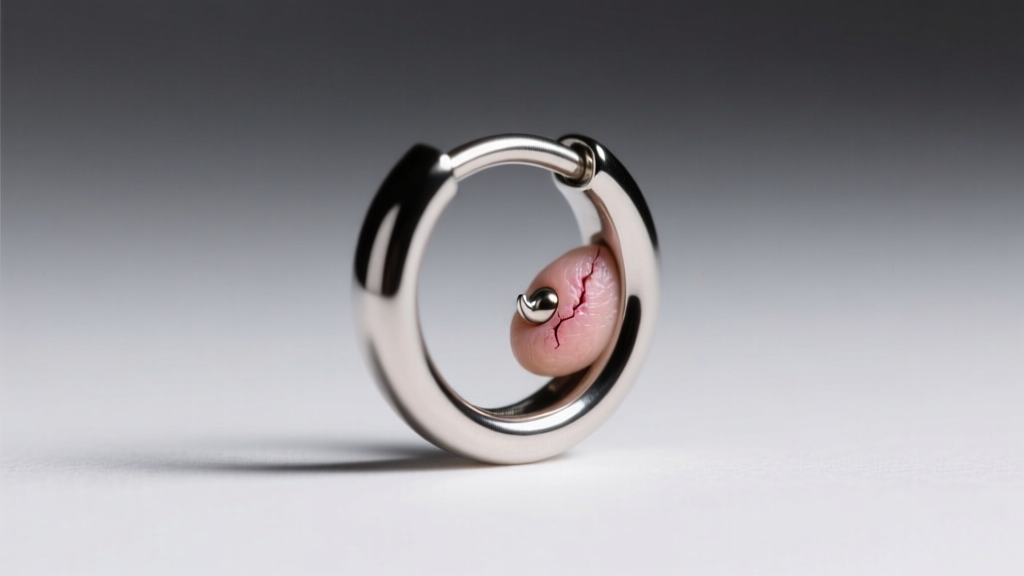
Material Science: Moving Beyond Basic Plating
A major trend defining the 2026 fine jewelry market is the widespread consumer rejection of gold-plated brass and 316L surgical steel. As awareness of contact dermatitis and heavy metal exposure grows, buyers are demanding verifiable material grades. According to the American Academy of Dermatology, nickel allergy remains the most common cause of allergic contact dermatitis, making the metallurgical composition of your small hoop earring a matter of biological safety, not just aesthetics.
The 316L Surgical Steel Myth
For years, 'surgical steel' was marketed as hypoallergenic. In reality, 316L stainless steel contains up to 14% nickel. While the nickel is often bound within the alloy, the acidic environment of a healing or irritated piercing can cause nickel ions to leach out, triggering severe allergic reactions. In 2026, reputable piercers and high-end jewelry brands have largely abandoned 316L for initial piercings and long-term wear in favor of superior alternatives.
The 2026 Material Hierarchy
- Implant-Grade Titanium (ASTM F136): The undisputed king of cartilage and sensitive lobes. It contains zero nickel, is highly biocompatible, and can be anodized to create vibrant, non-toxic colors without the use of chemical plating. Expect to pay $45 to $85 for a single, high-quality titanium huggie.
- Niobium: A softer, highly reactive metal that is also 100% nickel-free. It is increasingly popular for continuous small hoops because its malleability allows for a seamless, comfortable fit that can be gently squeezed to close the gap.
- Recycled 14k and 18k Solid Gold: Sustainability is a massive driver in 2026. Brands certified by the Gemological Institute of America (GIA) and responsible sourcing councils are utilizing recycled gold alloys. 14k gold (58.5% pure gold) offers the best balance of durability and hypoallergenic properties for small hoops that endure daily friction. Budget $180 to $350 per piece.
"The modern consumer treats their jewelry like skincare. They read the ingredient list. If a brand cannot verify their gold alloy is nickel-free or their titanium meets ASTM F136 standards, they are immediately disqualified from the curated ear market." — 2026 Association of Professional Piercers (APP) Material Guidelines.
The 2026 Ear Stack Formula: Mixing Textures and Metals
Styling a small hoop earring in 2026 is about intentional contrast. The 'matchy-matchy' uniform sets of the 2010s have been replaced by dynamic, mixed-metal, and mixed-texture stacks. The goal is to create a visual cascade that draws the eye upward along the jawline and toward the helix. Here are three actionable frameworks for building a modern stack using small hoops as your foundation.
Framework 1: The Helix-to-Lobe Cascade
This formula relies on graduating sizes and alternating metals. Start with a textured 10mm yellow gold small hoop earring in the primary lobe piercing. Move to a polished 8mm white gold or platinum huggie in the upper lobe. Finish the stack with a 7mm rose gold or anodized titanium micro-hoop in the helix. The alternating textures (hammered vs. high-polish) prevent the stack from looking like a uniform catalog page.
Framework 2: The Minimalist Tragus Anchor
The tragus is notoriously difficult to heal, but once established, it serves as the perfect anchor for a subtle stack. Use a 6mm, 16-gauge flat-back huggie in the tragus to eliminate the risk of the jewelry pressing into the ear canal while sleeping. Pair this with a simple, bezel-set diamond or moissanite stud in the lobe. The small hoop provides an industrial, architectural edge that balances the traditional sparkle of the lobe stud.
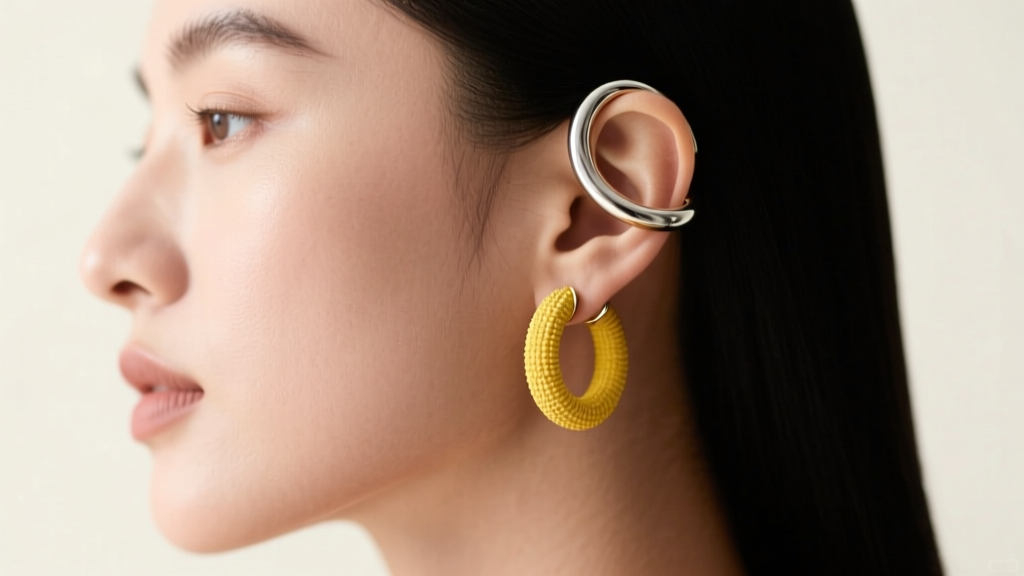
Framework 3: The Conch Statement
The conch piercing offers a large, flat canvas that is perfectly framed by a slightly larger small hoop earring (11mm-12mm ID). In 2026, the trend is to use a 'threadless' conch hoop. Unlike traditional clickers that can snap under pressure, threadless hoops utilize a tension-fit pin that bends slightly to lock into the receiving tube. This mechanism is virtually fail-proof and allows for interchangeable gemstone ends, letting you customize the stack daily without removing the base hoop.
Troubleshooting Common Small Hoop Failures
Despite their popularity, small hoops are mechanically complex. The smaller the diameter, the higher the stress placed on the hinge and closure mechanism. Understanding these failure modes will save you from lost jewelry and damaged piercings.
1. The Clicker Hinge Snap
Clicker hoops feature a tiny hinge on one side and a tension-clasp on the other. In diameters under 8mm, the metal fatigue on the hinge is significant, especially if the wearer frequently opens and closes the hoop by pulling the ends apart rather than using the hinge. Solution: Invest in continuous (endless) hoops or segment rings for daily wear, reserving clickers for occasional use. If you must use a clicker, ensure it is machined from solid 14k gold or titanium, as plated brass hinges degrade rapidly.
2. The Segment Ring Bead Loss
Segment rings rely on a tiny O-ring or a captive bead to close the circuit. The tension required to hold a 5mm segment ring closed is immense, and dropping the microscopic bead is a universal frustration. Solution: Transition to 'threadless' or 'internally threaded' seamless rings, or use a small pair of jewelry pliers with nylon jaws to gently tighten the tolerance of the segment ring ends before insertion.
3. Warping from Sleep Pressure
Sleeping in thin, continuous wire hoops often results in the jewelry warping into an oval shape, which then irritates the piercing channel. Solution: For sleepers, opt for a 'sleep hoop'—a specific design featuring a flat back and a huggie-style front that distributes pressure evenly across the back of the ear, or simply switch to flat-back labret studs for nighttime wear to preserve the structural integrity of your small hoop earring collection.


