Beginner Guide to Buying Real Gold and Emerald Earrings
Discover how to choose, authenticate, and care for gold and emerald earrings. Learn about gold karats, emerald treatments, and the best settings.

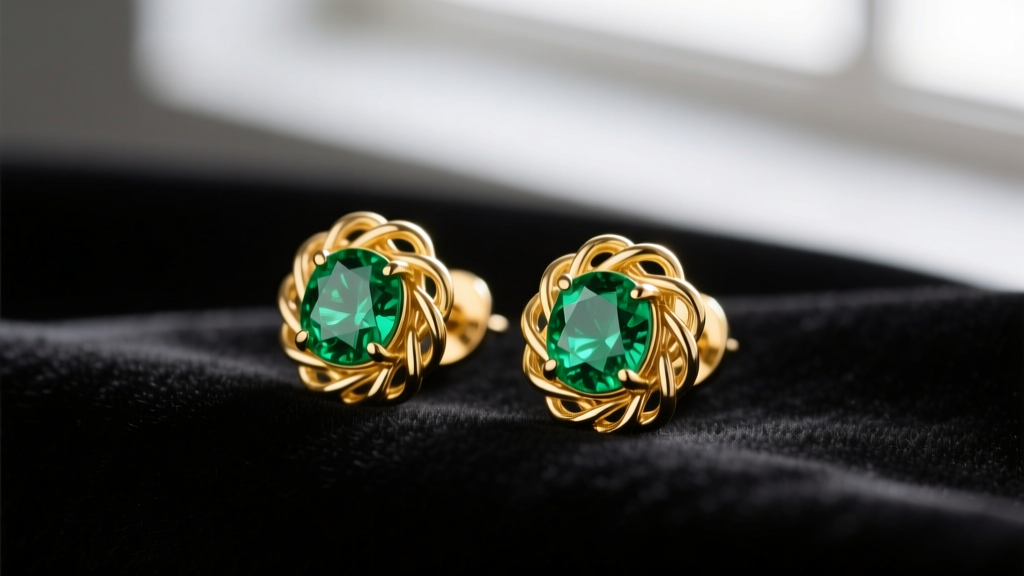
The Timeless Appeal of Gold and Emerald Earrings
When it comes to building a fine jewelry collection, few pairings are as historically significant and visually striking as gold and emerald earrings. The warm, reflective luster of gold perfectly complements the deep, velvety green of an emerald, creating a contrast that flatters almost every skin tone. However, for beginners stepping into the world of colored gemstones, emeralds present a unique set of challenges. Unlike diamonds or sapphires, emeralds are notoriously brittle and almost always undergo clarity treatments. This guide will walk you through the exact material grades, setting styles, and care protocols you need to know before making your first investment in gold and emerald earrings.
Decoding the Gold: Karats and Colors for Earring Settings
The first decision you will face is selecting the right gold alloy. Pure 24-karat gold is far too soft to securely hold a brittle gemstone like an emerald; the prongs would bend and release the stone with minimal pressure. Therefore, jewelers rely on alloyed gold, primarily 14K and 18K, to balance purity with structural integrity.
| Feature | 14K Gold (58.5% Pure) | 18K Gold (75% Pure) |
|---|---|---|
| Durability | Highly durable, resists scratching and bending | Softer, more prone to surface wear over time |
| Color Depth | Paler yellow, excellent base for rose gold alloys | Rich, saturated yellow hue that enhances green stones |
| Prong Security | Excellent grip, ideal for heavy or brittle stones | Good, but requires slightly thicker prongs for safety |
| Price Range (Studs) | $250 - $800 per pair (excluding stone cost) | $450 - $1,500+ per pair (excluding stone cost) |
For beginners, 14K yellow or rose gold is often the smartest choice for everyday wear, especially for hoop or huggie styles that might catch on clothing. If you are purchasing high-end, natural AAA-grade emeralds, 18K yellow gold is the industry standard, as its richer color amplifies the gemstone's natural green saturation without the need for heavy metal polishing.
Understanding Emerald Quality: What Beginners Must Know
Emeralds rank between 7.5 and 8 on the Mohs scale of hardness, which might suggest they are tough. However, hardness (resistance to scratching) is not the same as toughness (resistance to breaking). Because emeralds form under intense geological stress, they are riddled with natural fractures and inclusions, affectionately called the jardin (French for garden).
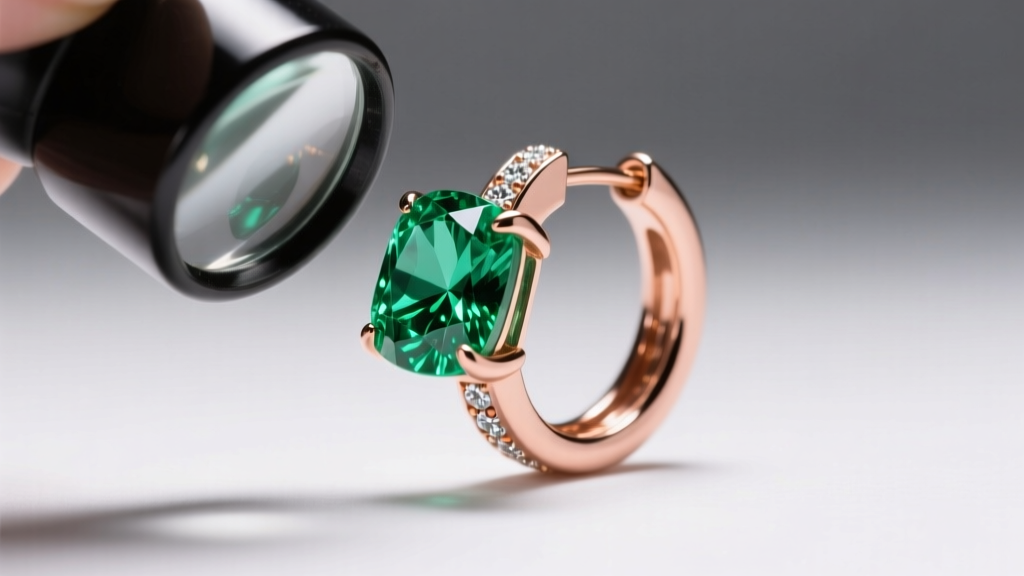
The Reality of Clarity Enhancements
According to the Gemological Institute of America (GIA), virtually all natural emeralds on the market are clarity-enhanced. Because the fractures reach the surface, jewelers fill them to improve transparency and stability. As a beginner, you must understand the difference between traditional and modern fillers:
- Cedar Oil: The traditional, most accepted treatment. It has a refractive index similar to emerald but can dry out or leak if exposed to heat or harsh chemicals.
- Synthetic Resins (e.g., Opticon): Modern polymers that are much more stable than oil but are frowned upon by high-end collectors because they can yellow over time and are nearly impossible to remove without damaging the stone.
Pro Tip: Always ask the jeweler for the specific enhancement type. If a seller claims a natural emerald is 'untreated' and 'eye-clean' but prices it under $2,000 per carat, it is almost certainly a lab-created stone or a heavily glass-filled composite.
Natural vs. Lab-Created: A Buyer's Pricing Framework
Gold and emerald earrings are available at wildly different price points, largely dictated by the origin of the gemstone. Here is a practical decision framework for your budget:
- Natural Emeralds (AAA Grade): Expect to pay $1,500 to $5,000+ per carat. These stones will have visible jardin but offer a unique, deep green color that synthetics struggle to perfectly replicate.
- Hydrothermal Lab-Created Emeralds: Priced between $50 and $150 per carat. These are chemically and optically identical to natural emeralds but are grown in a controlled environment, meaning they lack the structural fractures of natural stones. For beginners buying their first pair of drop or dangle earrings, lab-created emeralds set in 14K gold offer the best durability-to-price ratio.
Best Earring Styles and Settings for Emeralds
The physical vulnerability of emeralds dictates which earring styles are safe for daily wear. Avoid long, chandelier-style dangles that can swing and strike hard surfaces. Instead, focus on these beginner-friendly silhouettes:
Basket Studs vs. Martini Settings
While the three-prong martini setting is popular for diamonds, it is a poor choice for emeralds. The pointed pressure of a martini prong can easily chip an emerald's corner. Always opt for a four-prong basket setting with a solid metal base. The basket distributes pressure evenly and protects the pavilion (bottom) of the stone from accidental impacts.
Huggies with Channel-Set Accents
If you prefer hoops, avoid large, thin wire hoops that can bend and warp, potentially popping the stones out of their settings. Instead, choose 14K gold huggies with small, channel-set or bezel-set emerald accents. Bezel settings—where a rim of gold completely surrounds the gemstone's girdle—offer the ultimate protection for the brittle edges of an emerald.

Crucial Care Rules: Protecting Your Investment
The most common way beginners ruin their gold and emerald earrings is through improper cleaning. The GIA's official care guidelines explicitly warn against using ultrasonic and steam cleaners. The high-frequency vibrations of an ultrasonic cleaner will shatter a natural emerald's internal fractures, while the heat of a steam cleaner will melt or boil out the cedar oil filler, leaving the stone looking cloudy and white.
The Only Safe Cleaning Method: Mix a few drops of mild, ammonia-free dish soap in lukewarm water. Soak the earrings for 5 minutes, then gently agitate the water. Use a baby-soft toothbrush to lightly sweep the back of the gold setting. Rinse in lukewarm water and pat dry with a microfiber cloth. Never scrub the emerald itself.
Final Verdict for First-Time Buyers
Purchasing your first pair of gold and emerald earrings is an exciting milestone. By prioritizing 14K or 18K gold for structural security, understanding the necessity of clarity enhancements, and strictly avoiding ultrasonic cleaners, you can ensure your earrings remain vibrant and intact for decades. Start with a bezel-set huggie or a four-prong basket stud, and always request a detailed gemological report or disclosure of treatments before finalizing your purchase.


