How to Choose Among the Different Kinds of Earring Backs
Explore the different kinds of earring backs, from friction push to screw clutches. Find the most secure fit for fine jewelry and heavy statement pieces.

The Anatomy of Earring Security: Why the Back Matters
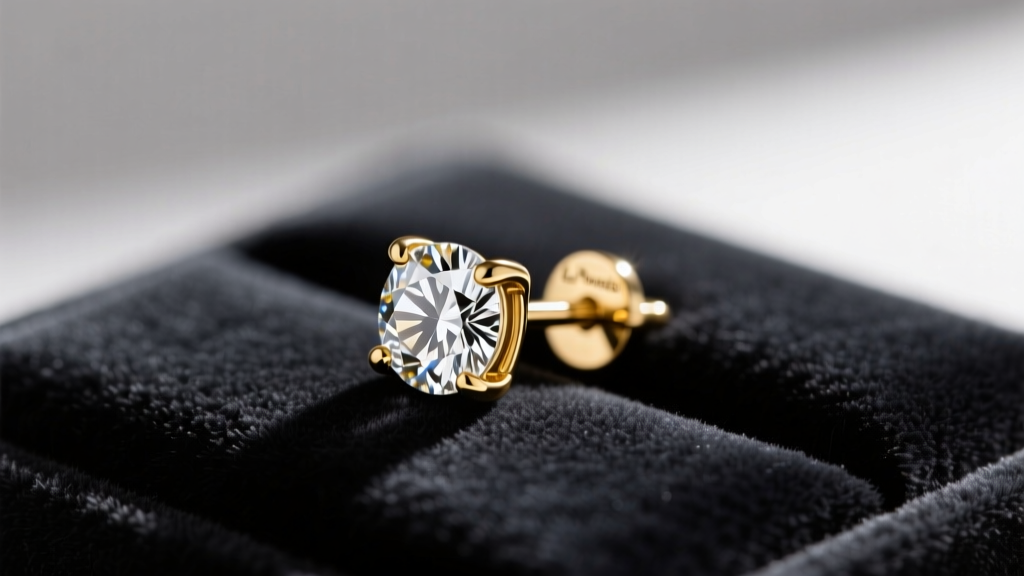
When investing in fine jewelry, buyers often obsess over diamond clarity, gold karatage, or gemstone origin. Yet, a $5,000 diamond solitaire is only as secure as the $2 piece of metal holding it to your earlobe. Understanding the different kinds of earring backs is not merely a matter of comfort; it is a critical exercise in risk management and asset protection.
The primary failure point for lost earrings is the backing mechanism. Metal fatigue, improper gauge matching, and daily friction can compromise even the most expensive pieces. In this comprehensive buying guide, we dissect the mechanical realities, material grades, and specific use cases for every major earring backing system available on the market today.
Comprehensive Breakdown of the Different Kinds of Earring Backs
1. Friction Push Backs (Butterfly Clutches)
The ubiquitous butterfly clutch relies on a simple friction fit. The post features a small notch, and the metal scroll of the clutch snaps into place. While cost-effective (typically included with the purchase of stud earrings), they are highly susceptible to metal fatigue. Over time, the tension in the scroll weakens, leading to a loose fit. Expert Tip: If your friction backs slide off easily, use flat-nose jewelry pliers to gently pinch the scroll loops closer together, restoring the tension.
2. Screw Backs
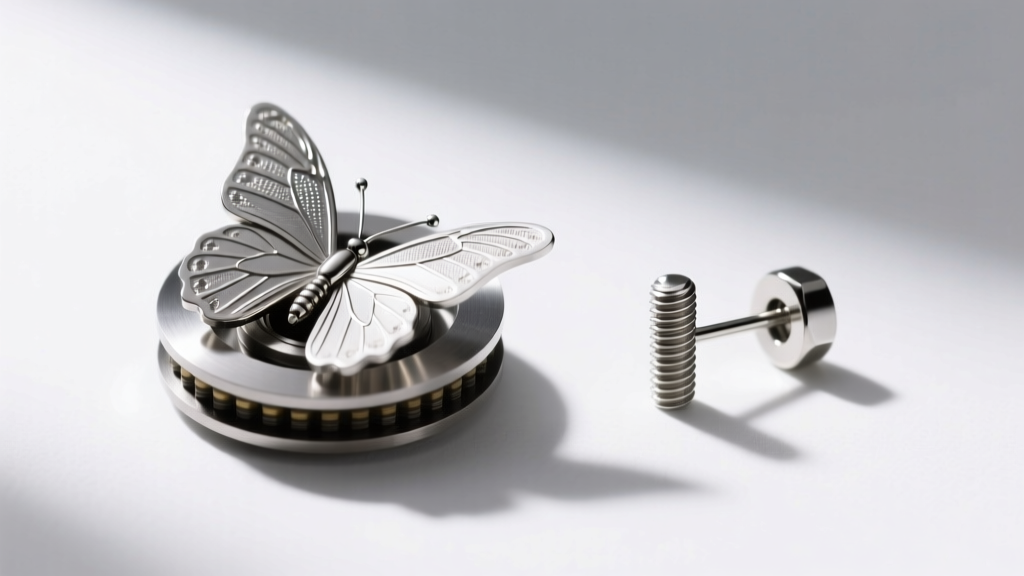
Screw backs feature a threaded post and an internally threaded nut. They are the gold standard for children's earrings and active adults. Because they require intentional rotational force to remove, accidental loss is nearly impossible. However, they demand precise alignment; forcing a misaligned nut will strip the threads (cross-threading), permanently ruining the post. Most fine jewelry screw backs are cut for 18-gauge (1.02mm) or 16-gauge (1.29mm) posts.
3. La Pousette (Locking) Backs
Often described as the "Rolex of earring backs," the La Pousette mechanism utilizes a spring-loaded internal clutch. Squeezing the two side tabs retracts the internal pins, allowing the back to slide smoothly on and off the post. When released, the pins lock securely into the post's notch. They offer unparalleled security for heavy diamond studs and high-value heirlooms. Expect to pay between $45 and $95 for a single pair in 14k or 18k solid gold.
4. Hinged Snap Closures & Huggie Clickers
Commonly found on hoops and huggies, this integrated system uses a hinged post that snaps into a grooved catch on the opposite side of the hoop. The security relies entirely on the precision of the click mechanism. A high-quality snap closure produces an audible, crisp click and exhibits zero lateral wiggle. If the post bends even a fraction of a millimeter, the closure will fail to engage.
5. French Wire & Fishhook (No Back Required)
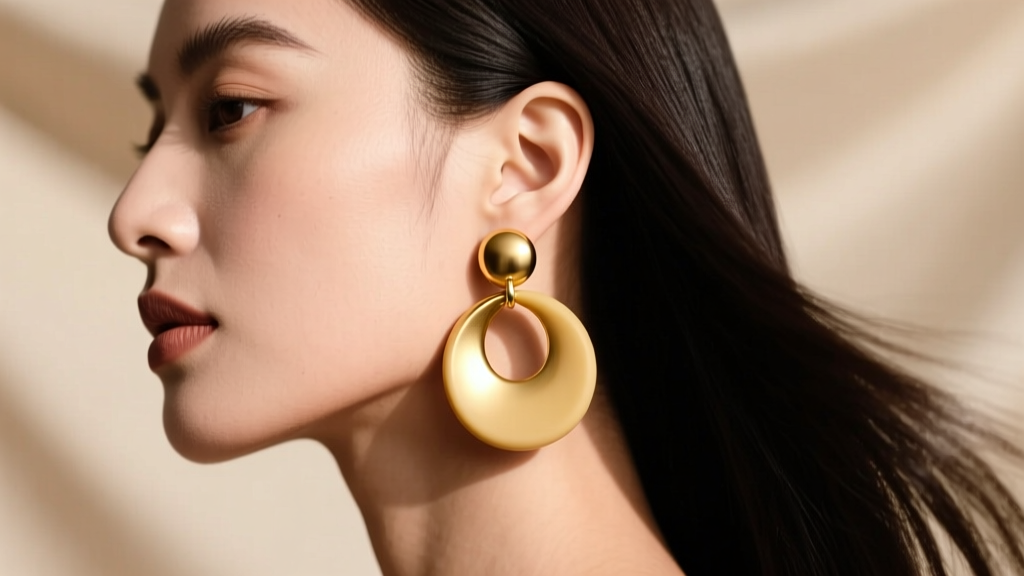
Dangle and drop earrings frequently utilize French wires, which rely on gravity and the natural curve of the wire to stay in the ear. Because they lack a mechanical lock, they are highly vulnerable to being pulled out by hair, scarves, or telephone receivers. For secure wear, pairing French wires with clear silicone friction stoppers or specialized locking ear wires is mandatory.
Material Grades and Hypoallergenic Considerations
The skin on the posterior earlobe is highly susceptible to contact dermatitis. According to the American Academy of Dermatology, nickel allergy is the most common cause of allergic contact dermatitis, affecting up to 18% of North Americans. When evaluating earring backs, the material grade is just as important as the mechanical design.
- Implant-Grade Titanium (ASTM F136): The absolute safest option for sensitive ears and fresh piercings. It contains zero nickel and is highly biocompatible.
- Surgical Stainless Steel (316L): Often marketed as hypoallergenic, 316L steel actually contains 8-10% nickel. It is generally safe for healed lobes due to a protective chromium oxide layer, but can trigger reactions in highly sensitive individuals if the layer scratches.
- Solid 14k/18k Gold: Excellent for fine jewelry, but ensure it is nickel-free white gold (alloyed with palladium instead of nickel) or stick to yellow/rose gold.
- Silicone/Plastic: Ideal for lightweight friction stoppers and heavy earring support discs, but they can harbor bacteria if not cleaned weekly with isopropyl alcohol.
Comparison Matrix: Security, Price, and Best Use Cases
| Back Type | Security Level | Post Gauge Compatibility | Avg. Price Range | Best For |
|---|---|---|---|---|
| Friction Push (Butterfly) | Low-Medium | 20g - 18g | $2 - $15 | Lightweight, everyday studs |
| Screw Back | High | 18g - 16g | $25 - $60 | Children, active lifestyles, sleepers |
| La Pousette (Locking) | Very High | 18g - 16g | $45 - $95 | High-value diamond studs, heavy gems |
| Hinged Snap (Hoops) | Medium-High | 16g - 12g | Integrated | Hoops, huggies, cartilage rings |
| Silicone Discs | Medium (Support) | Universal | $5 - $12 | Supporting heavy drop/dangle earrings |
Earlobe vs. Cartilage: Does the Back Change?
The anatomical location of your piercing drastically dictates which backing systems are viable. Standard earlobes are soft, pliable, and can accommodate the 10mm to 12mm post lengths required for bulky mechanisms like La Pousette or screw backs. Cartilage, however, is rigid, highly vascular, and prone to hypertrophic scarring if subjected to pressure.
For flat, helix, or tragus piercings, traditional push backs are a hazard. The rigid cartilage does not compress, meaning a tight friction back will pinch the tissue, restrict blood flow, and cause necrosis or severe irritation bumps. Instead, cartilage piercings require internally threaded flat-back labret studs. These feature a flat disc that sits flush against the back of the ear, distributing pressure evenly, while the front gemstone screws directly into the post. This eliminates the need for a traditional back altogether and is the only medically recommended setup for healing or long-term cartilage wear.
Troubleshooting Common Back Failures
Even the finest mechanisms fail if improperly maintained. Here is how to troubleshoot the most common issues encountered by jewelers:
"The number one reason clients lose diamond studs is not a defective back, but a buildup of lotion and skin oils inside the clutch, which acts as a lubricant and allows the back to slide off the post unnoticed." — Master Bench Jeweler
Fixing a Loose Friction Clutch
Do not throw away a loose butterfly back. Place it on a steel bench block and use a rawhide mallet or flat-nose pliers to gently compress the side scrolls. This restores the work-hardened tension of the metal. If the post itself is worn smooth (lacking a visible notch), a jeweler must use a bead-blasting tool or a fine file to recut the retention groove.
Dealing with Stripped Screw Backs
If a screw back becomes stuck due to cross-threading, do not apply excessive torque, which will snap the post. Apply a single drop of penetrating oil to the threads, let it sit for ten minutes, and use a rubber-tipped jar opener for grip to gently reverse the nut. If the threads are entirely stripped, the post must be laser-welded and re-threaded by a professional.
Expert Verdict: Matching the Back to the Earring Weight
Choosing the right backing system requires an honest assessment of your wardrobe and the physical properties of your jewelry. For lightweight everyday studs (under 2 grams), standard friction backs are perfectly adequate, provided they are cleaned regularly. For children or athletes, the minor inconvenience of threaded screw backs is vastly outweighed by their security.
However, if you are purchasing diamond solitaires over 1.00 carat, or heavy gemstone drops exceeding 5 grams, investing in La Pousette locking backs or large silicone support discs is non-negotiable. The Gemological Institute of America (GIA) consistently advises that proper jewelry care extends to the mechanisms that secure the pieces. By understanding the mechanical nuances of the different kinds of earring backs, you ensure your fine jewelry remains safely on your ears, not lost in the floorboards of your car.


