Transparent Hoop Earrings: Material Science & Hardware Guide
Discover the material science behind transparent hoop earrings. We compare lucite, resin, and glass, analyzing hinge mechanics, UV stability, and post grades.

The Material Matrix: Lucite vs. Cast Resin vs. Borosilicate Glass
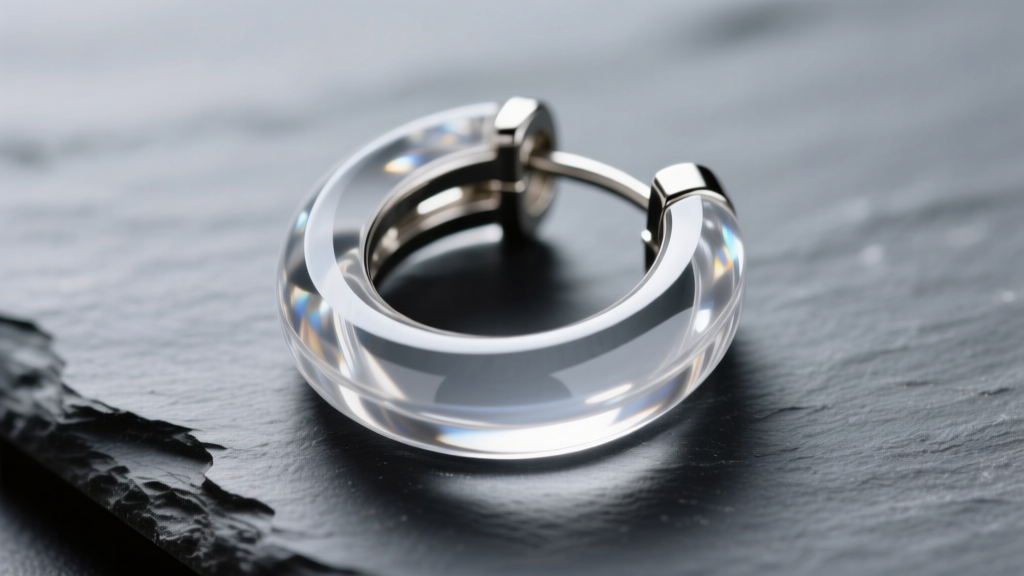
When consumers search for hoop earrings transparent styles, they are typically presented with three distinct material categories: polymethyl methacrylate (PMMA/Lucite), cast epoxy resins, and borosilicate glass. While visually similar on a digital storefront, their structural integrity, optical clarity, and biocompatibility vary drastically. Understanding these differences is critical for both jewelry designers and collectors seeking durable, skin-safe accessories.
PMMA, commonly known by the brand name Lucite, is the industry standard for high-end clear plastics. It boasts a 92% light transmission rate, making it optically superior to standard glass. However, PMMA is inherently brittle under point-stress. Cast resins, conversely, are poured into molds and can encapsulate organic materials like dried flowers or gold leaf. While versatile, epoxy resins possess a lower Mohs hardness (typically around 3.0), making them highly susceptible to micro-scratching from everyday wear. Borosilicate glass offers the highest scratch resistance (Mohs 6.5) and exceptional chemical inertness, but its density introduces significant weight distribution challenges for larger hoop diameters.
Hardware Integration: Solving the Stress Fracture Problem
The most common failure point in any clear polymer earring is the junction where the metal post or hinge meets the transparent body. This is governed by the Coefficient of Thermal Expansion (CTE). Metals like titanium and steel expand and contract at vastly different rates than acrylics or resins when exposed to temperature fluctuations (e.g., moving from a cold winter exterior to a heated room).
The Titanium Insert Technique
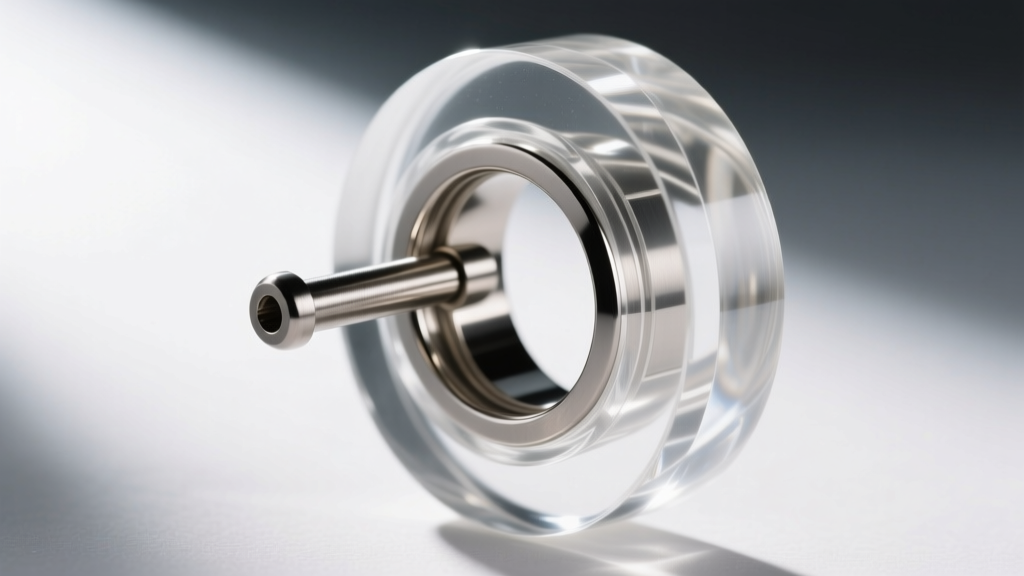
If a manufacturer simply drills a 1.0mm hole into a Lucite hoop and force-fits an 18-gauge (1.02mm) titanium post using cyanoacrylate adhesive, the joint will inevitably fail. The CTE mismatch will cause the acrylic to develop micro-fractures, eventually leading to a catastrophic snap at the hinge line. Expert jewelers solve this by ultrasonically embedding a threaded titanium sleeve into the polymer during the curing or molding process. This sleeve acts as a thermal buffer and a mechanical anchor, distributing shear stress across a wider surface area within the clear material rather than concentrating it at a single friction point.
Material Comparison and Biomechanical Data
Selecting the right transparent material requires balancing optical clarity with weight and durability. The following table breaks down the technical specifications of the primary materials used in transparent hoops.
| Material | Mohs Hardness | Density (g/cm³) | Light Transmission | Biocompatibility |
|---|---|---|---|---|
| Lucite (PMMA) | 3.5 | 1.18 | 92% | High (Inert) |
| Cast Epoxy Resin | 3.0 | 1.10 - 1.20 | 85% - 90% | Variable (Curing agents) |
| Borosilicate Glass | 6.5 | 2.23 - 2.50 | 90% | Exceptional |
| Polycarbonate | 2.9 | 1.20 | 88% | Moderate (BPA concerns) |
UV Degradation and Yellowing: The Polymer Reality
A frequent complaint regarding transparent plastic jewelry is the inevitable yellowing over time. This is not a manufacturing defect but a chemical process known as photo-oxidation. When ultraviolet light strikes the polymer chains in standard acrylics or polyurethanes, it breaks the molecular bonds, creating free radicals that absorb blue light, resulting in a yellow or brownish tint.
To combat this, premium manufacturers incorporate Hindered Amine Light Stabilizers (HALS) or UV-absorbing benzotriazoles into the PMMA mixture during the extrusion process. According to the British Plastics Federation, properly stabilized acrylics can resist UV degradation for decades without noticeable optical shifts. When purchasing transparent hoops, always verify if the polymer is UV-stabilized; otherwise, the earrings will lose their pristine clarity within 12 to 18 months of regular outdoor wear.
Post Metallurgy and Skin Biocompatibility
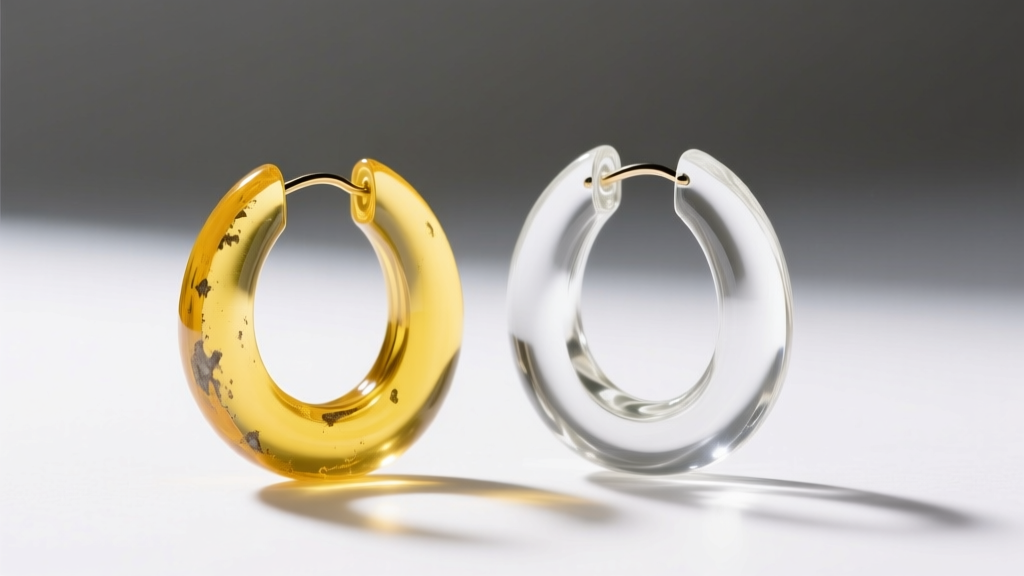
The transparency of the earring body often draws the eye away from the post, yet the metal piercing the earlobe dictates the biological response. The Association of Professional Piercers (APP) strictly recommends implant-grade titanium (Ti6Al4V ELI, ASTM F136) for initial piercings and sensitive ears. Nickel allergies are among the most common contact dermatitis triggers globally, as documented in extensive NCBI dermatological studies.
In transparent hoop designs, the post is highly visible through the clear material. Some manufacturers mistakenly use brass or copper posts coated in a clear lacquer to maintain an 'invisible' look. This is a critical error. Lacquer wears away through friction against the skin, exposing the reactive base metals to sweat and sebum, leading to severe localized allergic reactions and greenish skin discoloration. Always ensure the visible wire or post is solid implant-grade titanium or niobium, both of which are anodizable and completely hypoallergenic.
Weight Distribution and Earlobe Biomechanics
The density of the chosen transparent material directly impacts earlobe health. A standard 30mm diameter hoop made of lightweight Lucite (1.18 g/cm³) may weigh a mere 4 grams, sitting comfortably on a standard 20-gauge (0.81mm) post. However, a borosilicate glass hoop of the exact same dimensions can weigh upwards of 12 grams.
This concentrated mass on a thin wire creates a fulcrum effect, pulling the earlobe downward and causing the piercing channel to migrate or stretch over time. For glass or heavy resin hoops exceeding 8 grams, the post gauge must be increased to 16-gauge (1.29mm) or 14-gauge (1.63mm) to distribute the sheer force across a wider cross-section of ear tissue. Furthermore, the backing mechanism must utilize a wide-surface silicone o-ring or a threaded titanium disc to prevent the heavy hoop from tearing through the lobe during sleep or physical activity.
Maintenance and Solvent Sensitivity
Cleaning transparent hoops requires strict chemical awareness. The most common mistake consumers make is wiping PMMA or cast resin earrings with isopropyl alcohol or harsh antibacterial wipes. Alcohols act as aggressive solvents to acrylic polymers, inducing a phenomenon called 'crazing'—a network of microscopic internal cracks that scatter light, permanently clouding the earring and severely compromising its structural integrity.
Instead, transparent hoops should be cleaned using a mild, non-ionic surfactant (like a diluted baby shampoo) and a microfiber cloth. For borosilicate glass hoops, alcohol is perfectly safe and highly effective for sterilization. By matching the cleaning protocol to the specific material science of the earring, collectors can preserve the optical brilliance and mechanical strength of their transparent jewelry for years to come.


