Trending Earrings 2025 to 2026: The Ultimate Metal Guide
Discover which metals from trending earrings 2025 actually endure. We compare titanium, gold, and surgical steel properties, grades, and pricing.

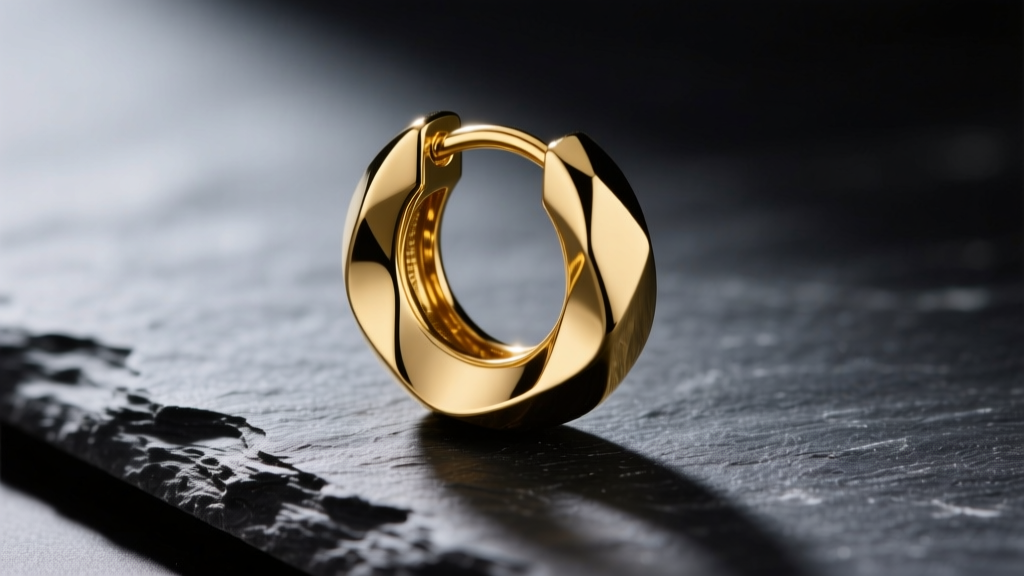
When we analyze the landscape of trending earrings 2025, the focus was undeniably on maximalist ear curation, mixed-metal stacks, and chunky silhouettes. Consumers were layering huggies, ear cuffs, and threadless studs with reckless abandon. However, as we move deeper into 2026, the jewelry industry and informed collectors are pivoting from purely aesthetic choices to a rigorous examination of material science. The heavy ear stacks of last year exposed a critical flaw in fast-fashion jewelry: widespread contact dermatitis, migration, and premature tarnishing. Today, understanding the metallurgical properties of your earrings is no longer optional; it is the foundation of a sustainable, healthy ear curation.
The Shift: From 2025 Aesthetics to 2026 Longevity
The viral ear trends of the past year heavily promoted the "curated ear" look, often requiring multiple piercings in close proximity. While visually striking, placing five to eight pieces of jewelry in a single ear drastically increases the skin's overall exposure to reactive alloys. According to the Association of Professional Piercers (APP), the most common cause of delayed healing and hypertrophic scarring in cartilage piercings is the use of unverified metals containing nickel or heavy metal impurities. As we transition into 2026, the smartest collectors are auditing their jewelry boxes, discarding mystery metals, and investing in pieces with verified metallurgical grades.
Deep Dive: Material Properties & Metallurgical Grades
Not all metals are created equal. The label "gold" or "titanium" on a product description is vastly insufficient for making an informed purchasing decision. Here is the exact breakdown of what you need to look for when shopping for high-quality studs, hoops, and dangles.
Implant-Grade Titanium (ASTM F136)
Titanium is the gold standard for initial piercings and sensitive ears, but the specific grade matters immensely. Commercial-grade titanium (ASTM B265) is often used in cheaper jewelry and can contain trace impurities that irritate healing fistulas. You must look for ASTM F136 Implant-Grade Titanium. This specific alloy (Ti6Al4V ELI) is highly biocompatible, entirely nickel-free, and features a mirror-finish polish that prevents bacteria from adhering to the post.
Best For: Fresh piercings, highly reactive skin, and heavy daily-wear staples like flat-back labrets.
Price Range: $35 to $85 per piece for high-end brands like BVLA or Maria Tash.
Solid Gold: The Alloy Breakdown (14k vs 18k)
Pure 24k gold is too soft for body jewelry; it will easily bend and lose its shape. Therefore, gold is alloyed with other metals for durability. According to the Gemological Institute of America (GIA), 14k gold contains 58.5% pure gold, while 18k contains 75%. Both are excellent for healed piercings, provided they are nickel-free.
The White Gold Trap: Many mass-market white gold earrings are alloyed with nickel to achieve their silver color, which can trigger severe allergic reactions. When buying white gold, always verify that it is alloyed with palladium instead of nickel. Yellow and rose gold are generally safer bets, though rose gold contains copper, which can cause minor oxidation over time.
Price Range: $150 to $600+ per piece, heavily dependent on gemstone accents.
Surgical Steel: 316L vs 316LVM
"Surgical steel" is a highly misleading marketing term. Most jewelry labeled as such is 316L stainless steel, which contains 8% to 10.5% nickel. While the nickel is largely bound within the alloy, prolonged exposure to sweat and skin oils can cause it to leach, triggering reactions in the 10% to 20% of the population with nickel sensitivities, as noted by the Mayo Clinic.
316LVM (Vacuum Melted): This is a superior variation where the melting process traps impurities and reduces surface nickel exposure. However, it still contains nickel at its core. Steel should only be worn in fully healed, non-reactive earlobes, never in fresh cartilage piercings.
Price Range: $15 to $45 per piece.
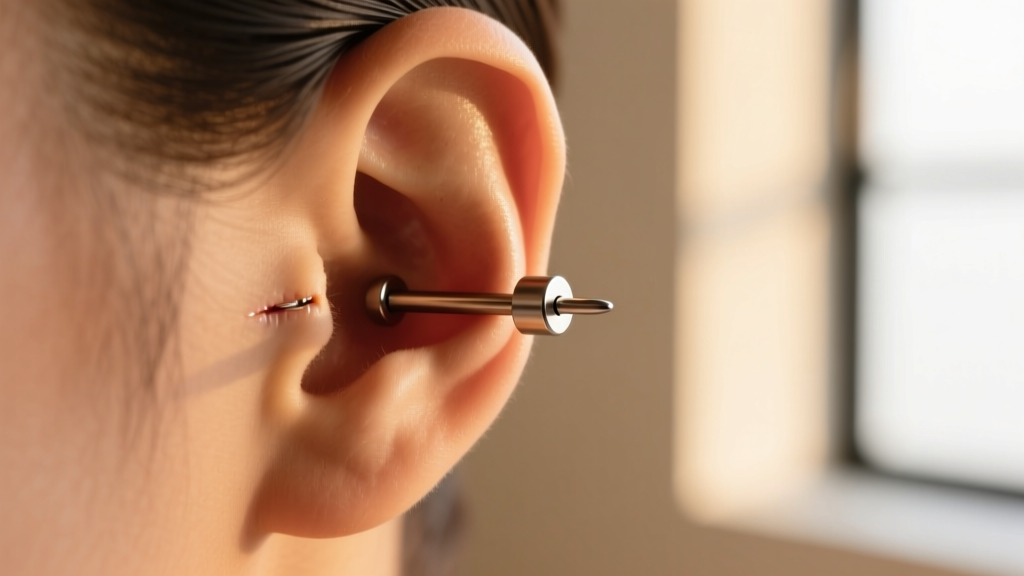
Material Comparison Matrix
Use this quick-reference table to determine which metal suits your specific piercing needs and budget constraints.
| Material / Grade | Nickel Content | Best Placement | Durability & Tarnish | Avg. Price (Stud) |
|---|---|---|---|---|
| ASTM F136 Titanium | 0% (None) | Fresh & Healed Cartilage/Lobes | Highly durable, zero tarnish | $40 - $75 |
| 14k / 18k Yellow Gold | Usually 0% | Healed Lobes & Cartilage | Excellent, requires occasional polish | $150 - $350 |
| 14k White Gold (Palladium) | 0% (None) | Healed Lobes & Cartilage | Excellent, may need rhodium replating | $180 - $400 |
| 316LVM Surgical Steel | Low surface exposure | Fully Healed Lobes Only | Good, can dull over time | $15 - $30 |
| Niobium (Anodized) | 0% (None) | Healed Lobes & Cartilage | Soft metal, scratches easily, no tarnish | $20 - $50 |
Cartilage vs. Lobe: Why Material Dictates Placement
The anatomical differences between your earlobe and your upper cartilage (helix, conch, daith) require entirely different approaches to material selection. The earlobe is highly vascular, meaning it has excellent blood flow. This allows lobes to heal quickly (typically 6 to 8 weeks) and fight off minor irritants. Because of this forgiving environment, healed lobes can often tolerate 316L steel or even high-quality silver without adverse reactions.
Cartilage, conversely, is avascular. It relies on surrounding tissue for nutrients and immune response, making healing a slow, arduous process that can take 6 to 12 months. Introducing a reactive metal like standard surgical steel or brass into a healing cartilage piercing is a recipe for hypertrophic scarring (the dreaded "piercing bump"), prolonged weeping, and eventual rejection. For any cartilage project, stick strictly to ASTM F136 titanium or high-karat, nickel-free solid gold. Furthermore, pay attention to gauge sizes: while 20G (0.8mm) and 18G (1.0mm) are standard for lobes, cartilage piercings are typically performed at 16G (1.2mm) or 14G (1.6mm) to provide structural stability and reduce the "cheese-cutter effect" where thin jewelry migrates through the tissue.
Troubleshooting Common Metal Reactions
Even with careful purchasing, you may encounter material issues. Here is how to diagnose what your earrings are actually made of based on your skin's reaction:
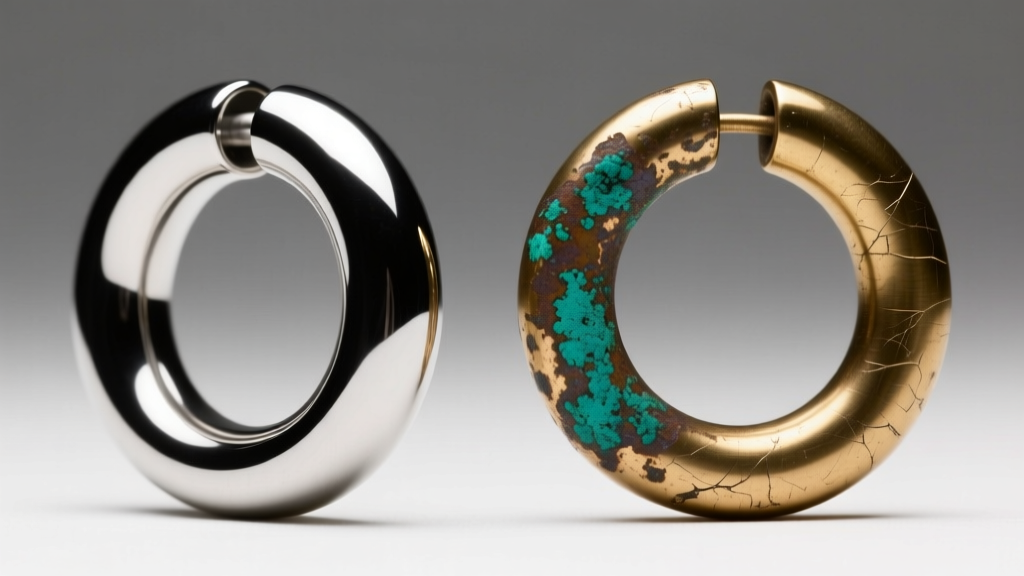
- The Green/Black Smudge: If your earlobe turns green or black, your jewelry contains copper or brass. This is common in gold-plated or gold-vermeil pieces where the base metal has worn through. This is not necessarily dangerous, but it indicates the piece is no longer solid and should be retired.
- Itching, Redness, and Clear Fluid: This is the hallmark of contact dermatitis caused by nickel. Remove the jewelry immediately and switch to implant-grade titanium to allow the fistula to calm down.
- Dullness and Pitting: Sterling silver (925) contains 7.5% copper, which oxidizes rapidly when exposed to the sulfur in human sweat. Silver should never be worn in unhealed piercings or left in the ear 24/7, as the tarnish can permanently stain the piercing channel black (a condition known as argyria).
Final Verdict: Investing in Your Ear Curations
The evolution from the fleeting aesthetics of trending earrings 2025 to the mindful materialism of 2026 represents a massive win for consumer health and jewelry longevity. While the upfront cost of implant-grade titanium and solid gold is undeniably higher than fast-fashion alternatives, the cost-per-wear drops significantly when you factor in the lifespan of the metal. A $60 titanium flat-back labret will outlive a $15 steel alternative by decades, keeping your piercing channels healthy, bump-free, and perfectly primed for your next upgrade. Audit your jewelry box today, check the stamps, and prioritize the metals that respect your anatomy as much as your aesthetic.


