Troubleshooting Gypsy Earrings: Fix Lobe Sag, Allergies & Tangles
Fix common issues with heavy gypsy earrings. Learn how to prevent earlobe tearing, solve metal allergies, and untangle multi-strand boho dangles.


The Biomechanics of Lobe Sag and Tearing
Gypsy earrings—characterized by their bohemian aesthetic, multi-layered coin dangles, intricate filigree, and cascading chains—are a staple of festival and eclectic fashion. However, their visual impact is often matched by their physical toll on the ear. The average earlobe is composed entirely of adipose (fat) tissue and loose connective tissue, lacking the rigid cartilage found in the upper ear. When you hang a 20-gram brass coin earring from a standard piercing, the sheer force concentrates entirely on the inferior edge of the fistula (the piercing hole). Over time, this causes micro-tears, localized ischemia (restricted blood flow), and permanent elongation of the lobe.
Troubleshooting this issue requires a two-pronged approach: redistributing the physical load and upgrading the structural integrity of the earring's findings. Before discarding your favorite vintage or artisan pieces, you can apply professional jewelry repair techniques to make them comfortable and safe for all-day wear.
Upgrading the Wire Gauge for Load Distribution
Most mass-produced bohemian earrings utilize 20-gauge (0.81mm) or even 22-gauge (0.64mm) base metal wires. These thin wires act like a cheese cutter against the soft tissue of the earlobe. The first and most effective troubleshooting step is to replace the ear wire with a thicker gauge. Upgrading to an 18-gauge (1.02mm) or 16-gauge (1.29mm) wire increases the surface area bearing the weight, drastically reducing the pounds-per-square-inch (PSI) of pressure on the fistula.
To execute this, use a pair of precision flush cutters to snip the original wire just above the jump ring. Attach a new 18-gauge implant-grade titanium fishhook using a 4mm split ring. Titanium is not only hypoallergenic but also possesses a higher tensile strength than brass, meaning an 18-gauge titanium wire will not bend or warp under the weight of heavy coin clusters.
Invisible Silicone Lobe Patches
If your earrings feature fixed, soldered hooks that cannot be easily removed, you must reinforce the earlobe itself. Invisible silicone earring support patches (often sold under brand names like BlingWraps or LobeWonder) are medical-grade, adhesive-backed silicone discs with a pre-punched center hole. To apply, peel the backing, slide the earring post or hook through the hole, and press the patch flush against the back of your earlobe. The patch acts as a secondary load-bearing washer, distributing the weight of heavy gypsy earrings across a two-inch radius of the back of the ear rather than a single millimeter of the piercing tract.
Contact Dermatitis and Base Metal Toxicity
A frequent complaint among wearers of boho and gypsy earrings is the development of weeping, itchy, or crusted fistulas. This is rarely an infection; it is almost always Allergic Contact Dermatitis (ACD) caused by nickel or lead leaching from the jewelry. Many imported earrings labeled as 'Tibetan Silver,' 'Antique Brass,' or 'Gunmetal' are actually cast from Zamak (a zinc alloy) and electroplated with thin layers of nickel-containing alloys to achieve an oxidized, vintage look. As the plating wears off from friction and skin oils, the underlying reactive metals are exposed.
According to the American Academy of Dermatology, nickel allergy is one of the most common causes of allergic contact dermatitis, affecting up to 36% of women. Once the skin is sensitized, even trace amounts of nickel in your gypsy earrings will trigger an immune response.
The Findings Replacement Protocol
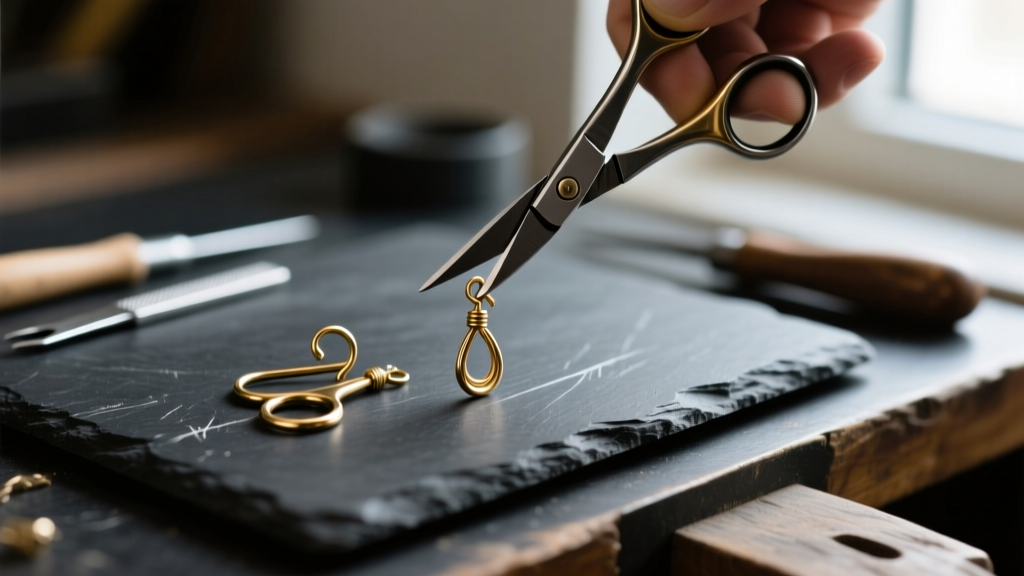
To salvage heirloom or expensive artisan gypsy earrings with toxic posts, you must perform a findings swap. You will need chain-nose pliers, flush cutters, and a pack of ASTM F136 certified titanium or pure Niobium ear wires. The Association of Professional Piercers (APP) strictly recommends ASTM F136 titanium for initial and irritated piercings due to its biocompatibility and lack of nickel impurities.
| Material | Common Alias | Nickel Content | Weight | Verdict for Sensitive Lobes |
|---|---|---|---|---|
| Zinc Alloy | Tibetan Silver | High (Plating) | Heavy | Avoid / Replace Findings |
| Brass | Antique Brass | Trace to Moderate | Heavy | Replace Findings |
| Surgical Steel | 316L Stainless | 8-10% (Bound) | Medium | Use with Caution |
| Implant Titanium | ASTM F136 | 0% (Nickel-Free) | Light | Highly Recommended |
| Niobium | Pure Niobium | 0% (Elemental) | Medium | Highly Recommended |
Untangling Multi-Strand Chaos and Fringe
The hallmark of gypsy earrings is the abundance of moving parts: delicate box chains, seed bead fringe, and layered charms. While beautiful, these elements are prone to catastrophic tangling, which can lead to broken links and lost components. The root cause of this tangling is the use of standard open jump rings in the assembly. When an open jump ring is subjected to the rotational friction of walking and dancing, it twists open, catching adjacent chains and threads.
Mechanical Fixes for Chain Tangles
To troubleshoot and permanently prevent chain tangling, inspect every connection point on your earrings. If you see a standard open jump ring (a ring with a single straight cut), use two pairs of flat-nose pliers to twist it open, remove it, and replace it with a split ring (which functions like a miniature keychain) or a soldered jump ring. Soldered rings have no gaps, making it physically impossible for adjacent chains to slip inside and knot together.
For thread-based fringe or silk tassels common in boho designs, tangling occurs due to static electricity and lack of structural weighting. Apply a microscopic drop of GS Hypo Cement to the top binding knot of the tassel to prevent the threads from unraveling and catching on neighboring chains. Additionally, storing gypsy earrings by hanging them from a velvet-lined jewelry stand, rather than tossing them in a box, allows gravity to keep the chains aligned and tangle-free.
Weight Redistribution: The Cartilage Anchor Hack
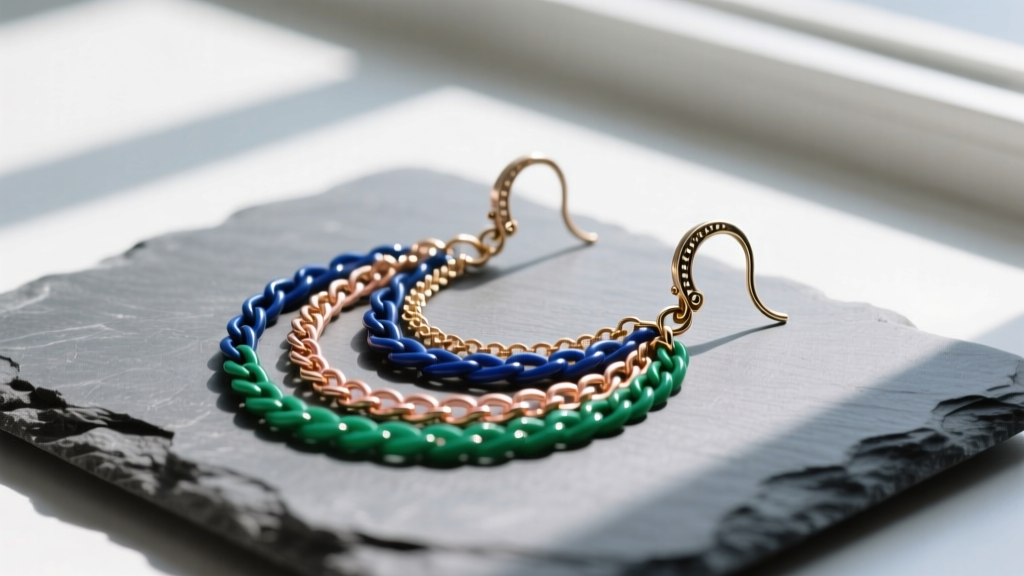
If your gypsy earrings feature massive statement hoops or heavy gemstone clusters that simply cannot be made comfortable on the lobe alone, you can borrow a technique from theatrical and high-fashion jewelry design: the cartilage anchor. This involves creating a delicate, secondary support system that transfers the majority of the earring's weight to the upper ear.
To execute this, you will need a lightweight, adjustable chain (such as a 1mm cable chain) and a secure cartilage cuff or helix stud. Attach one end of the micro-chain to the topmost jump ring of your heavy gypsy earring, and the other end to the cartilage cuff. By adjusting the length of the chain so that it pulls slightly taut when worn, the upper ear absorbs up to 60% of the downward drag. This not only saves your earlobes from stretching but also adds an authentic, layered bohemian aesthetic that perfectly complements the gypsy style. Ensure the cartilage piercing is fully healed (typically 6 to 12 months for helix piercings) before introducing any lateral tension to the area.
Summary Checklist for Boho Earring Maintenance
- Inspect Wires: Swap any wire thinner than 18-gauge to prevent the 'cheese-cutter' effect on the fistula.
- Test Metals: Use a neodymium magnet; if your 'silver' boho charms stick to it, they contain steel or iron and are prone to rust and nickel exposure.
- Secure Joints: Replace all open jump rings with split rings to eliminate multi-chain tangling.
- Reinforce Lobes: Keep medical-grade silicone patches on hand for days when you plan to wear heavy coin clusters for more than four hours.
- Anchor Heavy Pieces: Utilize helix-to-lobe chains for statement pieces exceeding 25 grams per ear.
By applying these professional troubleshooting methods, you can preserve the dramatic, free-spirited allure of gypsy earrings without sacrificing the health and comfort of your piercings.


