Wisteria Earrings Buying Guide: Styles, Metals & Care
Discover how to choose the perfect wisteria earrings. Our buying guide covers enamel techniques, weight distribution, gemstone grades, and pricing.

The Botanical Blueprint: Translating Wisteria into Jewelry
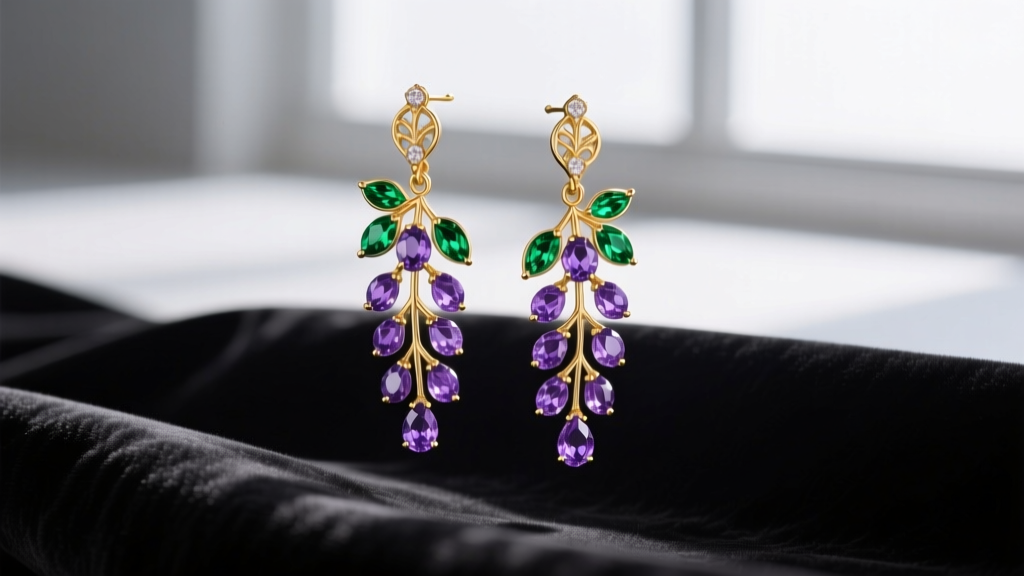
Wisteria is defined by its dramatic, cascading floral clusters, known botanically as racemes. Translating this organic, weeping structure into fine jewelry requires exceptional engineering. As we navigate the 2026 jewelry landscape, the demand for botanical motifs has shifted away from rigid, solid-cast designs toward fully articulated, kinetic pieces that move fluidly with the wearer. When evaluating wisteria earrings, the first element to inspect is the framework. High-end pieces utilize micro-jump rings to connect individual flower clusters, allowing the earring to sway and catch the light. Conversely, mass-market alternatives often use a single, solid piece of stamped metal, which not only looks stiff but adds unnecessary weight to the earlobe.
Articulation vs. Solid Casts
True artisan wisteria dangles feature a central 'stem'—usually a tapered wire of 14k or 18k gold—from which articulated branches suspend. This articulation is crucial. Without it, the earring will catch on clothing and hair, leading to bent metal and lost gemstones. Always check the connection points under a loupe; soldered joints should be smooth and flush, with no visible globs of solder that could snag delicate fabrics.
Material Grades and Enamel Techniques
The signature purple and lavender hues of wisteria are frequently achieved through gemstones or vitreous enamel. According to the Gemological Institute of America (GIA), understanding the durability of these materials is paramount for long-term wear.
Gemstone Selection: Hardness Matters
For the floral clusters, jewelers typically rely on briolette-cut stones. Lavender sapphire (Mohs 9) is the premium choice, offering exceptional scratch resistance and brilliance. Amethyst (Mohs 7) is a more accessible alternative, providing deep, saturated purples. However, because amethyst is softer, briolettes that knock against each other in a cascading design will eventually develop surface abrasions. Tanzanite (Mohs 6.5) offers a breathtaking violet-blue hue but is highly prone to chipping at the briolette's drilled tip, making it a risky choice for daily-wear dangles.
The Art of Vitreous Enamel
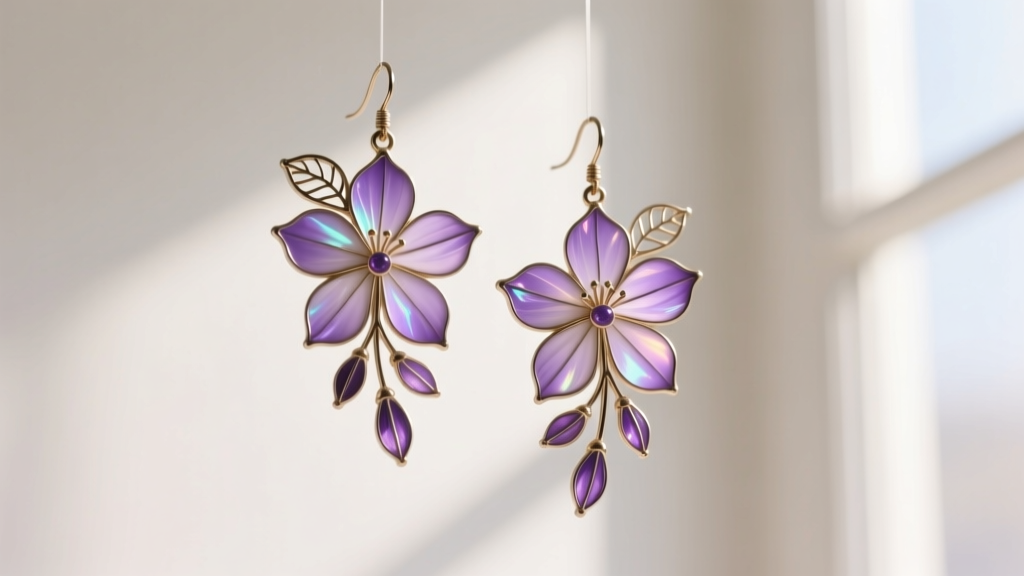
In fine jewelry, wisteria motifs are often brought to life using plique-à-jour enamel. This highly specialized technique creates a 'stained glass' effect where translucent enamel is suspended within a gold framework without a metal backing. While visually unparalleled, plique-à-jour is incredibly fragile; a simple drop onto a hard surface can shatter the enamel cells. For a more durable alternative, look for guilloché enamel, where translucent purple enamel is fired over a machine-engraved metal base, providing structural integrity while maintaining a luminous depth.
Weight Distribution: The Hidden Failure Mode
The most common point of failure with botanical dangle earrings is lobe fatigue. A fully articulated wisteria earring featuring multiple gemstone clusters can easily weigh between 8 and 14 grams per ear. Standard ear wires are simply not equipped to handle this load comfortably.
Gauge Sizing and Ear Wire Mechanics
Most commercial dangle earrings utilize a 20-gauge (0.81mm) wire. For heavy wisteria designs, this thin wire will bend under the weight, pulling the piercing forward and causing discomfort or, over time, lobe tearing. When buying, seek out designs that utilize an 18-gauge (1.02mm) or even 16-gauge (1.29mm) French wire. Alternatively, leverback closures provide a more secure, balanced fit that distributes the center of gravity closer to the piercing hole.
The Ear Chain Solution
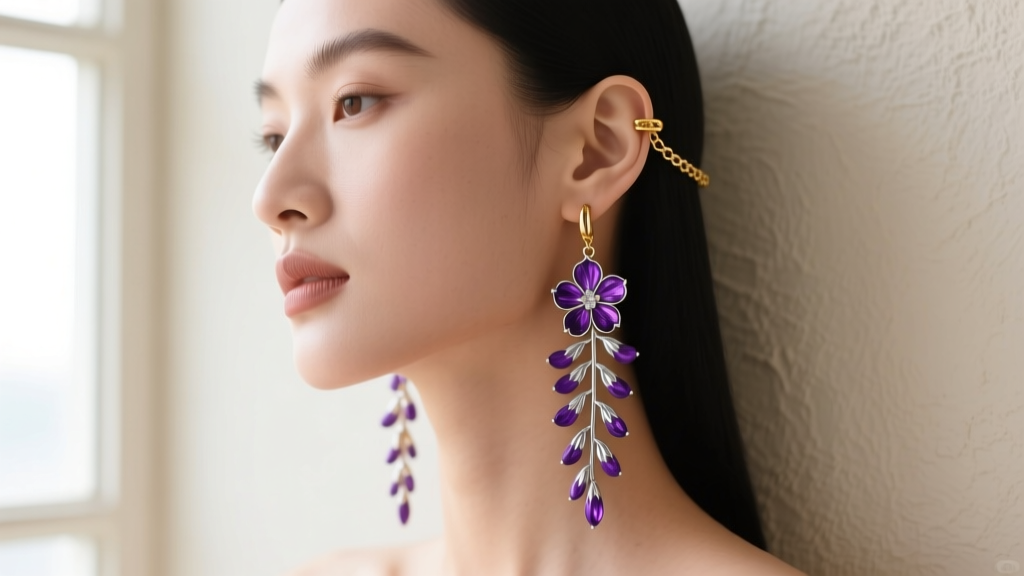
A brilliant innovation for heavy botanical dangles is the integrated ear cuff chain. This design features the main wisteria dangle suspended from the lobe, while a delicate gold chain extends upward to an unpierced cartilage cuff. This mechanism effectively offloads 60% to 70% of the earring's weight onto the upper ear, allowing you to wear dramatic, shoulder-grazing wisteria racemes without any lobe strain.
Pricing Tiers and Market Expectations
Understanding the pricing matrix for botanical jewelry helps you identify true craftsmanship versus inflated brand markups. Below is a breakdown of what to expect in the current market.
| Tier | Base Metal | Stones & Enamel | Construction | Price Range |
|---|---|---|---|---|
| Artisan / Fashion | Sterling Silver, Brass | CZ, Glass, Cold Enamel | Solid Cast, 20g Wire | $60 - $180 |
| Demi-Fine | 14k Gold Vermeil | Amethyst, Quartz, Guilloché | Basic Articulation, Leverback | $220 - $550 |
| Fine Jewelry | 18k Solid Gold, Platinum | Lavender Sapphire, Plique-à-jour | Micro-articulated, Ear Cuff Chain | $1,800 - $6,500+ |
Styling for Face Shapes and Necklines
Wisteria earrings are inherently long and V-shaped, making them a powerful tool for balancing facial proportions. For round or square face shapes, the elongated vertical line of the cascading raceme creates a slimming, lengthening illusion. However, if you have an oblong or rectangular face, opt for wisteria designs that feature wider, horizontal leaf clusters at the top to add lateral balance. When it comes to necklines, sweetheart and deep-V necks perfectly mirror the tapering geometry of the earrings, while high turtlenecks can cause the delicate articulated branches to snag.
Care and Maintenance for Cascading Designs
Maintaining wisteria earrings requires a departure from standard jewelry cleaning routines. The intricate crevices between the floral clusters trap lotion, perfume, and skin oils, dulling the gemstones and enamel.
The Ultrasonic Danger: Never place wisteria earrings in an ultrasonic cleaner. The high-frequency vibrations will instantly shatter plique-à-jour enamel and can cause internal fractures in amethyst and tanzanite briolettes, especially around the drill holes. Furthermore, ultrasonic waves can loosen the micro-jump rings that hold the articulated branches together.
Instead, follow the GIA's recommended care protocols for delicate gemstones: soak the earrings in a bowl of lukewarm water with a drop of mild, phosphate-free dish soap for five minutes. Gently agitate the cascading clusters using a baby toothbrush with ultra-soft bristles, brushing from the top stem downward to avoid bending the delicate prongs. Rinse with distilled water and lay flat on a microfiber cloth to air dry, ensuring no water spots remain on the enamel.
Expert Insight: When storing wisteria dangles, never toss them loosely into a jewelry box. The weight of other pieces will bend the articulated stems. Always hang them from a dedicated jewelry tree or lay them perfectly flat in a velvet-lined compartment, ensuring the briolettes are not resting on top of one another.


