Hypoallergenic Pearl Earrings: Budget & Value Guide
Discover how to evaluate hypoallergenic pearl earrings. We break down metal grades, pearl types, and true market value to help you buy smart.

The Intersection of Sensitive Skin and Pearl Value
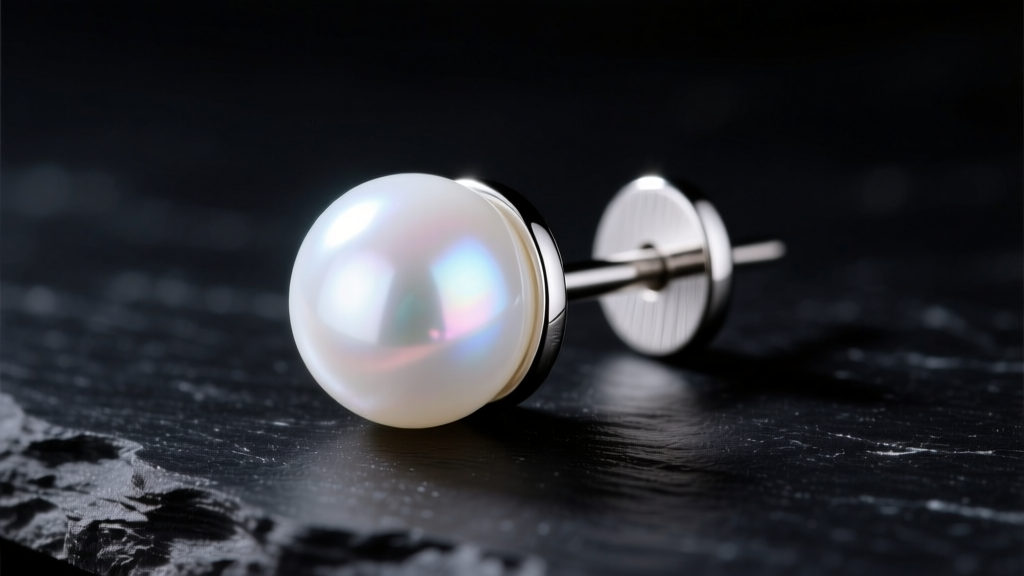
Finding the perfect pair of pearl earrings is a challenge; finding a pair that won't trigger contact dermatitis is an entirely different hurdle. For buyers navigating the market in 2026, the term hypoallergenic pearl earrings is frequently used as a marketing catch-all, often masking subpar metallurgy and inflated pricing. True value in this niche requires evaluating two distinct components: the biocompatibility of the earring post and the gemological grade of the pearl itself. Overpaying for 'hypoallergenic' labels while receiving gold-plated brass or low-grade surgical steel is a common failure mode in the mid-tier jewelry market. This guide deconstructs the actual costs, material grades, and pricing matrices you need to make an informed, budget-conscious purchase.
Metallurgy Matters: Decoding Hypoallergenic Posts
The earring post is the only part of the jewelry that interacts directly with your piercing channel. According to the Mayo Clinic, nickel is the most common culprit behind jewelry-induced contact dermatitis. Therefore, assessing value starts with verifying the exact alloy of the post, not just the marketing terminology.
The Metal Value Matrix
| Metal Grade | Nickel Risk | Avg. Post Cost Impact | Best For |
|---|---|---|---|
| ASTM F136 Titanium | Zero (Nickel-Free) | Low ($5 - $15) | Ultra-sensitive ears, fresh piercings, budget buyers |
| Niobium | Zero (Nickel-Free) | Low-Medium ($10 - $20) | Highly reactive skin, customizable anodized colors |
| 14k / 18k Gold (Nickel-Free) | Low (Alloy dependent) | High ($80 - $200+) | Healed lobes, luxury buyers, long-term wear |
| 316L Surgical Steel | Moderate to High | Very Low ($1 - $5) | Non-sensitive ears (Avoid if nickel allergic) |
Many budget brands use 316L Surgical Steel and label it 'hypoallergenic.' While 316L contains low levels of nickel (usually 8-10.5%), the EU Nickel Directive restricts nickel release to less than 0.5 mcg/cm²/week. However, for highly sensitive individuals, even this trace release can cause inflammation. For the ultimate budget-friendly and biocompatible choice, implant-grade ASTM F136 titanium offers the highest value, providing medical-grade safety without the precious metal markup.
Pearl Valuation: Freshwater vs. Saltwater on a Budget
Once the metal is secured, the bulk of your budget will go toward the pearl. The Gemological Institute of America (GIA) evaluates pearls based on size, shape, color, luster, surface quality, and nacre thickness. Understanding these factors is critical to assessing whether a price tag is justified.
Freshwater Pearls: The Budget Champion
Modern freshwater pearls (particularly Edison pearls) are tissue-nucleated and can achieve near-perfect roundness and high luster. Because a single freshwater mussel can produce up to 30 pearls at a time, the market is saturated with high-quality, affordable options. A pair of AAA-grade, 8mm round white freshwater pearls should cost between $20 and $45 wholesale. If a retailer is charging $150 for freshwater studs, you are paying for the brand name, not the gemological value.
Akoya Saltwater Pearls: The Premium Standard
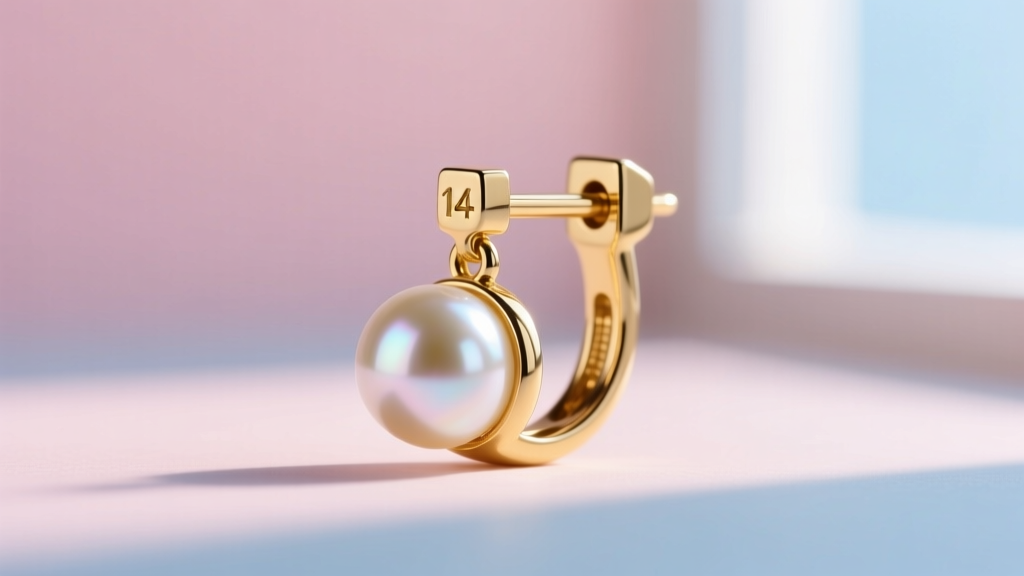
Akoya pearls are bead-nucleated, resulting in a perfectly round shape and a sharp, mirror-like luster that freshwater pearls struggle to replicate. However, the yield per oyster is much lower (usually 1-2 pearls), driving up the cost. A pair of 7.5mm Hanadama-certified Akoya pearls on 14k gold posts will reliably sit in the $250 to $450 range. The value here lies in the unparalleled luster and the prestige of the saltwater origin.
The 2026 Pricing Matrix: What You Should Actually Pay
To help you benchmark your purchases, here is a realistic breakdown of what you should expect to pay for hypoallergenic pearl earrings in the current market, factoring in both the pearl grade and the metal base.
- Under $50 (The Smart Budget Tier): You should expect 7mm-9mm AAA freshwater pearls set on ASTM F136 titanium or niobium posts. This is the highest value tier for sensitive ears. Avoid anything labeled 'gold-plated' in this tier, as the base metal is likely brass or copper, which will oxidize and cause severe reactions once the plating wears off the post.
- $50 to $150 (The Mid-Tier Sweet Spot): In this range, you can secure larger (9mm-11mm) premium freshwater pearls or entry-level, smaller (5mm-6mm) Akoya pearls set on solid 14k gold (ensure it is alloyed with silver or copper, not nickel, for white gold).
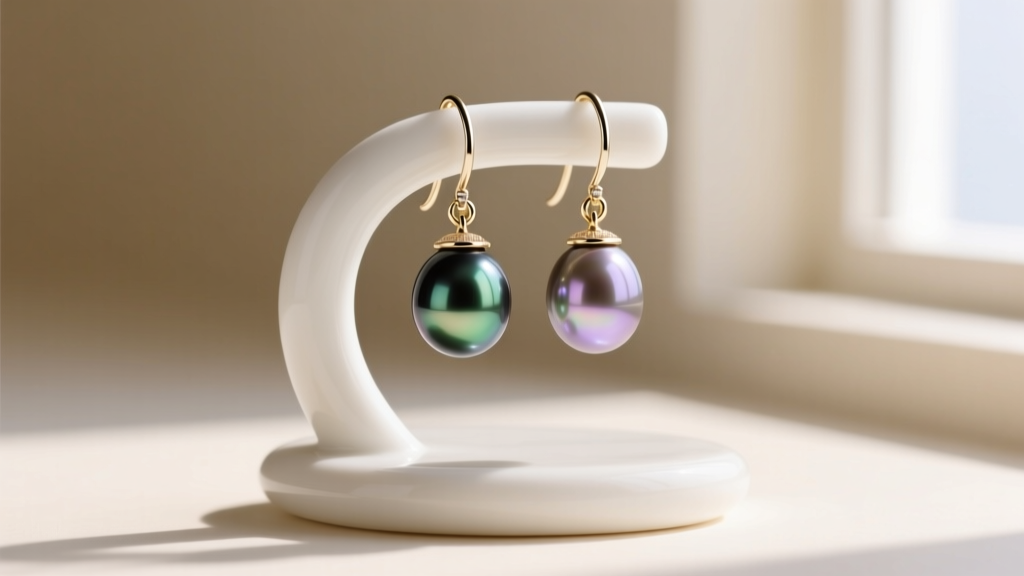
- $150 to $500 (The Luxury Tier): This budget commands 7mm+ Hanadama Akoya pearls on solid 14k or 18k gold posts, or smaller Tahitian/South Sea saltwater pearls on titanium or 14k gold. You are paying for saltwater origin, thick nacre, and precious metal weight.
- $500+ (The Investment Tier): Reserved for large (9mm+) South Sea pearls, high-grade Tahitian peacock pearls, or designer brand markups. Ensure the setting mechanics (pegging vs. gluing) match this price point.
Red Flags: Hidden Costs and Structural Failures
When assessing the value of hypoallergenic pearl earrings, price is only one metric. Structural integrity dictates the lifespan of the jewelry. A $300 pair of Akoya earrings is a poor value if the pearl detaches and is lost within a month.
The Glue vs. Peg Failure Mode
In budget and mid-tier pearl earrings, the pearl is often attached to the post using a simple drop of jeweler's epoxy. Over time, exposure to skin oils, perfumes, and humidity degrades the adhesive, causing the pearl to spin or pop off entirely. High-value pearl earrings utilize a peg-and-cup setting. The metal post features a small cup and a protruding peg that fits into a drilled hole in the pearl, secured with high-strength resin. This mechanical lock ensures the pearl cannot easily detach. Always inspect the product details or ask the jeweler if the earrings are pegged before purchasing saltwater pearls over $150.
The 'Gold-Plated' Hypoallergenic Trap
Many fast-fashion brands market 'gold-plated hypoallergenic' earrings. Plating is measured in microns. If the plating on the earring post is less than 1.0 microns thick, the friction of inserting the earring into a healed lobe will strip the gold away within weeks, exposing the reactive base metal underneath. If you require hypoallergenic properties but want the look of gold on a strict budget, opt for PVD-coated titanium or anodized niobium rather than traditional gold plating over brass.
Final Verdict: Maximizing Your Investment
Evaluating hypoallergenic pearl earrings requires looking past the 'hypoallergenic' buzzword and demanding material transparency. For the absolute best budget value without compromising your skin's health, pair AAA-grade freshwater pearls with implant-grade titanium posts. If you are stepping into the luxury market to acquire Akoya or Tahitian pearls, ensure your budget accounts for solid 14k/18k nickel-free gold and pegged settings. By understanding the distinct pricing matrices of both the metallurgy and the gemology, you can confidently build a collection that is as kind to your skin as it is to your wallet.


