Multi Colored Gemstone Earrings: 2026 Material Guide
Discover the best metals and stone treatments for multi colored gemstone earrings in 2026. Compare durability, Mohs hardness, and hypoallergenic properties.

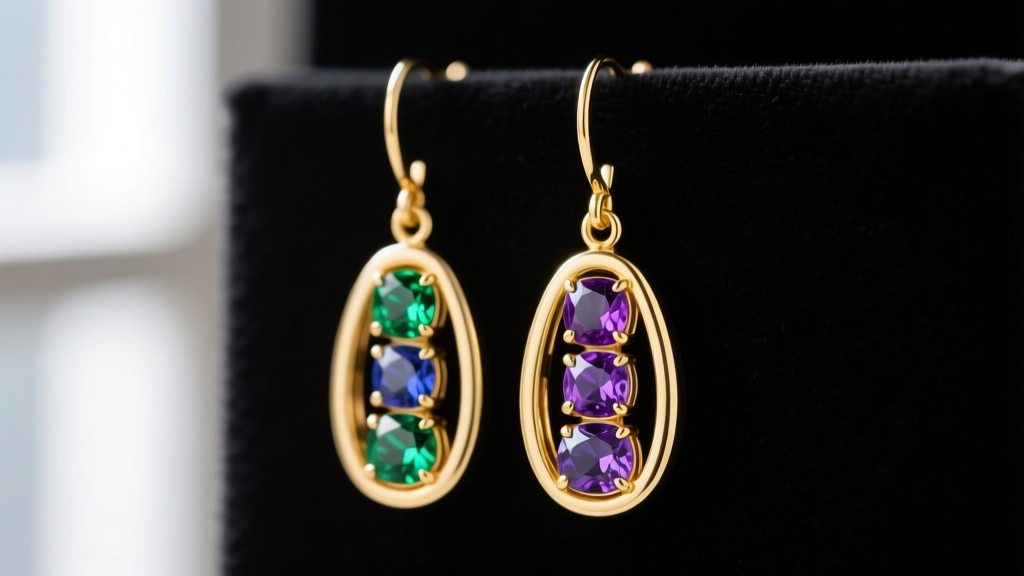
The Metallurgy and Mineralogy of Polychromatic Jewelry
Designing and purchasing multi colored gemstone earrings requires navigating a complex matrix of mineral hardness, metal alloy chemistry, and optical refraction. Unlike single-stone pieces, polychromatic earrings combine gems with vastly different physical properties into one unified setting. In 2026, as jewelry collectors increasingly prioritize heirloom-grade longevity over fast-fashion aesthetics, understanding the material science behind these pieces is critical. A poorly engineered multi-stone earring will suffer from uneven prong wear, galvanic corrosion, or catastrophic cleavage-plane fracturing within months of daily use.
This guide deconstructs the material properties that dictate the lifespan, color fidelity, and structural integrity of multi colored gemstone earrings, providing a technical framework for evaluating high-end jewelry.
Gemstone Hardness and Setting Mechanics
The most common failure mode in multi colored gemstone earrings is the mismatched setting of stones with divergent Mohs hardness and Vickers toughness ratings. When a jeweler sets a 9-Mohs sapphire next to a 6.5-Mohs tanzanite using identical prong tension, the softer stone will inevitably abrade, chip, or pop out of its setting due to differential impact resistance.
According to the GIA Gem Encyclopedia, toughness (resistance to breaking) is just as vital as hardness (resistance to scratching). Tanzanite, for instance, has perfect cleavage, meaning a single sharp blow at the wrong angle will split the stone cleanly, regardless of its overall hardness.
| Gemstone | Mohs Hardness | Vickers Toughness | Optimal Setting Type | Failure Risk |
|---|---|---|---|---|
| Sapphire (Corundum) | 9.0 | ~2000 | Tension, Shared Prong | Low (Excellent wearability) |
| Tourmaline | 7.0 - 7.5 | ~1000 | V-Prong, Half-Bezel | Moderate (Brittle, prone to chipping) |
| Tanzanite | 6.5 - 7.0 | ~800 | Full Bezel, Flush | High (Perfect cleavage planes) |
| Opal (Precious) | 5.5 - 6.5 | ~600 | Bezel with Epoxy Backing | Very High (Crazing, thermal shock) |
When evaluating multi colored gemstone earrings, inspect the setting architecture. Soft stones like opals and tanzanite must be fully encapsulated by bezels or flush-set into the metal, while harder stones like sapphires and rubies can safely bear the exposure of traditional prong settings.
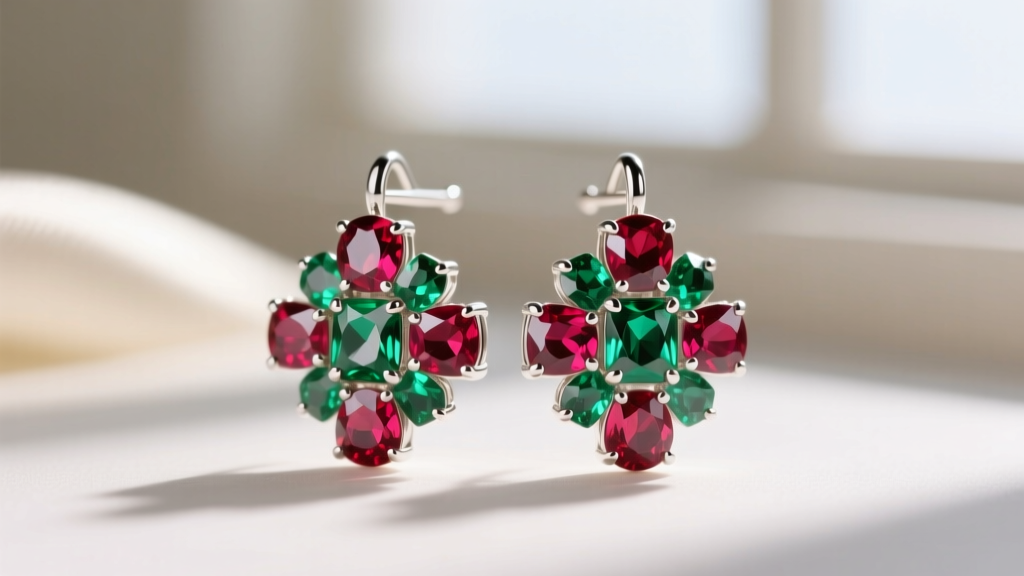
Metal Alloys: Color Temperature and Structural Integrity
The metal matrix holding your gemstones does more than provide structural support; it fundamentally alters the optical performance of the stones. The color temperature and reflectivity of the alloy will either amplify or muddy the light return of multi colored gemstone earrings.
18k vs. 14k Gold: The Alloy Matrix
Pure 24k gold is too malleable for securing gemstones. Therefore, it is alloyed with copper, silver, zinc, or palladium.
- 18k Yellow Gold (75% Au, 12.5% Ag, 12.5% Cu): Offers a rich, warm color temperature that dramatically enhances the saturation of orange, red, and yellow stones (e.g., citrine, garnet, fire opal). However, the higher copper content makes it slightly softer than 14k, requiring thicker prongs for heavy dangle earrings.
- 14k White Gold (58.5% Au, alloyed with Ni/Pd/Zn): Naturally possesses a faint yellowish-grey hue. To achieve a bright white finish, it is electroplated with rhodium. For multi colored gemstone earrings featuring cool-toned stones like aquamarine or blue topaz, white gold provides a neutral canvas. However, the rhodium strike (typically 0.75 to 1.0 microns thick) will wear off at the friction points of the earlobe, requiring re-plating every 12 to 18 months.
Platinum and Palladium: The Neutral Canvas
Platinum (usually 95% Pt, 5% Ruthenium or Iridium) is exceptionally dense and develops a soft patina over time rather than wearing away. This makes it the premier choice for securing soft, fragile stones in multi-stone settings, as the prongs will bend rather than snap under stress. Research published in Gems & Gemology frequently highlights platinum's superior long-term durability for heirloom-grade polychromatic pieces.
Treatment Stability in Multi-Stone Environments
Achieving a harmonious color gradient in multi colored gemstone earrings often requires stones that have undergone laboratory treatments. While heat treatment is permanent and stable, other enhancements introduce severe vulnerabilities.
"Fracture-filled rubies and emeralds rely on epoxy resins or cedar oil to mask surface-reaching fissures. Exposing these stones to the 40kHz frequencies of a standard ultrasonic jewelry cleaner, or the thermal shock of a jeweler's torch during resizing, will cause the filler to boil out, leaving the stone opaque and structurally compromised."
When purchasing multi colored gemstone earrings featuring emeralds, rubies, or heavily included sapphires, always demand a gemological report detailing the exact type and extent of clarity enhancement. If the stones are fracture-filled, the earrings must be cleaned exclusively with a soft brush, lukewarm water, and mild, non-detergent soap.
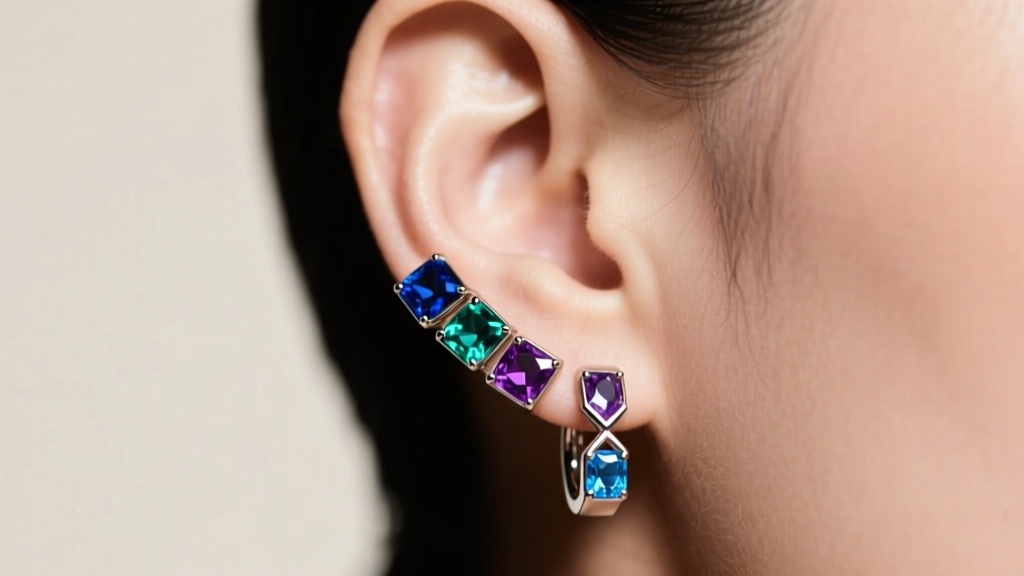
Galvanic Corrosion and Mixed-Metal Risks
A growing trend in 2026 is the use of mixed metals—such as 18k yellow gold bezels set on sterling silver earring posts—to reduce manufacturing costs while maintaining a high-karat aesthetic. From a materials science perspective, this is a catastrophic error for daily-wear jewelry.
When two dissimilar metals (like gold and silver) are in direct physical contact and exposed to an electrolyte (human sweat, which contains sodium chloride and lactic acid), a galvanic cell is created. The less noble metal (silver) becomes the anode and will rapidly corrode, oxidize, and degrade at the junction point. Within six months of daily wear, the silver post will develop severe pitting and structural weakness, risking the loss of the entire earring.
Always verify that the entire structural pathway of the earring—from the post and clutch to the bezel and prongs—is forged from a single, homogeneous alloy, or that mixed metals are separated by non-conductive ceramic or enamel barriers.
Final Verdict: Building a Heirloom Palette
The finest multi colored gemstone earrings are triumphs of material engineering. To ensure your investment survives generations, prioritize pieces that match the setting architecture to the specific Mohs and Vickers ratings of the individual stones. Opt for platinum or 18k gold to avoid rhodium maintenance and galvanic corrosion, and rigorously verify the treatment stability of every gemstone in the polychromatic array. By respecting the mineralogy and metallurgy of your jewelry, you secure not just a beautiful accessory, but a lasting artifact of horological and gemological precision.


