Iolite Earrings Value Guide: 2026 Pricing & Budget Tips
Discover the true value of iolite earrings in 2026. Learn pricing tiers, how to assess pleochroism, and budget tips for buying quality gemstone studs.

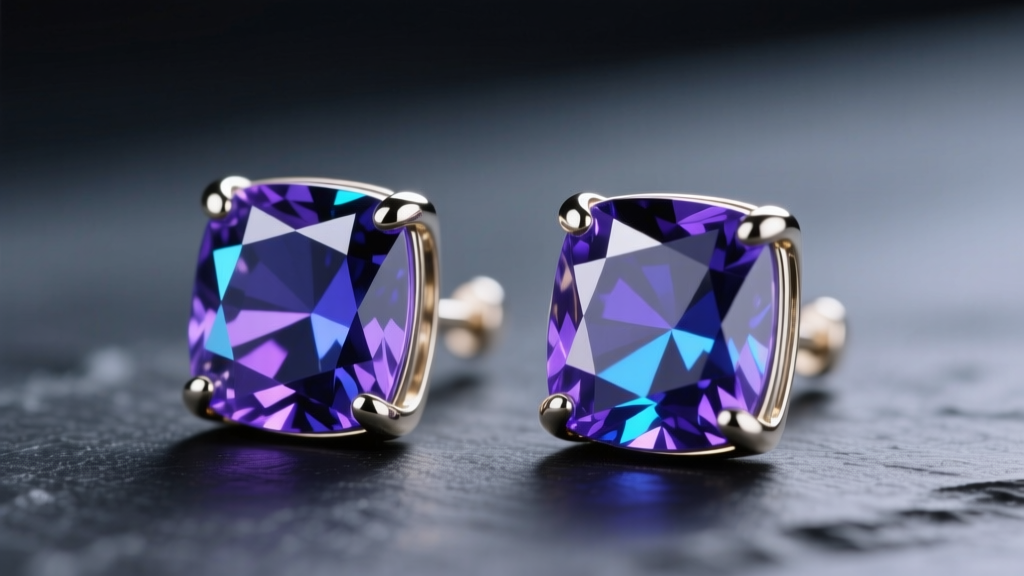
The Allure of the "Water Sapphire": Understanding Iolite's Market Position
Often referred to as the "Viking's Sapphire" or "Water Sapphire," iolite (the gemological variety of the mineral cordierite) has carved out a unique niche in the 2026 colored gemstone market. For buyers seeking the mesmerizing violet-blue hues of tanzanite or sapphire without the exorbitant price tags, iolite earrings represent one of the most compelling value propositions in modern jewelry. However, navigating the market requires a keen eye. Unlike diamonds, where value is strictly dictated by the 4Cs, iolite's worth is heavily influenced by its optical quirks, specifically its extreme pleochroism.
According to the Gemological Institute of America (GIA), iolite ranks between 7 and 7.5 on the Mohs hardness scale. This makes it durable enough for everyday earring wear, provided the setting offers adequate protection. Yet, because it is abundant in regions like India, Sri Lanka, and Madagascar, its per-carat cost remains remarkably accessible. The challenge for the budget-conscious buyer isn't necessarily finding affordable iolite; it is identifying high-quality iolite that won't look muddy or washed out after a year of wear.
2026 Pricing Tiers: What Should You Actually Pay?
To assess whether you are getting a fair deal on iolite earrings, you must understand the wholesale-to-retail pricing structure. Iolite is rarely priced by the carat in commercial retail settings; instead, it is sold by the finished piece. However, breaking down the gemstone cost reveals where brands are inflating their margins.
| Quality Grade | Color & Clarity Profile | Estimated Stone Cost (Per Carat) | Expected Retail Price (1ct Total Weight Studs) |
|---|---|---|---|
| Commercial | Pale blue, noticeable yellow/green zoning, visible inclusions | $2 - $10 | $40 - $80 (Usually set in Sterling Silver) |
| Fine | Medium violet-blue, eye-clean, excellent cut orientation | $15 - $40 | $120 - $250 (Set in Silver or 10k/14k Gold) |
| Extra-Fine | Deep, saturated indigo-violet, loupe-clean, precision custom cut | $50 - $90+ | $300 - $600+ (Set in 14k/18k Gold or Platinum) |
Budget Tip: The sweet spot for value lies in the "Fine" category. A 1-carat total weight (0.50ct each ear) pair of fine iolite studs in 14k white gold should cost between $150 and $250. If a retailer is charging upwards of $500 for commercial-grade stones in sterling silver, you are paying for the brand name, not the gemstone.
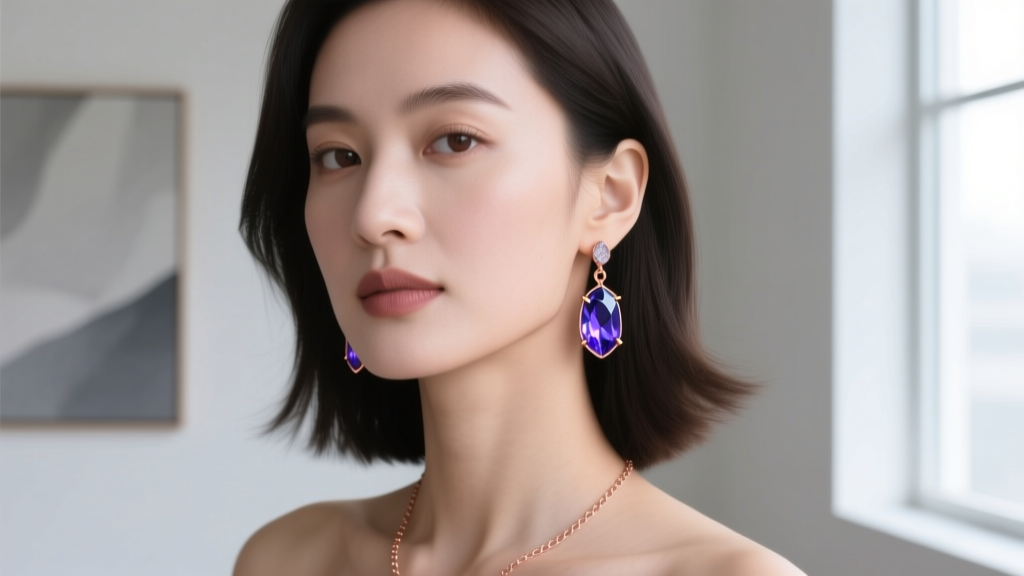
The Pleochroism Premium: How Cut Dictates Value
You cannot evaluate iolite earrings without understanding pleochroism—the ability of a crystal to display different colors when viewed from different angles. Iolite is strongly trichroic, meaning it shows three distinct colors: violet-blue, clear/light blue, and pale yellow.
The Cutter's Dilemma
To achieve the highly prized violet-blue face-up color, the gem cutter must orient the table facet exactly perpendicular to the crystal's c-axis. This is a labor-intensive process that results in higher weight loss during cutting.
- Poorly Cut (Muddy/Yellowish): If the cutter prioritizes carat weight retention over optical orientation, the yellow and blue axes mix. The resulting earring will look grayish, muddy, or unnaturally greenish-yellow when tilted. These stones are cheap but lack the signature iolite fire.
- Precision Cut (Violet-Blue): A masterfully cut iolite will face up with a rich, velvety indigo that rivals top-tier tanzanite. This precision commands a "pleochroism premium," adding 20% to 30% to the stone's base value, which is entirely justified.
When shopping online, always look for vendors that provide 360-degree videos. If the stone flashes yellow or gray when rotated, the cutter took the easy way out, and the earrings are overpriced regardless of the carat weight.
Metal Pairings and Setting Costs on a Budget
The metal you choose dramatically impacts both the aesthetic value and the final price tag of your iolite earrings.
Sterling Silver vs. White Gold
Because iolite is a budget-friendly gem, it is frequently set in 925 sterling silver to keep retail prices under $100. While this is great for fashion jewelry, silver tarnishes and can dull the stone's brilliance over time. For a piece you intend to wear daily, upgrading to 14k white gold or platinum is a superior investment. The cool, reflective properties of white metals amplify the violet undertones of the gem, whereas yellow or rose gold can sometimes clash with the stone's secondary green/yellow pleochroic flashes.
Prong vs. Bezel: Protecting the Cleavage Plane
The International Gem Society (IGS) notes that iolite has distinct cleavage in one direction. This means a sharp impact against a hard surface can cause the stone to split or chip.
"For active wearers, avoiding high-profile four-prong settings is advisable. Opt for bezel settings, low-profile six-prong settings, or halo designs that protect the vulnerable girdle of the iolite from lateral impacts."
A bezel setting will add roughly $40 to $80 to the manufacturing cost compared to a simple prong setting, but it significantly extends the lifespan of the earrings, maximizing your long-term value.
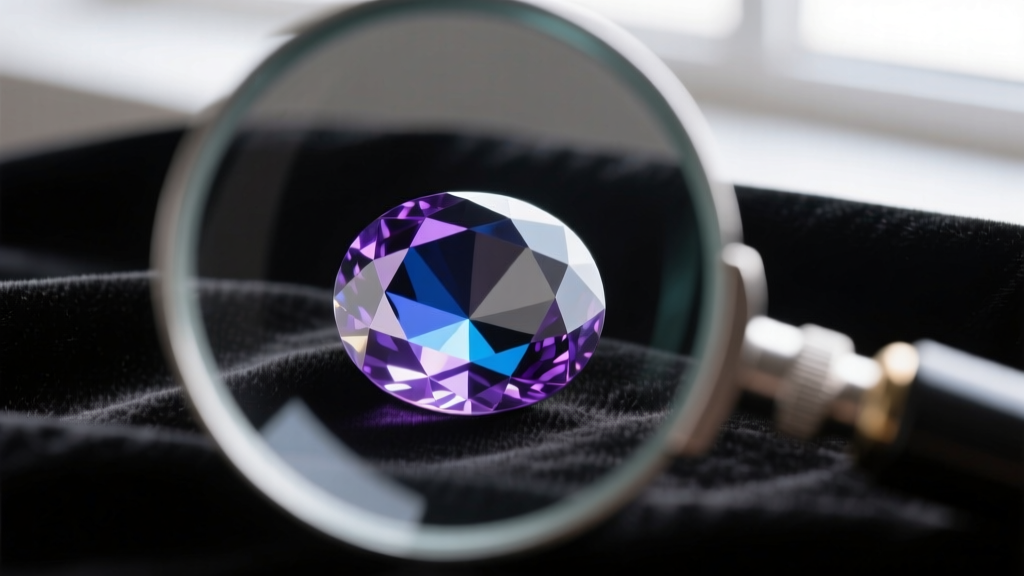
Red Flags: Avoiding Overpriced and Treated Stones
When conducting your value assessment, keep your guard up for deceptive marketing tactics. The iolite market in 2026 is largely transparent, but a few red flags should prompt you to walk away immediately.
- "Heat-Treated" Claims: Unlike tanzanite or sapphire, iolite is almost never heat-treated. In fact, exposing cordierite to high temperatures can cause it to fracture or lose its color entirely. If a seller claims their iolite earrings have been "heat-enhanced for better color," they are either misinformed or lying.
- The Tanzanite Bait-and-Switch: Because high-quality iolite closely resembles tanzanite, some unethical sellers market iolite as "African Tanzanite" or use confusing terminology to charge tanzanite prices ($150+ per carat) for iolite stones ($30 per carat). Always verify the gemological report.
- Glass and Synthetic Spinel Imitations: While synthetic iolite is virtually non-existent in the commercial market, blue glass and synthetic spinel are sometimes passed off as iolite in ultra-cheap tourist-trap jewelry. Glass will show mold marks and gas bubbles under a loupe, while iolite will display its signature trichroism.
Final Verdict: Is Iolite a Smart Investment for Your Jewelry Box?
From a strict financial standpoint, iolite is not an "investment grade" gemstone that will appreciate in value over time like unheated Burmese rubies or Kashmir sapphires. However, from a utility and aesthetic budget perspective, iolite earrings offer unparalleled value.
By targeting the "Fine" grading tier, insisting on precision cuts that eliminate the yellow pleochroic axis, and choosing protective 14k white gold bezel settings, you can acquire a pair of breathtaking, durable, and sophisticated gemstone earrings for a fraction of the cost of their sapphire counterparts. In 2026, smart luxury is about maximizing visual impact per dollar, and iolite delivers exactly that.


