Custom Earring Cards: 2026 Cost vs. Value ROI Guide
Is investing in custom earring cards worth it for jewelry makers? We break down 2026 pricing, material costs, and ROI to maximize packaging value.

For independent jewelry makers and boutique owners, packaging is the final physical touchpoint of the customer experience. While generic, unbranded cardboard backers serve a basic functional purpose, upgrading to custom earring cards is a frequent debate in maker communities. Does the upfront investment translate to higher perceived value, better retail placement, and repeat sales? In this 2026 budget and value assessment, we break down the exact manufacturing costs, material grades, and structural engineering required to make custom earring packaging a profitable asset rather than a sunk cost.
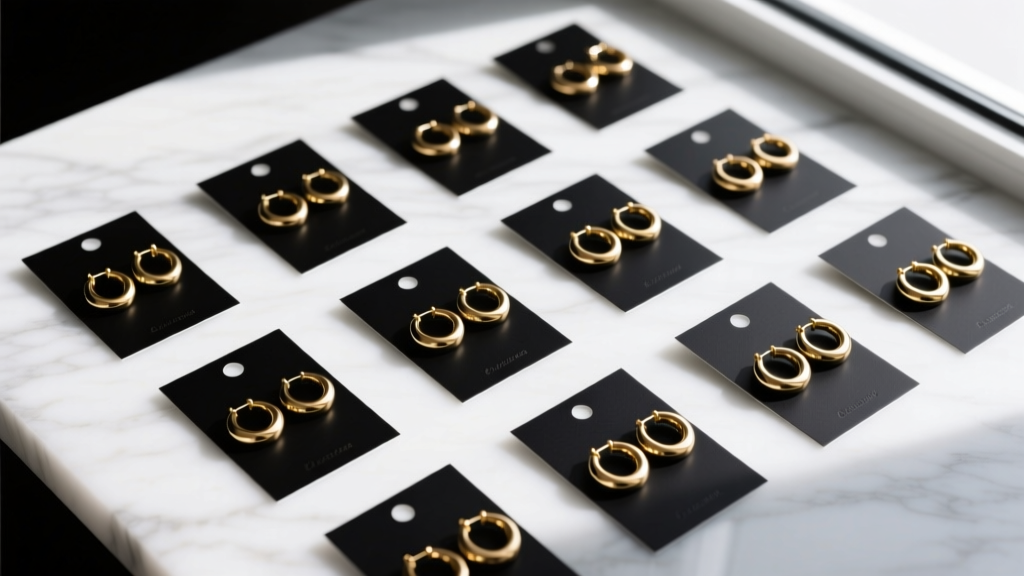
The True Cost of Custom Earring Cards in 2026
When evaluating the budget for custom earring cards, jewelry makers must navigate three distinct printing tiers. The cost per unit fluctuates wildly based on your Minimum Order Quantity (MOQ), the printing technique, and the complexity of your artwork. Understanding these tiers is the first step in assessing your packaging ROI.
Digital Printing (Short-Run)
Best for emerging makers testing new collections or seasonal drops, digital printing requires low MOQs (typically 50 to 250 units). Because there are no printing plates required, setup costs are minimal. However, the per-unit cost remains high. Expect to pay between $0.45 and $0.95 per card for standard 16pt cardstock with full-color CMYK printing and a basic matte or gloss laminate.
Offset Lithography (Mid-Volume)
Once your earring designs are proven sellers and you are ready to scale, offset printing becomes the most cost-effective route. This method requires higher MOQs (500 to 2,500 units) and involves creating custom metal plates for your design. The setup fee can range from $75 to $150, but the per-unit cost plummets to $0.12 to $0.28 per card. Offset printing also unlocks advanced finishing options like Spot UV and metallic ink blending, which digital printers struggle to replicate accurately.
Letterpress and Specialty Finishes (Luxury)
For fine jewelry makers selling 14k gold or precious gemstone dangles, the packaging must reflect the price point. Letterpress printing on thick cotton paper creates a tactile, debossed effect that screams luxury. Due to the manual nature of the press and the premium paper stocks, expect to pay $1.20 to $3.50 per card, usually with an MOQ of 250 units. While expensive, this tier is essential for brands where the unboxing experience is a core pillar of the marketing strategy, as noted in the Etsy Seller Handbook regarding premium brand positioning.
Material Grades and Structural Integrity
A common mistake jewelry makers make is selecting a paper stock that cannot support the physical weight of their earrings. Heavy brass dangles or long gemstone chain earrings will warp, bend, and eventually tear through flimsy paper, resulting in damaged products during shipping. Here is a breakdown of the industry-standard material grades for custom earring cards:
| Material Grade | Thickness / Weight | Best Earring Type | Estimated Cost Impact |
|---|---|---|---|
| 14pt Cardstock (Standard) | ~300 GSM | Lightweight studs, small wire wraps | Baseline (Lowest Cost) |
| 16pt Matte/Silk | ~350 GSM | Huggies, medium hoops, standard drops | +15% over baseline |
| 18pt Uncoated Kraft | ~400 GSM | Eco-friendly lines, raw brass, boho styles | +25% over baseline |
| 32pt Double-Thick | ~600+ GSM | Heavy statement dangles, large gemstone drops | +80% over baseline |
| Cotton Rag (Letterpress) | ~600 GSM | Fine jewelry, bridal, luxury gifting | +200% over baseline |
If you are selling heavy drop earrings, you must use at least a 32pt double-thick stock or a rigid cotton rag. According to packaging industry standards outlined by UPrinting, structural rigidity in packaging directly correlates to consumer perceptions of product quality and safety.
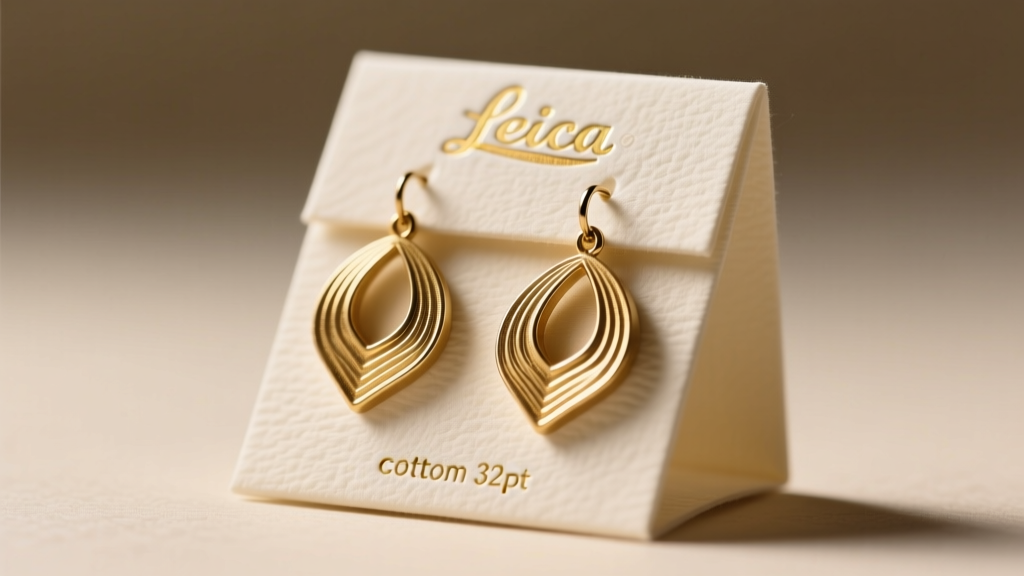
Slit Engineering and Die-Cut Realities
The functional core of any earring card is the slit or hole that holds the jewelry. Standard manufacturing templates utilize 1.5mm wide by 15mm long slits. While these work perfectly for standard 20-gauge or 22-gauge butterfly posts and thin ear wires, they are a structural liability for thicker handmade findings.
The Gauge-to-Slit Ratio
If you hand-forge your ear wires using 18-gauge or 16-gauge wire, a standard 1.5mm slit will cause friction. Over time, or during transit, the thick wire will act like a dull blade, slicing through the paper stock and causing the earring to detach. When ordering custom earring cards, always request 2.0mm or 2.5mm wide slits if you use heavier gauge metals. Most domestic printers will accommodate custom slit widths at no extra charge if you provide the correct dieline template.
Custom Die-Cut Shapes
Standard rectangular or square cards are cost-effective, but custom die-cut silhouettes (e.g., a card shaped like a crescent moon for celestial earrings, or an arch for minimalist brands) offer massive shelf appeal. The financial reality of die-cutting involves a one-time custom die fee, typically ranging from $75 to $150. Once the die is manufactured, the per-unit cutting cost is negligible. Therefore, custom die-cut shapes are highly recommended only if you plan to order at least 500 to 1,000 units, allowing you to amortize the initial tooling cost across a larger volume.
Calculating Your Packaging ROI
To determine if custom earring cards are a sound financial investment, makers must calculate the ROI not just in terms of direct sales, but in perceived retail value. A well-documented phenomenon in retail psychology is that premium packaging allows for a higher retail price point without increasing customer friction.
The Price-Bump Formula
Consider a scenario where a maker sells 500 pairs of mid-tier sterling silver huggie hoops at $45 each, generating $22,500 in revenue. Upgrading from generic 14pt white cards to 16pt soft-touch matte custom earring cards with foil stamping costs approximately $0.35 per unit, totaling a $175 investment. If the elevated unboxing experience and perceived luxury allow the maker to increase the retail price by just $3.00 per pair (to $48), that same volume yields an additional $1,500 in revenue. The ROI on the $175 packaging upgrade is over 750%, paying for itself after the sale of just 59 pairs.
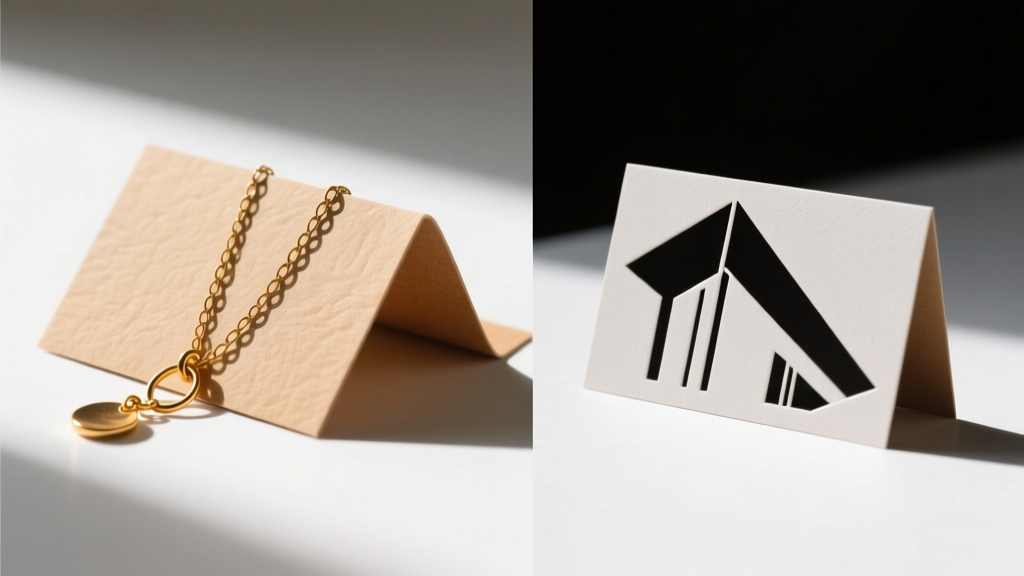
Sourcing Strategy: Domestic vs. Overseas
Where you manufacture your custom earring cards heavily impacts both your budget and your supply chain reliability. In 2026, the global printing landscape offers distinct advantages depending on your business model.
- Domestic Printers (US/UK/EU): Ideal for rapid restocks, complex die-cuts, and stringent color-matching (Pantone). Lead times are typically 5 to 10 business days. The trade-off is a 20% to 40% higher per-unit cost compared to overseas options.
- Overseas Printers (Asia-Pacific): Best for massive volume orders (2,000+ units) and highly complex packaging (e.g., cards that fold into miniature display boxes). Lead times can stretch from 15 to 30 days, plus ocean freight transit. While the per-unit cost is incredibly low, the high MOQ ties up cash flow that a small jewelry business might need for raw materials like gold and gemstones.
Final Verdict: When to Upgrade Your Earring Packaging
Custom earring cards are not a mandatory expense for a brand-new maker testing the waters at local craft fairs; generic cards with a custom rubber stamp or branded sticker are a perfectly viable bootstrap strategy. However, once your brand transitions into wholesale accounts, premium online retail, or bridal markets, custom packaging transitions from a luxury to a necessity. By carefully selecting the correct paper weight for your specific earring gauges, optimizing your slit widths, and leveraging offset printing at scale, custom earring cards become a high-ROI marketing tool that protects your jewelry and elevates your brand equity.


