Troubleshooting Jade Donut Earrings: Weight & Wire Fixes
Solve common jade donut earring problems. Learn how to fix broken wire wraps, prevent stretched lobes, and clean genuine nephrite safely.

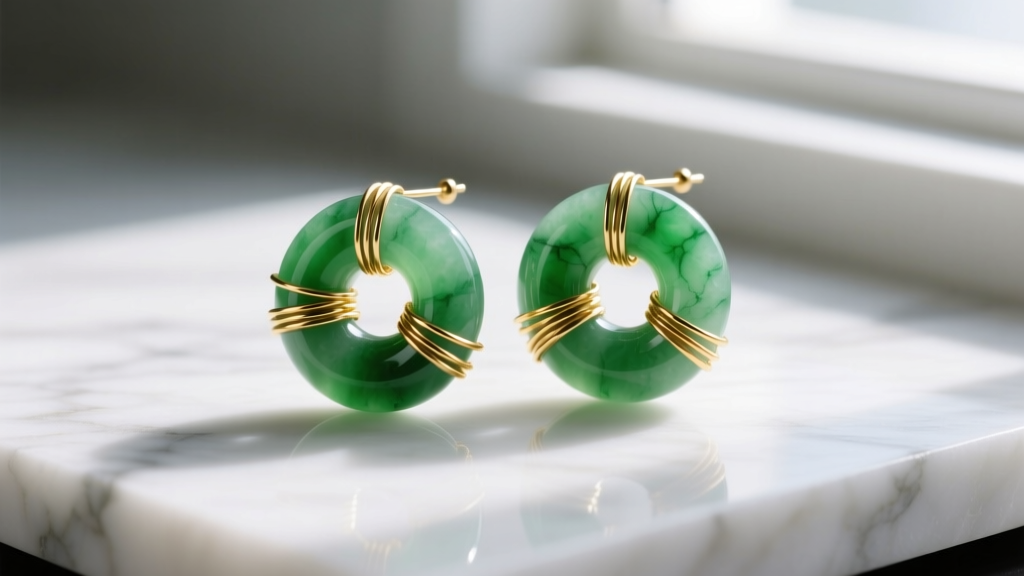
The Unique Challenges of Jade Donut Earrings
Jade donut earrings, often carved from nephrite or jadeite, are a staple in both minimalist and bohemian jewelry collections. However, their dense mineral structure and traditional manufacturing methods create unique wearability challenges. A standard 30mm jade donut can weigh between 8 to 14 grams per piece—significantly heavier than hollow metal hoops or acrylic alternatives. When you combine this substantial weight with mass-produced wire wrapping and standard 20-gauge ear piercings, the result is often discomfort, broken hardware, or stretched lobes.
This comprehensive troubleshooting guide addresses the most common structural and material failures associated with jade donut earrings, providing actionable, expert-level solutions to restore, rewire, and upgrade your pieces for daily wear.
The Physics of Jade: Why Your Earrings Feel So Heavy
To troubleshoot weight issues, you must first understand the material. According to the Gemological Institute of America (GIA), jadeite has a specific gravity of 3.30 to 3.38, while nephrite ranges from 2.90 to 3.03. Compare this to standard quartz (2.65) or glass (2.50), and it becomes clear why a seemingly small 30mm jade donut feels remarkably dense. This high specific gravity means the stone exerts a constant downward gravitational pull on the earlobe, which leads directly to our first major troubleshooting category: hardware failure and lobe stretching.
Troubleshooting Wire Wrap Failures and Metal Allergies
Most commercial jade donut earrings are secured using cheap 24-gauge or 26-gauge copper, brass, or nickel-silver wire. These base metals are prone to work-hardening, meaning they become brittle over time and eventually snap at the stress points near the donut's inner hole. Furthermore, they frequently cause contact dermatitis.
Upgrading to Hypoallergenic, High-Tensile Wire
If your jade donut's wire wrap is snapping or turning your skin green, you need to rewrap the stone. The Association of Professional Piercers (APP) strongly recommends implant-grade titanium or 14k/18k gold for sensitive ears. For wire wrapping, 14k gold-filled wire offers the best balance of hypoallergenic properties and structural integrity.
- Base Wrap: Use 20-gauge half-hard 14k gold-filled wire. The 'half-hard' temper provides enough stiffness to hold the heavy donut securely without bending out of shape.
- Decorative Weave: Use 24-gauge dead-soft gold-filled wire to create a basket weave or figure-8 pattern around the 20-gauge base.
- Tools Required: Nylon jaw pliers (to prevent marring the wire and scratching the jade), flush cutters, and a mandrel.
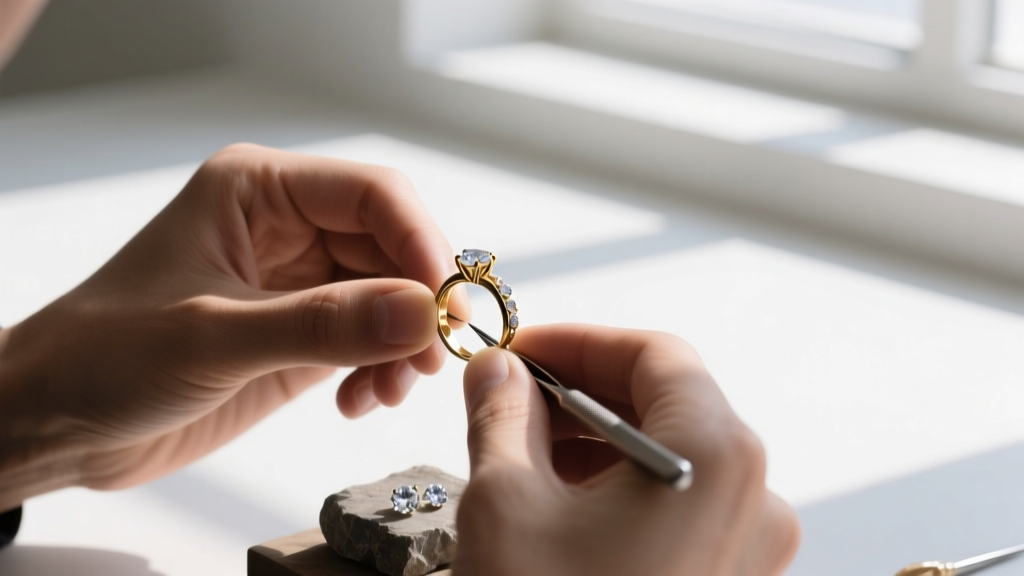
When wrapping, ensure the wire does not overtighten against the inner rim of the donut. Jade has a Mohs hardness of 6 to 7, but it can still chip if subjected to localized point-stress from a thick wire knot. Always leave a microscopic gap or use a tiny piece of clear silicone tubing as a buffer between the wire and the stone.
Solving the Weight Problem: Preventing Stretched Lobes
A 14-gram earring hanging from a standard 20-gauge (0.81mm) piercing acts like a slow, continuous stretcher. Over months of daily wear, this will cause the piercing hole to elongate, migrate, or tear entirely. You must distribute the weight across a larger surface area of the earlobe.
| Support Method | Material | Best For Weight | Pros & Cons |
|---|---|---|---|
| Silicone Ear Patches | Medical-grade silicone | 8g - 15g | Pros: Invisible, highly supportive. Cons: Can cause sweating in humid climates. |
| Leather Stretching Guards | Vegetable-tanned leather | 10g - 20g+ | Pros: Excellent weight distribution. Cons: Bulky, not suitable for formal events. |
| O-Ring Stabilizers | Neoprene / Silicone | 5g - 10g | Pros: Cheap, easy to apply. Cons: Only supports the back of the lobe, not the front. |
| French Wire Leverbacks | 14k Gold / Titanium | Any weight | Pros: Prevents the earring from falling out when pulled forward. Cons: Does not stop lobe stretching. |
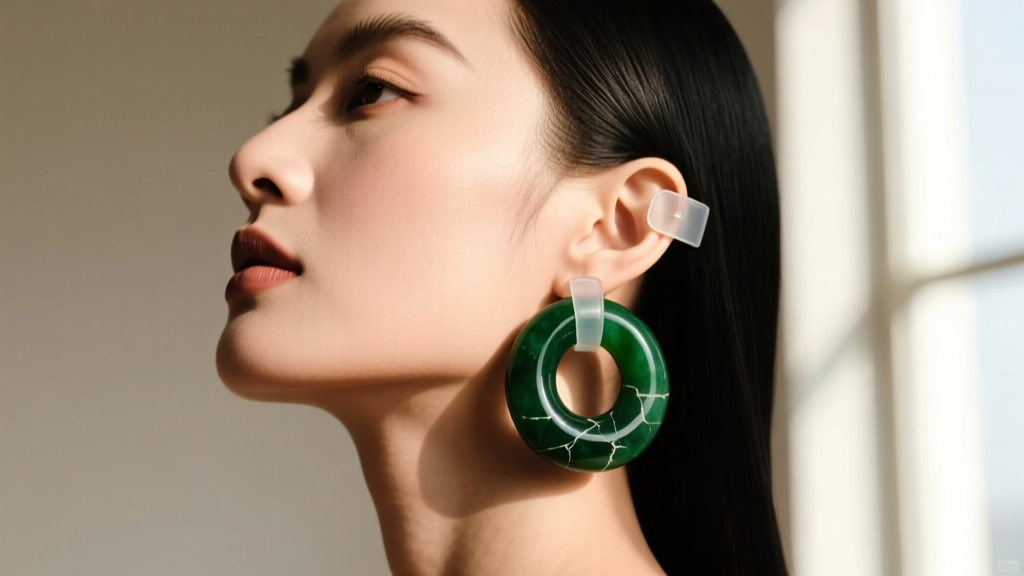
For everyday wear, clear silicone earlobe support patches are the most effective and discreet solution. Apply the patch to the back of the earlobe, pierce a tiny hole through it with a sterilized needle, and insert your earring hook. This increases the load-bearing surface area by up to 400%, completely neutralizing the downward drag of heavy nephrite.
Identifying Fake Jade and Surface Degradation
If your jade donut earrings are losing their luster, becoming sticky, or showing strange pitting, you may not be dealing with genuine jade. The market is flooded with dyed quartz, serpentine, and glass imitations.
"Genuine Type A jade is completely natural and untreated. Type B jade has been acid-bleached and polymer-impregnated to improve clarity, while Type C jade is artificially dyed. Over time, the polymers and dyes in Type B and C jade will degrade, yellow, and become brittle when exposed to UV light and skin oils."
The Troubleshooting Test: Genuine jade is exceptionally dense and feels cold to the touch, taking a long time to warm up in your hand. If your donut earring warms up instantly, it is likely glass or resin. Furthermore, because nephrite and jadeite are harder than steel (Mohs 6-7), a steel needle should not scratch the surface. If a needle leaves a mark, you have serpentine or dyed calcite, which requires entirely different, much gentler care protocols.
Safe Cleaning Protocols for Porous Nephrite
A common mistake that ruins jade donut earrings is the use of ultrasonic cleaners or harsh chemical dips. Ultrasonic vibrations can easily propagate internal micro-fractures within the jade, causing the donut to split in half while you are wearing it. Furthermore, the mild porosity of nephrite means it will absorb harsh detergents, leading to permanent discoloration.
Step-by-Step Safe Cleaning
- Prepare the Solution: Mix lukewarm distilled water with two drops of pH-neutral Castile soap. Avoid tap water, as chlorine and heavy minerals can leave a film on the polished stone.
- Agitate Gently: Use a brand-new, ultra-soft baby toothbrush to gently sweep the inner rim and the wire wraps where sebum and dead skin cells accumulate.
- Rinse and Dry: Rinse under a gentle stream of distilled water. Pat dry immediately with a microfiber cloth. Do not let the earring air dry, as water spots will ruin the high-gloss polish of the donut.
- Oiling (Optional): For vintage or heavily worn nephrite donuts, rubbing a single drop of pure mineral oil into the stone and buffing it off can restore its deep, waxy luster.
Final Thoughts on Restoring Your Jade
Jade donut earrings are meant to be generational pieces, but they require a modern approach to hardware and weight management. By upgrading your wire wraps to 20-gauge gold-filled materials, utilizing silicone lobe stabilizers to protect your piercings, and adhering to strict, chemical-free cleaning protocols, you can safely enjoy the heavy, luxurious drape of genuine jade without the structural failures that plague mass-produced alternatives.


