Labyrinth Earrings Troubleshooting: Fix Tangles & Snags
Learn how to fix tangled, bent, and tarnished labyrinth earrings. Expert troubleshooting for wire snags, warping, and deep-crevice cleaning.

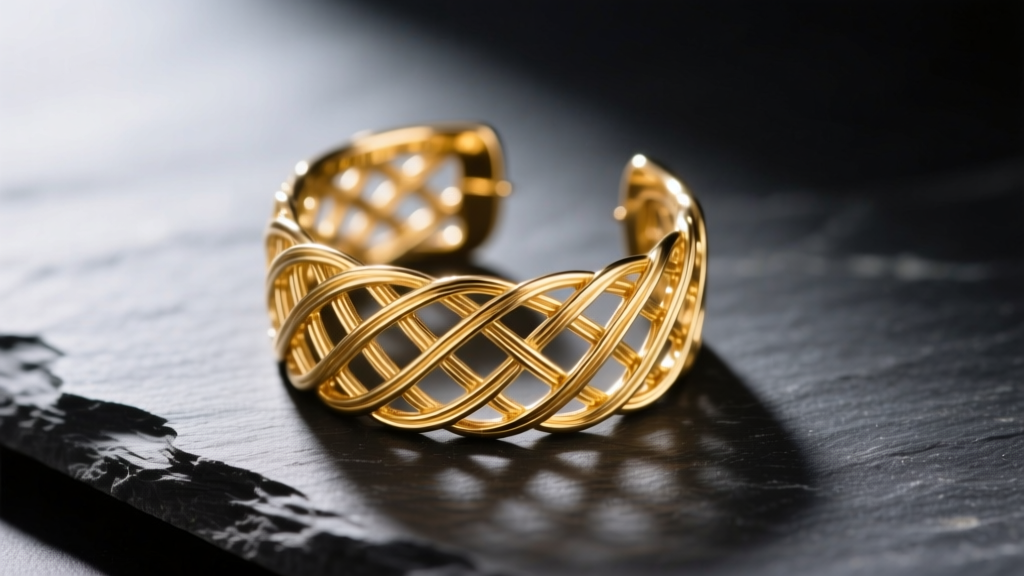
Labyrinth earrings are architectural marvels in the jewelry world. Characterized by their intricate, maze-like wirework, interlocking geometric patterns, and continuous metal loops, they offer a striking visual appeal that standard studs or hoops simply cannot match. However, this structural complexity introduces a unique set of vulnerabilities. In 2026, as laser-cut and 3D-printed wax-cast labyrinth designs become more prevalent, wearers are increasingly facing issues with hair entanglement, micro-warping, and deep-crevice tarnishing.
Troubleshooting these issues requires an understanding of jewelry metallurgy, gauge thickness, and structural torque. This guide provides actionable, expert-level solutions to restore and maintain your labyrinth earrings without compromising their delicate geometry.
The Anatomy of a Snag: Why Labyrinth Designs Catch
The most common complaint regarding labyrinth earrings—whether they are ear cuffs, hoops, or dangles—is their tendency to snag on hair and textiles. This is rarely a defect; rather, it is a byproduct of the design's negative space and joint construction.
Identifying Micro-Prongs and Catch Points
Run your finger lightly over the earring's surface. If you feel microscopic resistance, you have found a catch point. In wire-wrapped labyrinth designs, the ends of the wire are often tucked but not perfectly flush. In cast designs, microscopic porosity or incomplete polishing at the internal angles of the 'maze' creates burrs.
- The Nylon Test: Gently drag a piece of stretched nylon pantyhose or a fine silk cloth across the earring. If the fabric catches, mark the spot with a non-permanent jeweler's marker.
- The Fix: For minor burrs on sterling silver or gold, use a ruby polishing compound applied with a stiff-bristled jeweler's brush to smooth the internal angles. Avoid using standard polishing cloths, as they can snag on the labyrinth wires and pull them out of alignment.
Hair Entanglement in Continuous Loops
Hair strands easily slip into the 1mm to 2mm gaps typical of labyrinth patterns. Once inside, the natural oils in hair cause the strand to bind against the metal. To prevent this, apply a microscopic layer of Renaissance Wax to the wires. This museum-grade microcrystalline wax fills microscopic pores and creates a frictionless barrier that allows hair to slide off rather than catch.
Structural Warping: Reshaping Bent Wire Mazes
To achieve the intricate, winding paths of a labyrinth earring, jewelers often rely on thinner wire gauges. While this allows for high-detail work, it severely compromises the structural integrity of the piece when subjected to the torque of daily wear, sleeping, or accidental impacts.
Wire Gauge vs. Bend Resistance
Understanding the gauge of your labyrinth earring is critical before attempting any repairs. Applying too much pressure to a 22-gauge wire will cause work-hardening and eventual snapping.
| Wire Gauge | Millimeter Thickness | Common Labyrinth Application | Bend Resistance & Repair Strategy |
|---|---|---|---|
| 22-Gauge | 0.64mm | Intricate ear cuffs, tension-set mazes | Extremely Low. Reshape by hand only; pliers will mar or snap the wire. |
| 20-Gauge | 0.81mm | Standard labyrinth studs, lightweight hoops | Moderate. Use nylon-jaw pliers and a rubber mallet on a soft surface. |
| 18-Gauge | 1.02mm | Structural labyrinth hoops, heavy dangles | High. Requires a steel ring mandrel and rawhide mallet for trueing. |
Step-by-Step Reshaping Protocol
- Annealing (Professional Only): If the metal is heavily work-hardened (stiff and springy), a jeweler must anneal it with a torch to relax the crystalline structure before bending. Do not attempt this at home if your labyrinth includes gemstones.
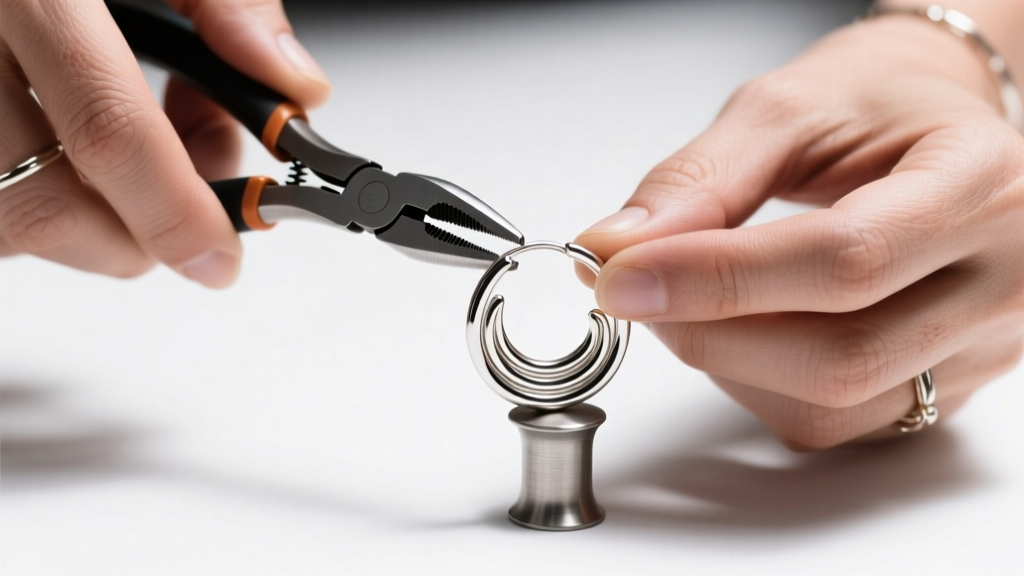
- Nylon-Jaw Pliers: Never use standard steel pliers on labyrinth wires. Steel-on-steel contact will gouge the finish. Always use nylon-jaw or brass-jaw pliers.
- Mandrel Support: For labyrinth hoops, place the earring on a steel ring mandrel. Tap gently with a rawhide or nylon mallet to restore the circular geometry without crushing the intricate internal maze walls.
Deep-Crevice Cleaning: Removing Tarnish from Micro-Corners
The sprawling surface area and tight internal corners of labyrinth earrings make them magnets for sebum, dead skin cells, cosmetics, and environmental sulfur. Standard polishing cloths cannot reach into the 90-degree internal angles of a maze design, leading to localized galvanic corrosion and stubborn black tarnish.
When to Use Ultrasonic Cleaners
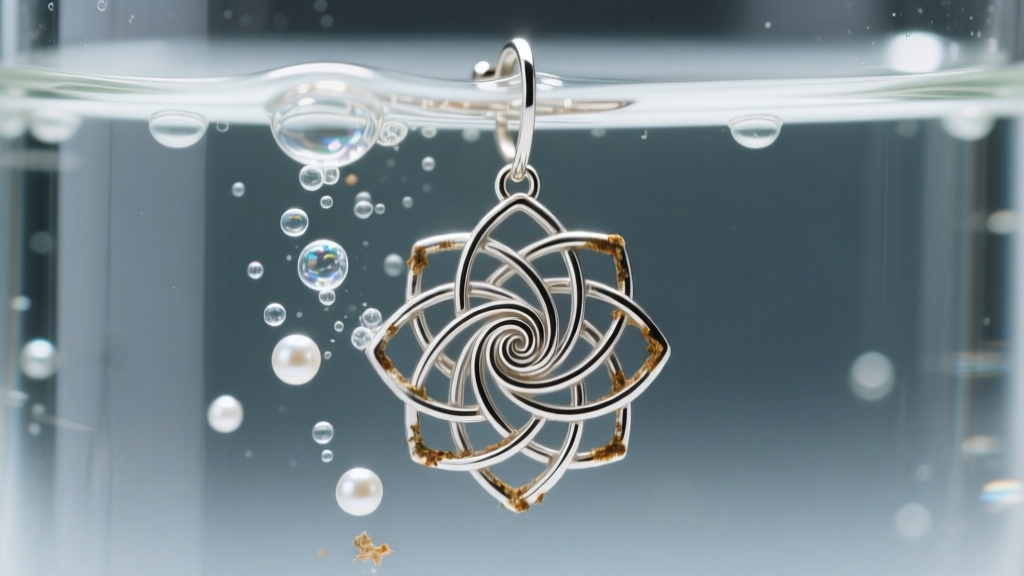
Ultrasonic cleaners use high-frequency sound waves to create microscopic cavitation bubbles that implode, blasting grime out of tight crevices. According to the Gemological Institute of America (GIA), ultrasonic cleaning is highly effective for bare metal labyrinth designs made of platinum, 14k/18k gold, or sterling silver.
Warning: Never use an ultrasonic cleaner if your labyrinth earrings feature tension-set stones, emeralds, opals, or pearls. The vibrations can shatter fragile gems or dislodge tension settings.
The Manual Deep-Clean Alternative
For mixed-media labyrinth earrings, use a chemical and manual approach:
- Prepare a solution of warm distilled water and a few drops of ammonia-free dish soap.
- Submerge the earrings for 5 minutes to soften lipid buildup (sebum and lotions).
- Use a soft-bristled baby toothbrush or a specialized jeweler's detailing brush to agitate the internal maze pathways. Brush in a single direction to avoid bending delicate 22G wires.
- Rinse with distilled water (tap water contains minerals that can leave water spots in the deep crevices) and dry immediately with a low-heat hair dryer to prevent water from trapping inside the joints.
Lobe Fatigue & Torque: Managing Weight Distribution
Because labyrinth designs require a high volume of metal to create the continuous pathways, they are inherently heavier than minimalist jewelry. A standard 15mm labyrinth hoop can easily weigh 4 to 6 grams per earring. Over time, this concentrated weight, combined with the leverage of the hoop's diameter, causes 'lobe fatigue'—stretching the piercing fistula and causing the earring to droop forward.
Upgrading Posts and Friction Backs
The Association of Professional Piercers (APP) emphasizes that proper jewelry fit and support are vital for piercing health. If your labyrinth stud is drooping, the issue is likely the friction back, not the piercing itself.
- Silicone O-Rings: Replace standard butterfly backs with medical-grade silicone O-rings. The high-friction rubber grips the post securely and provides a wider surface area against the back of the earlobe, distributing the weight more evenly.
- Jumbo Locking Backs: For heavy labyrinth dangles, invest in 18k gold or titanium jumbo locking backs (such as those by MONIZIA or Blomdahl). These feature a wide, flat disc that physically supports the lobe tissue.
- Post Gauge Check: Ensure the post of the labyrinth stud is at least 18-gauge (1.02mm) or 16-gauge (1.29mm). A 20-gauge post supporting a heavy maze design will act as a fulcrum, bending downward and irritating the piercing channel.
Preventative Maintenance Checklist
To keep your labyrinth earrings in pristine condition, integrate these specific habits into your jewelry care routine:
- The 'Last On, First Off' Rule: Always put labyrinth earrings on after styling your hair and applying cosmetics. Remove them before taking off your clothes to prevent the maze wires from catching on sweater threads or collars.
- Storage Isolation: Never store labyrinth earrings loosely in a jewelry box. The interlocking wires of two labyrinth pieces will inevitably tangle and bend each other. Store them individually in hard-shell ring boxes or threaded through a piece of stiff foam.
- Bi-Weekly Wire Inspection: Use a 10x jeweler's loupe every two weeks to inspect the solder joints where the labyrinth wires meet the main structural post or hoop. Catching a micro-fracture early prevents the total loss of the earring's intricate design.
By understanding the structural realities of labyrinth earrings and applying these targeted troubleshooting techniques, you can preserve the architectural beauty of your jewelry for decades without sacrificing wearability or comfort.


