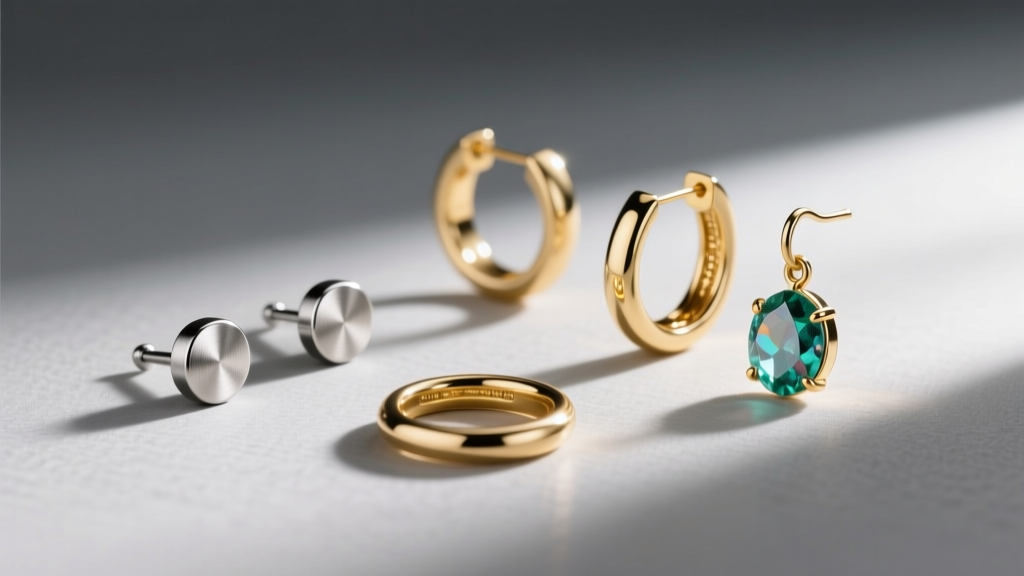
Troubleshooting 6mm Earrings Men: Fit, Sizing & Style Fixes
Solve common fit, sizing, and irritation issues with 6mm earrings men wear. Expert troubleshooting for studs, hoops, gauge mismatches, and materials.


The landscape of men's jewelry has evolved dramatically, with minimalist and precise sizing taking center stage in 2026. However, navigating the specific dimensions of ear jewelry can be a frustrating experience. When searching for 6mm earrings men often run into a wall of confusing sizing charts, leading to poor fit, irritation, and style mismatches. The core issue? A lack of understanding regarding how a 6-millimeter measurement translates to male ear anatomy.
Whether you are dealing with a stud that disappears into your lobe or a hoop that is painfully choking your cartilage, this comprehensive troubleshooting guide will diagnose your fit issues and provide actionable, expert-level solutions.
The 6mm Dilemma: What Are You Actually Measuring?
The most common failure point when buying men's earrings is misunderstanding what the '6mm' metric actually refers to. In jewelry manufacturing, 6mm means two entirely different things depending on the style of the earring:
- For Studs: 6mm refers to the diameter of the decorative face (the gem, bead, or metal disc). It does not dictate the length of the post that goes through your ear.
- For Hoops and Huggies: 6mm refers to the inner diameter of the circle. This is the actual empty space available to accommodate your ear tissue.
Men generally have thicker earlobes and more pronounced cartilage ridges than women. The average male earlobe thickness ranges from 5mm to 8mm. If you attempt to wear a 6mm inner-diameter hoop through a standard lobe piercing, you will immediately encounter the 'choked lobe' problem, leading to swelling and the dreaded cheese-cutter effect, where the jewelry slowly migrates downward through the tissue.
Troubleshooting Fit: Studs vs. Hoops vs. Huggies
To fix your fit issues, we must break down the specific earring types and map them to the correct male piercings. Below is a diagnostic matrix to help you identify where your current 6mm jewelry is failing.
| Earring Type | What 6mm Means | Ideal Male Placement | Common Failure Mode |
|---|---|---|---|
| Flat-Back Stud | Face Diameter | Standard Lobe, Helix | Post too short; embeds in thick lobe tissue. |
| Seamless Hoop | Inner Diameter | Tragus, Snug, Rook | Too tight for lobes; causes migration and swelling. |
| Huggie / Clicker | Inner Diameter | Upper Lobe, Helix | Hinge pinches skin if lobe thickness exceeds 4mm. |
Fixing the 'Lost in the Lobe' Stud Problem
If your 6mm stud looks underwhelming or is sinking into your skin, the issue is likely the post length, not the face size. Men with thicker lobes require a post length of at least 6mm to 8mm to allow for a 'breathing gap' between the front face and the flat back. If you are using a standard 4mm post, upgrade to a 6mm or 8mm threadless push-pin post to prevent the jewelry from embedding when you sleep on it.

Solving the Cartilage Squeeze
If you bought a 6mm hoop for your helix (upper cartilage) and it feels like a vice grip, your piercing channel may be swelling, or the angle of the piercing is too steep. According to the Association of Professional Piercers (APP), cartilage piercings require precise inner diameters to accommodate natural swelling and the curvature of the ear. If a 6mm hoop pulls upward on your helix, you must size up to an 8mm or 10mm hoop to allow the jewelry to sit flush without putting pressure on the fistula (the piercing hole).
Material Failures: Sweating, Tarnish, and Contact Dermatitis
Men's daily routines in 2026 involve a heavy rotation of styling products, colognes, and rigorous physical activity. This environment is highly corrosive to cheap metals. If your 6mm earrings are causing itching, flaking, or a greenish tint on your skin, you are likely experiencing contact dermatitis from nickel exposure.
Many mass-market brands still use 316L 'Surgical Steel.' Despite the medical-sounding name, 316L steel contains up to 10% nickel, which is a primary allergen. The Mayo Clinic notes that prolonged exposure to nickel alloys in jewelry is a leading cause of allergic contact dermatitis.
The Material Upgrade Path
- Implant-Grade Titanium (ASTM F136): The absolute gold standard for men's earrings. It is completely nickel-free, highly resistant to sweat and grooming chemicals, and lightweight.
- Niobium: An excellent, hypoallergenic alternative that can be anodized to create dark, masculine colors like gunmetal black or deep bronze without using toxic plating.
- Solid 14k or 18k Gold: Ensure it is nickel-free (white gold often contains nickel; stick to yellow or rose gold, or palladium-white gold).
Pro Tip: Never wear plated jewelry (like gold-plated brass) in a cartilage piercing. The friction of a tight 6mm huggie will wear away the plating within weeks, exposing the reactive base metal directly to the vulnerable piercing channel.
Gauge and Threading Nightmares (And How to Fix Them)
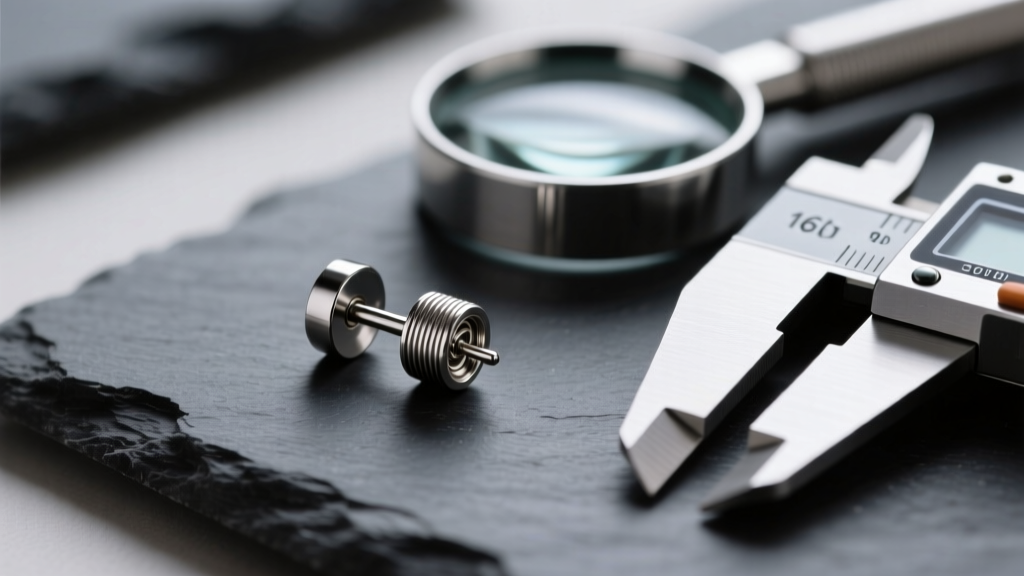
Another massive troubleshooting hurdle is gauge mismatching and threading damage. The 'gauge' refers to the thickness of the metal post. Standard male lobe piercings are usually done at 20g (0.8mm) or 18g (1.0mm), while cartilage is standardly pierced at 16g (1.2mm).
The Danger of External Threading
If your 6mm stud screws together, check the threading. External threading means the screw pattern is on the post itself. Forcing an externally threaded post through a 16g cartilage piercing acts like a cheese grater, micro-tearing the delicate fistula tissue every time you change it.
The Fix: Switch to internally threaded jewelry (where the screw is on the backing, and the post is smooth) or, even better, threadless (push-pin) jewelry. Threadless systems use tension to hold the jewelry together, offering a completely smooth insertion that protects the piercing channel and provides a much more secure fit for active men.
What if My Gauge is Wrong?
If you bought a beautiful 6mm 18g hoop but your cartilage was pierced at 16g, do not force it. Forcing a thinner wire into a larger hole won't cause immediate pain, but it can cause the piercing to shrink around the smaller gauge, making it difficult to re-insert standard 16g jewelry later. Use a professional piercing taper to gently stretch the jewelry through, or simply return the piece and order the correct 16g version.
Quick Diagnostic Checklist for 6mm Earring Issues
Before you throw out your current jewelry or assume you can't pull off the style, run through this expert troubleshooting checklist:
- Is the lobe choked? If the tissue bulges around a 6mm hoop, switch to an 8mm or 10mm inner diameter immediately to prevent migration.
- Is the stud sinking? Measure your post length. If it is under 5mm, buy a longer post to accommodate male lobe thickness.
- Is the skin itchy or red? Discard surgical steel or plated metals. Replace with ASTM F136 Titanium.
- Is the backing falling off? Stop using cheap butterfly friction backs. Upgrade to screw-on flat backs or threadless push-pin ends for secure, all-day wear.
- Does the hoop pull the piercing angle? If the hoop sits at a harsh angle rather than hanging straight down, the inner diameter is too small for your specific anatomy. Size up by 2mm.
Mastering the fit of 6mm earrings men rely on for daily wear requires looking past the decorative face and focusing on the structural dimensions. By matching the correct inner diameter to your specific piercing placement, upgrading to biocompatible titanium, and utilizing smooth threadless posts, you can eliminate irritation and achieve a sharp, comfortable, and permanent addition to your personal style.