Troubleshooting BB Earrings: Fixes for Lost Backs & Loose Balls
Lost the back to your BB earrings? Discover expert troubleshooting tips for loose balls, friction-fit failures, and cartilage gauge mismatches.
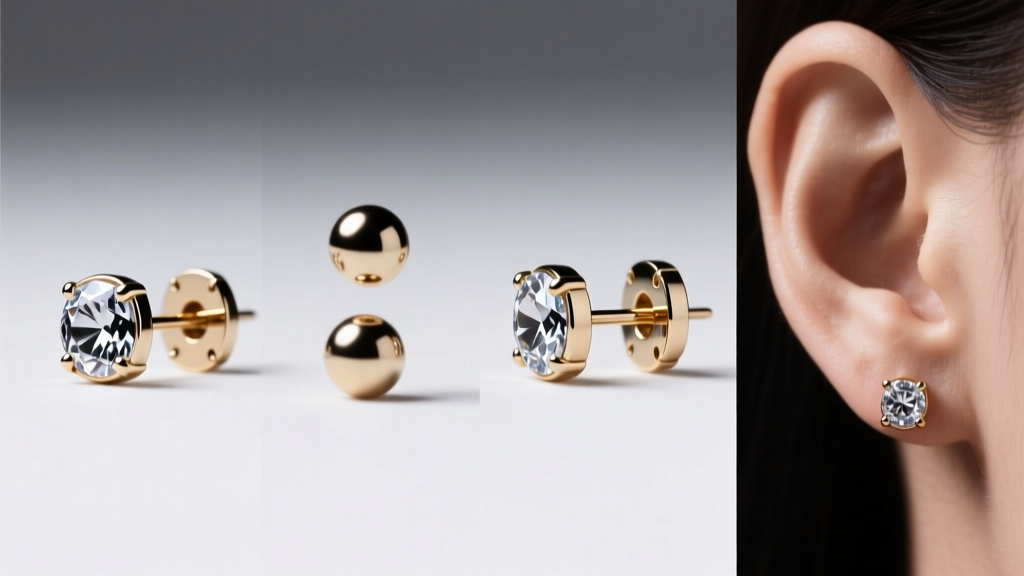
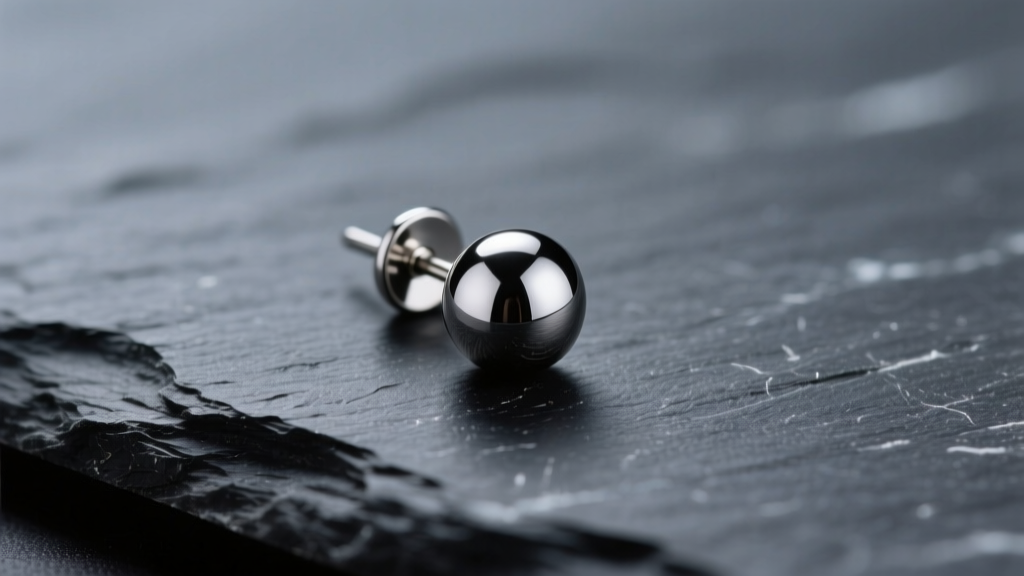
The Anatomy of BB (Ball/Bead) Earrings and Common Failures
BB earrings—named for their resemblance to small, spherical ball bearings or BB pellets—are a staple in minimalist jewelry and curated ear stacks. Typically ranging from micro 2mm spheres to bold 8mm orbs, these studs rely on a deceptively simple mechanical design. However, as of 2026, the surge in high-end, body-safe materials like ASTM F136 implant-grade titanium and 14k solid gold has introduced more complex threading and tension systems to the market. While these upgrades improve safety, they also create a steep learning curve for everyday wearers.
The most frequent complaints we see at Jewel Style Radar regarding BB studs involve three specific mechanical failures: cross-threaded or loose spherical ends, friction backs that fail to grip the post, and severe irritation caused by gauge mismatches in cartilage piercings. Troubleshooting these issues requires an understanding of jewelry micro-engineering, metallurgy, and piercing anatomy. Below, we break down the exact diagnostic steps and professional fixes for your favorite spherical studs.
Troubleshooting Loose Balls and Threading Strips
When the ball of your BB earring refuses to tighten, or worse, spins endlessly without securing, you are likely dealing with a threading failure. High-quality BB earrings rarely use external threading (where the screw is on the post itself, which can damage the piercing channel). Instead, they utilize internal threading or threadless (push-pin) systems.
Fixing Internally Threaded BB Ends
Internal threading means the screw mechanism is housed inside the spherical BB end, and the post features a smooth, threaded pin. If the ball won't catch, the threads are likely cross-threaded. This happens when the ball is forced in at a slight angle.
- The Diagnostic Test: Hold the post steady and try to screw the BB end on counter-clockwise (lefty-loosey) until you feel a subtle 'click' or drop. This aligns the threads. Then, gently turn clockwise.
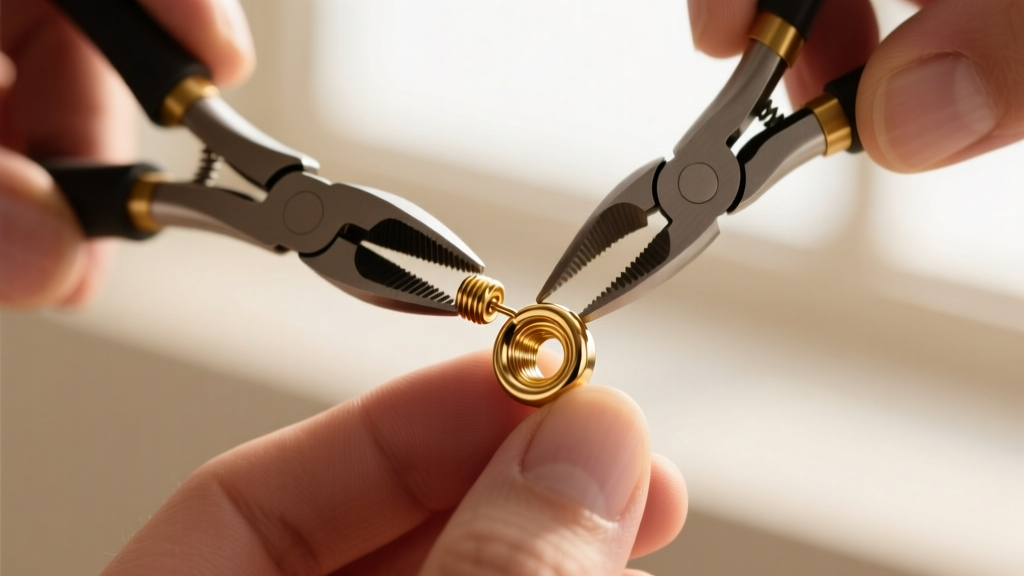
- The Pliers Trick: If the ball is stripped or too small to grip with bare fingers (common with 3mm and 4mm BBs), use a pair of soft-jawed nylon pliers. Never use bare metal needle-nose pliers, as they will permanently mar the polished surface of the gold or titanium bead.
Adjusting Threadless (Push-Pin) Tension
Many modern cartilage BB earrings use a threadless system where a slightly bent pin is pushed into a hollow post. The tension holds the jewelry in place. If your BB end keeps falling out, the pin has lost its bend.
Pro Fix: Insert the pin only one-third of the way into the post. Using your fingers or soft pliers, gently bend the pin by about 5 to 10 degrees. Remove it, flip it over, and bend it slightly in the opposite direction to create a wave-like tension. When you push it fully into the post, it should require a firm, deliberate pull to remove.
Solving the 'Lost Earring Back' Crisis
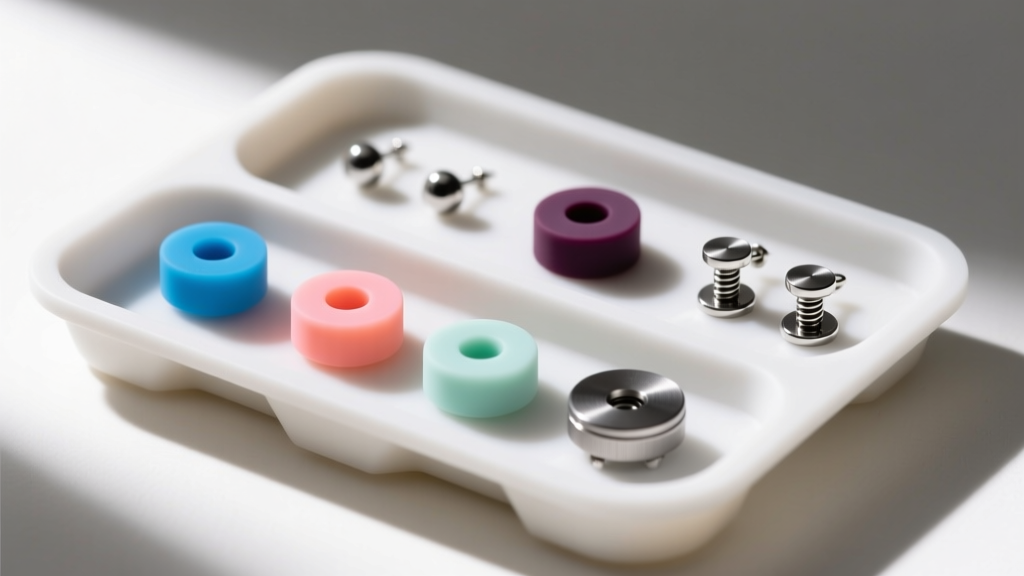
Because BB earrings are often worn as 'sleepers' or everyday essentials, the backing system takes a massive amount of abuse from hair brushing, pillow friction, and clothing changes. Standard 'butterfly' friction backs are notorious for loosening over time as the metal loops stretch out. If you are constantly losing your BB earrings, it is time to upgrade your backing hardware.
Earring Back Retention and Troubleshooting Chart
| Backing Type | Retention Rate | Best Use Case | Troubleshooting Tip |
|---|---|---|---|
| Standard Friction (Butterfly) | Low (40%) | Temporary wear, low-cost fashion BBs | Squeeze the metal loops inward with pliers to restore grip tension. |
| Silicone O-Rings / Discs | Medium (65%) | Sports, sleeping, sensitive lobes | Replace every 3 months; silicone degrades and stretches with skin oils. |
| Screw Backs | High (90%) | Valuable diamond/gold BB studs | Clean post threads with a soft brush; debris prevents full locking. |
| Locking Backs (e.g., La Pousette) | Very High (98%) | High-security, heavy 6mm+ BB orbs | Ensure the internal spring mechanism is flushed with warm water to remove lint. |
| Threadless (Push-Pin) | Maximum (99%) | Cartilage stacks, professional body jewelry | Adjust the pin bend angle (see section above) if tension fails. |
According to the Jewelers of America, regularly inspecting the mechanical components of your fine jewelry, including earring backs and clasps, is essential to prevent catastrophic loss of valuable pieces.
Cartilage Piercing Mismatches: Gauge and Post Length
A major troubleshooting issue arises when consumers purchase standard lobe BB earrings and attempt to wear them in healed cartilage piercings (like the helix, tragus, or conch). Standard lobe earrings are typically 20-gauge (0.81mm) or 18-gauge (1.02mm) with a post length of 6mm. Cartilage piercings, however, are usually pierced at 16-gauge (1.29mm) or 14-gauge (1.62mm) and require longer posts (8mm to 10mm) to accommodate tissue swelling and the angle of the ear.
The 'Cheese Cutter Effect'
If you force a thin 20G BB post into a 16G cartilage hole, the thin wire will act like a cheese cutter, slowly migrating through the tissue. This causes chronic inflammation, hypertrophic scarring (piercing bumps), and eventual rejection. Furthermore, a 6mm post is often too short for the thickness of the cartilage fold, causing the friction back to press directly into the skin, trapping bacteria and causing localized infections.
Gauge Size Conversion & Suitability Guide
| Gauge Size | Millimeter (mm) | Piercing Location | BB Earring Suitability |
|---|---|---|---|
| 20G | 0.81mm | Standard Earlobe | Ideal for delicate 2mm-4mm lobe BB studs. |
| 18G | 1.02mm | Earlobe / Upper Lobe | Standard for most commercial fashion BB earrings. |
| 16G | 1.29mm | Helix, Tragus, Conch, Nostril | Required for safe, long-term cartilage BB wear. |
| 14G | 1.62mm | Conch, Industrial, Daith | Used for heavy, large-diameter (6mm+) BB orbs. |
For authoritative guidelines on jewelry sizing and tissue health, always refer to the Association of Professional Piercers (APP) jewelry standards, which strongly advocate for implant-grade titanium (ASTM F136) for any jewelry worn in cartilage or healing piercings to prevent nickel-induced contact dermatitis.
Deep Cleaning Tiny Spherical Studs Without Scratching
Because BB earrings feature a continuous curved surface, they are magnets for sebum, dead skin cells, and hair product buildup, particularly where the sphere meets the post. This buildup not only dulls the metal but can harbor Staphylococcus bacteria, leading to localized earlobe infections.
The Ultrasonic Warning: While ultrasonic cleaners (operating at 40kHz) are excellent for plain metal BB studs, they will shatter or craze soft gemstones. If your BB earring features an inlaid opal, pearl, or turquoise cabochon, never use ultrasonic or steam cleaning. The high-frequency vibrations will fracture the stone's internal matrix.
The Safe Soak Method: Create a solution of warm distilled water and a few drops of mild, phosphate-free dish soap. Let the BB earrings soak for 10 minutes. Use a brand-new, ultra-soft baby toothbrush to gently sweep the junction where the ball meets the post. Rinse with distilled water (tap water leaves mineral spots on high-polish gold) and dry completely with a lint-free microfiber cloth before storing or reinserting.
When to Retire Your BB Earrings
Not all jewelry can be saved. If your internally threaded BB earring has completely stripped threads that no longer catch, or if the post itself is visibly bent or pitted from corrosion (common in low-grade brass or copper alloys plated in thin gold), it is time to retire the piece. Attempting to wear damaged jewelry introduces microscopic jagged edges into the fistula (the piercing channel), which can cause micro-tears and scar tissue formation. Invest in high-quality, body-safe replacements, and maintain them using the precision troubleshooting techniques outlined above to ensure your curated ear stack remains flawless and comfortable for years to come.


