Troubleshooting Blue Agate Earrings: Fading, Cracking & Fakes
Fix common issues with blue agate earrings. Learn how to stop color fading, prevent skin reactions, identify dyed fakes, and repair cracked stones.

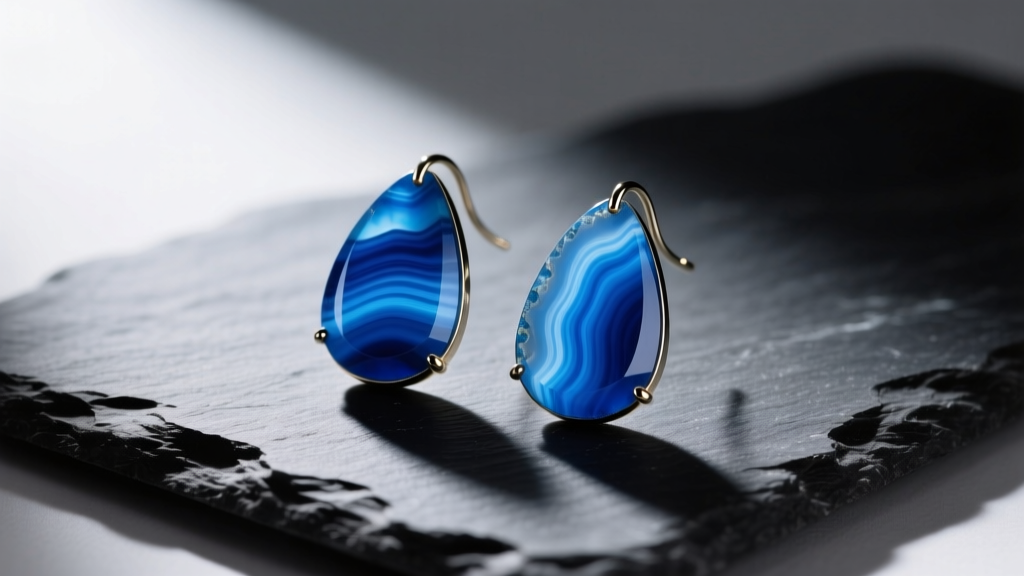
Blue agate earrings offer a striking pop of cerulean and indigo, making them a perennial favorite in jewelry boxes worldwide. However, beneath their gorgeous banded surfaces lies a web of gemological and metallurgical quirks that frequently frustrate wearers. Whether your stones are losing their vibrant hue, leaving green stains on your earlobes, or developing mysterious micro-fractures, these issues are rarely random. They are predictable chemical and physical reactions. In this comprehensive troubleshooting guide, we will diagnose the most common failures associated with blue agate earrings and provide actionable, expert-level solutions to restore and protect your jewelry.
The Gemological Reality: Natural vs. Dyed Chalcedony
Before troubleshooting physical damage, you must understand the material you are wearing. According to the Gemological Institute of America (GIA), natural blue agate—often marketed as 'blue lace agate' sourced primarily from Namibia and South Africa—is exceptionally rare. Its natural color is usually a pale, dusty periwinkle with distinct white banding.
The vast majority of commercial 'blue agate earrings' on the market are actually gray or white chalcedony that has been permanently dyed. The Mindat Mineral Database notes that agate is highly porous, making it an ideal candidate for chemical enhancement. Gemologists typically use a two-step process involving potassium ferrocyanide and iron salts to create the deep, saturated blues seen in mall kiosks and boutique displays. While this dyeing process is accepted in the gem trade and considered 'permanent' under normal conditions, it introduces specific vulnerabilities that natural, unheated stones do not possess. Understanding this distinction is the first step in diagnosing why your earrings might be failing.
Troubleshooting Color Fading and Bleeding
The Problem: Your once-vibrant blue agate cabochons are turning pale, grayish-white at the edges, or the blue dye is transferring onto your skin or clothing.
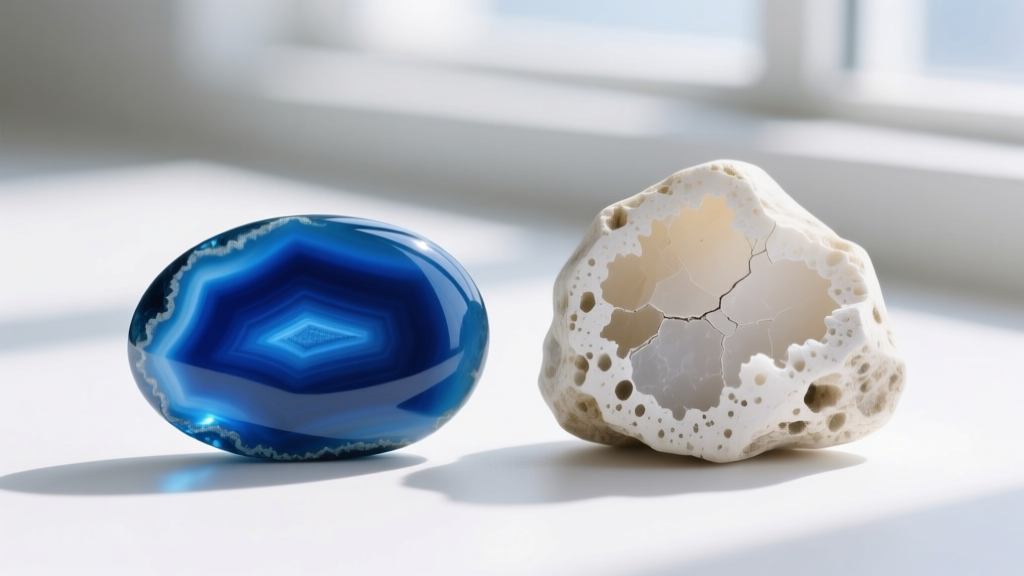
The Diagnosis: While the Prussian blue chemical reaction used to dye chalcedony is relatively stable, the microscopic pores of the stone can still be compromised by environmental factors. Prolonged exposure to ultraviolet (UV) light can break down the chromophores in the dye. More commonly, color 'bleeding' or rapid fading at the edges is caused by chemical solvents. Alcohol-based perfumes, acetone (nail polish remover), and even the natural acids and salts in heavy sweat can slowly leach the unreacted dye molecules out of the stone's porous matrix.
The Solution:
- Stop the Bleeding: If your earrings are actively transferring color, wipe them gently with a damp microfiber cloth and let them air dry completely. Do not use soap, as surfactants can pull more dye from the pores.
- Seal the Stone: For heavily fading dyed agate, a professional jeweler can apply a microscopic layer of optically clear, UV-resistant gemstone sealant (such as a specialized acrylic polymer) to close the surface pores and lock the remaining color in place.
- Behavioral Shift: Adopt a strict 'last on, first off' policy. Put your blue agate earrings on after applying perfume, hairspray, and makeup, and remove them immediately upon returning home to prevent prolonged contact with skin oils.
Solving the 'Green Ear' and Skin Irritation Problem
The Problem: Your earlobes are turning green, or you are experiencing contact dermatitis, itching, and flaking around the piercing site after wearing your blue agate earrings.
The Diagnosis: Agate itself is a hypoallergenic, inert silicate mineral (Mohs hardness 6.5-7). It will not cause skin reactions. The culprit is almost always the earring post, the clutch (backing), or the bezel setting. To keep costs low, many manufacturers cast dyed agate earrings in brass, copper, or low-karat gold alloys. When copper alloys mix with the oxygen, sweat, and natural oils on your skin, they undergo oxidation, creating copper chloride—a green compound that stains the skin. Furthermore, nickel alloys frequently used in cheap posts are a leading cause of contact dermatitis.
The Solution:
- The Quick Fix (Barrier Method): Paint the earring posts and the backs of the settings with two coats of clear, hypoallergenic nail polish or a specialized jewelry shield coating. Let it cure for 24 hours before wearing. Reapply every few weeks as the coating wears off.
- The Permanent Fix (Hardware Upgrade): Take the earrings to a bench jeweler and ask them to snip off the base metal posts and laser-weld or solder on new 18-gauge or 20-gauge posts made from ASTM F136 implant-grade titanium or 14k/18k nickel-free gold. This typically costs between $30 and $60 per pair but completely eliminates the reaction while saving the stones you love.
Crack and Chip Repair: When to Glue vs. Replace
The Problem: You dropped your blue agate drop earrings, and one of the cabochons has developed a hairline fracture or a small chip near the bezel edge.
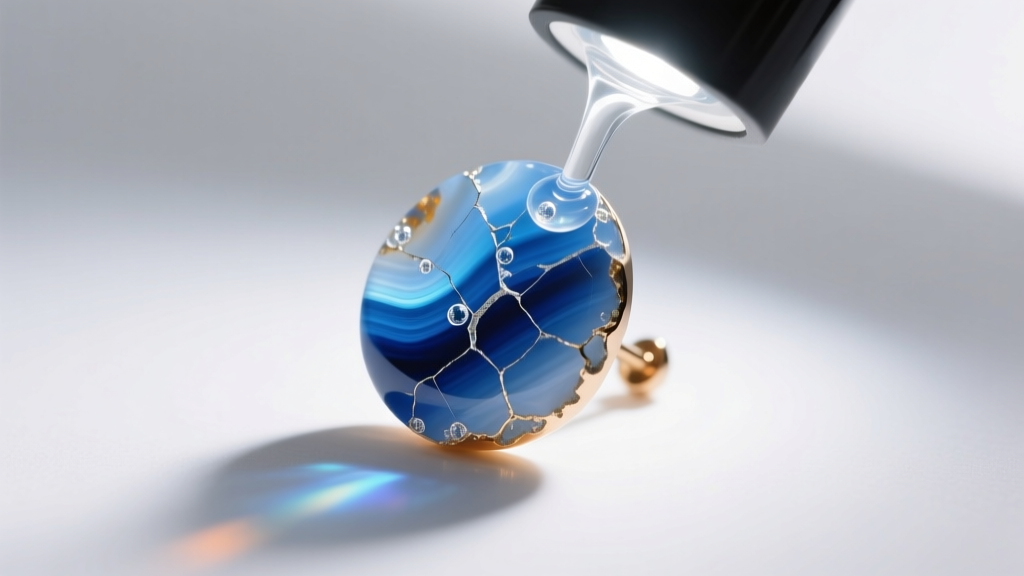
The Diagnosis: Despite its respectable 6.5 to 7 rating on the Mohs hardness scale, agate lacks cleavage planes but is prone to 'conchoidal fracturing' (shell-like breaks) upon sharp impact. Because dyed agate has been soaked in acid baths during the coloring process, its structural integrity can sometimes be slightly more brittle than untreated, natural chalcedony.
The Solution:
CRITICAL WARNING: Never use cyanoacrylate (commonly known as Super Glue or Krazy Glue) to repair porous gemstones. Its extremely low viscosity causes it to wick deep into the microscopic pores of the agate, where it cures into a permanent, cloudy white haze that cannot be removed without destroying the stone's polish.
Instead, use a high-viscosity, optically clear two-part epoxy resin (such as Epoxy 330 or G-S Hypo Cement for micro-chips). Clean the fracture line with a dry, soft-bristled brush to remove dust. Apply the epoxy sparingly with a toothpick, clamp the stone gently with padded jewelry pliers, and allow it to cure for 24 hours in a dust-free environment. If the chip is on the outer edge and catches on hair or clothing, a jeweler can use a lapidary wheel to gently re-dome and polish the edge, though this will remove the dye from the newly exposed stone layer, requiring a professional re-dyeing treatment.
Quick-Reference Troubleshooting Matrix
| Symptom | Root Cause | Actionable Solution | Estimated Fix Cost |
|---|---|---|---|
| Color fading to gray/white | UV degradation or chemical solvent exposure | Professional acrylic pore-sealing treatment | $15 - $30 |
| Blue dye bleeding onto skin | Sweat/acid leaching unreacted dye from pores | Wipe with damp microfiber; avoid wearing during exercise | Free |
| Green stains on earlobes | Oxidation of copper/brass alloy settings | Apply clear nail polish barrier or upgrade to titanium posts | $2 (polish) / $40 (titanium upgrade) |
| Itchy, flaky piercing sites | Nickel allergy from base metal posts | Replace posts with ASTM F136 implant-grade titanium | $30 - $60 |
| Hairline fractures / chips | Conchoidal fracturing from blunt impact | Bond with high-viscosity optically clear epoxy (NO super glue) | $10 (DIY epoxy) |
Preventative Care Protocol for Longevity
To ensure your blue agate earrings remain vibrant and structurally sound for decades, implement a strict care protocol. Store them in a dark, velvet-lined jewelry box to eliminate UV exposure and prevent the stones from scratching softer gems or being scratched by diamonds (Mohs 10). Never wear blue agate in swimming pools or hot tubs; the chlorine and bromine will aggressively attack the porous surface and strip the dye. Finally, clean your earrings monthly using only a dry, untreated microfiber cloth. If a deeper clean is absolutely necessary, use a slightly damp cloth with distilled water—never tap water, which contains trace minerals and chlorides that can leave permanent spotting on the polished surface of the chalcedony. By respecting the unique chemical nature of dyed agate, you can troubleshoot and prevent 99% of the issues that plague this beautiful gemstone.


