How to Wear Heavy Goofy Earrings Without Stretching Lobes
Love quirky jewelry? Learn how to wear heavy goofy earrings without stretching your lobes, fixing cheap clasps, and avoiding allergic reactions.

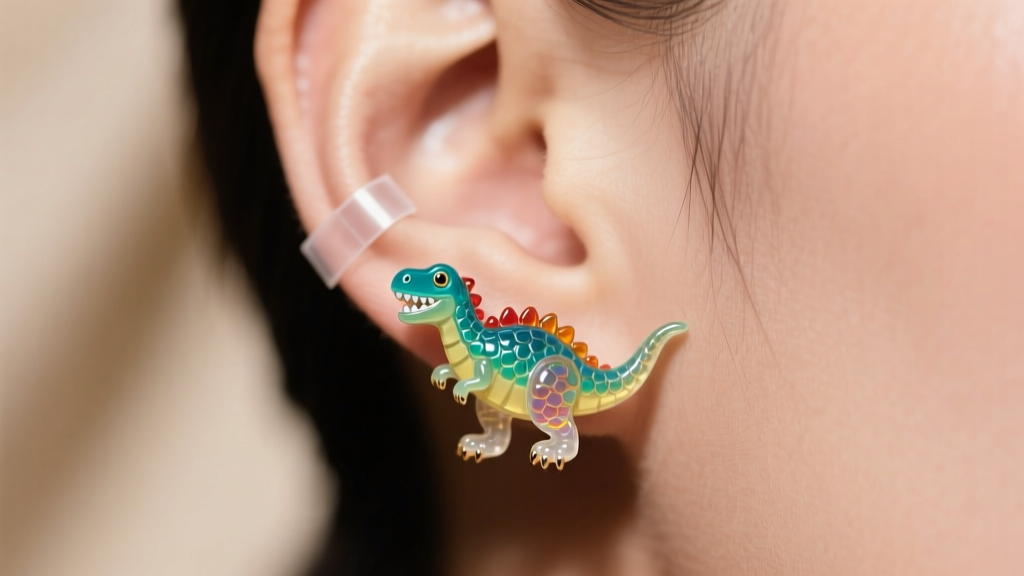
The Hidden Physics of Novelty Jewelry
Quirky, novelty, and undeniably goofy earrings have dominated the accessory space, offering a playful rebellion against minimalist fine jewelry. From oversized 3D resin frogs to asymmetrical mismatched food shapes, these pieces bring immense joy and personality to any outfit. However, as any seasoned piercer will tell you, the structural reality of wearing heavy novelty jewelry is far less fun than the aesthetic. The core problem lies in basic physics.
A standard gold or titanium stud weighs between 1 and 2 grams. In contrast, a solid acrylic or resin novelty earring can easily weigh 15 to 25 grams. When these heavy pieces dangle, they create a pendulum effect. Every time you turn your head, walk, or take off a sweater, the kinetic energy multiplies the static load on your fistula (the piercing hole). Over time, this dynamic stress leads to micro-tears, lobe migration, and eventually, the dreaded split earlobe. If you refuse to sacrifice your favorite statement pieces, you must troubleshoot the mechanical and chemical flaws inherent in mass-produced novelty jewelry.
Troubleshooting Lobe Stretching and Tearing
The most common failure mode when wearing heavy goofy earrings is the "cheese wire effect." Most inexpensive novelty earrings are strung on 22-gauge (0.64mm) or even 24-gauge (0.51mm) base metal wires. When a 20-gram acrylic slice of pizza hangs from a wire this thin, the surface area pressing against your earlobe tissue is microscopic. The wire slowly slices downward through the tissue, causing permanent stretching.
The Adhesive Support Patch Hack
If you are committed to wearing heavy novelty pieces with thin wires, you must artificially increase the surface area distributing the weight. Polyurethane adhesive lobe patches (such as LobeWonder) are the industry standard for this fix. These 12mm circular patches feature a slit that allows them to slide over the earring post, resting flush against the back of your earlobe. By distributing the 20-gram load across a 113-square-millimeter radius, the downward pressure on the fistula is reduced by over 80%, effectively halting the cheese wire effect.
Upgrading the Post: Gauge and Material Swaps
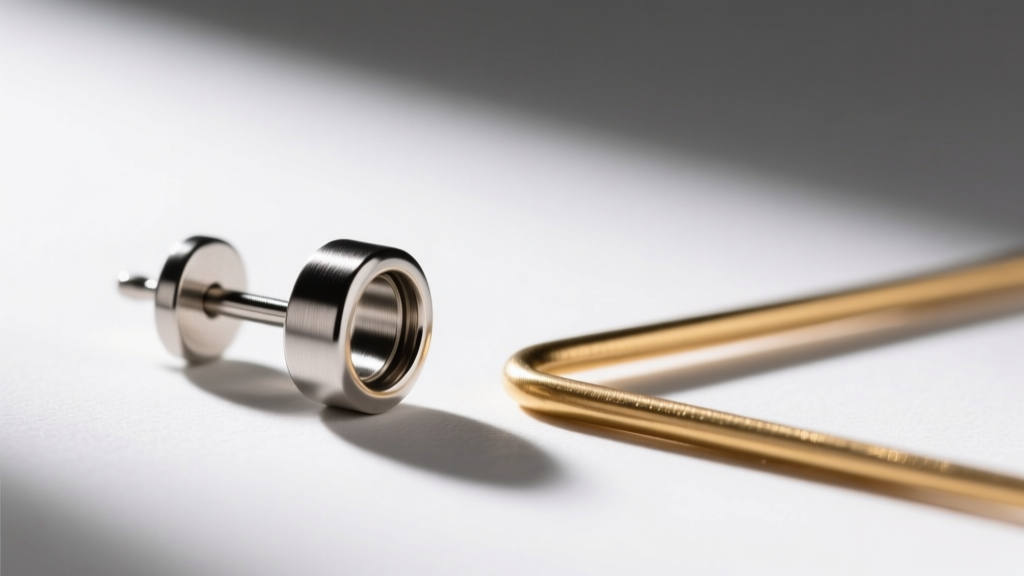
For a permanent solution, you need to rewire your goofy earrings. According to the Association of Professional Piercers (APP), the minimum safe gauge for heavy dangling jewelry is 18-gauge (1.02mm), though 16-gauge (1.29mm) is vastly superior for extreme novelty weights. You can purchase ASTM F136 implant-grade titanium wire and use flush cutters and round-nose pliers to create custom, thick French wires for your acrylic pieces. Titanium is not only incredibly strong but also weighs 45% less than surgical steel, reducing the overall pendulum weight.
Fixing Cheap Clasp Failures on Oversized Novelties
Heavy earrings do not just stretch lobes; they break cheap hardware. The clasps used on mass-produced goofy earrings are rarely rated for the weight they carry. When a heavy resin earring catches on a scarf, a weak clasp will snap or bend, resulting in lost jewelry. Below is a troubleshooting guide to identifying and replacing inadequate novelty clasps.
| Clasp Type | Standard Wire Gauge | Max Safe Weight | Failure Mode on Heavy Earrings | Recommended Upgrade |
|---|---|---|---|---|
| Fishhook (Shepherd's Hook) | 22G - 20G | 8 grams | Wire bends open, earring falls out during movement. | Add a clear silicone earback or upgrade to a locking leverback. |
| Leverback | 20G - 18G | 15 grams | Hinge snaps under lateral kinetic stress (e.g., pulling off a shirt). | Use 16G niobium leverbacks with a reinforced soldered hinge. |
| Threadless Flat Back | 18G - 16G | 25+ grams | Rarely fails; tension pin may loosen if bent improperly. | Best option for heavy novelties. Requires custom rewiring. |
Solving the Base Metal Allergy Problem
Because goofy earrings are often treated as disposable, fast-fashion accessories, they are frequently manufactured from "Tibetan silver," zinc alloys, or brass. These materials contain high levels of nickel. The American Academy of Dermatology (AAD) notes that nickel contact dermatitis is the most common allergic reaction to jewelry, characterized by red, itchy, and weeping skin around the piercing site.
The European Union's Nickel Directive limits nickel release to 0.5 µg/cm²/week, but cheap novelty imports routinely bypass these regulations. If your earlobes become inflamed after wearing quirky statement pieces, you must create a chemical barrier. While many suggest painting the post with clear nail polish, this is a flawed long-term solution; nail polish chips easily, traps moisture and bacteria against the wound, and degrades when exposed to the natural oils of your skin.
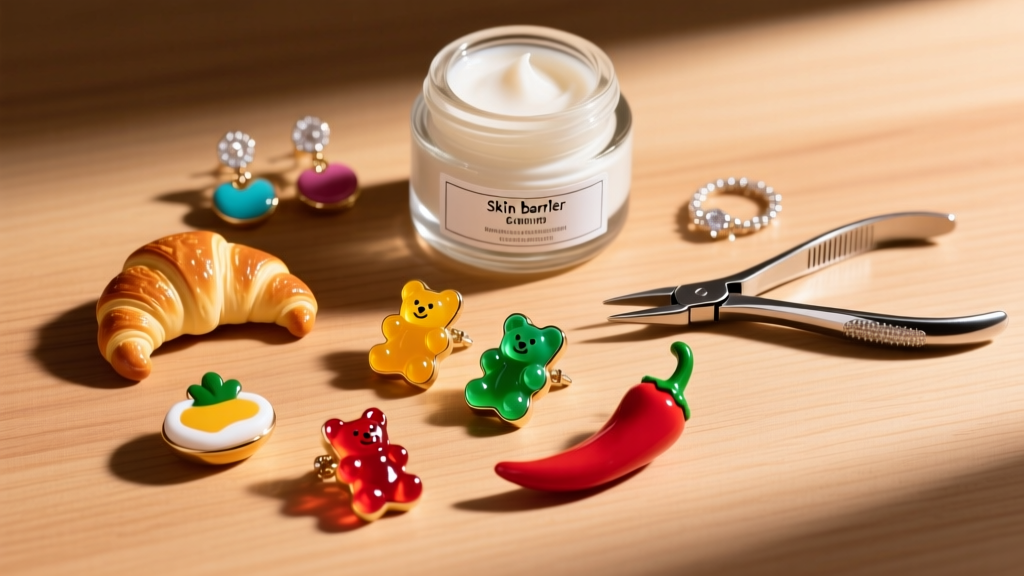
The Expert Fix: Use a dedicated hypoallergenic barrier cream (like Skintifique Protective Cream) or a medical-grade nano-ceramic spray coating. Alternatively, use jewelry pliers to completely remove the base metal post and replace it with a threadless 16G implant-grade titanium end, securing your heavy novelty charm to a biocompatible anchor.
Styling Framework: Balancing Asymmetrical and Quirky Pieces
Troubleshooting the physical damage of goofy earrings is only half the battle; styling them so they look intentional rather than chaotic is the other. The most common styling failure with novelty earrings is visual clutter. When wearing oversized, brightly colored resin or enamel pieces, the earrings must act as the focal point of your entire silhouette.
"The key to pulling off extreme novelty jewelry is radical contrast. If your earrings are loud, goofy, and visually heavy, your neckline and hair must be aggressively minimalist. A sleek, pulled-back bun and a structured, solid-colored turtleneck provide the negative space required for quirky earrings to read as high-fashion rather than costume."
- Asymmetrical Sets: If wearing mismatched goofy earrings (e.g., a tiny cat on the left, a giant ball of yarn on the right), ensure the heavier piece is balanced by a thicker gauge wire to prevent uneven lobe stretching.
- Cartilage Limitations: Never hang heavy resin novelties from upper cartilage piercings (like the helix or forward helix). Cartilage lacks the elasticity of the earlobe and is highly prone to irritation bumps and angle migration when subjected to pendulum weights.
- Hair Snagging: Goofy earrings often feature protruding acrylic elements. If you wear your hair down, opt for pieces with smooth, domed finishes rather than sharp, geometric novelty shapes that will tangle and rip the jewelry from your ear.
Final Verdict on Novelty Ear Care
You do not need to abandon your love for goofy earrings to preserve the health of your piercings. By acknowledging the mechanical limits of thin base metals, upgrading your wire gauges to 16G titanium, utilizing adhesive support patches, and enforcing strict barrier protocols against nickel, you can safely wear the quirkiest statement pieces in your collection. Treat your novelty jewelry with the same structural respect you would give to fine diamonds, and your earlobes will thank you.


