The Biomechanics of Stud and Drop Earrings: An Expert Guide
Explore the biomechanics, metallurgy, and engineering of stud and drop earrings. Learn gauge standards, material grades, and lobe health.

The Physics of Earlobe Stress: Studs vs. Drops
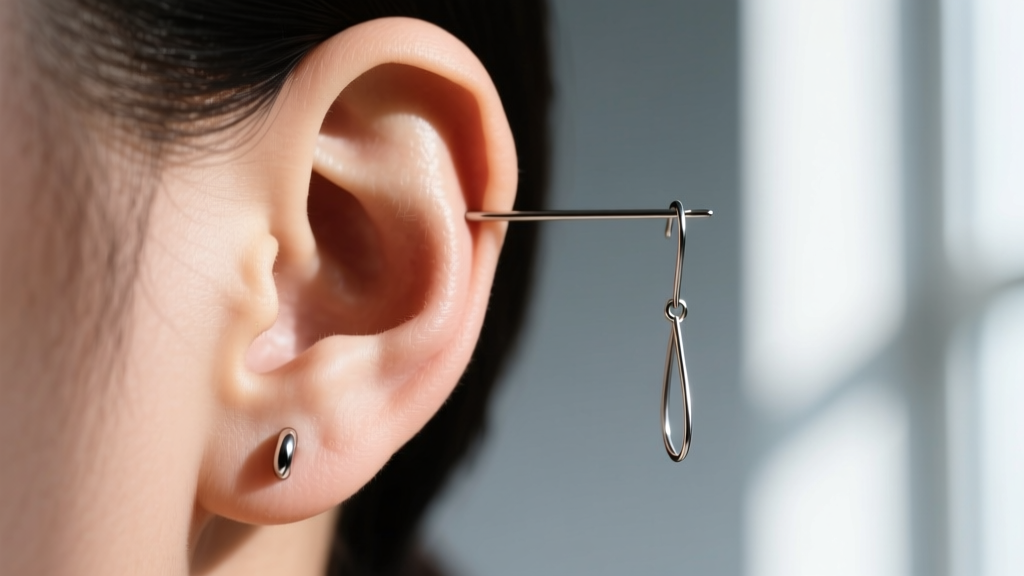
When evaluating fine jewelry, most consumers focus exclusively on carat weight, gemstone clarity, and precious metal purity. However, from an anatomical and engineering perspective, the earlobe is a dynamic tissue matrix subjected to continuous mechanical stress. This is especially true when wearing combined stud and drop earrings, which introduce complex pendulum physics to a delicate fistula (the piercing channel).
The primary failure mode in heavy earring wear is the "cheese-cutter effect." This biomechanical phenomenon occurs when the downward force of a heavy drop earring exceeds the tensile strength of the earlobe's collagen network, causing the jewelry post to slowly slice through the tissue. The severity of this effect is dictated by the formula for pressure: Pressure = Force / Area.
Gauge Thickness and Surface Area
Standard fashion earrings typically utilize a 20-gauge (0.81mm) or 18-gauge (1.02mm) post. While adequate for lightweight studs weighing under 3 grams, these gauges are structurally insufficient for heavy drops. A 14-gauge post (1.63mm) offers roughly four times the cross-sectional surface area of a 20-gauge post. When a 12-gram drop pendant is suspended from a 14-gauge post, the localized pressure on the inferior wall of the fistula is reduced by over 70%, effectively neutralizing the cheese-cutter effect and preserving long-term lobe integrity.
Metallurgical Breakdown: Hypoallergenic Grades for Heavy Drops
The structural demands of stud and drop earrings require materials that possess both high yield strength and absolute biocompatibility. Heavy drops generate micro-abrasions inside the fistula during normal movement (walking, turning the head). If the alloy contains reactive metals, these micro-abrasions provide a direct pathway for metallic ions to enter the bloodstream, triggering severe contact dermatitis.
According to the American Academy of Dermatology (AAD), nickel is the most common culprit in jewelry-induced allergic reactions. Therefore, expert jewelers and professional piercers mandate the use of specific, verifiable implant-grade materials for any earring that places prolonged stress on the tissue.
| Material Grade | Vickers Hardness (HV) | Nickel Release (EN 1811) | Best Use Case |
|---|---|---|---|
| ASTM F136 Titanium (Grade 23) | 310 HV | 0.00 µg/cm²/week | Heavy drops, fresh piercings, hyper-sensitive lobes |
| Niobium (99.9% Pure) | 135 HV | 0.00 µg/cm²/week | Articulated drops requiring malleable hinge components |
| 14k Gold (Nickel-Free Alloy) | 140-180 HV | < 0.5 µg/cm²/week | Everyday luxury stud and drop combinations |
| 18k Gold (Palladium Alloyed) | 120-150 HV | 0.00 µg/cm²/week | High-end bridal or heirloom convertible earrings |
| Platinum (950/50 Ru) | 135 HV | 0.00 µg/cm²/week | Dense, heavy diamond drops requiring supreme prong security |
As outlined by the Association of Professional Piercers (APP), ASTM F136 Titanium remains the gold standard for biocompatibility. However, for high-end stud and drop earrings, 18k gold alloyed with palladium (rather than nickel or zinc) provides the necessary prestige and color while maintaining a zero-nickel-release profile.
Engineering the Connection: Backing Mechanisms Under Load
The most overlooked component of any earring is the backing mechanism. When dealing with the pendulum motion of drop earrings, the backing must withstand both static downward pull and dynamic shear forces.
Friction Backs (Butterfly Clutches)
Standard friction backs rely on the tension of folded sheet metal against a notched post. For heavy drops, friction backs are a critical point of failure. The dynamic swinging of a drop earring will gradually wear down the notches on a soft 18k gold post, leading to catastrophic loss of the earring. Furthermore, the narrow base of a butterfly clutch concentrates the weight of the drop onto a tiny 4mm area of the back of the earlobe, causing localized pressure necrosis and discomfort.
La Pousette (Locking) and Screw Backs
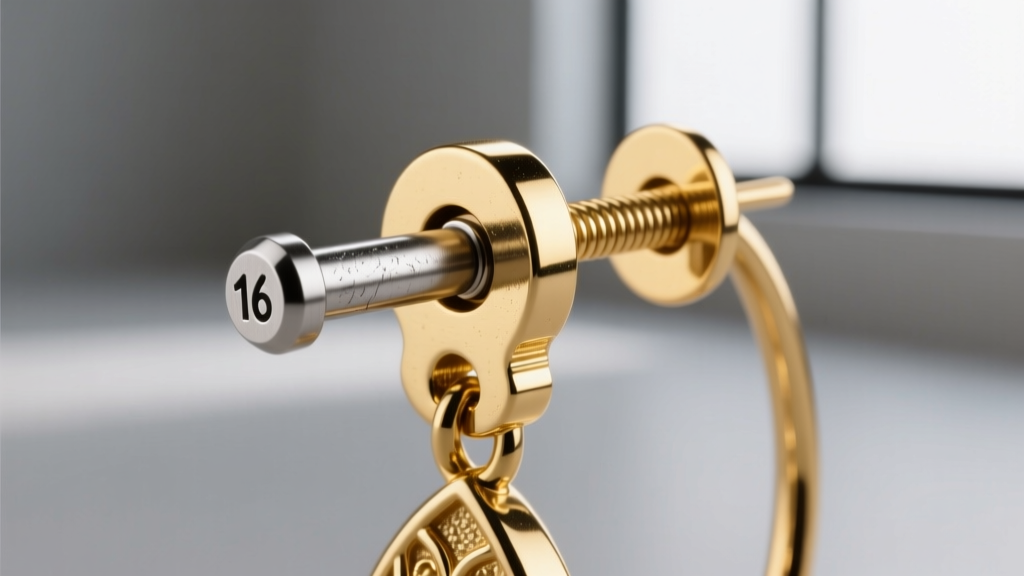
For premium stud and drop earrings, La Pousette locking backs or precision-machined screw backs are mandatory. A La Pousette back utilizes a dual-spring internal clutch mechanism that physically locks behind a machined groove on the post. This distributes the weight across a wider 8mm concave disc, stabilizing the heavy drop and preventing the earring from drooping forward. Screw backs, machined with a 0.8mm thread pitch, offer the highest security but require a minimum post diameter of 1.2mm (approx. 16-gauge) to ensure the threaded core does not snap under torque.
Convertible Stud and Drop Earrings: Design Failures and Solutions
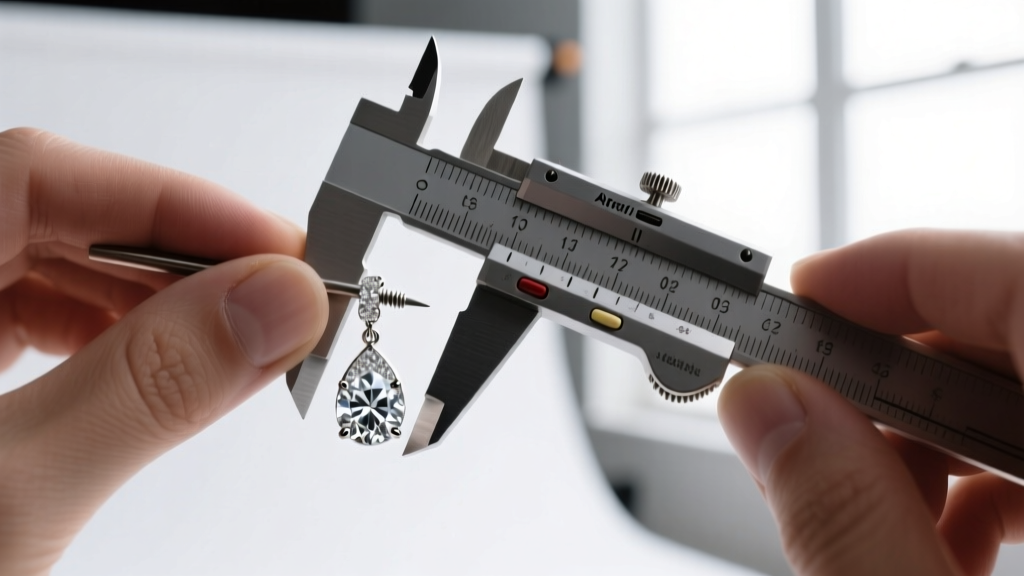
The modern jewelry market has seen a surge in convertible 2-in-1 designs, where a standalone stud can be augmented by clipping on a drop pendant. While highly marketable, these modular systems introduce severe mechanical vulnerabilities.
"The most common failure in modular jewelry is not the metal itself, but the micro-hinges and friction catches used to connect the drop to the stud. When tolerances exceed 0.05mm, the drop component will wobble, accelerating hinge pin shear."
To mitigate this, expert bench jewelers utilize bayonet-style fittings or micro-threaded connectors rather than simple friction clips. A bayonet fitting requires the drop component to be inserted and twisted 90 degrees, locking it securely against the stud base. This eliminates lateral wobble and ensures that the sheer force of the drop is transferred directly into the structural base of the stud, rather than relying on a fragile, spring-loaded catch.
Clinical Guidelines for Lobe Rehabilitation
For clients who have already suffered tissue elongation from wearing improperly engineered stud and drop earrings, rehabilitation is possible without surgical intervention, provided the stretching is under 4mm.
- Silicone Support Patches: Adhesive, medical-grade silicone patches worn behind the earlobe distribute the weight of heavy drops across the entire posterior lobe surface, relieving stress on the fistula.
- Earlobe Support O-Rings: Specially designed polymer O-rings slide onto the earring post between the lobe and the backing, acting as a shock absorber and increasing the surface area of the backing.
- Gauge Upsizing: Transitioning the client's jewelry to a permanent 14-gauge or 12-gauge titanium sleeper ring allows the fistula to heal around a thicker, more supportive diameter, naturally tightening the stretched tissue matrix over a period of 6 to 8 months.
Final Thoughts on Biomechanical Jewelry Design
Designing and selecting high-quality stud and drop earrings requires looking past the surface aesthetics to evaluate the underlying physics and metallurgy. By insisting on thicker gauge posts (16G to 14G), verifying implant-grade or palladium-alloyed metals, and utilizing wide-base locking mechanisms, you ensure that the jewelry not only looks breathtaking but also respects and preserves the delicate anatomy of the human earlobe. True luxury in jewelry is defined by the seamless intersection of flawless engineering and enduring anatomical comfort.


