Troubleshooting 10mm Hoop Earrings: Fit, Gauge & Comfort
Solve common fit, gauge, and hinge issues with 10mm hoop earrings. Expert troubleshooting for thick lobes, cartilage, and stuck clickers.

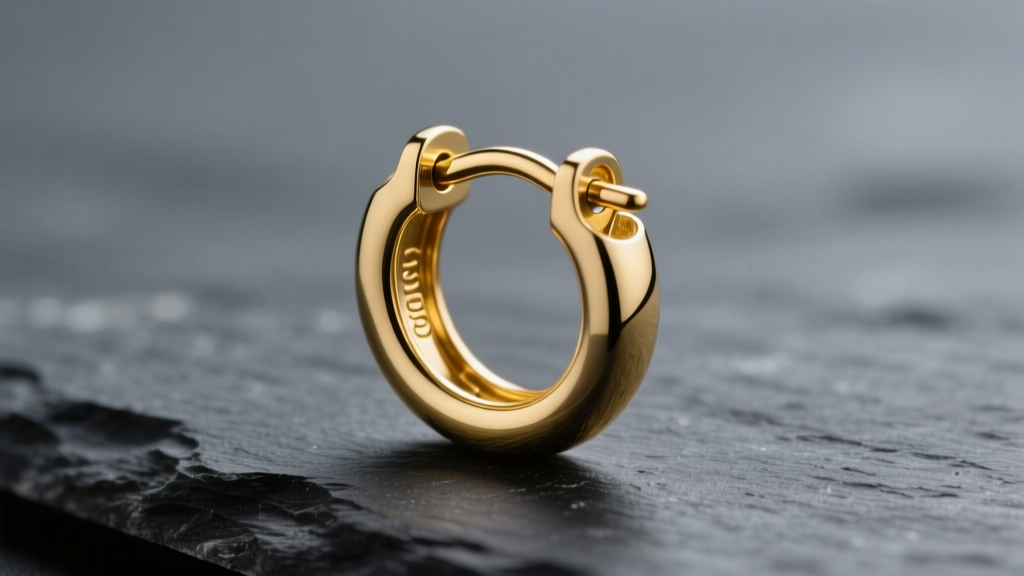
When it comes to minimalist body jewelry, 10mm hoop earrings occupy a highly specific niche. Often classified as micro-hoops or tight huggies, this size is a staple for second and third lobe piercings, tragus placements, and snug cartilage work. However, the very attribute that makes a 10mm hoop visually striking—its compact inner diameter (ID)—is also the source of its most frequent biomechanical failures. As of 2026, advanced body jewelry engineering has improved clicker mechanisms and alloy purity, but sizing and gauge mismatches remain the primary culprits behind chronic irritation, embedding, and broken hinges.
If your 10mm hoops are causing pain, refusing to click shut, or migrating through your piercing, you are likely dealing with a structural mismatch rather than a simple healing issue. This guide provides a master-class troubleshooting framework to diagnose and resolve the most common problems associated with micro-hoops.
The Biomechanics of a 10mm Inner Diameter
The most common mistake consumers make is confusing Outer Diameter (OD) with Inner Diameter (ID). In professional body jewelry, hoops are measured by their ID—the empty space inside the ring. A 10mm ID hoop provides exactly 10 millimeters of clearance for your tissue.
"A 10mm inner diameter is unforgiving. If a client's earlobe is 8mm thick, a 10mm hoop leaves only 2mm of total clearance. That single millimeter on either side is not enough to accommodate natural swelling, lymphatic drainage, or the physical bulk of the clasp mechanism." — Master Piercer, APP Certified
When clearance drops below 3mm, the jewelry acts as a tourniquet. This "chokehold" effect restricts blood flow, traps dead skin cells and sebum against the fistula (the piercing channel), and creates a breeding ground for hypertrophic scarring or localized contact dermatitis.
Troubleshooting Matrix: Diagnosing Your 10mm Hoop Issues
Use the diagnostic table below to identify your specific failure mode and apply the corresponding mechanical or sizing correction.
| Symptom | Root Cause | Actionable Fix |
|---|---|---|
| Redness and indentation on the lower lobe | Insufficient ID clearance (Lobe thickness > 7mm) | Upsize to a 12mm ID hoop or switch to a flat-back labret stud. |
| Piercing channel migrating or thinning | The "Cheese Cutter" effect from incorrect wire gauge | Verify piercing gauge; upgrade to a thicker 16G or 14G wire if applicable. |
| Clicker hinge refuses to snap shut | Sebum buildup in the tension arm or bent closure pin | Ultrasonic clean; gently adjust tension arm with nylon-jaw pliers. |
| Sharp pain when sleeping on the ear | Clasp bulk pressing into the mastoid region | Switch to a continuous (seamless) ring or a hinged segment ring (HSR). |
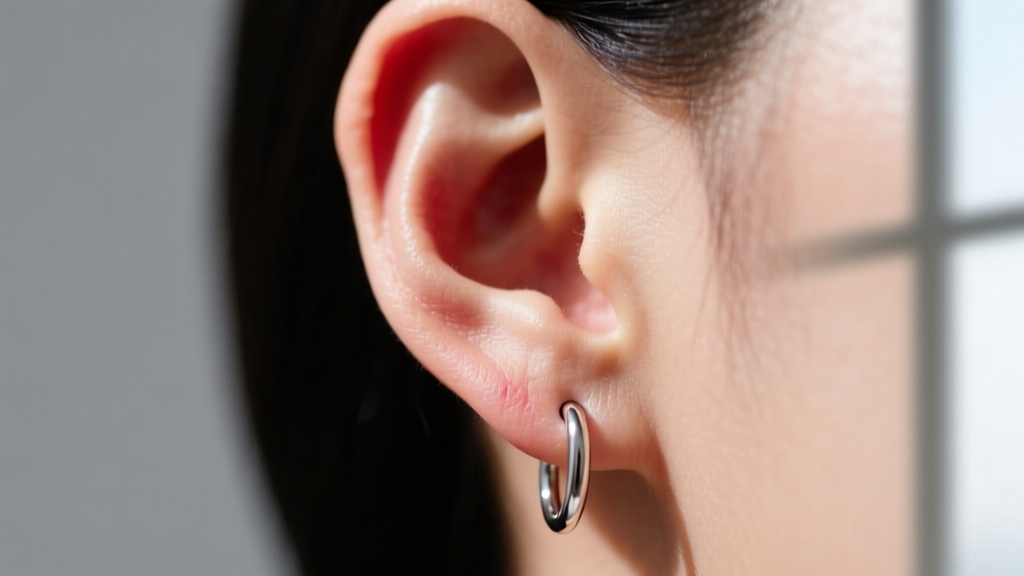
The "Cheese Cutter" Effect: Gauge Mismatches in Cartilage
Gauge refers to the thickness of the wire that passes through your piercing. Standard lobe piercings are typically done at 20G (0.81mm) or 18G (1.02mm), while cartilage piercings (like the tragus or helix) are usually pierced at 16G (1.29mm).
Why Wire Thickness Matters for Micro-Hoops
Because a 10mm hoop has such a tight curvature, the physical tension exerted on the fistula is highly concentrated. If you place a thin 20G wire into a 16G cartilage piercing, the tight curve combined with the thin wire creates a shearing force. Over time, this mimics the action of a cheese cutter, slowly slicing through the tissue and causing the piercing to reject or migrate.
- 20 Gauge (0.81mm): Only suitable for standard, well-healed earlobe piercings with low tension.
- 18 Gauge (1.02mm): The minimum safe thickness for most cartilage placements wearing tight hoops.
- 16 Gauge (1.29mm): The gold standard for tragus, snug, and daith piercings to prevent migration.
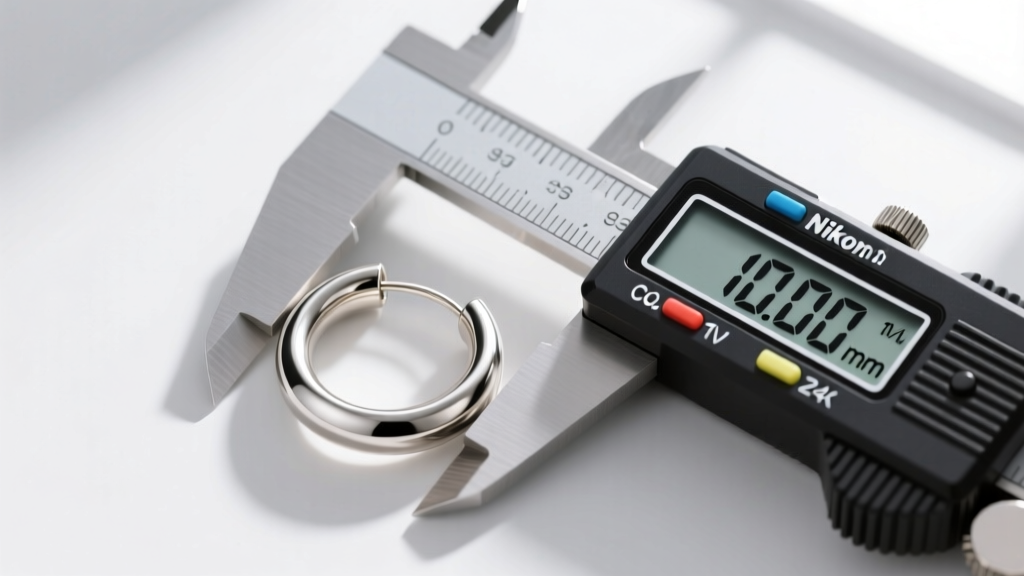
If your 10mm hoop feels like it is "pulling" downward, immediately remove it and measure the wire thickness using a digital caliper. High-end brands like BVLA and Anatometal clearly laser-engrave their gauge sizes on the packaging to prevent this exact error.
Mechanical Failures: Fixing Stubborn Clicker Hinges
The clicker mechanism is a marvel of micro-engineering, relying on a tiny tension arm that snaps into a receiving notch. In 10mm hoops, this mechanism is minuscule and highly susceptible to failure. If your clicker won't close, or pops open randomly, do not throw it away. Follow this professional repair protocol:
- Deep Clean the Mechanism: Submerge the earring in an ultrasonic jewelry cleaner filled with warm water and a drop of mild dish soap for 3 minutes. This dislodges microscopic skin cells and hardened sebum that block the tension arm from seating fully.
- Inspect the Tension Arm: Use a 10x jeweler's loupe to look at the curved arm. If it has been bent outward from repeated forcing, it will not catch the notch.
- Adjust with Nylon-Jaw Pliers: Never use standard steel pliers, which will mar the gold or titanium finish. Use nylon-jaw bead-crimping pliers to apply microscopic inward pressure to the tension arm. Bend it less than a millimeter, then test the click. Repeat until the snap is audible and secure.
- Lubricate (Sparingly): A microscopic dab of synthetic watch oil on the hinge pin will restore smooth articulation without attracting dust.
Material Irritation: When to Upgrade Your Alloy
If you have ruled out sizing and gauge issues, but the piercing remains angry, red, and weeping clear fluid, you are likely experiencing a contact allergy. Many commercial "surgical steel" hoops contain up to 10% nickel, which leaches when exposed to the slightly acidic pH of healing tissue or trapped sweat.
According to the Association of Professional Piercers (APP), the only acceptable metals for long-term wear in tight, high-friction environments like a 10mm huggie are implant-grade titanium and high-karat gold. Specifically, you should look for ASTM F136 compliant titanium. Unlike F67 (commercially pure titanium), F136 is an alloy (Ti6Al4V) that has been processed to eliminate nickel impurities and features a mirror-polished surface that resists bacterial adhesion.
Pricing Reality Check: A genuine ASTM F136 titanium 10mm clicker from a reputable body jewelry brand will typically cost between $45 and $85. 14k or 18k solid gold versions from premium manufacturers range from $120 to $250. If you find a "titanium" 10mm hoop for $12 on a fast-fashion marketplace, it is almost certainly PVD-coated brass or low-grade steel, which will inevitably cause an allergic reaction in a tight fistula.
Final Sizing Framework: When to Abandon the 10mm Size
While 10mm hoop earrings are undeniably chic, they are not a universal solution. If your earlobe thickness exceeds 8mm, or if your cartilage piercing is less than 9 months old and still subject to fluctuating swelling, a 10mm ID is mechanically contraindicated. In these scenarios, transition to a 12mm or 14mm ID hoop, or utilize a threadless flat-back labret stud (typically 6mm to 8mm in length) to allow the tissue to breathe. Troubleshooting jewelry is about respecting the anatomy of the ear; when the math of the inner diameter doesn't align with your tissue thickness, no amount of hinge adjustment will solve the underlying discomfort.


