Prevent an Allergic Reaction to Metal Earrings: Expert Guide
Learn how to identify and prevent an allergic reaction to metal earrings. Discover hypoallergenic grades, safe materials, and expert healing tips.

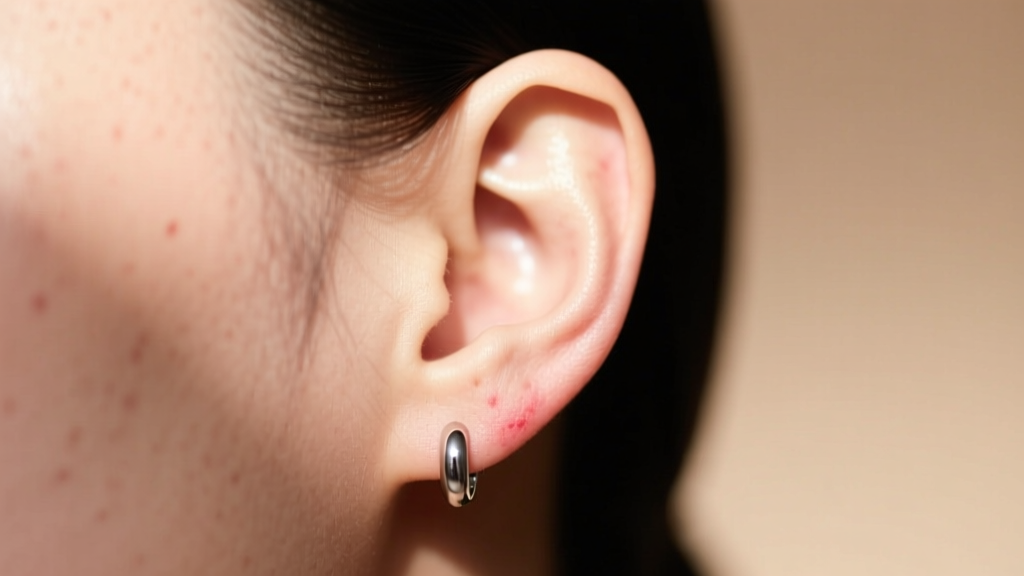
There is nothing more frustrating than finding the perfect pair of earrings, only to have your earlobes turn red, itchy, and swollen a few hours later. If you have ever experienced an allergic reaction to metal earrings, you are not alone. Contact dermatitis from jewelry affects roughly 10% to 20% of the global population, with nickel being the primary culprit. But navigating the jewelry market as a beginner can feel like walking through a minefield of misleading marketing terms and confusing metallurgy.
This comprehensive guide breaks down the exact science behind jewelry allergies, decodes misleading labels, and provides a definitive matrix of safe metals. Whether you are shopping for standard 20-gauge lobe studs or 16-gauge cartilage hoops, understanding material grades is the key to keeping your piercings healthy, happy, and irritation-free.
The Science of Contact Dermatitis: Why Metals Trigger Your Skin
To prevent an allergic reaction to metal earrings, you first need to understand what is actually happening beneath the surface of your skin. Jewelry allergies are a form of Type IV delayed hypersensitivity known as allergic contact dermatitis.
When you wear an earring, microscopic friction and your body's natural sweat cause metal ions to leach from the jewelry post. In the case of nickel, these ions penetrate the outer layer of your skin (the stratum corneum) and bind to natural skin proteins. This process, called haptenization, tricks your immune system into recognizing the metal-protein complex as a foreign invader. Your T-cells launch an attack, resulting in the classic symptoms: erythema (redness), pruritus (itching), vesicles (tiny blisters), and in severe cases, weeping or crusting of the earlobe.
According to the American Academy of Dermatology, once you develop a nickel allergy, it is typically lifelong. Even trace amounts of nickel leaching at a rate of just 0.5 micrograms per square centimeter per week—the strict limit set by the European Union's Nickel Directive (EN 1811)—can trigger a severe flare-up in highly sensitized individuals.
Decoding 'Hypoallergenic': What the Label Actually Means
One of the most dangerous traps for beginners is the term 'hypoallergenic.' In the jewelry industry, this term is largely unregulated and functions more as a marketing buzzword than a scientific guarantee. 'Hypo' means 'below normal' or 'slightly,' meaning hypoallergenic simply implies that the item is less likely to cause an allergic reaction to metal earrings compared to standard costume jewelry. It does not mean the item is 100% nickel-free.
Many mass-market brands label their surgical steel or sterling silver jewelry as hypoallergenic. While 316L surgical stainless steel is highly corrosion-resistant, it still contains between 10% and 14% nickel in its alloy matrix. For someone with a mild sensitivity, the tight molecular binding of 316L might prevent leaching. However, for someone with a severe allergy, surgical steel will almost certainly cause a flare-up.
The Safe List: Best Metals for Sensitive Ears (With Grades)
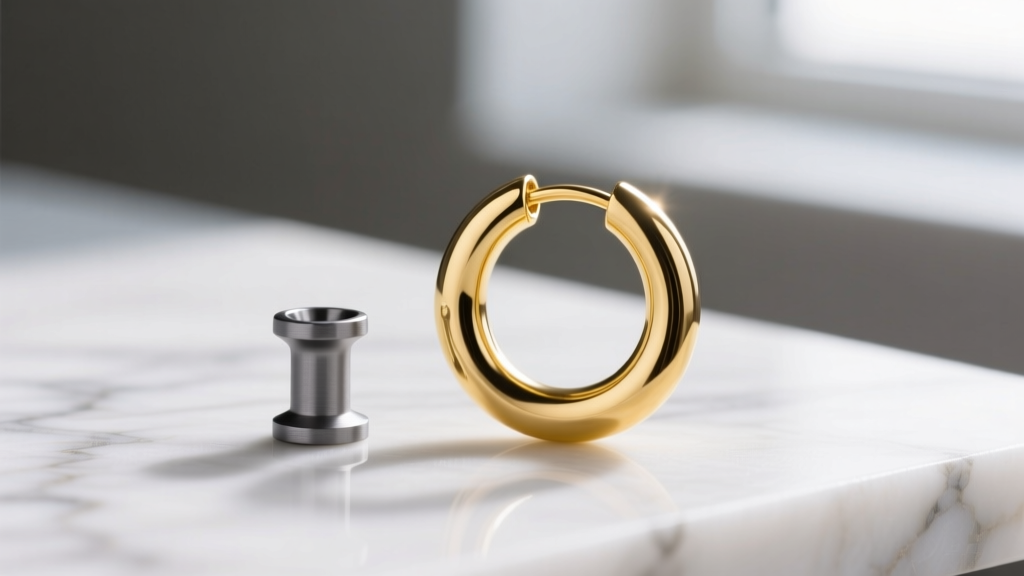
To completely avoid an allergic reaction to metal earrings, you must look past the marketing and check the specific metallurgical grade. Below is a definitive comparison chart of the safest metals for sensitive piercings, including standard pricing and use cases.
| Material | Required Grade / Standard | Nickel Content | Avg. Price Range | Best Use Case |
|---|---|---|---|---|
| Titanium | ASTM F136 (Implant Grade) | 0% (Trace only) | $25 - $80 | Fresh piercings, hyper-sensitive lobes, cartilage |
| Niobium | 99.9% Pure (Uncolored or Anodized) | 0% | $20 - $60 | Healing piercings, lightweight dangles |
| Gold (Yellow/Rose) | 14k or 18k Solid (Nickel-Free Alloy) | 0% (If properly alloyed) | $100 - $500+ | Everyday wear, heirloom pieces, huggies |
| Platinum | 950 Platinum (95% Pure) | 0% | $300 - $1000+ | Luxury studs, lifetime wear |
| Surgical Steel | 316L or 316LVM | 10% - 14% (Low leaching) | $10 - $30 | Healed piercings, non-sensitive wearers only |
Why You Must Avoid White Gold
While yellow and rose gold are generally safe when alloyed with copper, silver, or palladium, white gold is a major hidden trigger. To achieve its silvery color, white gold is traditionally alloyed with nickel. Even if the piece is plated with rhodium (a platinum-group metal that is hypoallergenic), the plating will eventually wear off at the friction points of the earring post, exposing the nickel-rich alloy directly to your piercing channel.
Hidden Triggers: Where Nickel Hides in Your Jewelry Box
Even if the main body of your earring is solid 18k gold, you can still experience an allergic reaction to metal earrings due to hidden manufacturing components. Here is where nickel frequently hides:
- Solder Points: When attaching a decorative element to an earring post, jewelers often use a solder that contains nickel or cadmium to lower the melting point. A tiny bead of nickel solder at the base of the post can cause localized dermatitis.
- Friction Backs (Butterfly Clutches): The post might be solid gold, but the backing could be plated brass or cheap steel. Always swap out mystery backs for solid titanium or plastic friction backs.
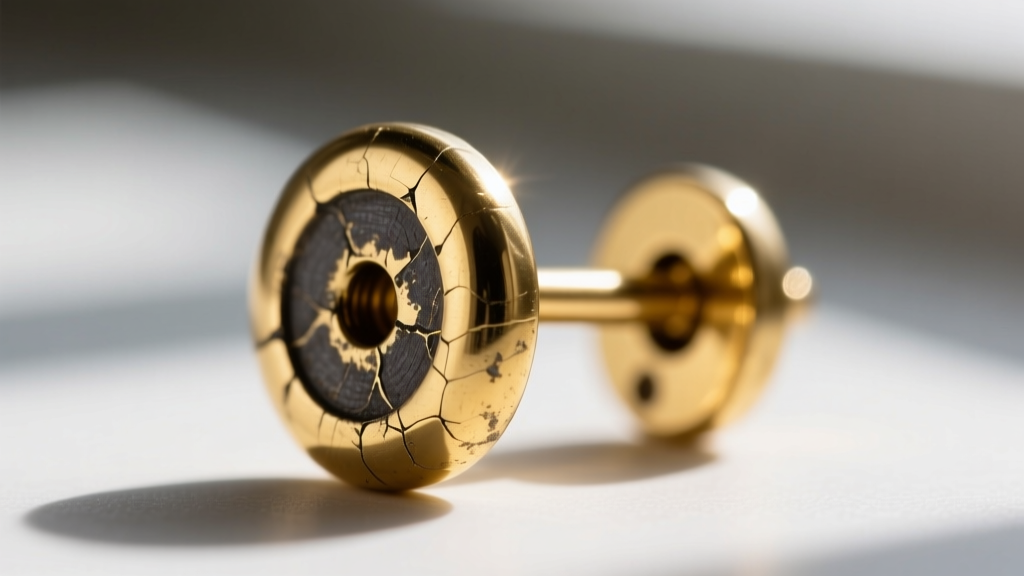
- Plating Wear and Tear: Gold-plated or vermeil earrings feature a microscopic layer of gold over a brass or copper base. Brass itself is an alloy of copper and zinc (usually safe), but cheaper base metals often contain nickel to increase hardness. Once the plating wears thin from daily friction, the base metal leaches into the skin.
Step-by-Step Recovery: Treating an Active Flare-Up
If you are currently suffering from an allergic reaction to metal earrings, immediate and proper intervention is required to prevent secondary bacterial infections. The National Center for Biotechnology Information (NCBI) notes that chronic exposure can lead to lichenification (thickening of the skin), making future piercings difficult.
- Remove the Trigger Immediately: Take out the offending earrings. Do not try to 'push through' the pain.
- Cleanse Gently: Wash the affected earlobe with a sterile saline solution (0.9% sodium chloride). Avoid harsh soaps, rubbing alcohol, or hydrogen peroxide, as these destroy newly forming tissue and delay healing.
- Apply a Topical Corticosteroid: Use an over-the-counter 1% hydrocortisone cream twice daily for up to seven days to reduce inflammation and suppress the localized immune response.
- Keep it Dry and Aerated: Avoid swimming pools (chlorine can irritate broken skin) and keep hair tied back to prevent snagging and bacterial transfer.
- Re-pierce or Re-insert Carefully: Once the skin is 100% healed and free of redness for at least two weeks, re-insert jewelry made strictly of ASTM F136 titanium to keep the fistula (piercing hole) from closing without triggering a new reaction.
Pro Tips for Wearing Fashion and Heirloom Jewelry Safely
What if you have a beautiful pair of vintage clip-ons or trendy fashion hoops that you know contain nickel? You do not necessarily have to throw them away. Here are three expert-approved workarounds to bypass an allergic reaction to metal earrings:
1. The Cyanoacrylate Barrier Method
Coating the earring post and friction back with two thin layers of clear nail polish creates a temporary, non-porous plastic barrier between the nickel and your skin. Let it dry completely before wearing. Note that this barrier degrades with friction and sweat, so it must be reapplied every 3 to 4 wears. This works best for smooth posts, not textured wires.
2. Silicone Post Covers
For standard 20-gauge or 18-gauge posts, you can purchase medical-grade silicone post sleeves. These tiny tubes slide over the metal post, completely encasing it. They also have the added benefit of providing a cushion that prevents the earring from drooping in stretched or delicate earlobes.
3. Switch to Ear Cuffs and Clip-Ons
If your lobe piercings are hyper-reactive, shift your styling focus to the outer cartilage. Ear cuffs and modern padded clip-ons do not require piercings and sit on the thicker, less sensitive skin of the helix or earlobe edge. Because they do not penetrate the skin barrier, the risk of haptenization and severe allergic contact dermatitis is drastically reduced, allowing you to wear a wider variety of fashion alloys safely.
The Bottom Line: An allergic reaction to metal earrings is an immune response to specific metal ions, primarily nickel. By ignoring unregulated 'hypoallergenic' labels and demanding specific material grades like ASTM F136 titanium or 18k nickel-free gold, you can build a jewelry collection that is as safe as it is stylish.


