Dichroic Earrings Buying Guide: What to Look For in 2026
Discover how to choose the perfect dichroic earrings in 2026. Learn about glass fusing, hypoallergenic metals, gauge sizes, and weight limits.

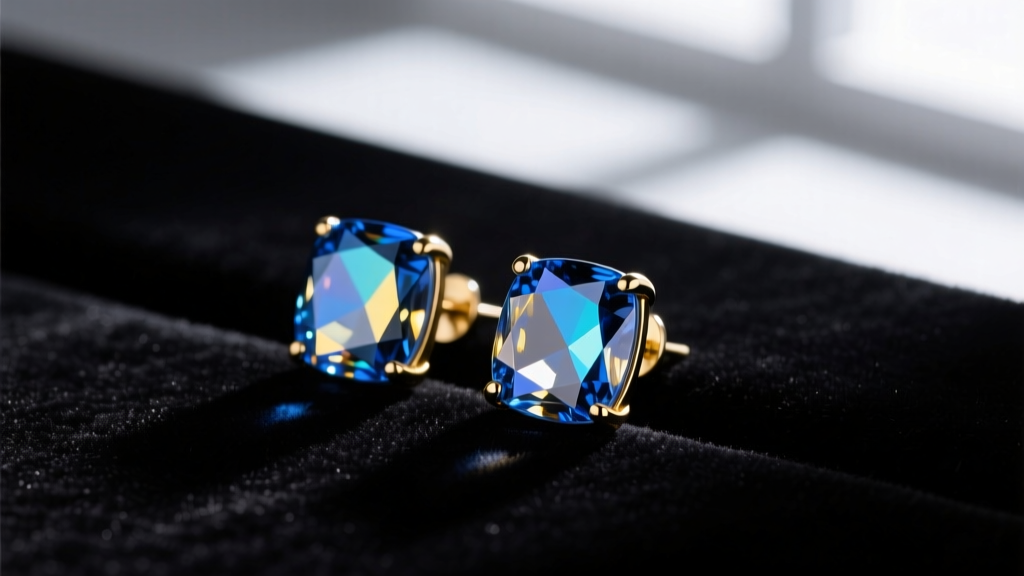
Dichroic glass earrings are among the most captivating accessories in the jewelry market, offering a kaleidoscopic color shift that changes with the angle of light and the movement of the wearer. Originally developed by NASA for satellite mirrors and optical filters, dichroic glass has become a staple in artisan jewelry. However, the surge in popularity has also led to a flood of cheap, resin-based imitations and poorly constructed pieces that fail after a few wears.
If you are investing in dichroic earrings in 2026, you need to look beyond the flashy surface. This comprehensive buying guide breaks down the exact material grades, fusing techniques, gauge sizes, and weight distribution metrics you must evaluate to ensure your earrings are authentic, hypoallergenic, and built to last.
The Physics of Dichroic Glass: Authenticity vs. Imitation
True dichroic glass is created through a highly specialized vacuum deposition process. According to manufacturing standards outlined by Bullseye Glass, a leading producer of fusible glass, multiple micro-layers of quartz crystal and metal oxides (such as titanium, chromium, and zirconium) are vaporized and bonded to a glass substrate. This creates a surface that reflects certain wavelengths of light while transmitting others.
The Two-Color Test
The most reliable way to authenticate dichroic glass is the 'two-color test'. Because of its optical properties, genuine dichroic glass will display one color when light reflects off its surface, and a completely different color when light passes through it. For example, a piece might reflect a brilliant metallic gold but transmit a deep sapphire blue when held up to a light source. If the earring displays the exact same color both in reflection and transmission, you are likely looking at a cheap foil-backed glass or a dyed resin imitation.
Critical Metalwork: Posts, Hooks, and Hypoallergenic Standards
The glass cabochon may be the star of the show, but the metalwork is what actually interacts with your body. Because dichroic glass is relatively heavy, the structural integrity and biocompatibility of the earring post or hook are paramount.
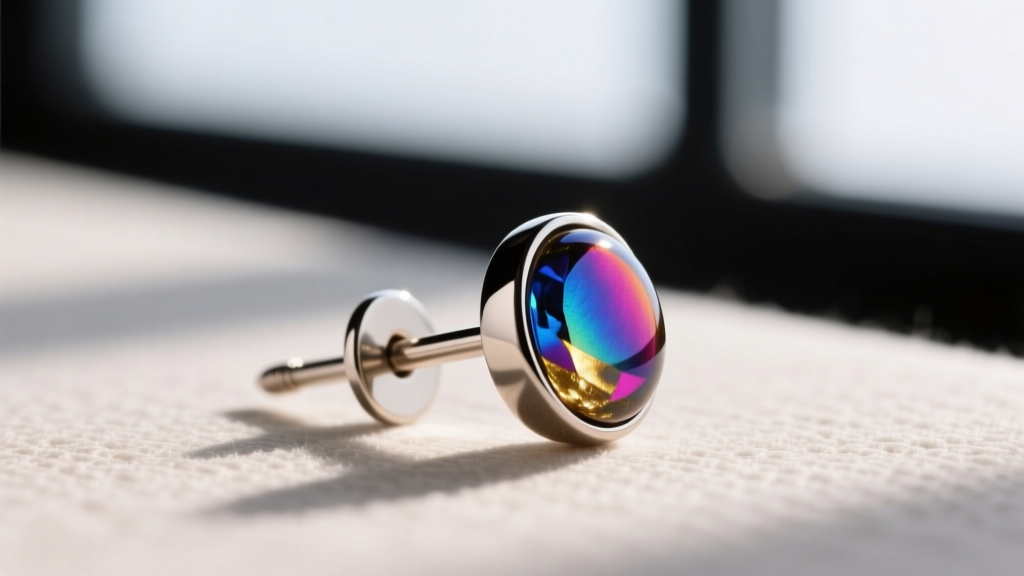
Implant-Grade Titanium vs. Surgical Steel
Many mass-market vendors label their earrings as 'surgical steel.' However, the Association of Professional Piercers (APP) notes that the term 'surgical steel' is largely unregulated and often contains nickel, which triggers contact dermatitis in a significant portion of the population. For sensitive ears, always look for ASTM F136 Implant-Grade Titanium or ASTM F904 Niobium. These alloys are entirely nickel-free and feature a mirror-polished surface that resists bacterial adhesion.
Understanding Gauge Thickness
Gauge refers to the thickness of the wire that passes through your piercing. Because glass is dense, thin wires will easily bend under the weight of a dangling dichroic piece, causing the earring to droop or fall out.
- 20-Gauge (0.81mm): Standard for lightweight studs. Acceptable for small, fused dichroic cabs under 2 grams.
- 18-Gauge (1.02mm): The ideal sweet spot for most dichroic dangles and drops. Provides enough rigidity to support 3-5 grams of glass without bending.
- 16-Gauge (1.29mm): Necessary for heavy chandelier styles or cartilage placements (like the helix or conch), where structural support is critical.
Weight Distribution and Wearability: Lobe vs. Cartilage
One of the most common failure points in glass jewelry is ignoring the anatomical limits of the ear. Glass is significantly denser than acrylic or hollow metals. Wearing heavy dichroic drops on standard lobe piercings can lead to 'cheese-cutter effect' migration, where the weight slowly tears through the tissue.
Earring Style and Weight Guidelines
| Earring Style | Typical Glass Weight | Recommended Wire Gauge | Best Piercing Placement |
|---|---|---|---|
| Micro Studs (6mm-8mm) | 1.0g - 2.5g | 20g or 18g | Standard Lobe, Tragus |
| Medium Drops / Dangles | 3.0g - 5.5g | 18g or 16g | Standard Lobe (thick tissue) |
| Heavy Chandeliers / Shields | 6.0g - 10.0g+ | 14g or 12g | Stretched Lobes, Ear Cuffs |
| Flat-Back Cartilage Studs | 1.5g - 3.0g | 16g or 14g | Helix, Conch, Flat |
Note: If you wish to wear heavy dichroic dangles but have delicate lobes, look for designs that incorporate a 'lever-back' or 'ear-wire with a stabilizing bead' to distribute the fulcrum point away from the piercing hole itself.
Kiln-Fusing vs. Adhesive: The Durability Test
How the glass is attached to the metal finding dictates the lifespan of the earring. The Glass Art Society emphasizes that glass and metal have vastly different Coefficients of Expansion (COE). When exposed to body heat, sunlight, or cold weather, glass and metal expand and contract at different rates.
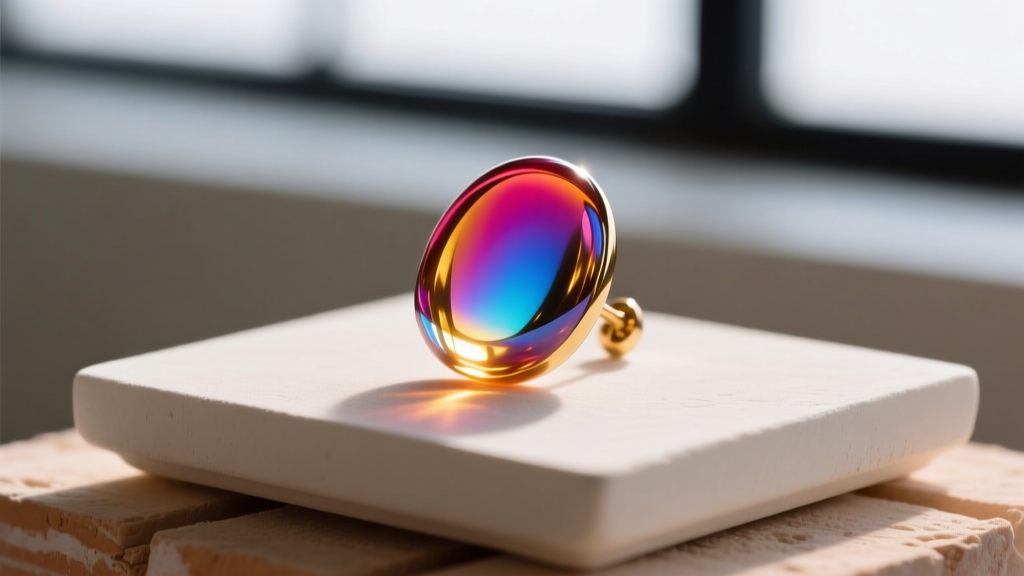
The Problem with Glued Bails
Craft fair favorites often feature a dichroic glass cabochon with a metal bail or post glued to the back using epoxy or UV resin. Within a few months, the thermal expansion cycle will snap this adhesive bond, and the glass will shatter on the floor. Furthermore, the solvents in some cheap adhesives can degrade the dichroic coating over time, causing it to peel or cloud.
The Kiln-Fused Solution
High-quality artisan dichroic earrings are kiln-formed. The artist cuts the dichroic glass and fuses it at temperatures exceeding 1450°F (788°C). Instead of gluing a metal loop, the artist creates a 'glass bail' or 'glass loop' from the exact same COE glass batch during the fusing process. The metal jump ring is then threaded through this solid glass loop. This ensures that the entire piece expands and contracts uniformly, making it virtually indestructible under normal wear conditions.
2026 Pricing Tiers and Value Assessment
Understanding the market tiers will help you identify whether you are paying for genuine craftsmanship or overpriced mass production.
Tier 1: Mass-Market / Dropshipped ($10 - $25)
Usually featuring glued bails, mystery alloy posts, and often faux-dichroic resin or foil-backed glass. The color shift is minimal, and the posts frequently cause irritation. Avoid these if you have sensitive skin.
Tier 2: Artisan Craft / Studio Fused ($35 - $75)
Hand-cut, kiln-fired COE 90 or COE 96 glass with proper annealing (slow cooling to relieve internal stress). These pieces feature genuine dichroic color shifts, glass loops instead of glued bails, and sterling silver or surgical steel wire wraps. This is the best value for everyday wear.
Tier 3: High-End Designer / Precious Metal Integration ($90 - $250+)
Features complex 'pattern bars' or 'millefiori' dichroic techniques, encased in clear cap glass for a 3D domed effect. The hardware is crafted from solid 14k/18k gold or platinum, utilizing ASTM F136 titanium posts for the piercing contact points. These are investment pieces and wearable art.
Care and Maintenance for Dichroic Jewelry
While kiln-fired glass is highly durable, it is still susceptible to thermal shock and hard impacts. To maintain the brilliance of your dichroic earrings:
- Avoid Thermal Shock: Never wear glass earrings in a sauna or hot tub if you plan to immediately jump into cold water. Rapid temperature differentials can cause micro-fractures.
- Cleaning: Use a mild, ammonia-free glass cleaner or warm water with a drop of dish soap. Avoid ultrasonic cleaners, as the high-frequency vibrations can shake loose wire-wrapped connections.
- Storage: Store dichroic pieces in individual soft pouches. While the glass is hard, the metallic dichroic coating can be scratched if it rubs against diamonds, sapphires, or other glass pieces in a communal jewelry box.
By prioritizing kiln-fused construction, verifying the two-color optical shift, and insisting on implant-grade titanium or niobium hardware, you can confidently build a collection of dichroic earrings that are as structurally sound as they are visually mesmerizing.


