DBZ Earrings: Material Grades, Gauge Sizes & Collector Guide
Discover the technical specs of DBZ earrings. We analyze metal grades, gauge sizes, enamel types, and weight limits for safe anime jewelry wear.

When sourcing dbz earrings, collectors and cosplayers often prioritize character accuracy and visual pop over metallurgical safety and structural integrity. The anime jewelry market is notoriously saturated with low-grade, mass-produced accessories that can cause severe contact dermatitis, lobe tearing, and rapid material degradation. As we move through 2026, the demand for high-end, technically sound anime merchandise has surged, pushing discerning fans to look beyond cheap convention-haul trinkets. This expert deep dive dissects the material science, biomechanics, and manufacturing specifications of Dragon Ball Z earrings, ensuring your collection is as durable and resilient as the characters they represent.
Metallurgical Breakdown: Zamak vs. Surgical Steel vs. Titanium
The vast majority of budget-friendly anime earrings on the market are cast from Zamak, a zinc-based alloy. While Zamak allows for intricate, low-cost die-casting of complex shapes like the Capsule Corp logo or Shenron scales, it is fundamentally unsuited for long-term dermal contact. Zamak consists of zinc, aluminum, magnesium, and copper (kupfer). Because it is cast at relatively low temperatures, the resulting metal is highly porous. These microscopic pores trap sweat, dead skin cells, and bacteria, leading to rapid oxidation and a phenomenon known as 'jewelry rot.' Furthermore, cheap Zamak alloys are frequently contaminated with nickel, a known allergen that triggers contact dermatitis in up to 20% of the population, according to the American Academy of Dermatology.
The 316L Surgical Steel Standard
For mid-tier dbz earrings, 316L surgical stainless steel is the baseline acceptable material. The 'L' stands for low carbon, which increases corrosion resistance. While 316L does contain nickel, the metal is tightly bound within the austenite crystal lattice, meaning it rarely leaches into the skin under normal conditions. However, for heavy dangles or freshly pierced lobes, steel's density becomes a liability, as it adds unnecessary gravitational stress to the fistula (the piercing channel).
Grade 23 Titanium: The Ultimate Anime Jewelry Alloy
For premium, heirloom-quality DBZ replicas, implant-grade titanium (Ti-6Al-4V ELI, or Grade 23) is the undisputed champion. Recommended by the Association of Professional Piercers (APP), Grade 23 titanium is entirely nickel-free, biocompatible, and boasts a strength-to-weight ratio that vastly outperforms steel. A titanium Potara earring can be CNC-milled to the exact visual dimensions of a brass replica while weighing 60% less, entirely eliminating the risk of lobe stretching.
The Biomechanics of Potara Earrings: Weight and Fistula Health
The Potara earring is arguably the most iconic accessory in the Dragon Ball Z universe, worn by Supreme Kais and essential for Vegito and Kibito Kai fusions. However, translating the bulky, spherical design of the Potara into wearable jewelry presents a severe biomechanical challenge. A standard, healthy earlobe fistula can comfortably support between 7 and 10 grams of static weight before the risk of tissue migration, thinning, and the dreaded 'cheese-cutter' effect increases exponentially.
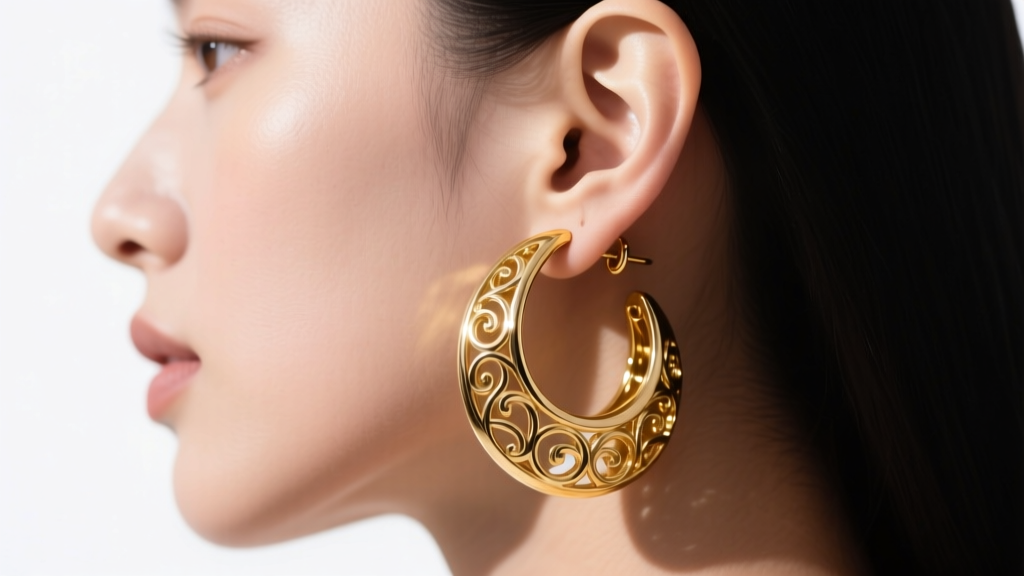
Many mass-produced Potara replicas are cast in solid brass or thick steel, routinely weighing between 15 and 22 grams per earring. Wearing these for a full day at an anime convention will result in micro-tears inside the piercing channel, leading to scar tissue buildup and permanent lobe elongation. To safely wear Potara-style dbz earrings, collectors must adhere to the following technical parameters:
- Hollow-Core Milling: High-end manufacturers use 5-axis CNC machining to hollow out the back of the Potara sphere, reducing the mass while maintaining the exterior silhouette.
- Weight Ceiling: Never exceed 8 grams per earring for standard 20G or 18G lobe piercings.
- Support Chains: For heavier, solid-cast replicas, utilize an invisible ear-support chain that hooks over the top of the auricle (ear cartilage) to distribute the gravitational load away from the lobe.
Enamel Techniques: Hard Cloisonné vs. Soft Epoxy
Color accuracy is paramount for DBZ jewelry, particularly for Dragon Ball star configurations, Super Saiyan hair accents, and Gi uniforms. The method used to apply this color dictates the lifespan of the piece.
Soft Enamel (Epoxy Resin)
Soft enamel is the industry standard for budget anime merch. Liquid epoxy resin is dropped into the recessed channels of the metal casting and left to air-cure. The result is a textured surface where the metal lines sit higher than the colored resin. While cost-effective, soft epoxy is highly susceptible to UV degradation (yellowing over time) and chemical breakdown when exposed to the acidic pH of human sweat. A soft-enamel Goku stud worn daily will typically show severe color fading and resin pitting within eight months.
Hard Enamel (Cloisonné)
Premium dbz earrings utilize hard enamel, a traditional jewelry technique where vitreous glass powder is packed into metal channels and fired in a kiln at over 1,400°F (760°C). Once cooled, the glass fuses to the metal and is polished completely flat. Hard enamel is impervious to UV light, sweat, and cosmetic chemicals. If you are investing in high-ticket Dragon Ball jewelry, always verify that the product description specifies 'hard enamel' or 'cloisonné' to guarantee the colors remain vibrant for decades.
Gauge Sizing and Post Specifications
The thickness of the earring post (the wire that passes through the ear) is just as critical as the decorative face. Standard fashion earrings use 20-gauge (0.81mm) posts, which are perfectly adequate for lightweight studs like a small Trunks sword or a minimalist Capsule Corp logo. However, dynamic shapes and dangles require thicker posts to prevent bending and tearing.
| DBZ Earring Style | Recommended Gauge | Post Thickness (mm) | Max Safe Weight | Best Material |
|---|---|---|---|---|
| Dragon Ball Studs (1-4 Star) | 20G | 0.81mm | 4g | 316L Steel / Gold-Plated Brass |
| Potara Dangles (Standard) | 18G | 1.02mm | 8g | Hollow-Milled Titanium |
| Shenron / Dragon Wrap Cuffs | 16G (Cuff) | 1.29mm | N/A (Cartilage) | Niobium or Titanium |
| Super Saiyan Hair Drops | 18G | 1.02mm | 6g | Anodized Titanium |
For cartilage piercings, such as ear cuffs designed to mimic Shenron wrapping around the helix, 16-gauge (1.29mm) or 14-gauge (1.63mm) wire is mandatory. Thinner wires will warp under the tension required to grip the cartilage securely, leading to a loose fit and eventual loss of the piece.
Identifying Authentic vs. Bootleg DBZ Jewelry
The secondary market for anime jewelry is flooded with unauthorized bootlegs that infringe on Toei Animation's intellectual property and bypass basic safety testing. Authentic, licensed dbz earrings will feature specific manufacturing hallmarks that bootleggers rarely replicate due to the cost of precision tooling.
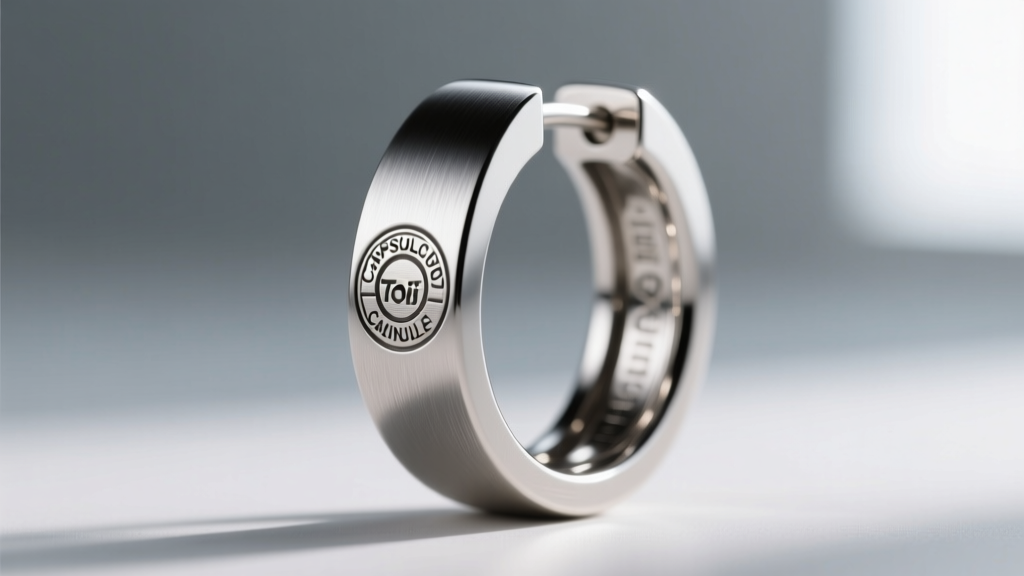
Authentication Tip: Always inspect the clutch (butterfly back) and the post base. Licensed premium jewelry will feature a laser-engraved licensing stamp (e.g., '© TOEI' or '© BIRD STUDIO/SHUEISHA') and a material purity mark (like '316L' or 'Ti'). Bootlegs typically rely on cheap, stamped brass friction backs that lack any identifying marks and feature rough, unfinished edges that can harbor staphylococcus bacteria.
Care and Maintenance for Plated Anime Earrings
If you own gold-plated or rose-gold-plated DBZ earrings (common for Frieza-force themed or regal Vegeta designs), understanding the electroplating thickness is vital for maintenance. Budget pieces use 'flash plating,' which deposits a microscopic layer of gold (less than 0.1 microns). This will wear off in weeks. High-end pieces use 'heavy gold electroplate' (HGE), depositing at least 2.5 microns of gold. To preserve HGE anime earrings, never clean them with ultrasonic jewelry cleaners or harsh chemical dips. Instead, use a mild, phosphate-free dish soap, warm distilled water, and a microfiber cloth to gently wipe away sebum and environmental pollutants after every wear. Store them in an anti-tarnish, sulfur-free ziplock bag to prevent the base metal from oxidizing and pushing through the gold layer.