Flower Earrings: Large Styles & Earlobe Troubleshooting Guide
Struggling with heavy floral jewelry? Learn how to troubleshoot and comfortably wear flower earrings (large sizes) without earlobe damage or pain.
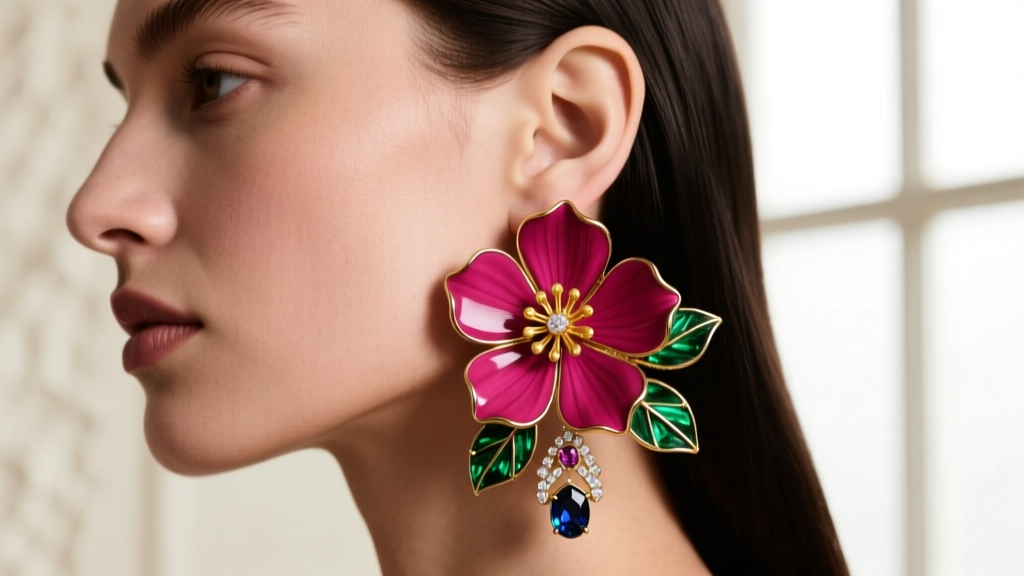
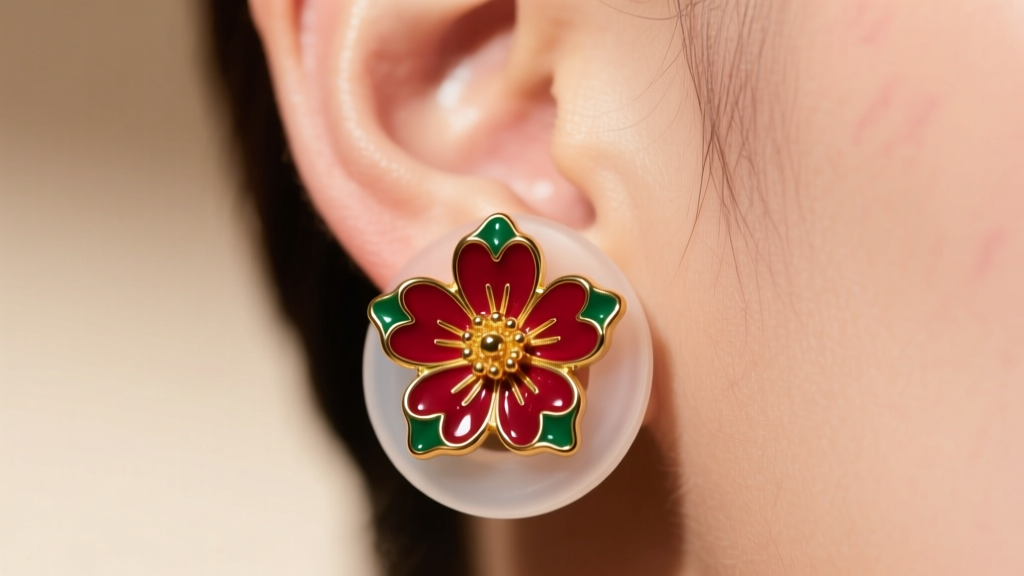
The resurgence of maximalist botanical jewelry has made oversized floral designs a staple in modern accessorizing. However, the physics of wearing heavy, statement-making botanical pieces often clash with the delicate anatomy of the human earlobe. When you transition from standard 3-gram studs to 20-gram statement pieces, the gravitational torque applied to your piercing can lead to post bending, lobe stretching, and severe contact dermatitis. This comprehensive troubleshooting guide addresses the biomechanical and metallurgical challenges of wearing heavy floral jewelry, providing actionable solutions to protect your piercings while maintaining visual impact.
The Biomechanics of Heavy Floral Jewelry
The human earlobe is primarily composed of adipose (fat) tissue and areolar connective tissue, entirely lacking the rigid cartilage found in the upper ear. While this tissue has surprising tensile strength, it is highly susceptible to creep—the tendency of a solid material to move slowly or deform permanently under the influence of mechanical stresses.
When you wear flower earrings, large sizes often feature a dropped center of gravity. A 2-inch hibiscus drop earring weighing 22 grams creates a lever effect. The standard 20-gauge (0.81mm) post acts as the fulcrum, concentrating all that downward force onto a surface area of less than 2 square millimeters at the back of the lobe. Over time, this localized pressure restricts blood flow, causes micro-tears in the connective tissue, and results in the dreaded "forward droop" or permanent lobe elongation.
Troubleshooting Common Large Earring Failures
1. The Forward Droop and Post Bending
If your oversized daisy or peony earrings constantly tilt forward, pointing toward the floor, the issue is a combination of post gauge and backer failure. Standard 20-gauge or 22-gauge brass posts will physically bend under a 15+ gram load. The Fix: Seek out designs with 18-gauge (1.02mm) or 16-gauge (1.29mm) posts. If the earring uses a French wire, ensure the wire is at least 1.2mm thick and features a reinforced soldered loop at the top of the floral drop to prevent the wire from unhooking under stress.
2. Earlobe Stretching and Piercing Migration
Chronic wear of heavy blooms causes the piercing hole to migrate downward, thinning the tissue between the hole and the edge of the lobe. The Fix: Never wear heavy floral drops for more than 6-8 consecutive hours. Utilize adhesive lobe support patches (like Lobe Wonder) which feature a pre-punched hole that distributes the earring's weight across a 12mm adhesive surface area, completely bypassing the stressed tissue at the bottom of the piercing.
3. Contact Dermatitis from Wide Surface Areas
Large floral earrings have a massive surface area that rests against the neck and jawline. Cheap base metals marketed as "Tibetan Silver" or "Gold Alloy" often contain high levels of nickel and copper. According to the American Academy of Dermatology, nickel allergy is the most common cause of allergic contact dermatitis, and the sweat trapped beneath a large, solid metal flower accelerates ion leaching. The Fix: Mandate ASTM F-136 implant-grade titanium or pure niobium for any post or backing that touches the skin. The Association of Professional Piercers (APP) strictly recommends these materials for their zero-nickel content and high biocompatibility.
Structural Support Solutions for Heavy Blooms
Upgrading your earring backers is the single most effective way to troubleshoot heavy floral jewelry. The standard "butterfly" friction back is entirely inadequate for anything over 7 grams, as its narrow wings dig into the lobe. Below is a comparison of professional-grade support mechanisms.
| Support Mechanism | Best For | Weight Capacity | Pros & Cons |
|---|---|---|---|
| 10mm-14k Gold Disc Backers | Post earrings with heavy drops | Up to 15g | Pro: Distributes weight evenly. Con: Requires a thicker post (18g+) to fit the silicone O-ring grip. |
| Silicone O-Ring / Tension Backs | Standard posts needing extra grip | Up to 12g | Pro: High friction prevents slipping. Con: Can trap moisture and bacteria if not cleaned daily. |
| Adhesive Lobe Patches | Extreme weight (20g+) & stretched lobes | Up to 30g+ | Pro: Completely removes stress from the piercing hole. Con: Single-use; adhesive can irritate sensitive skin. |
| Ear Chains / Ear Laces | Wrap-around floral ear cuffs & drops | Variable | Pro: Transfers weight to the top of the ear cartilage. Con: Visually alters the design; requires precise fitting. |
Material & Gauge Specifications for 2026 Floral Designs
When investing in large-scale botanical jewelry, scrutinize the manufacturing specifications. The floral face of the earring can be made from various materials, but the findings (the post, the hinge, the clutch) must meet strict metallurgical standards.
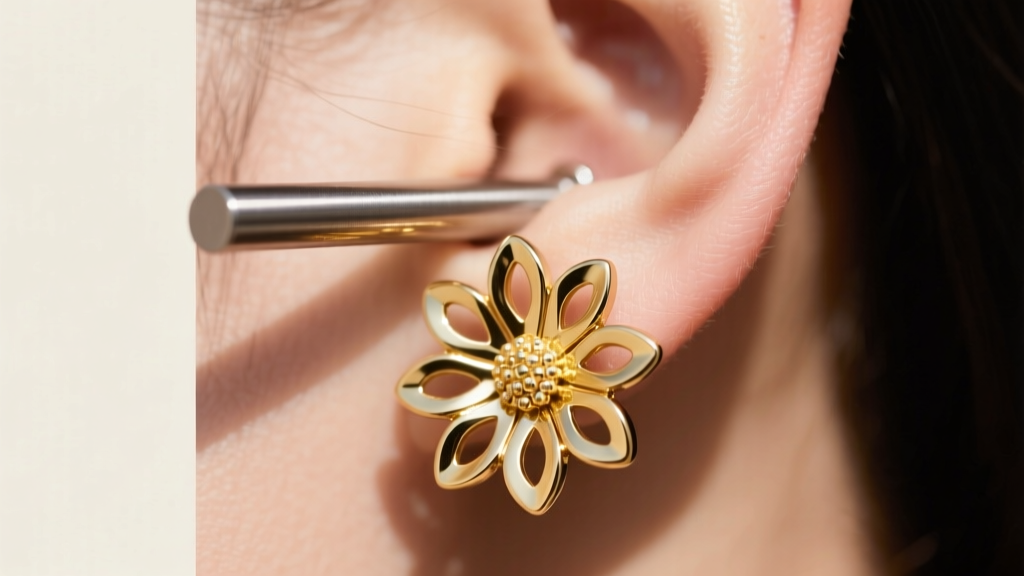
- Posts: Must be 18-gauge (1.02mm) or 16-gauge (1.29mm) minimum. Look for flat-back labret-style posts for heavy pieces, as the flat 4mm-6mm base plate rests flush against the back of the ear, eliminating the pressure point of a traditional post.
- Hinges (for Clip-Ons & Omega Backs): Large floral clip-ons require high-tension omega backs with adjustable screws. If the floral head exceeds 2 inches in diameter, the clip must feature a padded silicone inner lining to prevent the metal from pinching the lobe's nerve endings.
- Floral Face Materials: To reduce physical weight without sacrificing visual size, look for electroformed metals or hollow-form construction. Electroforming builds a microscopic layer of copper or silver over a wax model, resulting in a massive, highly detailed flower that weighs a fraction of a solid cast piece.
Visual Weight vs. Physical Weight: Balancing Face Shapes
Troubleshooting large flower earrings isn't just about physical comfort; it's about visual proportionality. A 3-inch solid brass sunflower will overwhelm a petite jawline and drag the facial features downward.
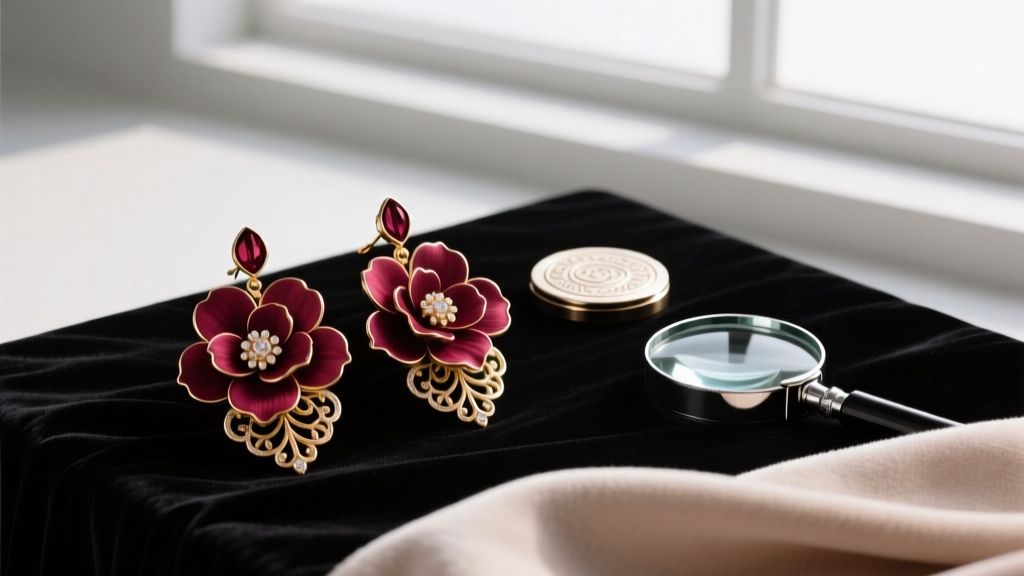
To achieve the illusion of massive size without the physical penalty, utilize negative space and enamel work. Filigree floral designs—where the petals are constructed from intricate, openwire metalwork—reduce the physical mass by up to 60% compared to solid sheet metal. Furthermore, vitreous enamel or high-grade cold enamel adds vibrant, opaque color that catches the eye, increasing the visual footprint of the earring while adding less than 0.5 grams of actual weight. For those with round or square face shapes, opt for elongated floral drops (like orchids or lilies) rather than wide, circular blooms (like daisies) to create a lengthening optical illusion.
"The secret to mastering oversized botanical jewelry is understanding leverage. A 20-gram flower sitting flush against the lobe exerts half the tearing force of a 10-gram flower dangling two inches below it. Always prioritize the drop length over the raw gram weight when assessing lobe safety."
— Master Bench Jeweler & Piercing Biomechanics Specialist
Expert Maintenance & Storage Protocols
Large floral earrings are highly susceptible to structural fatigue and cosmetic degradation. Implement these maintenance protocols to extend the lifespan of your statement pieces:
- Post Straightening: Never bend a post back into place with your fingers. Use smooth-jawed nylon pliers to gently realign an 18-gauge post; metal fatigue from repeated bending will cause the post to snap.
- Enamel Protection: Store enameled floral pieces in individual microfiber pouches. Cold enamel is essentially a hardened resin that will scratch and cloud if it rubs against diamond or sapphire accents on adjacent jewelry.
- Sweat Neutralization: After wearing large metal flowers in warm environments, wipe the back of the earring and the post with a 70% isopropyl alcohol pad to neutralize acidic sweat that rapidly degrades brass and copper alloys.
By respecting the physics of your piercings and upgrading your support hardware, you can confidently wear large, dramatic floral earrings without sacrificing the health and integrity of your earlobes.


